
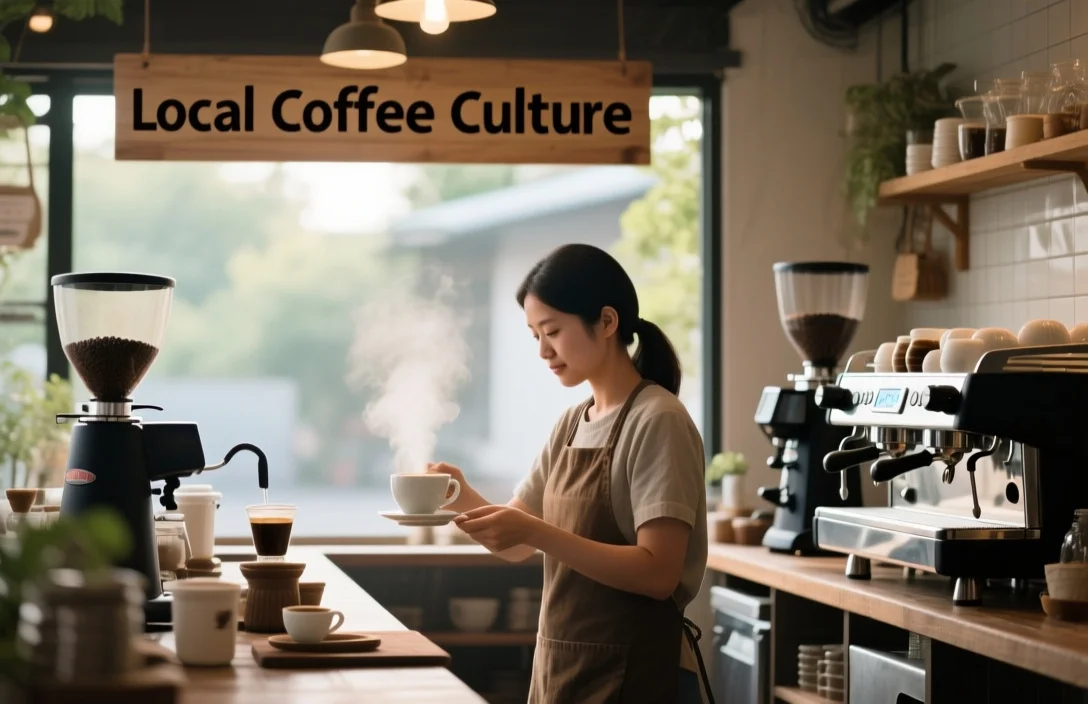
Local coffee culture refers to the shared habits, businesses, and rituals around coffee in a neighborhood, town, or city – the places people go, the drinks they prefer, how shops interact with customers, and the small practices that make coffee meaningful locally. Readers who want to find, understand, or support a local scene will learn what shapes it, how to explore it, how to tell good places apart, and practical next steps.
What local coffee culture actually means
Local coffee culture describes how coffee fits into a community’s daily rhythm. Neighborhood routines, the presence of independent roasters or chains, common drink orders, design choices in shops, and informal social rules all combine to form a recognizable local pattern. Personal preferences, such as whether people favor espresso-based drinks, filter coffee, or a takeout-on-the-go style, help define a city’s identity the same way local food specialties do.
Roots matter when assessing a local coffee culture. Historic migration patterns, nearby agricultural connections, and past business investment can tilt a community toward certain formats – for instance, production-focused roasteries versus counter-service specialty cafés. Social functions also shape the scene: some cafés operate as remote-work hubs while others prioritize conversation and neighborhood gatherings. Those functional differences influence everything from the music played to the hours a shop stays open.
How local coffee culture forms
Climate, commuting patterns, and local tastes interact to form a coffee scene rather than a single cause. Cities with heavy morning commutes frequently develop quick-service outlets and reliable to-go options, while walkable downtown districts often foster sit-down cafés with longer dwell times. Cultural influence from immigrant communities frequently introduces preparation methods, flavor profiles, or unique beverage types that become part of the area’s coffee identity.
Supply-chain decisions made by shop owners change what customers experience at scale. Choices about roasting style, single-origin offerings, and whether to source beans directly from producers affect taste and price. Local training and the skill level of baristas determine drink consistency and how likely a shop is to offer detailed brewing or pour-over options. Community feedback loops – regulars who request adjustments and baristas who experiment – cause the scene to evolve.
Local coffee culture
After comparing the main options side by side in many cities, the key difference is whether a scene is roaster-driven, cafe-driven, mobile-driven, or chain-dominated. Roaster-driven scenes center on small-batch roasting and often include tasting flights, public roasting windows, and direct-sourcing stories. Cafe-driven scenes emphasize hospitality, interior design, and food pairings. Mobile-driven scenes rely on carts and pop-ups and are anchored to festivals, farmers markets, and street corners. Chain-dominated scenes prioritize predictable menu items, longer hours, and broad accessibility.
Street-level economics and zoning shape which model takes hold in a neighborhood. Real estate costs push many small businesses to operate with smaller footprints or to choose high-traffic corners. Licensing and health-code rules influence whether kiosks and carts can flourish. Customer expectations then feed back into what owners build: communities that reward experimental, seasonal menus encourage innovation, while those that prize consistency encourage standardization.
| Name | Price / Key Spec | Best For |
|---|---|---|
| Independent cafe | Moderate to premium pricing; emphasis on barista skill and atmosphere | People who want hospitality, sit-down time, and specialty drinks |
| Roastery with tasting bar | Premium pricing; single-origin focus and bean transparency | Coffee enthusiasts who want direct-sourced beans and brew education |
| Coffee cart / pop-up | Lower overhead; flexible locations and hours | Commuters and festival crowds who want quick, local flavor |
| National chain | Standardized pricing and menu; extended hours | Customers who value predictability and convenience |
| Hybrid (bakery + coffee) | Menu with pastries and seasonal drinks; neighborhood focus | Those who want food pairing and a casual, all-day spot |
How to explore your local coffee culture (practical steps)
Find spots that match your priorities and then sample deliberately. Use this action-oriented plan to explore on foot and online.
- Map nearby options and prioritize by walking time and type.
- Visit during different times of day – order a morning espresso and an afternoon filter if possible.
- Ask baristas about bean origin and brewing methods; listen for specificity.
- Try at least one drink that’s outside your usual order to test a shop’s range.
- Buy a bag of beans to taste at home and compare with what you had in the shop.
Comparative tasting helps reveal what a local scene values. Shops that describe tasting notes and provide brewing recommendations often invest in training and sourcing. Places that hand you a standard menu with little explanation usually focus on speed and volume. Chatting with staff will often reveal whether a shop roasts its own beans, sources from local micro-roasters, or relies on national suppliers.
Spot-check real-world signals when you visit. Menus that list brew methods, visible equipment like a pour-over station or a La Marzocco espresso machine, and staff who can explain extraction variables point to a shop that thinks about coffee beyond shortcuts. Seating layout and acoustics communicate what a shop expects from customers – a long communal table suggests socializing, while many small bistro tables suggest privacy and short visits.
Common mistakes when sampling local coffee culture
Expecting uniformity across a city leads to disappointment. Many readers arrive with a single expectation about how coffee “should” taste based on one experience in another place. Local roast profiles and serving temperatures differ, and adjusting expectations yields a fairer comparison.
Relying only on social media hype can mislead. Popular posts often highlight visually striking drinks rather than representative offerings, so trending photos may not reflect daytime quality or consistency. Failing to ask simple questions at the counter leaves you without context; responsible staff will usually explain why a brew was chosen and how it was prepared.
Evaluating price without considering portion size or service style misses the full picture. A higher price can indicate direct trade sourcing, labor for skilled baristas, or smaller batch roasts. Conversely, low price might reflect efficient scale or basic commodity beans. Judging a shop solely by price will obscure differences in service, freshness, and educational value.
How local coffee culture affects price and choice
Local pricing and product choices typically reflect supply decisions and business model rather than arbitrary markups. Shops that roast in-house or import very small lots must recover higher input costs and often pass some of that onto customers. Businesses that prioritize quick turnover tend to buy commercial blends and design scalable menus to reduce labor per cup.
Taste expectation drives menu design and therefore cost structure. A community that prizes single-origin pour-overs encourages shops to carry rotating inventory and to train baristas in multiple brew methods. Shops that cater to commuting crowds optimize for consistent espresso extraction and high-volume machines to keep labor and wait time down. Those trade-offs end up visible in both menu breadth and price lines.
Practical trade-offs for customers include the predictability of chains versus the discovery potential of independents. Predictability suits people who value time and consistent flavor across locations. Discovery suits people who enjoy variability, want to support local roasters, and appreciate nuanced origin stories. A deliberate personal choice about what matters should guide how much you pay attention to price versus provenance.
How to tell a well-run local coffee business from a weak one
Look for operational cues early in a visit. Clean equipment, a steady flow at the bar that doesn’t result in chaotic order-mismatches, and staff who can describe beans and extraction methods are strong signals. Transparent labeling of roasts, visible roast dates on bean bags, and clear brewing instructions for at-home use indicate a shop that invests time in quality.
Customer interactions offer another reliable lens. Baristas who suggest a drink based on taste preferences and who can explain the differences between roast levels or brew methods show depth. Owners who rotate beans and advertise tasting events demonstrate a long-term commitment to community and craft. Conversely, inconsistent drink quality, opaque sourcing, and an unwillingness to answer basic questions suggest either inexperience or a business model focused on speed rather than craft.
Operational hazards to watch for include excessively long wait times for simple drinks and a menu that changes every week without clear reason. Those patterns can mean staff turnover, workflow problems, or unstable supply chains. Asking one targeted question, such as how long beans have been in store or whether the shop roasts in-house, will often reveal whether a store understands its product.
How to support and influence local coffee culture
Spend where your priorities align if you want to shape a scene. Regular purchases at an independent shop – especially for beans – help owners plan roasting schedules and experiment with new lots. Attending cuppings, public roasting events, or educational classes financially supports shops while increasing your own understanding.
Amplify practices that you value by providing constructive feedback. Politely suggesting alternative milk options or offering to buy a sampler bag for a friend introduces incremental demand signals. Writing short, specific reviews that call out service, consistency, or bean freshness contributes to useful visibility for small businesses. Volunteering or collaborating on neighborhood coffee events can also broaden a local scene’s audience.
Advocacy works on the policy level when mobile vendors or small kiosks face restrictive ordinances. Communicating with local officials or participating in neighborhood business associations about fair permitting helps maintain variety in the scene. Small-scale action, such as encouraging your office to buy local beans for meetings, creates steady demand that supports roasters and cafe owners.
how different neighborhoods present local coffee culture
Urban downtowns often present a mixture of chains and specialty spots where convenience and discovery coexist. Residents and commuters intertwine and create cross-traffic that lets small roasters find customers. Suburban neighborhoods frequently support hybrid bakery-coffee concepts that prioritize family-friendly hours and pastry pairings. College towns may show a strong independent-cafe culture that includes student-run events, late-night study spots, and experimental beverage menus.
Coastal towns commonly favor lighter-roast filter coffees and cold-brew options due to seasonal demand and tourist-driven foot traffic. Mountain and rural communities may emphasize locally roasted beans with single-origin stories tied to outdoor tourism. These examples show how local needs and local clientele shape menu formats, opening hours, and community activities.
Mistakes to avoid when trying to influence a scene
Expecting immediate changes after switching your own buying habits creates unrealistic expectations. Cultural shifts tend to happen slowly as multiple people and businesses alter buying and sourcing choices. Pressuring shop owners to change overnight by tweeting negative comments without offering constructive feedback usually backfires and damages relationships.
Misreading the difference between critique and personal taste leads to bad advice. Offering specific, actionable feedback about consistency or temperature is helpful. Complaining generally that a drink was “bad” without describing what tasted off – acidity, over-roasted notes, or dilute extraction – doesn’t give staff a path to improvement.
FAQ
How can I find truly local roasters near me?
Search for places that list roast dates and direct-sourcing information on their bags, attend community markets, and ask baristas whether they roast on-site or work with regional micro-roasters. Visiting a shop and buying a small bag is the most reliable method to confirm local roasting.
What should I ask a barista to evaluate a shop quickly?
Ask where the beans are from, when they were roasted, and what brew methods the shop uses for single-origin coffees. Those questions highlight whether staff know their product and whether the shop prioritizes freshness and education.
How much does supporting local shops actually help the scene?
Purchases of beans and attendance at events create demand signals that let small roasters and cafés plan and expand. The exact impact varies by shop size and market, so view your support as part of a broader effort that includes word-of-mouth and written reviews.
Are pop-up carts and kiosks less valuable to local culture than brick-and-mortar cafés?
Pop-ups and kiosks contribute accessibility and diversity to a scene by reaching different neighborhoods and events. Their lower overhead allows experimentation and rapid adaptation, which complements the longer-term stability that full cafés provide.
Verdict and next
If you want a stronger local coffee culture, start by exploring at least three different nearby spots and buying beans to brew at home; that will tell you more than a single visit. Your immediate next step: pick one independent café within walking distance, ask about their beans and roast dates, and bring home a small bag to taste and compare.

- Espresso Tastes Watery? 10 Common Causes and How to Fix It - October 23, 2026
- 10 Common Coffee Equipment Cleaning Mistakes and How to Avoid Them - October 23, 2026
- 17 Common Coffee Grinder Problems and How to Fix Them - October 23, 2026