
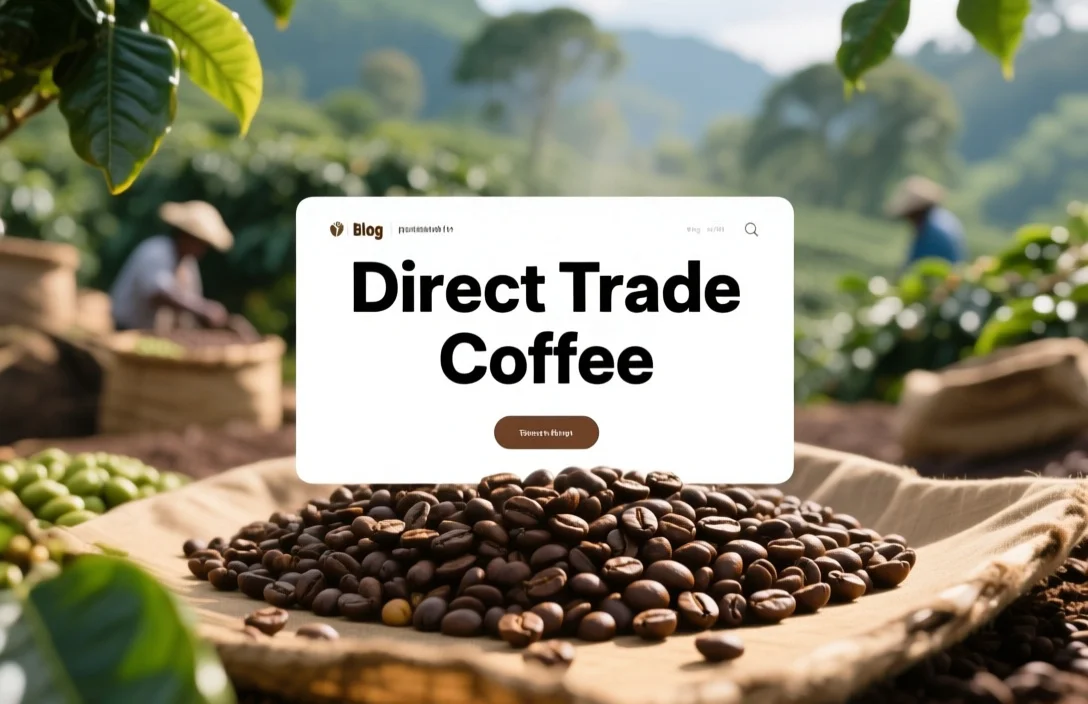
Direct trade coffee is a sourcing approach in which roasters form direct relationships with coffee producers, aiming to negotiate prices and quality without intermediaries. Use this guide to recognize genuine direct-trade practices, ask the right questions of roasters, and decide whether paying a premium for traceability and relationships matches your priorities.
What direct trade coffee means
Direct trade coffee describes a purchasing model in which a buyer – typically a roaster – buys green coffee directly from a farmer, farm group, or cooperative rather than through an exporter or commodity broker. Goals commonly associated with the model include shorter supply chains, more transparent pricing, and closer cooperation on quality, processing, and crop planning.
Origins of the phrase came from specialty coffee communities dissatisfied with commodity-market dynamics and with existing certification systems that they felt did not always reward quality. Buyers who use direct trade will often highlight farm-level relationships, shipment paperwork that traces origin to a specific farm or lot, and financial arrangements that they say pay farmers above local market rates.
How direct trade actually works on the ground
Roasters typically begin by sourcing coffee samples from a region and then cupping them to evaluate quality. Successful samples lead to conversations or visits; buyers and producers discuss lot size, processing method, harvest windows, and expected deliveries. Contract terms can range from informal handshake agreements to formal contracts that specify price, delivery schedule, and quality metrics.
Payments in direct trade arrangements sometimes include pre-harvest or pre-export deposits intended to fund harvest, improve processing, or cover inputs. Buyers may also offer technical assistance such as milling upgrades, fermentation trials, or agronomy support to raise cup quality. Relationships that extend across seasons usually let both parties plan for improved consistency and shared investment in specific lots.
Direct trade coffee versus other sourcing models
Comparing common sourcing models side by side clarifies why consumers and roasters invoke direct trade. The table below shows how direct trade typically contrasts with fair trade and commodity purchasing on the main claims roasters and sellers make.
| Name | Typical claim | Best for |
|---|---|---|
| Direct trade | Direct buyer-producer relationships with negotiated prices and transparency about origin and quality | Buyers who want traceable lots, higher-quality specialty coffees, and visible farmer relationships |
| Fair Trade (certified) | Minimum price guarantees, premiums used for community projects, and a third-party certification audit | Consumers seeking third-party verification of labor and pricing policies at the cooperative level |
| Commodity/Spot market | Coffee sold via exporters and brokers, price determined on exchange and by global supply/demand | Buyers focused on volume and low unit cost rather than lot-specific traceability |
Roasters who claim direct trade often emphasize that their payments reflect quality and not solely certification. Buyers who prioritize reliable, documented farmer benefit may prefer producers certified by recognized third parties. Consumers should weigh whether they value audited guarantees or flexible, relationship-driven benefits that do not carry a common certification.
How to evaluate a roaster’s direct trade claim
After comparing transparency practices at several roasters, the single most practical verification is specific, farm-level evidence. A credible direct-trade claim usually includes at least two of the following items: lot-level origin information, transparent purchase invoices that identify the farm or barn, and verifiable visits or photo/video documentation from recent harvests.
Useful questions to ask a roaster include:
- Which farm or cooperative supplied this lot, and can you share the farm name or location?
- How much did you pay the producer for this lot, and was that price paid in cash up front or on delivery?
- Have you visited the farm in the last two harvests, and can you describe what was done together to influence quality?
- Is the coffee traceable to a particular lot or micro-lot rather than blended across many farms?
- Do you have documentation – invoices, exporter receipts, or contracts – that match the origin claim?
Red flags appear when roasters refuse to provide basic documentation or give only vague origin statements such as “from a small farm in X region” without lot details. Claims that all benefits go to “farmers” without specifying who on the farm or which cooperative received payments are also a warning. Marketing language that substitutes storytelling for verifiable data requires additional scrutiny.
Practical steps to buy direct trade coffee
- Decide what matters: prioritize either price, traceable origin, or consistent flavor profile.
- Identify roasters known locally and online that list single-origin lots with farm or cooperative names.
- Read product pages for lot-level information and cupping notes; bookmark lots that match your taste.
- Contact the roaster with the verification questions listed above before you buy a large quantity or subscribe.
- Buy a small bag as a trial, paying attention to roast date, grind size, and tasting notes.
- Track your cup across two or three roasts to judge consistency and whether the roaster follows up on quality changes.
Buyers who want to support sustained producer benefit should prefer roasters that offer multi-season commitments or that disclose how premiums are used. Subscribing to a roaster’s micro-lot releases is a valid way to support specific farms, provided the roaster backs claims with documentation.
Cost and value trade-offs for direct trade coffee
Expect value trade-offs rather than universal bargains when choosing direct trade coffee. Specialty lots sourced directly from small farms commonly cost more than commodity-grade blends because of limited volume, higher production costs, and the premium that buyers may pay for quality or relationship support. Some roasters absorb additional logistics and compliance expenses to maintain traceability.
Budget-conscious buyers can still access direct trade coffee by choosing small roasters who focus on regional visibility and by subscribing to occasional single-lot releases rather than committing to expensive micro-lots. Home roasters and consumers who evaluate value by cup quality rather than retail price per pound often find that direct-trade lots offer clearer flavor differentiation and rewarding tasting complexity.
Risks, limits, and common abuses in the label
Lack of a standard definition allows misuse of “direct trade” in marketing. Unverified claims, selective storytelling, and lack of price transparency enable some sellers to present ordinary green-coffee purchases as direct trade. Roasters that conflate photos of farms with ongoing business relationships are sometimes exaggerating.
Other practical limits include logistics and scale. Small farms do not always have the export or documentation capacity required for rigorous traceability. Buyers who expect certification-style audits will find direct trade inconsistent because the model emphasizes relationships rather than standardized third-party verification. Consumers should therefore treat any direct-trade claim as a prompt to request evidence that suits their values.
How direct trade affects farmers and communities
Direct trade arrangements can benefit producers in several ways when executed responsibly: immediate cash flow, feedback on processing to improve cup quality, and access to specialty markets with higher per-unit prices. Long-term contracts create incentives for farm upgrades and sustainable practices that improve quality and yield.
Risks for communities can arise if buyers focus narrowly on a single farm or lot. Uneven investment can leave neighboring farms excluded from higher-value markets. Buyers interested in broader community impact should ask whether premiums are reinvested locally or whether the roaster supports training and infrastructure that benefit nearby producers.
Questions to ask before you commit to a roaster or subscription
Good questions force concrete answers and reduce ambiguity. Ask for the following pieces of information before purchasing a subscription or placing a large order:
- Farm/cooperative name and lot identification.
- Purchase price paid to the farmer or cooperative for the specific lot.
- Shipping and export documents that match the farm name to the lot.
- Evidence of roaster visits or third-party verification within recent harvests.
- Description of any additional investments (equipment, training) provided to producers.
Demanding specific answers will quickly reveal which roasters have robust direct-trade practices and which use the phrase primarily for marketing.
Common mistakes consumers make and how to avoid them
Many buyers accept narrative descriptions without verification. That practice often leads to paying a premium with no clear traceability benefit. Asking for invoices or origin documentation before purchasing a subscription reduces this risk.
Another frequent mistake is conflating “single-origin” with direct trade. Single-origin labeling simply means the coffee comes from one region, country, or farm; it does not guarantee direct purchasing or premium distribution. Consumers should evaluate claims on the basis of documentation and ongoing relationship evidence rather than label buzzwords.
Additional mistakes include prioritizing roast color or shop ambiance over origin transparency and assuming that a higher price always equals better farmer compensation. Seeking roasters who publish origin documentation and who are willing to answer follow-up questions gives buyers a stronger assurance that their money supports the claimed outcomes.
How to support reliable direct-trade practices beyond single purchases
Supporting credible direct trade goes beyond buying a single bag. Consider these actions to create longer-term positive outcomes:
- Subscribe to a roaster’s micro-lot releases only after verifying farm-level traceability.
- Join or support cooperatives and funds that invest in community-level processing infrastructure.
- Buy green beans directly if you have roasting capacity and want to engage with producers on pricing and processing.
- Attend coffee events or cuppings where roasters present lot-level information and producers occasionally appear.
Repeated purchases and clear communication with roasters help build sustainable partnerships that produce consistent quality and tangible producer benefit.
How to verify common direct-trade promises
| Promise | Practical verification | Red flag |
|---|---|---|
| Higher farmer payment | Request the purchase invoice, contract, or exporter receipt identifying the farm and the amount | Refusal to provide any paperwork or insistence that payments are “confidential” |
| Farm-level traceability | Ask for lot ID, GPS coordinates, or farm name and photos from recent harvests; verify against exporter documents | Only region-level origin given, no lot ID |
| Long-term partnership | Ask about multi-season commitments and examples of past collaborations | Only one-off purchases described without follow-up steps |
| Investments in quality | Request descriptions of equipment purchases, training sessions, or on-farm processing improvements | Vague claims of “helping” without specific examples or receipts |
FAQ
Is direct trade coffee certified by a third party?
Roasters that use direct trade rarely rely on a single third-party certification because the model emphasizes relationships and negotiated deals rather than standardized certification. Consumers who want external verification should ask whether the producer also holds recognized certifications in addition to direct-trade arrangements.
Will direct trade coffee always taste better than fair trade or other coffee?
Taste depends on many factors including variety, altitude, processing, and roast profile. Direct trade can increase the chance of unique, high-quality lots reaching the roaster, but better taste is not guaranteed. Sampling and cupping remain the reliable ways to evaluate flavor.
How much more does direct trade coffee cost at retail?
Price differences vary widely by roaster, lot size, and production costs. Ask the roaster for a price breakdown if you want to understand how much of the retail premium is intended as direct payment to producers. Transparent roasters will explain the factors that influence retail price.
Can small roasters reliably do direct trade?
Small roasters often specialize in direct-trade relationships because they can work closely with specific producers and purchase small lots. That agility helps establish direct relationships, but documentation and consistent visits are the markers of reliability, not roaster size alone.
How can I verify that a roaster actually visits farms?
Request recent visit reports, photos with timestamps, or summaries of what was discussed and agreed during visits. Export documents that name the farm and the lot combined with visit evidence give the strongest verification.
Are there organizations that standardize direct trade?
No single global standard defines direct trade. Some industry groups collect best practices or publish guidance, but the lack of a formal, universal certification means buyers must evaluate claims on a case-by-case basis.
Closing note and next ste
Choose one roaster that lists a specific farm name for a lot you like, then contact them with the verification questions in this guide. Buying a single trial bag and requesting documentation before committing to a subscription gives you direct experience with the roaster’s transparency and lets you judge both cup quality and sourcing integrity.

- Espresso Tastes Watery? 10 Common Causes and How to Fix It - October 23, 2026
- 10 Common Coffee Equipment Cleaning Mistakes and How to Avoid Them - October 23, 2026
- 17 Common Coffee Grinder Problems and How to Fix Them - October 23, 2026