
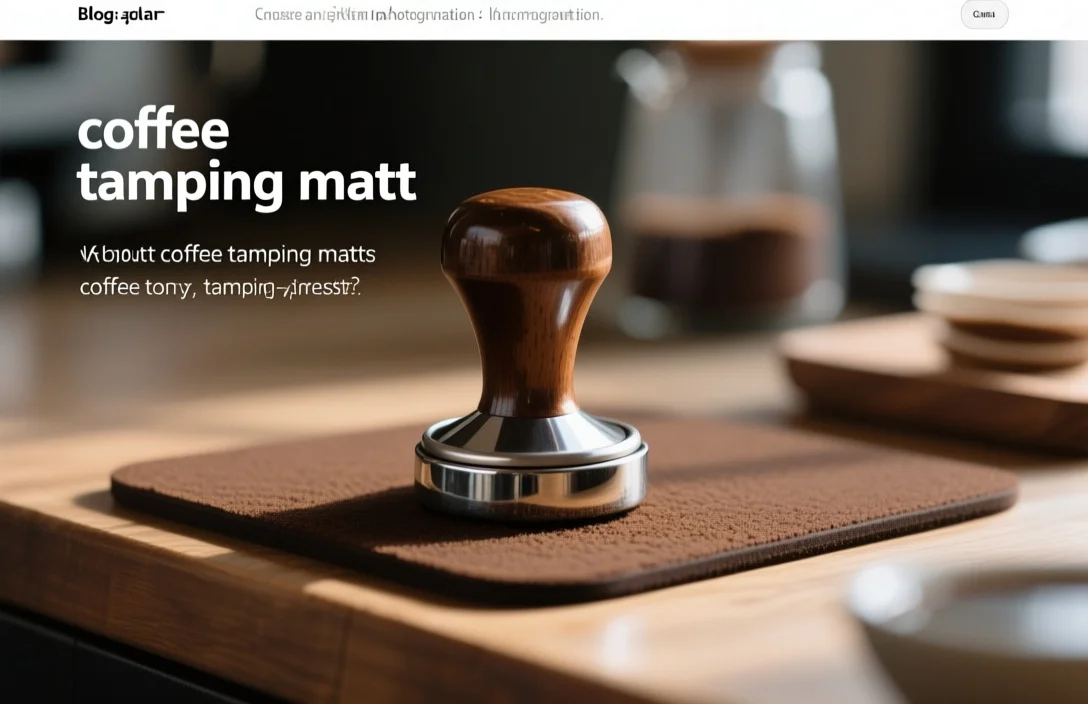
A coffee tamping matt protects your countertop and stabilizes the portafilter while you tamp. Choose a mat with a non-slip base, a comfortable compressible surface, and a size that fits your portafilter and workspace.
What a tamping matt does and why it matters
A tamping matt serves three practical roles: it protects the counter from the tamper’s force, prevents the portafilter from sliding during tamping, and contains stray grounds. Those functions matter because an unstable tamp produces uneven puck compression, which increases channeling and harms espresso extraction consistency. Placing the portafilter on an unsecured surface also risks chipping stainless steel or ceramic backings and can transmit noise and vibration through your bench.
Many home baristas first buy a tamping matt to protect a kitchen counter or hardwood, not realizing the mat also changes how tamp force is felt. A mat with too much give makes it harder to feel whether your tamper is level. Conversely, a mat that is too rigid transmits more impact to the countertop rather than absorbing it. A usable mat balances grip and compressibility so you can apply steady, even pressure and feel the tamper seat into the puck.
How a tamping matt changes tamping mechanics
A mat modifies three tactile cues during tamping: resistance, feedback, and stability. Resistance comes from the mat’s thickness and material durometer. Feedback is the small movement and vibration you sense through the tamper shaft as you compress the coffee puck. Stability is the mat’s ability to keep the portafilter still under lateral force.
Portafilter movement of even a few millimeters while tamping will create a tapered puck or an uneven top surface. That leads to water finding a path of least resistance and producing an under-extracted shot. A good mat reduces lateral displacement to near zero while not deadening tactile feedback entirely. Many experienced baristas prefer mats that leave a faint “bounce” so they can judge when the tamper has fully seated.
Mat design can influence tamp angle, too. Mats with a shallow cradle or contour for the portafilter make it easier to keep the tamper perpendicular to the puck. Flat mats demand more attention to tamp alignment but allow space for larger or unusual portafilters.
Materials, construction, and features to prioritize
Choose a mat based on three priority attributes: material, thickness/durometer, and edge/feature design.
Material: Silicone and nitrile rubber are the most common materials for tamping mats. Both provide good grip and are easy to clean. Leather or waxed canvas mats are available for a warmer aesthetic but need more care and do not shed grounds as cleanly as silicone. Mats advertised as food-grade silicone are convenient because they tolerate hot water and are dishwasher-safe.
Thickness and compressibility: A mat must absorb the impact from repeated tamps without bottoming out or completely isolating feedback. Look for a mat described as “cushioned” or “padded” rather than a thin anti-slip sheet. Thicker pads that use multiple layers or embedded foam tend to provide a satisfying feel while protecting surfaces.
Edge and channel features: Useful design elements include a raised lip to catch knocked-off grounds, a shallow cradle to hold a portafilter, and a recessed tamping area to align the tamper with the puck. Some mats include alignment guides or printed concentric circles to help center the tamper. Commercial bar mats will sometimes feature a textured underside or suction-style base for extra grip.
Durability: Evaluate seams and the way layered mats are bonded. A glued or stitched multi-piece mat can separate under heavy use. Single-piece molded mats show fewer failure modes but cost more.
Cleaning and maintenance: Non-porous materials like silicone are easiest to rinse and sanitize. Leather requires oiling and careful cleaning to avoid staining. Pick a material that matches how often you rinse or sanitize your tamping area.
Size, shape, and matching to your portafilter and counter
Measure the portafilter diameter and consider the available counter space before buying. A mat should provide stable seating for the portafilter without crowding your workspace or forcing awkward tamps. Standard commercial portafilters range from compact single-shot baskets up to larger 58 mm double baskets; some brands use nonstandard sizes. If you buy a mat that includes a portafilter cradle sized for 58 mm, confirm your portafilter diameter first.
Shape matters when you multitask. Rectangular mats provide a generous work area and can double as a small drip mat or base for milk pitchers. Circular mats concentrate tamping support and are compact, but they may limit where you can place other tools. For very small kitchens or coffee bars, a mat that fits just the portafilter and tamper is often the most practical.
Surface texture affects how grounds behave. A very smooth top surface makes it easier to sweep grounds off with a brush. Deep textures or honeycomb patterns can trap fines, requiring more aggressive cleaning. Consider whether you prefer a mat that hides spill marks (dark, textured) or one that makes maintenance obvious (light, smooth).
Practical buying comparison
After handling a range of mats and comparing the common models side by side, three distinct product categories emerge. The table below summarizes the trade-offs so you can match a mat to your priorities.
| Name | Price / Key Spec | Best For |
|---|---|---|
| Budget silicone mat | Low cost, thin single-piece silicone, basic non-slip | Casual home users who want counter protection and easy cleaning |
| Padded rubber/foam mat | Midrange cost, multi-layer cushioning, portafilter cradle option | Home baristas seeking better feedback and surface protection |
| Commercial heavy-duty mat | Higher cost, thick rubber or molded silicone, large footprint | Small cafés or enthusiasts who need durability and workspace control |
| Leather or aesthetic mat | Variable cost, leather or treated canvas, stylish finish | Those valuing kitchen aesthetics and who will maintain leather care |
Trade-offs across categories center on tactile feedback versus surface protection and aesthetics versus ease of cleaning. Budget silicone mats are washable and inexpensive but may be thin. Padded mats give better feel and protect surfaces but require more careful cleaning if they have channels. Commercial mats last longest and are easiest to grip, but they occupy more counter space and cost more. Leather mats look attractive but require maintenance and are less forgiving if you need frequent sanitization.
How to use a tamping mat correctly
Follow these steps to get consistent tamping technique while using a mat.
- Position the mat where you normally tamp so the portafilter rests comfortably on its cradle or flat surface.
- Distribute coffee evenly in the basket using a distribution tool, tap, or gentle shake.
- Level the bed of coffee with a finger swipe or distribution tool to remove major high spots.
- Place the portafilter on the mat and grip the tamper handle vertically above the basket center.
- Apply steady downward pressure until you reach your target feel; stop if you feel the tamper seat solidly.
- Remove the tamper while keeping the tamper vertical to avoid disturbing the puck.
- Wipe stray grounds from the basket rim and mat before locking the portafilter into the group head.
Perform a quick check after several shots. If tamping with the mat yields a consistently sloped puck or uneven crema, experiment with a firmer surface or move to a harder pad to increase feedback.
Cleaning, sanitizing, and maintaining different mat materials
Silicone: Rinse under warm water after each session and scrub with a soft brush if fines accumulate. For periodic deep cleaning, soak in hot soapy water or place on the top rack of a dishwasher if the manufacturer permits.
Rubber/foam composites: Wipe with a damp cloth and a mild detergent. Avoid long hot-water soaks for laminated foam layers because trapped water can degrade adhesives. Inspect the mat edges for delamination and replace if the inner foam becomes exposed.
Leather or canvas: Wipe with a damp cloth and mild soap. Treat leather occasionally with a small amount of leather conditioner to prevent drying and cracking. Avoid submerging leather in water; drying out leather will make it brittle.
General maintenance habits that extend mat life:
- Sweep away grounds with a dedicated brush rather than dragging them across the mat with your hand.
- Avoid leaving tamped portafilters resting for long periods on the mat with wet coffee residues, which can stain or degrade some materials.
- Rotate the mat periodically to distribute wear evenly across the surface.
Alternatives and DIY options
A few common alternatives work when you don’t want to buy a dedicated tamping mat.
- A folded microfiber cloth or dish towel provides cushioning and grip in a pinch. Change it often; fabric soaks up oils and fines and can become unsanitary.
- Silicone baking mats or pot holders can substitute effectively because they share material properties with commercial mats. Trim to size if needed; ensure edges are secure so they don’t bunch up.
- A small cutting board with a rubber base can serve as a firm tamping surface if you prefer less compression and more feedback.
- For a more stable solution, consider a tamping station or stand that clamps to the bench and holds the portafilter – these minimize the need for a mat but add cost and bench intrusion.
Do-it-yourself solutions can be cost-effective but demand frequent cleaning and replacement to avoid contamination from spent grounds or coffee oils.
Common mistakes and how to avoid them
Placing the wrong mat or using poor technique will frustrate attempts to improve espresso consistency. Watch out for these common errors and correct them.
- Using a mat that’s too thin: If you can feel a hard metallic clack through the tamp, the mat may be protecting the countertop but not absorbing vibration, reducing comfort and potentially damaging counters.
- Choosing an overly soft mat: Mats with excessive give make tamp alignment harder and reduce tactile feedback, which can cause inconsistent tamp pressure and poor extractions.
- Buying a mat with slippery underside: If the mat slides on your countertop, the portafilter will shift. Test a mat by pressing laterally on the portafilter; it should remain still.
- Ignoring portafilter size: Mats with cradles designed for a specific portafilter diameter will not hold nonstandard sizes securely. Always verify fit or choose a flat mat.
- Neglecting cleaning: Mats that trap fines or oils will accumulate residues that affect taste and hygiene. Schedule a cleaning routine consistent with your mat material.
Fix these issues by swapping to a mat with the desired firmness, ensuring a non-slip base, and maintaining a visible cleaning routine. If you still see extraction issues after changing the mat, isolate variables by tamping without a mat to determine whether the mat is the root cause.
Matching a mat to your routine: buyer scenarios
Ranked by likely priorities, these buyer scenarios help you pick the right mat.
- Low-commitment home user: Prioritize easy cleaning and low cost. A simple silicone mat that fits your counter and is dishwasher-safe works well.
- Dedicated home enthusiast: Prioritize feedback and puck consistency. A padded rubber/foam mat with a portafilter cradle will improve repeatability.
- Small café operator: Prioritize durability and workspace control. A heavy commercial mat with an extended footprint and high wear resistance is appropriate.
- Design-conscious home: Prioritize appearance and a pleasant work surface. Choose leather or canvas if you’re willing to maintain it and accept trade-offs in sanitation speed.
Measure your portafilter, evaluate how much bench space you can allocate, and pick a material that matches how often you will clean the mat.
Price expectations and where to look
Price varies by material and construction. Low-cost silicone mats provide basic protection and washability. Midrange options that add padding and cradles cost more but improve tamp feel. Commercial heavy-duty mats command a higher price because they use thicker, bonded materials and cover larger areas.
Retail platforms offer a wide selection; check product descriptions for material type, thickness cues like “padded” or “cushioned”, and any stated portafilter dimensions. Read user photos and reviews to verify how a mat performs under repeated tamps and whether it delaminates over time. If you need a specific fit for a nonstandard portafilter, search for the exact diameter or contact the seller before purchase.
Quick checklist before you buy
- Confirm portafilter diameter and ensure the mat accommodates it.
- Decide whether you prefer more tactile feedback or more surface protection.
- Select a material that fits your cleaning habits (silicone for easy washing; leather for looks).
- Check for a non-slip underside or suction feature.
- Inspect the mat footprint and ensure it fits your bench without obstructing workflow.
FAQ
How important is mat thickness when tamping?
Thickness affects both impact absorption and tactile feedback. A mat that is too thin transmits more impact to the countertop; a mat that is too thick deadens feel. Try a mid-compression mat that lets you sense when the tamper seats while minimizing counter shock.
Can I use a regular silicone kitchen mat instead of a dedicated tamping mat?
Yes. Many silicone baking mats and pot holders have similar material properties and provide adequate grip and washability. Trim or fold with care to avoid unstable edges that could interfere with tamping.
How often should I clean and replace my tamping mat?
Wipe the mat after each session and perform a deeper cleaning once a week or whenever fines accumulate. Replace the mat if you notice delamination, cracking, or persistent staining that cleaning cannot remove.
Will a tamping mat improve my espresso shots?
A good mat removes a variable – unstable portafilter seating – that can introduce inconsistency. Expect better repeatability and less countertop wear. Mat choice alone cannot fix grind, dose, distribution, or machine issues that more strongly affect shot quality.
Should I use a tamping station instead of a mat?
A tamping station provides a rigid, repeatable platform and can eliminate the need for a mat. Choose a station if you want the most consistent setup and have space for a fixed accessory. Mats remain more portable and easier to store.
Are leather mats safe for everyday coffee work?
Leather looks attractive and provides cushioning, but it requires maintenance and is less resistant to oils and moisture. Avoid leather mats in environments where frequent sanitization is necessary.
A practical verdict and next ste
Choose a tamping matt that matches how you work – prioritize non-slip backing and a balanced compressibility for the best mix of protection and feedback. If unsure, buy a padded rubber or silicone mat with a portafilter cradle and test tamping for several sessions; switch to a firmer or softer mat only after you notice persistent feedback or stability problems. Start by measuring your portafilter diameter and confirming cleaning instructions before you purchase.

- How to Fix a Portafilter: Size, Locking Mechanism, and Troubleshooting Guide - October 22, 2026
- 35 Coffee Machine Parts and Functions: Complete Guide With Names and Uses - October 22, 2026
- 25 Espresso Machine Parts Names and Their Functions Explained - October 22, 2026