
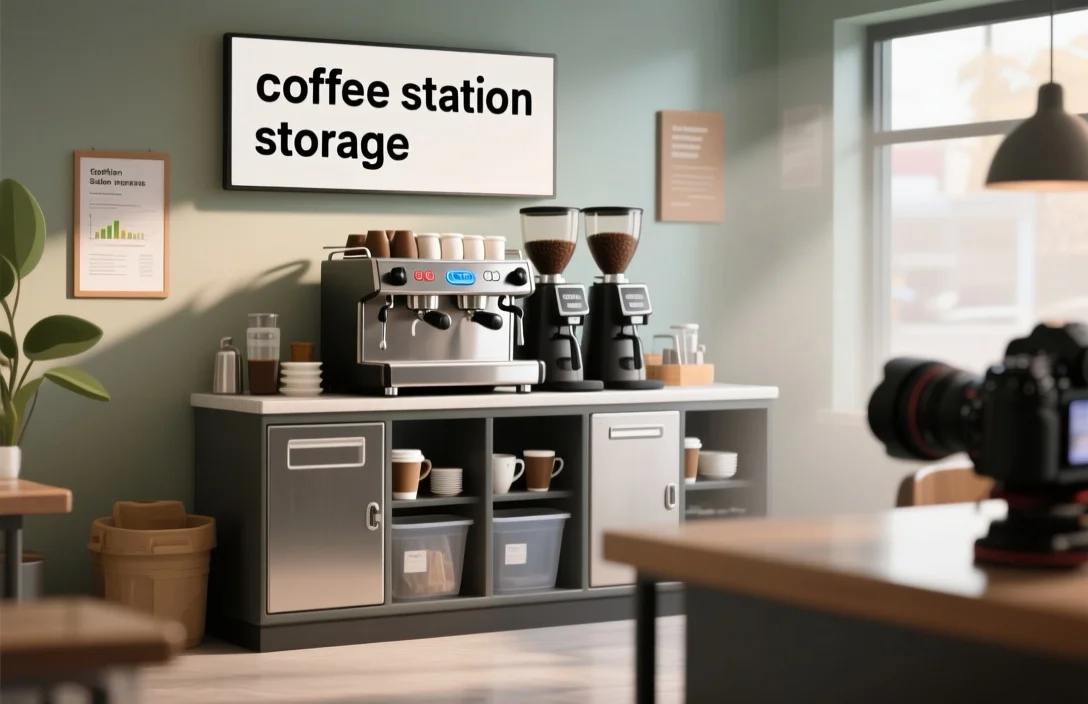
A good coffee station storage setup puts the brewer, beans or pods, and serving items close together so making coffee takes as few steps as possible. That is the basic aim. Keep the daily-use items visible and reachable, and move backups to a cabinet, pantry, or cart shelf.
What coffee station storage should do
Coffee station storage is really about cutting down on small annoyances. It should keep your counter from turning into a pile of mugs, filters, and half-open bags, while still letting you reach what you use every morning without thinking about it.
I would start with the workflow, not the organizer. Where does the water come from, where do the beans or pods live, and where do the mugs sit? If those three points are too far apart, the station will always feel awkward. A simple brew, serve, store layout usually works best, with the brewer at the center, mugs and sugar nearby, and backup supplies a little farther out.
The pieces most coffee stations need
A practical coffee station does not need a lot of parts. It needs the right ones.
At minimum, I would plan for:
- A coffee maker
- A place for beans, grounds, or pods
- Mugs or cups
- Spoons, sugar, and creamer storage
After that, extras depend on how you brew. Filters, a grinder, water treatment tools, and backup coffee can all be useful, but they should support the routine, not crowd it.
Storage choice matters too. Airtight containers help slow flavor loss in beans and grounds. Open shelves make mugs easy to grab, but they leave everything exposed to dust. Drawer inserts keep small tools sorted, though they add an extra reach. My practical rule is simple, put the things you use every day where your hand naturally goes, and tuck the rest away.
Layout choices and where they make sense
Countertop setups are the fastest for daily use. The brewer stays plugged in, spills are easy to wipe, and everything is within reach. The downside is obvious, you give up prep space. A tray or mat helps define the coffee area and keeps it from spreading across the whole counter.
A cart gives you mobility and a little more storage without permanent installation. That can be useful in a kitchen that doubles as an entertaining space or in a room where coffee gets served from more than one spot. The trade-off is size. Smaller carts may not handle bulky kettles or larger grinders well, so check the footprint before you buy.
Cabinet and pantry storage hide the clutter and protect beans from light. Pull-out trays and shallow drawers make that setup easier to live with, though they add one more step to the routine. I usually think of this as a split system, keep the daily items on the counter and store backups, extra filters, and unopened bags inside.
Wall shelves and pegboards are worth considering when counter space is tight. They use vertical space well and can clear a surprising amount of room below. Hooks under a shelf can hold mugs, which leaves the shelf itself for canisters or a grinder. This is one of the better options for small kitchens, as long as the mounting is secure.
Coffee station storage options, compared
The best organizer depends on what matters most to you, visibility, capacity, or portability.
| Name | Price / Key Spec | Best For |
|---|---|---|
| Countertop canister set | Moderate cost, airtight lid, starch-free seal | Daily bean or ground storage where visibility and quick access matter |
| Pod carousel or dispenser | Low-to-moderate cost, holds multiple pods upright | Pod users who want quick selection and tidy display |
| Mug hooks under shelf | Low cost, installs under shelf or cabinet | Saving cabinet shelf space while keeping mugs accessible |
| Pull-out drawer organizer | Moderate cost, segmented trays for filters, scoops, pods | Kitchens with under-counter space for contained storage |
| Rolling coffee cart | Varies by model, shelves and sometimes drawers | Mobile coffee stations for hosts or multi-room use |
| Wall-mounted shelf + hooks | Low-to-moderate cost, needs secure mounting | Small kitchens that need vertical storage and display |
| Lazy Susan or rotating tray | Low cost, spins for access | Corner cabinets or deep pantries where reach is hard |
| Airtight vacuum canister | Moderate-to-higher cost, vacuum lid | Long-term bean storage for flavor retention |
I would not pick based on style alone. Pick the option that fits your busiest habit. If you brew every morning, fast access matters more than a pretty display. If you stock up in bulk, deeper storage may make more sense.
How to set up a coffee station
Start with the routine you actually follow. Lay out the items you use most mornings and test the sequence before you buy any organizers. That step saves money and avoids the common mistake of buying storage that looks right but does not fit the way you move.
- Clear a dedicated surface or cart and measure the space.
- Put the coffee maker where it can reach an outlet and water easily.
- Place a container for used filters or pods close to the brewer.
- Group mugs and glasses together on a shelf or hooks.
- Store beans or ground coffee in an airtight container next to the grinder or brewer.
- Keep spoons, sugar, and creamers in a tray or drawer divider within arm’s reach.
- Add a cabinet or pantry spot for extra filters, beans, and single-use items.
- Label shelves or canisters if you keep more than one coffee type on hand.
I would then live with the layout for a week. Usually, one small adjustment makes the whole setup easier. Moving sugar a few inches, shifting mugs one shelf lower, or turning a canister so the lid opens cleanly can solve more than people expect.
Making a small kitchen work harder
Small kitchens need a little discipline. Vertical storage matters more, and every piece should earn its place.
A narrow shelf above the counter can hold canisters, while hooks underneath free up mug space. Slim equipment helps too. So does stacking items in a way that uses height instead of spread. I keep coming back to one point here, small spaces work best when each item has one clear job.
Drawer inserts are useful for pods, scoops, filters, and other small parts that tend to scatter. If a cabinet is deep enough to make reaching annoying, use a pull-out tray or a Lazy Susan. A cart with a removable or fold-down tray can also help when you need the setup to shrink back out of the way.
A few small-space habits help:
- Measure both height and width before buying organizers.
- Keep the brewer and mugs easiest to reach.
- Use clear or labeled containers so you do not waste time searching.
- Repurpose shallow baskets or magazine files for filters or pods.
- Use a rail or hooks for spoons and scoop storage.
Narrow, tall containers often work better against a wall than wide, shallow ones. And if the grinder sits too far from the brewer, you will feel that extra distance every morning.
How to store coffee without ruining it
Freshness is mostly about air, light, heat, and moisture. Whole beans and ground coffee should go in an opaque, airtight container in a cool, dark place. Direct sun, a spot above the stove, or an area beside the dishwasher will shorten shelf life.
Pods and capsules are easier to manage because they are sealed, but they still should stay dry and away from strong odors. Coffee picks up smells more easily than many people expect. I would keep opened boxes away from spices, cleaners, and anything with a strong scent.
Filters should stay dry. That sounds obvious, but coffee stations often end up close to sinks or dish towels, and that is where trouble starts. Sugar should also be sealed, since open or flimsy packaging can attract pests.
Common setup mistakes
The biggest mistake is hiding everything in the name of neatness. If the grinder lives three steps away from the brewer, you have made the routine harder for no good reason. The most-used items should be the easiest to reach.
Overstuffed canisters and shelves create their own mess. Leave a little room so scoops fit cleanly and lids close without a fight. Decorative jars are fine if they seal properly. If they do not, they are more display than storage.
Another mistake is mixing wet and dry items. A damp towel or rinsed mug sitting near coffee supplies can create odors and, in some cases, mold. I would also avoid storing coffee directly above a heat source, since heat works against freshness and can damage containers over time.
Setup ideas for different households
Minimalist apartment:
Use a compact drip brewer or single-serve machine on a 12- to 18-inch counter corner. Add one floating shelf above it for canisters and a pair of hooks for mugs. A small drawer tray can hold filters and a spoon.
Family breakfast hub:
Set a larger brewer on a work surface with a tray for sugar, syrups, and creamers. Use a cart or lower cabinet for bulk coffee and extra mugs. Label canisters if different people use different blends or decaf.
Office or shared workspace:
A rolling cart with lockable wheels is often the easiest answer. Put the brewer and mugs on top, pods or beans on the middle shelf, and extra supplies below. A small trash or compost bin beside it keeps used filters or pods from piling up.
Entertaining-ready station:
Use a two-tier counter if you have the space. Keep the brewer and grinder on the back level, and put cups, saucers, and spoons in front. A nearby cabinet can hold extra filters, coffee bags, and napkins.
Tools and materials that are worth considering
Some storage pieces do more than they first appear to.
A set of airtight canisters sized to match how often you buy coffee is one of the better purchases. Nesting or stacking containers save space and make inventory easier to manage. A small digital scale is optional, but it helps if you want more consistent brewing.
Drawer organizers made for pods or scoops cut down search time. A heat-resistant mat under the brewer protects the counter and marks off the coffee zone without much effort. Hooks and rails are inexpensive, and they often solve the vertical space problem better than a bigger cabinet ever will.
If the setup is not working
If spills happen often, place a shallow tray under the brewer to catch drips. If your grinder sends grounds everywhere, a different grinder design or a pod-based machine may reduce the mess.
If coffee seems to lose flavor too quickly, move it into an opaque container and keep it out of direct light. Smaller purchases made more often can also help.
If you cannot find the right mug in the morning, the storage is probably mixed up. Put everyday mugs together and move special cups elsewhere. If other people keep taking supplies, create one clearly labeled shared area so things do not disappear into different corners of the kitchen.
FAQ
How long do coffee beans stay fresh in a countertop canister?
Freshness depends on air, light, and heat. Beans should stay in an airtight, opaque container away from heat, and opened beans are usually best used within a few weeks. Roast date and roast type matter too.
Are airtight canisters worth it?
If flavor matters to you, yes. Airtight canisters reduce oxygen exposure and slow aroma loss. I would look for a seal that is easy to use every day and an opaque body that blocks light.
What is the best way to store single-serve pods?
Keep unopened pods in their original packaging or in a sealed container in a dry spot away from heat. If you open a box, a small airtight container makes the pods easier to grab and keeps them organized.
Can I store coffee in the refrigerator or freezer?
Usually, no. Cold storage can introduce moisture and odor transfer from other foods. A cool, dark, dry cabinet is the safer everyday choice. If you freeze coffee for long-term storage, use small airtight portions and let them thaw fully before opening so condensation does not form.
How should I organize a coffee drawer for pods?
Use segmented trays to separate flavors or strengths. Keep pods upright if possible, and label the sections if more than one person uses the drawer.
What size cart should I buy for a mobile coffee station?
Measure the largest item you plan to place on it, usually the coffee maker or kettle, and leave room for mugs and canisters. Make sure the cart can handle the width and weight of your heaviest appliance and still fit the space where you plan to use or store it.
A practical way to finish the setup
A good coffee station storage setup cuts friction without making the kitchen feel busier. I would start by measuring the space, laying out the items you use every morning, and living with that arrangement for a week. After that, choose one storage solution, a shelf, cart, or drawer organizer, and refine it based on what actually happens in the morning. That is usually enough.

- Espresso Tastes Watery? 10 Common Causes and How to Fix It - October 23, 2026
- 10 Common Coffee Equipment Cleaning Mistakes and How to Avoid Them - October 23, 2026
- 17 Common Coffee Grinder Problems and How to Fix Them - October 23, 2026