
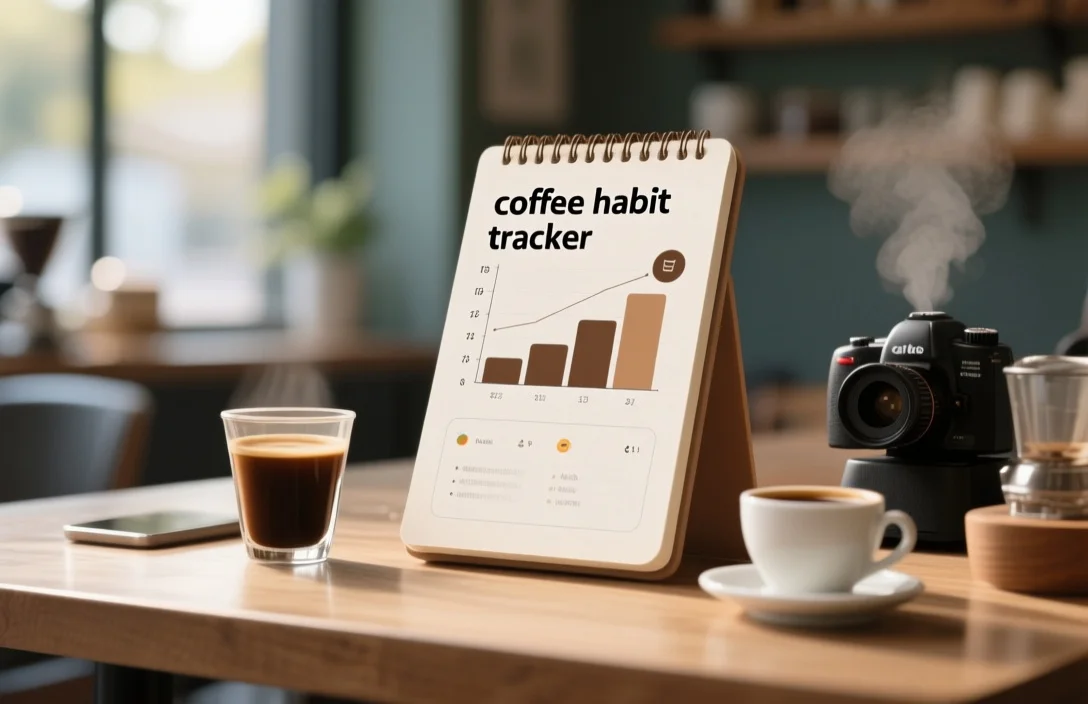
A coffee habit tracker is a simple tool for recording what you drink, when you drink it, and how it affects you. That basic log can help you spot patterns, cut back if you need to, or decide that your current routine is fine. I would start there before adding anything fancy.
The point is not to create a perfect record. It is to get enough information to make a clear decision. Track cups, timing, brew method, and effects, then review the week and see whether the pattern points toward less coffee, earlier coffee, or no change at all.
After comparing the main approaches side by side, this guide covers what to track, how to set rules that hold up in real life, how to read the data, and where tracking usually breaks down. There is also a simple comparison table and a few short scenarios so you can choose a system that fits your day.
Why track coffee at all
People usually start tracking coffee for one of a few plain reasons: sleep disruption, jitters, anxiety, health concerns, or cost. Once the habit is on paper, it is easier to see where it is drifting. Late-afternoon cups, weekend overuse, and accidental refills stop being vague impressions.
I keep coming back to one practical benefit: feedback. A tracker gives you a quick answer to questions like whether you are drinking more than you thought, whether coffee is standing in for actual fatigue, or whether your last cup is pushing sleep later.
What a good coffee habit tracker records
A useful tracker needs more than a cup count. At minimum, I would record four things: time, beverage type, amount, and effect. Time shows when the habit clusters. Beverage type separates coffee from tea or energy drinks. Amount gives you the scale of intake. Effect tells you whether you felt focused, jittery, sleepy, or unchanged.
Brew method and cup size matter too. Espresso, drip coffee, cold brew, and French press are not interchangeable if you care about caffeine strength. If that level of detail is useful to you, record the preparation method as well.
A few optional fields are worth adding if you want better pattern detection later:
- Mood before drinking
- What triggered the craving
- Sugar or milk added
- Sleep quality that night
Those extra notes make the weekly review far more useful. They help explain why a cup happened, not just that it happened.
How to build a coffee habit tracker
I would start with the smallest version that gives you usable answers. A simple template works better than an elaborate one you stop using after three days.
A basic tracker can use five columns:
- Date
- Time
- Drink
- Size
- Effect
Add a Notes column if you want room for context, such as “meeting,” “commute,” or “walking home.”
The next choice is how often to log. If you make coffee at home, you can log each cup as you drink it, or combine several quick cups into one morning entry. If you buy coffee on the go, log the purchase time and size. The important part is consistency, not perfect precision.
A straightforward setup plan looks like this:
- Pick a format: paper, spreadsheet, or app.
- Create the five core columns.
- Write one clear goal, such as “Limit to two cups before 3 p.m.”
- Track for one full week without changing anything.
- Review the week and set one rule for the next week.
That is enough to get useful data without turning the habit into homework.
Choosing a tracking format
Different formats solve different problems. Price and features change often, so I would treat this as a practical comparison rather than a fixed buying guide.
| Name | Price / Key Spec | Best For |
|---|---|---|
| Paper journal | Low upfront cost; tactile entry | People who like analog routines and visible notes |
| Habit-tracking app | Free basic tier; paid upgrades available | Quick daily logging, reminders, and streaks |
| Spreadsheet or custom database | Free if you already use the tool; flexible fields | People who want custom reports and filters |
| Note app with templates | Free or subscription-based | Minimalists who want simple timestamped notes |
Paper journals reduce friction in one way and add it in another. You have to write things down, but you also avoid app alerts and setup. Habit apps are faster for quick taps and reminders, though many people end up ignoring features they do not need. Spreadsheets take more effort to build, but they are hard to beat if you want charts or averages. Note apps sit in the middle if you want something simple without much structure.
Setting goals and rules you can follow
A useful goal has to be specific enough to act on. “Drink less coffee” is too loose. I would rewrite it as something like “No caffeinated drinks after 2 p.m.” or “No more than three 8-ounce cups on workdays.”
Rules work better when they include both a limit and a time window. That gives the tracker something concrete to measure.
It also helps to add a short if-then plan. For example: “If I want coffee after lunch, I will drink water and wait 15 minutes.” That kind of rule is simple, but it keeps the decision from turning into a daily debate.
I would check progress once a week, not every hour. Compare the week to your baseline and look at two things: total servings per day and how many servings happened after your cutoff time. Then decide whether the rule should tighten, stay the same, or loosen slightly. Small adjustments are easier to keep than abrupt changes.
How to read the data
Weekly review does not need to be complicated. Start by looking for timing clusters. Which half-hour windows show up most often? Then compare weekdays with weekends. That usually tells you whether the habit is tied to work, fatigue, or routine drift.
After that, connect the log to the outcome notes. Are the later cups linked to worse sleep? Are the morning cups linked to better focus or fewer jitters? You do not need perfect science here. You need repeatable patterns.
If you use a spreadsheet, three simple metrics are enough:
- Daily total
- Count after cutoff time
- Number of entries marked “jitter”
A chart can help, but it is not required. Even a weekly summary line on paper can show whether the habit is moving in the right direction.
How to reduce coffee without making it harder than it needs to be
Most people do better with a gradual change than with a sudden stop. I would usually choose one of two approaches: taper the amount or move the timing earlier.
Tapering means reducing one serving every few days and staying at the new level long enough to adjust. Re-timing means moving the last cup earlier until it no longer affects sleep.
A few practical ways to taper:
- Switch one coffee to a lower-caffeine option
- Use a smaller cup
- Dilute the drink with more hot water
If the ritual matters as much as the caffeine, replace it with something else that still marks the same moment in the day. Herbal tea, flavored sparkling water, or even a short walk can keep the routine intact without the stimulant.
Common mistakes that make tracking useless
The biggest mistake is trying to capture too much detail too soon. That usually turns a manageable habit into a chore. A minimal log with time, size, and effect is enough for most people.
Another common problem is changing behavior before you have a baseline. If you alter the rule on day two, you lose the clean before-and-after comparison that makes the tracker worthwhile. I would leave the first week alone, even if the pattern is already obvious.
Privacy, accuracy, and what the tracker cannot tell you
Privacy matters most if you use a third-party app. A local spreadsheet, a private note, or a paper journal keeps control in your hands. App policies vary, so it is worth checking how sensitive notes are stored before you add anything personal.
Accuracy has limits too. People forget entries. They round times. They log later than they should. That is normal. The practical fix is to log at the moment you drink whenever possible, and mark retrospective entries as estimated if you need to add them later.
When tracking starts to fall apart
If you stop logging after a couple of weeks, simplify. I would strip the system back to one line per cup with just time and size for a week. If the app itself is the problem, move to paper. A sticky note per cup, dropped into a jar, is crude but often easier to maintain than a polished system you ignore.
If the log shows fewer cups but stronger symptoms, look at concentration, not just count. Espresso and strong cold brew can hit harder than a casual cup of drip coffee. Cup count alone can hide that difference.
If motivation drops, tie the habit to something immediate. Better sleep, calmer mornings, and fewer mid-afternoon crashes are easier to care about than abstract health advice.
Practical
Sleep-first tracking
Someone who wants better sleep sets a rule to stop caffeine eight hours before bedtime. The log records each cup time and a simple sleep-quality note. After a week, the pattern shows that the problem cups are mostly after lunch. The next step is moving the last cup to before noon.
Cost and routine tracking
A reader who wants to spend less money logs where each coffee comes from and how much it costs. That often makes the drift obvious. Store-bought drinks add up quickly, and home brewing usually cuts both cost and casual extra cups because it takes a little more effort.
Performance-focused tracking
A person who wants steadier focus tracks before-and-after concentration along with brew method. Over time, the log may show that one mid-morning espresso works better than several cups spread through the afternoon. That is the kind of pattern a cup count alone would miss.
Long-term tracking without burnout
Once the new routine settles, daily logging is usually more than you need. Many people can move to twice a week, then to a monthly check-in unless the old pattern starts returning.
I would also keep a short relapse plan in the tracker. If intake creeps up or sleep gets worse, what is the first move? Maybe you return to the last rule that worked, restart daily logging for a week, or talk with a clinician if the problem feels larger than self-tracking. Having that plan written down makes correction faster.
FAQ
How many cups should I aim for?
There is no single number that fits everyone. Sensitivity to caffeine varies too much for that. A better target is one tied to outcomes. If sleep improves, anxiety eases, or afternoon crashes fade, your target is probably doing its job.
Should I track caffeine milligrams or just cups?
Milligrams are more precise because cup size and brew strength vary. If you do not have a reliable way to estimate milligrams, track cup size and brew method instead. That still gives you useful pattern data without requiring technical measurements.
Can a coffee habit tracker help with caffeine withdrawal?
Yes. It can make withdrawal easier to manage by showing gradual progress and helping you taper slowly. If you have severe headaches or major mood changes, I would not rely only on self-tracking. That is a point for a clinician.
How long does it take to change a coffee habit?
It depends on the change and on the person. Small, consistent adjustments with weekly reviews often settle within a few weeks. If progress stalls, change the tactic rather than trying to force it harder.
Is it worth logging decaf and tea?
If your goal is total caffeine management, yes, log all caffeinated drinks. Decaf matters if you care about ritual replacement or trace caffeine. Herbal tea and water can also be useful to log when you are trying to replace the habit rather than just reduce it.
A simple way to begin
Pick one format, paper, spreadsheet, or a basic habit app, and use it for one week without changing your routine. Keep the five core fields. At the end of the week, review the timing, total servings, and any effect notes, then set one specific rule to test next week.
That is usually enough to turn coffee from a vague habit into something you can actually manage.

- Espresso Tastes Watery? 10 Common Causes and How to Fix It - October 23, 2026
- 10 Common Coffee Equipment Cleaning Mistakes and How to Avoid Them - October 23, 2026
- 17 Common Coffee Grinder Problems and How to Fix Them - October 23, 2026