
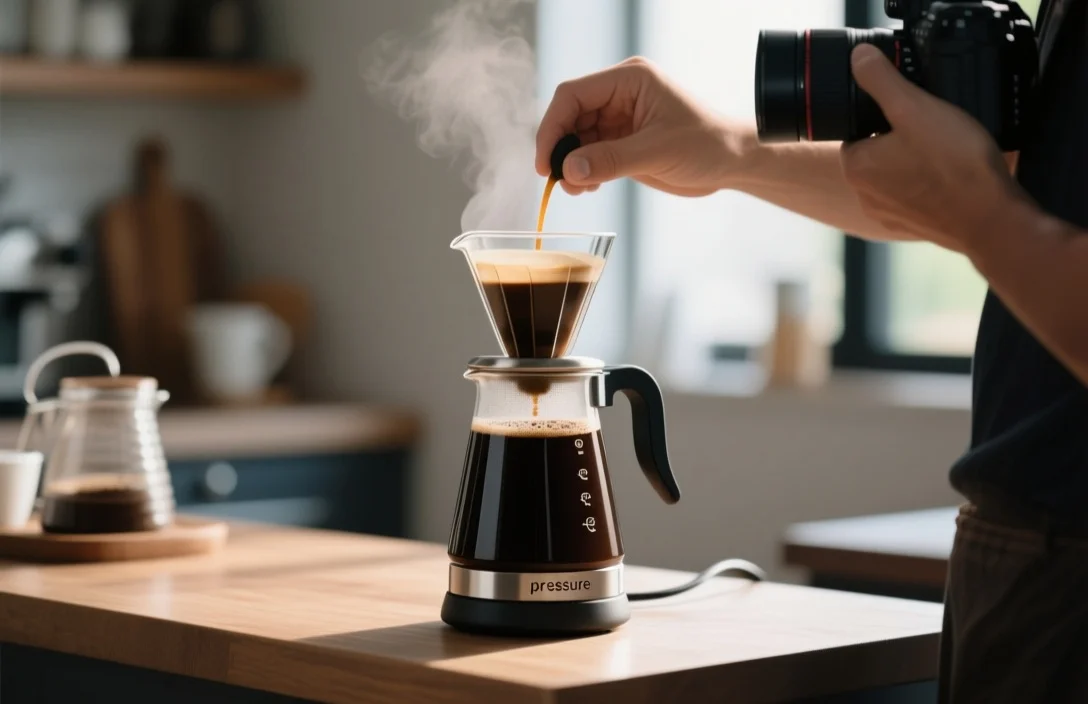
A coffee pressure pot is a stovetop or tabletop brewer that uses trapped steam pressure to push hot water through a basket of coffee grounds, producing a concentrated, espresso-like brew. This device most often appears as the Moka pot (stovetop espresso maker) and sits between drip coffee and pump-driven espresso in strength, body, and extraction style.
How a coffee pressure pot works
A coffee pressure pot operates by heating water in a lower chamber until steam and expanding water create enough pressure to force liquid upward through a filter basket containing coffee grounds and then into an upper collection chamber. Construction is straightforward: a sealed lower boiler, a perforated filter basket for grounds, and a top chamber where brewed coffee collects. Heat creates pressure; pressure pushes water through the coffee – that is the mechanism. Manual pressure pots use only steam and the pressure differential caused by heating, not an electric pump.
Extraction with this approach emphasizes contact time and the rate at which water is forced through the ground bed. Grind size, fill level in the basket, and stove heat control change flow rate and extraction. Finer grinds slow flow and raise perceived strength and bitterness; coarser grinds speed flow and shift the cup toward under-extracted, sour flavors. Pressure-driven extraction in these pots produces a concentrated cup with more body than drip coffee but typically without the sustained, thick crema characteristic of pump espresso.
Design decisions matter for performance. Materials that heat unevenly can produce channeling or pockets of over-extraction. A tight seal is necessary to maintain pressure; worn gaskets or warped parts reduce available pressure and can make the pot spit or drip. Safety features can include a pressure-relief valve or a dedicated safety notch; any device that traps pressurized steam requires a way to vent excess pressure if the outlet becomes blocked.
Common types and how they differ
Several devices fall under the general idea of a pressure pot, but they differ in how pressure is generated and how the brew contacts the grounds.
- Moka pots (stovetop espresso makers): Use steam pressure created by boiling water to force liquid upward through a basket of grounds into the top chamber. Popular for stovetop use; many designs originate from Italy.
- Electric stovetop-style units: Look like Moka pots but incorporate electric heating bases or integrated thermostats for convenience.
- Percolators: Cycle boiling water up a central tube so it percolates through grounds repeatedly; the process relies on boiling and circulation rather than sustained pressure and typically produces a heavier, sometimes harsher cup.
- Manual press devices (e.g., AeroPress-style hybrids): Use hand pressure to force water through grounds; pressure levels are lower and more controlled by the user than steam-driven pots.
- Pump espresso machines: Not a pressure pot by stovetop design, but included here for comparison because they use a mechanical pump to reach much higher and controlled pressures and produce classic espresso.
Table: Key comparisons
| Name | Price/Key Spec | Best For |
|---|---|---|
| Moka pot (stovetop) | Budget to midrange; aluminum or stainless construction; no pump | Strong, concentrated stovetop coffee; durable, travel-friendly |
| Electric stovetop-style unit | Midrange; plug-in heating base or thermostat | Convenience for stovetop-like coffee without range heat control |
| Percolator | Budget to midrange; continuous circulation method | Large-batch robust coffee for camping or group settings |
| Manual press hybrids | Budget to midrange; hand-plunger extraction | Clean/punchy concentrated coffee with low equipment cost |
| Pump espresso machine | Midrange to premium; mechanical pump | Authentic espresso, milk drinks, and microfoam control |
Variability within each category is significant. Materials, gasket quality, and valve design change user experience from pot to pot. Confirm manufacturer claims – particularly induction compatibility and safety-valve design – before buying because online descriptions sometimes omit these details.
What coffee and grind size to use
Freshness and roast level influence how a pressure pot performs more than any single technical setting. Choose freshly roasted coffee roasted for espresso or a medium-dark profile if you want a rich, chocolatey cup with lower perceived acidity. Lighter roasts amplify acidity and delicate aromatics; they can taste thin or sharp in concentrated brews if you’re not attentive to grind and heat.
Grind size guidance depends on the device type. Use a medium-fine to fine grind for Moka-style pots – finer than drip, coarser than true espresso. Punctuated clumping indicates grinds that are too fine and risk clogging the filter; visibly loose, sandy grounds typically indicate too coarse a grind and will under-extract. Dose by the basket fill line when possible; tamping is generally unnecessary and can cause overpressure or channeling in these designs.
Water quality and temperature are often overlooked. Use filtered water to avoid scaling over time and to keep off-flavors from municipal chlorine taste out of the cup. Preheating water reduces the time the pot spends heating from cold, which can limit metallic taste from aluminum pots and prevent overcooking the coffee while pressure builds. Brewing with cold tap water is possible, but expect slightly different flavor dynamics.
How to brew with a Moka-style pressure pot
Follow these steps for a reliable Moka-style cup. Shelf or package instructions vary; adjust after a few brews.
- Fill the lower chamber with hot, filtered water up to but not over the safety-valve level.
- Add medium-fine coffee to the filter basket; level it without tamping.
- Assemble the pot and make sure the gasket and filter are seated correctly.
- Place the pot on low-to-medium heat; keep the lid open to watch the brew.
- Remove from heat as soon as the top chamber begins to fill and you hear a sputtering noise.
- Stir the top chamber gently for a consistent cup, then pour immediately to avoid over-extraction from residual heat.
- Rinse and disassemble once cooled; wipe dry or allow air drying before reassembly.
Small adjustments will tune the cup. Lower heat and a slightly coarser grind reduce bitterness. Faster extraction through higher heat or finer grind increases strength but risks a burnt taste if you leave the pot on the burner after extraction. Follow safety precautions: never force-open a hot, pressurized pot; allow it to cool and depressurize.
Taste profile and how it compares to espresso and drip
A brew from a coffee pressure pot sits between drip coffee and pump espresso in sensory characteristics. Expect more body and concentration than drip, often with a syrupy texture and intense flavor notes. Crema, if present, is usually light and ephemeral rather than the thick, stable crema from high-pressure pump espresso.
Acidity tends to be lower than in a pour-over because the shorter contact with hot water and the higher concentration mute sharper acids. Bitterness can become prominent when grind is too fine or heat is too high. Milk-based drinks built from pressure-pot coffee taste richer than those based on drip coffee but different from pump espresso-based cappuccinos because of differences in crema and microfoam interaction.
Use the pressure pot as a base for drinks such as caffè lungo, or diluted “espresso” for an Americano-style drink. Milk drinks work well when using steamed milk and a concentrated base; barista-level microfoam is harder to achieve without a steam wand, but textured milk added to a concentrated pressure-pot brew still creates enjoyable cappuccinos or lattes.
Maintenance, safety, and troubleshooting
Routine maintenance keeps a pressure pot performing and prevents safety issues. Rinse the filter basket and upper chamber after each use to remove oils and fines. Periodic deeper cleaning – soaking parts in a non-foaming detergent or a vinegar solution followed by thorough rinsing – removes scale. Aluminum pots require gentler cleaners to avoid oxidizing the metal; stainless steel tolerates more aggressive scrubs.
Gaskets and filter plates wear out. Inspect the rubber/gasket for cracks, brittleness, or compression that prevents a tight seal. Replace worn gaskets and visibly damaged filter plates; both are inexpensive and restore proper pressure and flow. A pressure-relief valve is a critical safety feature. Confirm it moves freely; mineral deposits can jam relief valves and create unsafe conditions.
Common problems and fixes:
- Weak or watery coffee: Check grind size (should be finer), dose, and gasket seal. Replace gasket if leaks occur.
- Bitter or burnt tasting coffee: Reduce heat, coarsen the grind slightly, and remove the pot from heat at the first sputter. Avoid letting the pot sit on a hot burner after the brew finishes.
- Coffee spurting or noisy sputtering: Clear the outlet spout and filter plate of blocked fines; backflush with water only when cooled and disassembled.
- Pressure not building: Inspect the safety valve and gasket; ensure the lower chamber has enough water and that the pot is assembled tightly.
Avoid putting aluminum Moka pots in dishwashers unless the manufacturer explicitly states dishwasher safety; dishwashers can alter surface finish and accelerate corrosion.
what matters and what to skip?
Start by deciding which criteria matter most: portability, induction compatibility, durability, or authenticity of cup. Materials split most buyers: aluminum models are traditional, lightweight, and heat up quickly. Stainless steel models last longer and often work on induction ranges. Handles and knobs should be heat-resistant and firmly attached.
Size matters but not in purely numeric terms. Typical household sizes range from single-cup to 12-cup variants; choose a size that matches how you drink coffee daily so you avoid stale leftovers. If you plan to use an induction cooktop, verify induction compatibility – not all pots will work, even if they look metallic.
Look for these features:
- Replaceable gasket and filter plate availability
- A clearly visible safety valve and easy cleaning access
- A tight-fit lid and secure handle
- Manufacturer reputation for spare parts
Skip marketing claims about “true espresso” when applied to Moka or stovetop pots. Those devices make a concentrated brew but do not replicate pump-driven espresso machine pressure curves and temperature control. Focus instead on build quality, spare parts availability, and whether the pot fits your daily routine.
Shopping categories (practical guidance):
- Budget (durability-oriented): Traditional aluminum Moka pots; good for travel or simple stovetop use.
- Midrange (convenience + build): Stainless steel versions, often with induction compatibility and better handles.
- Specialty / Premium: Electric stovetop-style units with thermostats, or branded kits that include spare gaskets and matching cups.
Because online listings and vendor details sometimes leave out key specs, confirm induction compatibility, warranty terms, and spare parts availability before purchase.
Recipes and variations to try
Pressure-pot coffee is versatile; use it as a base for several drinks. Try these straightforward variations.
- Straight concentrated cup: Brew normally, pour small servings, sip to appreciate roast character.
- Americano-style: Dilute the concentrated brew with hot water for a longer black coffee while retaining richness.
- Caffè cortado: Add a small amount of steamed milk to the concentrated brew for a balanced, silky drink.
- Moka-based iced coffee: Brew into a heatproof pitcher, cool quickly, then pour over ice with milk or sweetener.
- Chocolate- or spice-enhanced variations: Stir in a pinch of ground cinnamon or a small square of dark chocolate when the pot finishes; let melt briefly and stir.
Small technique changes shift the result. Preheating the lower chamber with hot water shortens brew time and reduces potential metallic notes in aluminum pots. Stirring the top chamber after extraction equalizes concentration. For milk drinks, heat and texture the milk separately and combine immediately after brewing for consistent temperature.
Common mistakes and how to fix them
Many users make the same avoidable errors with pressure pots. Troubleshoot with targeted fixes listed below.
- Mistake: Overfilling the lower chamber with water. Fix: Fill only to the safety-valve level; overfilling can force water into the spout prematurely.
- Mistake: Overpacking or tamping the grounds. Fix: Fill and level the basket; avoid tamping because it can increase pressure unpredictably and cause clogging.
- Mistake: Leaving the pot on high heat during and after brewing. Fix: Use low-to-medium heat and remove at the first sputter to stop extraction at the right moment.
- Mistake: Neglecting gasket and filter maintenance. Fix: Replace the gasket regularly and clean the filter plate to maintain proper pressure and flow.
- Mistake: Assuming all pots are induction-compatible. Fix: Verify manufacturer specifications for induction use or choose stainless steel models designed for induction.
A simple preventive practice prevents many of these mistakes: after each use, disassemble, rinse, and dry. Doing this keeps the safety valve moving, prevents stuck filters, and makes it obvious when a gasket needs replacement.
FAQ
Can a coffee pressure pot make real espresso?
A coffee pressure pot makes a concentrated coffee that approximates espresso in strength, but it does not reproduce the pressure and temperature control of a pump-driven espresso machine. Expect a different crema and mouthfeel.
Is a Moka pot safe to use on an electric or gas stove?
Yes, Moka pots are safe on gas and electric ranges when used according to instructions; ensure the flame or heating element does not extend past the pot’s base. Confirm induction compatibility separately.
How often should I replace the gasket?
Replace the gasket when you notice leaks, loose fit, or visible cracking. Many users find a replacement every 6-18 months keeps performance consistent depending on use frequency and cleaning habits.
Should I rinse or deep-clean the pot?
Rinse the pot after every use. Perform a deeper cleaning for scale and oil buildup periodically using a vinegar solution or a manufacturer-recommended cleaner; avoid strong detergents on aluminum models unless the manufacturer permits them.
What grind setting is best for a pressure pot?
Use a grind finer than drip but coarser than true espresso; medium-fine works well for most Moka-style pots. Adjust by taste: too fine leads to bitterness and clogging; too coarse yields weak coffee.
Can I use preheated water for faster extraction?
Yes. Preheating the water reduces the time the pot spends on heat before pressure builds and can limit metallic or overcooked flavors, especially in aluminum pots. Handle with care to avoid burns.
A short practical verdict: if you want a simple, durable way to make strong, espresso-like coffee without a pump machine, a Moka-style coffee pressure pot is a reliable choice. Next step: pick a stainless or aluminum model that matches your cooktop (confirm induction compatibility if needed), buy a medium-dark roast coffee, and run a few test brews adjusting grind and heat until the cup matches your taste.

- How to Fix a Portafilter: Size, Locking Mechanism, and Troubleshooting Guide - October 22, 2026
- 35 Coffee Machine Parts and Functions: Complete Guide With Names and Uses - October 22, 2026
- 25 Espresso Machine Parts Names and Their Functions Explained - October 22, 2026