
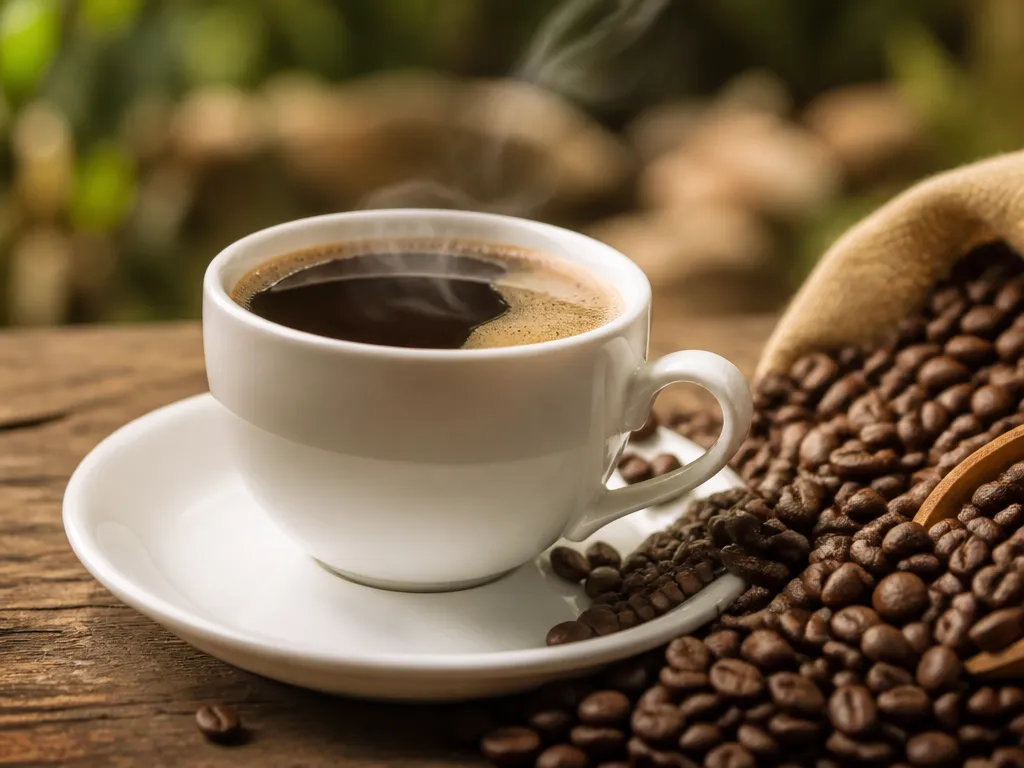
Coffee from coffee beans is a two-stage process: coffee cherries grow on trees, then their seeds are dried, roasted, ground, and brewed. Coffee “beans” are seeds inside the cherries. A cherry matures in nearly 1 year after first flowering, and a coffee tree starts producing cherries at about 3 years old.
The full path from tree to cup is harvesting, processing, drying, roasting, grinding, and brewing. Each step affects the final taste, but roasting creates many of the aromas and flavors associated with coffee.
Key Takeaways
- Coffee beans are seeds. They grow inside cherries on coffee trees.
- Maturation takes time. A coffee cherry matures in nearly 1 year after first flowering.
- Roasting drives flavor. Green coffee develops its color, aroma, and familiar flavor during roasting.
- Arabica is more common. Global production is about 62% Arabica and about 38% Robusta.
- Robusta has more caffeine. Robusta contains 50-60% more caffeine than Arabica.
- Freshness is perishable. Buy smaller bags, store beans airtight, and keep them away from heat and light.
From Coffee Cherry to Brewed Coffee
Coffee starts with ripe cherries on a coffee tree. Growers harvest the fruit, processors remove the pulp and dry the seeds, roasters turn the dried green coffee brown and aromatic, and you grind and brew the roasted beans.
The process looks like this:
- Growers harvest coffee cherries. Ripe cherries are picked from the trees.
- Processors separate and dry the seeds. The fruit is removed, and the seeds are dried into stable green coffee.
- Roasters roast the green coffee. Heat creates the color, aroma, and flavor compounds associated with coffee.
- You grind and brew the roasted beans. Grinding creates particles that hot water can extract.
Every stage leaves a mark. Under-roasted beans can taste sour and thin, stale beans taste flat, and an unsuitable grind size can produce weak or bitter coffee. Poor drying or storage before roasting can also lead to uneven roast development, which may taste muddy or inconsistent across the same bag.
What Coffee Beans Are
Coffee beans are seeds inside coffee cherries, not beans in the botanical sense. The seeds grow on coffee trees that can live around 100 years. A tree typically begins producing cherries at about 3 years and reaches full production around 5 years.
Coffee trees cycle through flowering and fruiting. After first flowering, a coffee cherry matures in nearly 1 year, and the tree is generally most productive for 7-20 years. The fruit changes color as it ripens, so harvest timing matters. Under-ripe and over-ripe cherries can affect the flavor and quality of the seeds after processing.
What Happens Inside the Coffee Cherry?
A coffee cherry contains a seed with several layers that protect it before processing. Although varieties differ, coffee cherries share a similar basic structure. Processing removes the fruit and dries the seed until it becomes green coffee that can be stored and roasted.
After drying, the seeds are roasted until they develop aroma, color, and the flavor compounds people associate with coffee. Grinding breaks the roasted structure into smaller particles, allowing hot water to extract soluble flavors into the cup.
Which Bean Fits Your Taste?
Arabica and Robusta are different coffee species with distinct growing conditions and cup characteristics. Global production is approximately 62% Arabica and 38% Robusta, so Arabica appears more often in specialty shops and single-origin bags.
| Arabica | Robusta |
|---|---|
| Percentage of coffee produced globally (approximate): 62% | Percentage of coffee produced globally (approximate): 38% |
| Growing locations: Central and South America, East Africa, Asia | Growing locations: Central and Western Africa, Southeast Asia, Brazil |
| Growing conditions: Higher altitudes, milder temperatures | Growing conditions: Lower altitudes, warmer temperatures |
| Trees: More disease-prone, require additional care | Trees: Heartier, more resistant to disease and parasites |
| Beans: Flatter, more elongated | Beans: Smaller, rounder |
| Caffeine: Contains caffeine | Caffeine: Contains 50-60% more caffeine than arabica |
Arabica is usually the safer starting point if you prefer smoother, more nuanced coffee. Depending on the roast and origin, it may show fruit, chocolate, or floral notes.
Robusta suits drinkers who want more caffeine and a stronger, more intense profile. It is common in espresso blends because it can add body and crema, though it may also bring more bitterness. Two espresso shots made with the same grind size and brew ratio can taste very different when one blend contains more Robusta.
How to Choose Coffee Beans
Choose beans according to your preferred flavor, brewing method, and how quickly you will use them. If you are unsure, start with a medium roast and adjust from there. Dark roasts often taste bolder, but they can also increase bitterness and mask flavors associated with the coffee’s origin.
Use these buying guidelines:
- Choose a roast level. Light roasts tend to taste brighter, medium roasts more balanced, and dark roasts deeper and more heavily roasted.
- Match beans to your brewing method. Espresso often uses a fine grind and works well with stronger roasts. Pour-over and drip coffee often suit light to medium roasts.
- Look for a recent roasting date. Choose the freshest bag available and use it before its aroma fades.
- Buy whole beans when possible. Pre-ground coffee loses aroma faster because more of its surface is exposed to air.
- Match the bean type to your taste. Arabica-heavy blends suit smoother, classic flavors. Robusta blends offer more caffeine and a stronger punch.
How Starbucks Roasting and Recipes Affect Flavor
Starbucks affects the coffee experience through roasting, distribution, and standardized drink preparation. Its menu emphasizes consistent recipes and nutritional information for each menu item, so ordering the same drink usually produces a predictable result.
A Starbucks drink reflects more than the beans. Dose, grind, extraction, milk, sweeteners, and roast level all shape the flavor. That recipe-driven consistency can make Starbucks a familiar reference point, even when you later prefer different flavors from a local roaster or home-brewed coffee.
When switching from Starbucks to a local roaster, compare more than sweetness or bitterness. Check whether the coffee smells fresh, tastes balanced at your usual brew strength, and matches the roast direction you prefer.
How Long Coffee Beans Stay Fresh
Coffee beans go stale as oxygen, heat, and light degrade their flavor compounds. They do not remain at peak flavor indefinitely, so buy what you can use quickly and store it properly.
A fresh bag is best used within a few weeks of roasting. As the weeks pass, the beans lose aroma and taste flatter. Buying in bulk and leaving the bag in a warm cupboard speeds up that decline.
Follow these storage practices:
- Seal the beans airtight in a container with a good seal.
- Keep them cool and dark, away from ovens, windows, and bright cabinets.
- Skip the refrigerator or freezer for everyday storage unless you can control moisture and reseal the beans immediately. Poor storage can introduce dampness and off-flavors.
FAQ
How long do coffee beans stay fresh after opening?
Coffee beans usually taste best within a few weeks of opening, even when stored airtight. Roasted coffee reacts with oxygen, heat, and light, causing its flavor to fade. A weaker aroma or flatter taste indicates that the beans are getting stale.
What’s the difference between whole bean and pre-ground coffee?
Whole bean coffee stays fresh longer because grinding exposes more surface area to air. Pre-ground coffee loses aroma quickly after opening, even when it still looks fine. Grinding immediately before brewing provides the most consistent flavor.
Is Arabica or Robusta better?
Arabica is usually easier for beginners because it tends to produce smoother, more balanced flavors. It accounts for about 62% of global production (approximately). Robusta contains more caffeine and often tastes more intense, with a stronger bitter edge. Start with Arabica-heavy coffee for classic, sweeter flavors, or try a Robusta blend if you want maximum punch.
How do I choose a coffee roast level for drip coffee?
Start with a medium roast if you are unsure. It balances acidity and roasted flavor in most drip setups. If the coffee tastes too sharp, try a darker roast. If it tastes too heavy or bitter, choose a lighter roast next time. Keep the brew strength reasonable as well, since very strong coffee can amplify bitterness regardless of roast level.
What’s the most common mistake people make with coffee beans?
The most common mistake is leaving beans exposed to air and heat, which makes coffee lose freshness quickly.

- Espresso Tastes Watery? 10 Common Causes and How to Fix It - October 23, 2026
- 10 Common Coffee Equipment Cleaning Mistakes and How to Avoid Them - October 23, 2026
- 17 Common Coffee Grinder Problems and How to Fix Them - October 23, 2026