
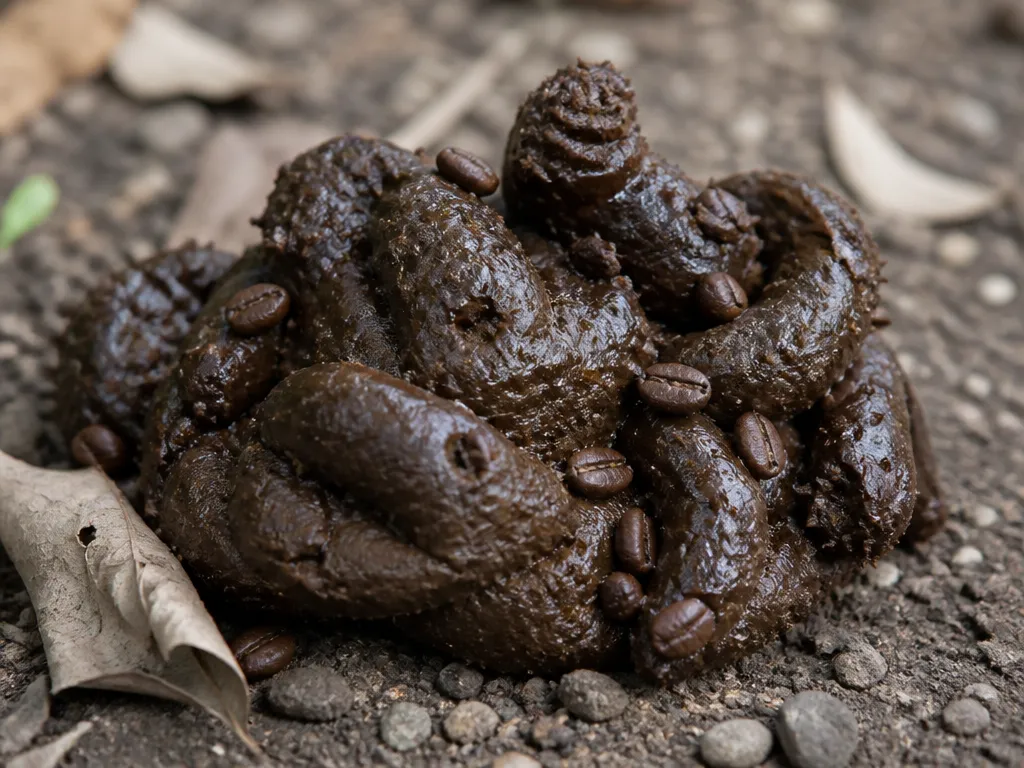
Coffee is made from roasted coffee beans, and those “beans” start life as seeds inside coffee cherries. When food moves through your digestive tract, heat, acid, and enzymes can change how plant material looks and how it breaks down. This guide answers what coffee beans in poop usually mean, how digestion affects them, and what to do next if you spot something that looks like coffee beans in stool.
Coffee beans in poop usually mean you swallowed something containing coffee or coffee-like seeds, and your digestion may have partially broken it down but not fully digested it. Whole seeds can pass through – especially if you ate them with a shell, or if they were already hard – so you might see small brown pieces without it meaning anything dangerous. If you keep seeing them or have symptoms, talk to a clinician.
Key Takeaways
- Usually it is undigested. Whole coffee seeds or cherry pieces can pass through your gut with only partial breakdown.
- Digestion can change texture. Stomach acid and enzymes soften food, but hard seed coats can resist.
- Shape helps you judge. True coffee “beans” are oval from roasted seed, while unroasted seeds are flatter and greener.
- Roasting matters for breakage. Roasted beans crack and soften differently than green seeds or cherry fragments.
- Chemical residues are unlikely. It is more common to see undigested plant bits than “treatments” showing up intact.
- Get help if it repeats. Persistent findings, pain, vomiting, or blood are reasons to seek medical advice.
What It Means
Finding “coffee beans” in poop is most often a mix-up with what you actually ate, plus the fact that seeds can pass through digestion partly intact. Coffee is typically brewed from roasted, ground beans, and those beans are designed to be fragile once roasted and ground, but whole seeds or cherry fragments are a different story. If you ate something like coffee cherry products, coffee-related snacks, or even coffee-cultivar seeds by accident, you can see pieces that resemble beans.
For most people, this is not a sign that you are “detoxing” coffee. It is usually just mechanical digestion and biology doing what it does: breaking down food until only indigestible parts remain. Plant seed coats are built to survive harsh conditions, and your gut is harsh, but not always harsh enough to fully dissolve every seed layer.
In practice, your fastest path to the right answer is to compare what you saw with what you could have eaten. If the pieces are dark and look like small, smooth ovals, you may have had roasted coffee fragments. If they look greenish, flatter, or more “seed-like,” you may have ingested unroasted seed material or a coffee cherry product. If the “beans” are crisp and intact, it points even more strongly toward undigested plant material.
How Digestion Changes Coffee Beans
Your digestive tract changes seeds in two big ways: chemistry and time. Stomach acid (plus digestive enzymes) helps break down many foods, but seed coats and some plant structures resist digestion, especially when the seed is hard or protected. That means a seed can come through smaller, softer, or cracked, but still recognizable.
The mechanical part matters too. Chewing breaks food into smaller pieces, which increases contact with acid and enzymes. If you swallowed whole or poorly chewed material, it spends less time exposed to digestive chemistry per piece, so you are more likely to see recognizable fragments later.
If what you saw was actually coffee “beans,” note this: roasted coffee beans are not designed to be swallowed as whole seeds for digestion. They are usually roasted and then ground, then brewed. Whole roasted beans are harder than ground coffee, and the outer layers can sometimes survive digestion better than you would expect. Unroasted coffee seeds tend to be tougher and more intact for longer, because they have more structural integrity than roasted material.
A practical implication: if you ate coffee products on an empty stomach (or took capsules) and later saw intact brown ovals, the capsule itself or the food matrix may have protected the seed bits. If you ate ground coffee in a drink, the grounds are much more likely to look like dark specks or flecks rather than intact “beans.”
What Bean Shapes Show Up
Coffee’s most common cultivated species are Coffea arabica and Coffea canephora (often referred to as robusta). Those two varieties produce seeds with similar “coffee bean” identity to humans, but their shape and density differences can affect how they break apart after roasting and chewing.
In the real world, though, most “coffee beans in poop” cases come from either cherry-related material or coffee seeds that were not ground. That means you may be seeing seed shape more than variety. True coffee “beans” are usually described as oval and somewhat flattened compared with round seeds like peppercorns, and they often have a seam or crease depending on how they were processed.
Unroasted green coffee seeds are typically more pale or greenish and can look more like a general “seed” than the dark, glossy roasted bean you see in a bag. If what you found is greenish or lighter brown and looks tougher, it leans toward unroasted or minimally processed material. If it is very dark brown to black and has the typical coffee-bean oval profile, it leans more toward roasted fragments or a coffee-cherry product that got processed into seed-like pieces.
This is where careful observation helps. Compare size and shape to common things in your diet. If it looks more like a cherry pit, a grape seed, or a chili seed, it is more likely to be that than coffee. The gut can make identification harder, but intact hard seeds are recognizable with a close look and a ruler or coin for scale.
Cultivation and Production: Unprocessed Bean Clues
Coffee production starts with seeds from coffee cherries, producing green, unroasted coffee beans. Those green beans are traded as an agricultural commodity before roasting. That detail matters because unprocessed material behaves differently in your gut: tougher structure, different color, and less “brittle” behavior than roasted beans.
If you find pieces that look greenish, beige, or pale brown, think about products that contain green coffee seeds or coffee seed material that was not roasted and ground. Specialty supplements sometimes market “green coffee extract,” and some foods or homemade experiments might include whole green seeds. Whole unroasted seeds also resist breakdown better than ground roasted coffee, so they are more likely to pass through recognizable.
Processing steps between harvest and roasting also create different forms. Some coffee is sold as whole roasted beans, but most consumer coffee is ground. Brewing typically strains out grounds, while whole-bean products retain larger seed pieces.
Here’s a simple reality check: coffee you drink is typically roasted and ground, and brewing strains out grounds. Whole seed-like fragments are therefore more associated with whole beans, coffee-seed-containing snacks, or similar ingredients than with ordinary brewed coffee.
Pests and Treatments
It is unlikely that you will see pest-treatment chemicals in stool as recognizable “bean” material. Most pesticide residues (when present on food) are measured in very small amounts, and they disperse or degrade rather than stay as an intact, identifiable “chemical” coating on a whole seed fragment you would visually recognize.
What you might see, instead, is the physical evidence of ingestion: seed coats, fragments of plant tissue, or hull-like bits. If those pieces contain residues from cultivation, your body still has to absorb and process those chemicals. Visual identification does not tell you residue levels, and it also does not confirm exposure intensity.
The bigger practical question is not “can chemicals appear,” it is “is this a situation where you should stop eating a suspected item and ask for medical guidance?” If you recently ate an unusual coffee-related product (especially something not intended for human consumption), or you had symptoms like nausea, vomiting, severe abdominal pain, or persistent diarrhea, get medical advice promptly. In that scenario, clinicians can ask about timing and specific products rather than relying on what it looks like in stool.
If you are worried about contamination more broadly, the best action is to be conservative: avoid mystery coffee seed products, buy from reputable sellers, and do not eat green coffee seeds whole unless a food-safe product specifically instructs that use. Your safety comes from what you put in, not from trying to “test” stool visually.
Ecological Effects: Any Environmental Impact
Coffee beans in poop do not create meaningful ecological impact. In normal circumstances, what leaves your body is already part of the biological waste stream, and seed fragments are just plant material that will be further broken down during waste treatment or in compost-like environments.
The only time there is a plausible “environment” concern is if seed fragments are viable and could germinate after passing through waste. Seed viability depends on the species, how it was processed (roasting tends to reduce viability), and whether the seeds are exposed to conditions that can support germination. Roasted coffee beans are generally not the same as viable seed stock you would plant, and digestion plus time in waste systems is usually not a good germination setup.
If you are thinking about home compost specifically, most guidelines treat unknown organic material as compostable only when it is typical kitchen waste. Coffee grounds are common compost material, but whole seed fragments are a different category. If you want to be cautious, compost whole “bean-like” fragments rather than spreading them where they could be unintentionally planted, and avoid composting if your system is poorly managed.
For almost everyone, the ecological angle is a non-issue. The practical focus should stay on identification (what you ate) and symptoms (whether anything is off in your body).
Preprocessing: Roasting and Grinding Effects
Roasting changes how beans behave in your mouth and in your digestive system. Roasted coffee beans are more brittle than many unroasted seeds, and they crack or soften differently, which affects whether fragments remain recognizable. Ground coffee, by contrast, is already broken down, and it mostly shows up as dark specks rather than intact ovals.
Grinding is the big divider between “coffee bits” and “coffee beans.” Brew filtration removes most grounds, so stool usually shows no “bean” shapes, maybe just a bit of dietary pigment or minor fiber changes depending on what else you ate.
If you did swallow whole or near-whole coffee beans, roasting still matters. Very lightly roasted beans can be tougher and more intact than dark roasted beans that are more brittle. However, digestion is still the wildcard because chewing, stomach emptying time, and gut motility influence how quickly fragments break down.
Practical takeaway: the size and appearance of the fragments reflect the original material, its processing, and how thoroughly it was chewed. Dark flecks are more consistent with ground material, while intact ovals suggest a larger seed or bean fragment.
FAQ
Could coffee grounds make it look like beans in poop?
Coffee grounds usually look like dark flecks or sediment, not intact oval beans. Recognizable whole ovals are more consistent with whole seed-like material than with drinking brewed coffee.
Do coffee beans in poop mean I should worry?
Most one-time sightings are not a medical emergency and usually point to undigested seed fragments. You should take it seriously if it keeps happening, you have abdominal pain, vomiting, fever, or blood in stool, because then the cause could be something beyond normal digestion.
Can green coffee seeds pass through digestion intact?
Yes, green or less-processed seeds can resist digestion better than roasted and ground coffee. Whole green seeds or products containing them are more likely to produce intact or cracked fragments in stool.
How can I tell what I actually ingested?
Color, size, shape, and surface details can help. Roasted coffee fragments are typically much darker, while unroasted seeds or cherry pieces can be lighter or more seed-like. A seam or crease may also suggest a coffee bean.
What’s a common mistake people make with this?
The most common mistake is assuming it must be “coffee” because it looks brown. Many other foods contain oval or seed-shaped pieces (like berries, peppers, and other fruits), and digestion can preserve those shapes enough to look like coffee beans.
In the meantime, the best next step is simple: take a clear look at the size and shape of what you found, then trace back what you ate in the previous 24-72 hours. If it is recurring or you have symptoms, book a clinician visit and bring a photo (and any product label) so they can connect the dots quickly.

- Espresso Tastes Watery? 10 Common Causes and How to Fix It - October 23, 2026
- 10 Common Coffee Equipment Cleaning Mistakes and How to Avoid Them - October 23, 2026
- 17 Common Coffee Grinder Problems and How to Fix Them - October 23, 2026