
A coffee brewing calculator guide simplifies the complex art of coffee making by providing precise, personalized ratios for water and coffee, ensuring a consistently delicious brew every time.
For any coffee enthusiast, the quest for the perfect cup is a continuous journey, often fraught with inconsistency. Achieving that ideal balance of flavor, aroma, and body can feel like a delicate dance, where a slight misstep in measurement can lead to a less-than-stellar outcome. This comprehensive coffee brewing calculator guide is designed to transform your brewing experience from guesswork to scientific precision, empowering you to consistently craft exceptional coffee. We delve into the mechanics, benefits, and practical application of these invaluable tools, demonstrating how a well-utilized coffee brewing calculator guide is an indispensable asset for both novice brewers and seasoned baristas aiming for unparalleled consistency.

What is a Coffee Brewing Calculator Guide?
A coffee brewing calculator guide is essentially a digital or analog tool that helps determine the optimal amount of ground coffee and water required for your desired brew, taking into account various factors like brewing method, preferred strength, and final serving size. At its core, it translates general brewing guidelines, often expressed as ratios (e.g., 1:15 or 1:18, meaning 1 part coffee to 15 parts water), into precise, measurable quantities. This calculator typically prompts users to input their desired water volume or number of servings, then calculates the exact coffee weight needed to achieve a balanced extraction based on pre-set or user-defined ratios. It removes the ambiguity of "a scoop" and replaces it with scientifically backed measurements, ensuring reproducibility and quality in every cup you brew.

Why Precision Matters: The Science Behind Perfect Coffee
The foundation of a great cup of coffee lies in optimal extraction, a delicate process where water dissolves desirable soluble compounds from the ground coffee. This extraction is heavily influenced by factors such as water temperature, grind size, and contact time, but the coffee-to-water ratio remains paramount. Too little coffee for the amount of water (under-extraction) results in a weak, sour, and underdeveloped flavor profile, as insufficient soluble solids are extracted. Conversely, too much coffee (over-extraction) leads to a bitter, astringent, and heavy taste, as undesirable compounds are dissolved. A coffee brewing calculator guide provides the consistency needed to hit that sweet spot, ensuring that each brew extracts the perfect balance of flavors and aromas. By consistently maintaining the correct ratio, a coffee brewing calculator guide acts as your scientific assistant, preventing the common brewing pitfalls that lead to less-than-ideal results.

Key Elements of an Effective Coffee Brewing Calculator Guide
An effective coffee brewing calculator guide incorporates several crucial elements to deliver accurate and actionable recommendations. Understanding these components is key to maximizing its utility.
Coffee-to-Water Ratio
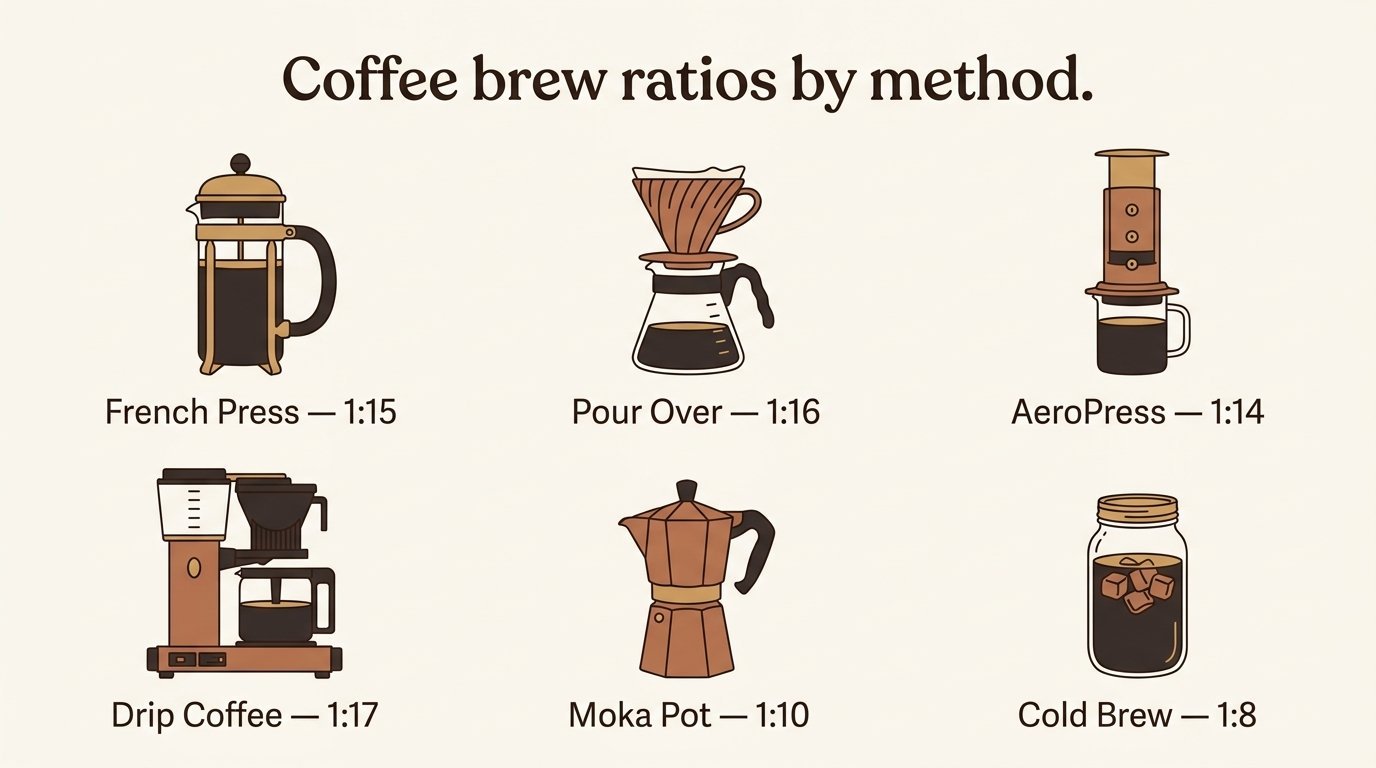
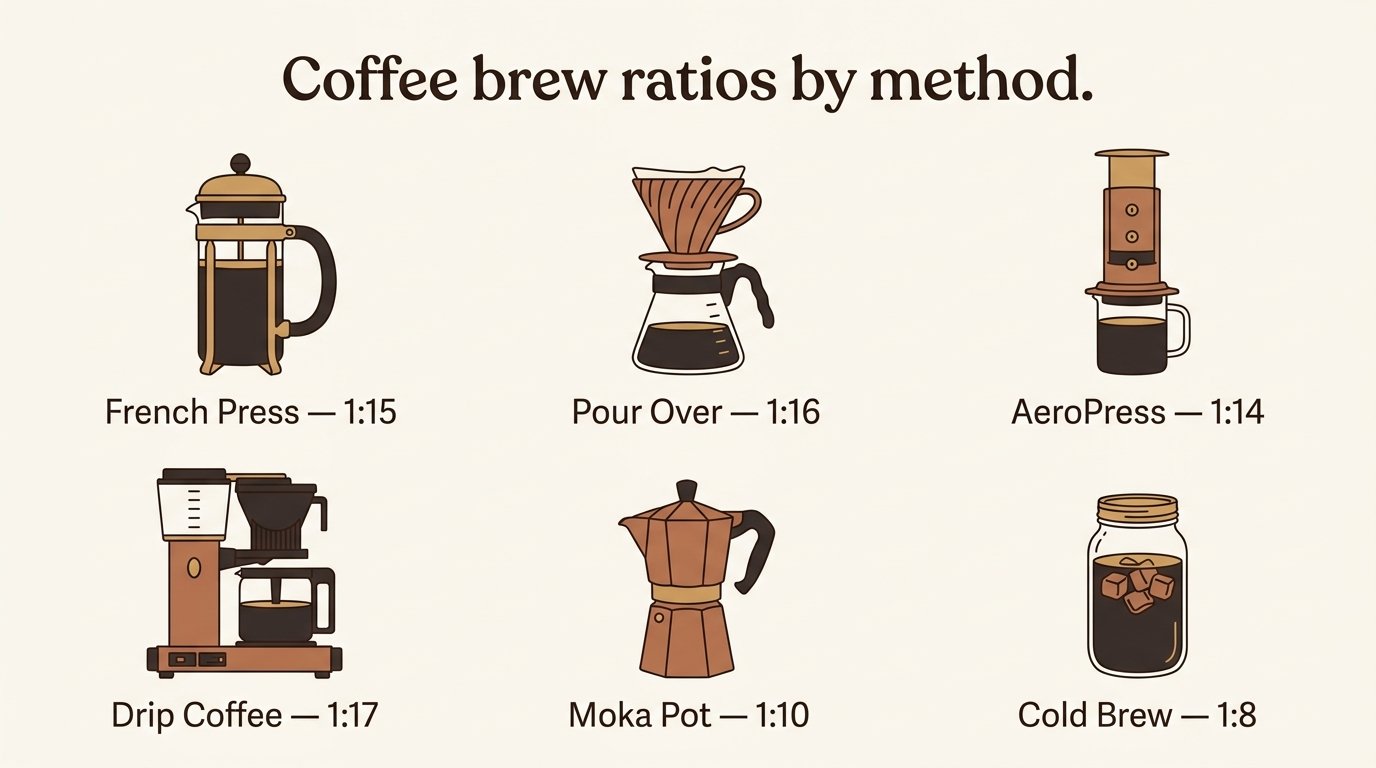
This is the heart of any coffee brewing calculator guide. Common ratios range from 1:15 (for a stronger brew) to 1:18 (for a lighter, more delicate cup), with 1:17 often considered a balanced starting point. The calculator allows you to select your preferred ratio or guides you towards one based on your desired strength.
Brewing Method Specifics
Different brewing methods have distinct ideal ratios and requirements. A French press might benefit from a slightly higher ratio (more coffee) due to its full immersion and longer contact time, while a pour-over might thrive with a slightly lower ratio for clarity. A good coffee brewing calculator guide often has specific settings for various methods, such as pour-over, French press, AeroPress, or automatic drip.
Desired Brew Strength
Calculators often offer strength options like "light," "medium," or "strong." These options adjust the coffee-to-water ratio behind the scenes to align with your personal preference, making it easier to achieve your desired intensity without needing to manually tweak ratios.
Grind Size Recommendations
While not always directly calculated, many advanced coffee brewing calculator guides will offer grind size suggestions relevant to the chosen brewing method, as grind size significantly impacts extraction time and efficiency.
Water Volume and Coffee Weight
The calculator's primary output is the precise weight of coffee (in grams) and volume of water (in milliliters or ounces) needed. This eliminates guesswork and ensures repeatable results.
Temperature Guidelines
Some calculators might also offer guidance on optimal water temperature, a critical factor for effective extraction, typically between 195°F and 205°F (90°C and 96°C).
Personal Experience: My Journey to Consistent Brews with a Coffee Brewing Calculator Guide
For years, my morning ritual of brewing coffee was a hit-or-miss affair. I'd invest in high-quality beans and decent equipment – a burr grinder, a pour-over cone – but the results were maddeningly inconsistent. One day, the coffee would be bright and balanced, the next it would be either watery and sour or intensely bitter. I blamed everything from the weather to my mood, never truly pinpointing the issue. Then, a fellow coffee aficionado introduced me to the concept of a coffee brewing calculator guide. Initially, I was skeptical; I prided myself on my "feel" for brewing. However, out of sheer frustration, I decided to give it a try.
The first time I used a coffee brewing calculator guide, I was amazed. I input my desired cup size and brewing method, and it spat out precise gram measurements for coffee and water. I meticulously followed the instructions, using a digital scale for both. The result was a revelation: a perfectly balanced pour-over, exactly what I had been striving for. It wasn't just good; it was consistently good. This coffee brewing calculator guide didn't replace my intuition; it refined it, giving me a consistent baseline from which to experiment. It taught me that precision isn't about being robotic; it's about establishing a foundation of accuracy that allows for true mastery and appreciation of nuanced flavors. It demystified the process and made every subsequent brew a delightful, predictable experience.

How to Use a Coffee Brewing Calculator Guide Effectively
Utilizing a coffee brewing calculator guide is straightforward, but accuracy in measurement is paramount to achieving the best results.
- Step 1: Choose Your Brewing Method: Start by selecting the specific method you intend to use. Whether it's a French press, pour-over, AeroPress, or automatic drip, the calculator will adjust its recommendations accordingly, making the coffee brewing calculator guide adaptable to your setup.
- Step 2: Input Desired Brew Volume: Decide how much coffee you want to make. This could be in ounces, milliliters, or even simply "cups." The calculator will then use this as the basis for its calculations.
- Step 3: Select Your Preferred Strength: Most coffee brewing calculator guides offer options like "light," "medium," or "strong." This choice will subtly adjust the coffee-to-water ratio to match your taste.
- Step 4: Get Your Ratios: With your inputs, the coffee brewing calculator guide will provide the exact weight of coffee (in grams) and the precise volume of water (in grams or milliliters, as 1 gram of water equals 1 milliliter) you need.
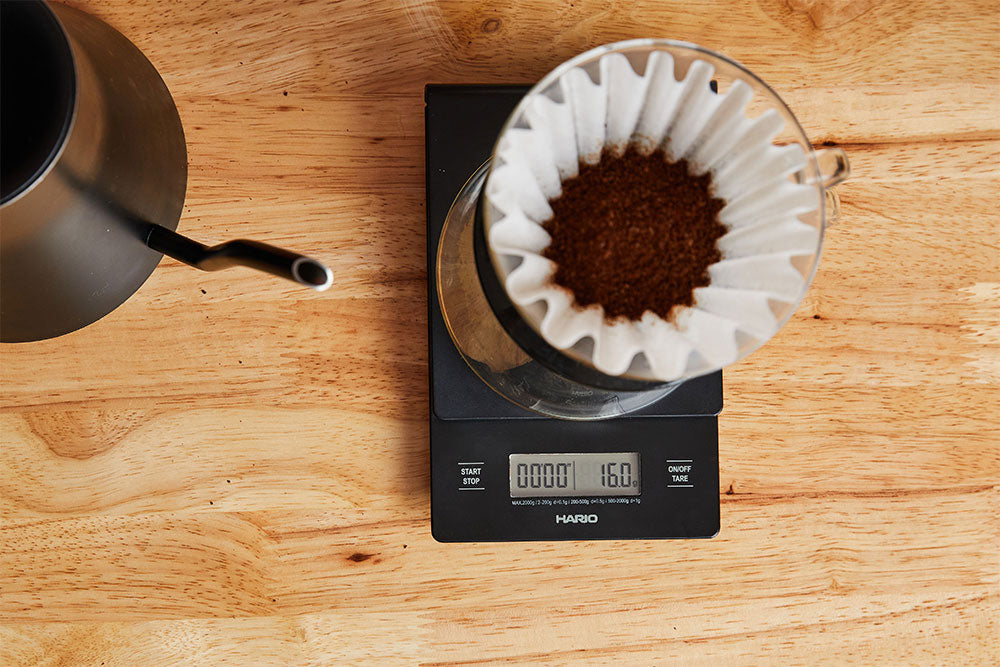
- Step 5: Measure Accurately: This is where a good digital kitchen scale becomes indispensable. Measure your coffee beans by weight before grinding, and measure your water volume accurately. This precision is what makes the coffee brewing calculator guide so effective.
- Step 6: Experiment and Adjust: While the calculator provides an excellent starting point, don't be afraid to fine-tune. If you find your coffee slightly too strong or weak, adjust the coffee weight by a gram or two in subsequent brews and note the changes. Use the coffee brewing calculator guide as a consistent reference point for your experiments.

Benefits of Integrating a Coffee Brewing Calculator Guide into Your Routine
Adopting a coffee brewing calculator guide offers a multitude of advantages that can elevate your daily coffee experience and brewing expertise.
- Unparalleled Consistency: The most significant benefit is the ability to consistently reproduce your favorite brew. No more guessing, just reliable, delicious coffee every time, thanks to the precision offered by the coffee brewing calculator guide.
- Reduced Waste: By accurately measuring coffee and water, you minimize the chances of brewing a subpar cup that ends up being poured down the drain. This means less wasted expensive coffee beans and water.
- Enhanced Flavor Profile: Optimal extraction leads to a more balanced and nuanced flavor. A coffee brewing calculator guide helps you achieve this delicate balance, allowing the unique characteristics of your beans to shine through.
- Educational Tool: For those new to brewing, a coffee brewing calculator guide serves as an excellent educational tool, teaching the importance of ratios and how different parameters affect the final taste. It demystifies the brewing process.
- Time Saving: While it adds a step of measurement, it ultimately saves time by eliminating the trial and error associated with inconsistent brewing, ensuring you get it right the first time, every time.

Common Pitfalls and How a Calculator Helps Avoid Them
Even experienced brewers can fall victim to common pitfalls that compromise coffee quality. A coffee brewing calculator guide serves as a reliable guard against these frequent mistakes.
One prevalent issue is inconsistent strength, where one day's brew is too weak and the next is overwhelmingly strong. This often stems from varying coffee-to-water ratios due to imprecise measurement or using volume-based scoops that don't account for bean density. A coffee brewing calculator guide eliminates this variability by providing precise weight measurements. Another common problem is under-extracted (sour) or over-extracted (bitter) coffee. While grind size and temperature play roles, an incorrect ratio is frequently the root cause. Too little coffee leads to under-extraction, while too much can cause over-extraction. The calculator ensures you hit the correct ratio, significantly reducing the likelihood of these undesirable flavors. Lastly, wasting expensive beans due to poor brewing is a painful reality for many. By guaranteeing an optimal starting point for your brew, the coffee brewing calculator guide minimizes the chances of ruining a batch, thus making every gram of your specialty coffee count. It provides a consistent, dependable baseline, allowing you to focus on other variables like grind and technique, rather than constantly second-guessing your measurements.
Beyond the Basics: Advanced Tips for Using Your Coffee Brewing Calculator Guide
Once you've mastered the fundamentals of your coffee brewing calculator guide, you can begin to explore more advanced techniques to further refine your brews. These tips allow you to use the calculator not just for consistency, but as a dynamic tool for exploration.
- Consider Different Bean Roasts: Lighter roasts often benefit from a slightly higher coffee-to-water ratio (e.g., 1:16 instead of 1:17) to ensure full flavor extraction, given their denser structure and lighter development. Darker roasts, being more soluble, might shine with a slightly lower ratio (e.g., 1:18) to avoid over-extraction and bitterness. Use your coffee brewing calculator guide to experiment with these subtle ratio adjustments.
- Adjust for Specific Water Chemistry: While a coffee brewing calculator guide won't directly calculate water chemistry, understanding your water's mineral content can influence your ideal ratio. Softer water might extract flavors more aggressively, suggesting a slightly lower coffee dose, while harder water might require a bit more coffee. Log your results and see how your coffee brewing calculator guide settings interact with your water.
- Logging Your Results: Keep a brewing journal. Note the bean origin, roast level, grind size, water temperature, and the exact ratio provided by your coffee brewing calculator guide. Record tasting notes for each brew. This meticulous logging allows you to pinpoint what works best for different beans and methods, turning your coffee brewing calculator guide into a powerful data analysis tool for your personal preferences.
- Experiment with Pre-infusion/Bloom: While not directly related to the calculator's output, using the calculated water volume to guide your pre-infusion (e.g., using twice the coffee weight in water for the bloom phase) can significantly improve extraction, especially for pour-overs.

Frequently Asked Questions
What is the ideal coffee-to-water ratio for most brewing methods?
The "golden ratio" often recommended is 1:15 to 1:18, meaning 1 part coffee to 15-18 parts water, but personal preference and brewing method can influence this. A coffee brewing calculator guide typically uses these ranges as a starting point.
Can a coffee brewing calculator guide really improve my coffee?
Absolutely. By ensuring consistent coffee-to-water ratios, a coffee brewing calculator guide eliminates guesswork, leading to more consistent and often significantly improved flavor profiles by optimizing extraction.
Do I need a special scale to use a coffee brewing calculator guide?
A digital kitchen scale capable of measuring in grams with at least 0.1-gram precision is highly recommended. This accuracy is crucial for leveraging the precision offered by a coffee brewing calculator guide.
Is a coffee brewing calculator guide only for beginners?
Not at all. While excellent for beginners to learn foundational ratios, experienced brewers use a coffee brewing calculator guide to maintain consistency, troubleshoot issues, and experiment with new beans or methods.
How often should I adjust my coffee brewing calculator guide settings?
You should adjust your coffee brewing calculator guide settings when changing brewing methods, trying new beans, or if you desire a different strength or flavor profile from your usual brew.
Conclusion
Embracing a coffee brewing calculator guide is a transformative step towards mastering the art of coffee. It shifts the brewing process from intuitive guesswork to precise, repeatable science, ensuring that every cup you make is a testament to consistency and quality. By leveraging the accuracy it provides, you unlock the full potential of your beans, minimize waste, and embark on a continuous journey of flavor discovery. Don't let inconsistent brews diminish your coffee experience any longer. Take control of your coffee destiny today; explore a reliable coffee brewing calculator guide and meticulously apply its insights to your daily routine. Share your experiences in the comments below, and let's brew better coffee together!

- Are Pod Coffee Machines Healthy? The Unfiltered Truth About Your Daily Cup - September 27, 2026
- Does Gatorade Have Caffeine? Here’s What’s in Each Type - September 26, 2026
- Does Powerade Have Caffeine, or Is That a Myth? - September 26, 2026