
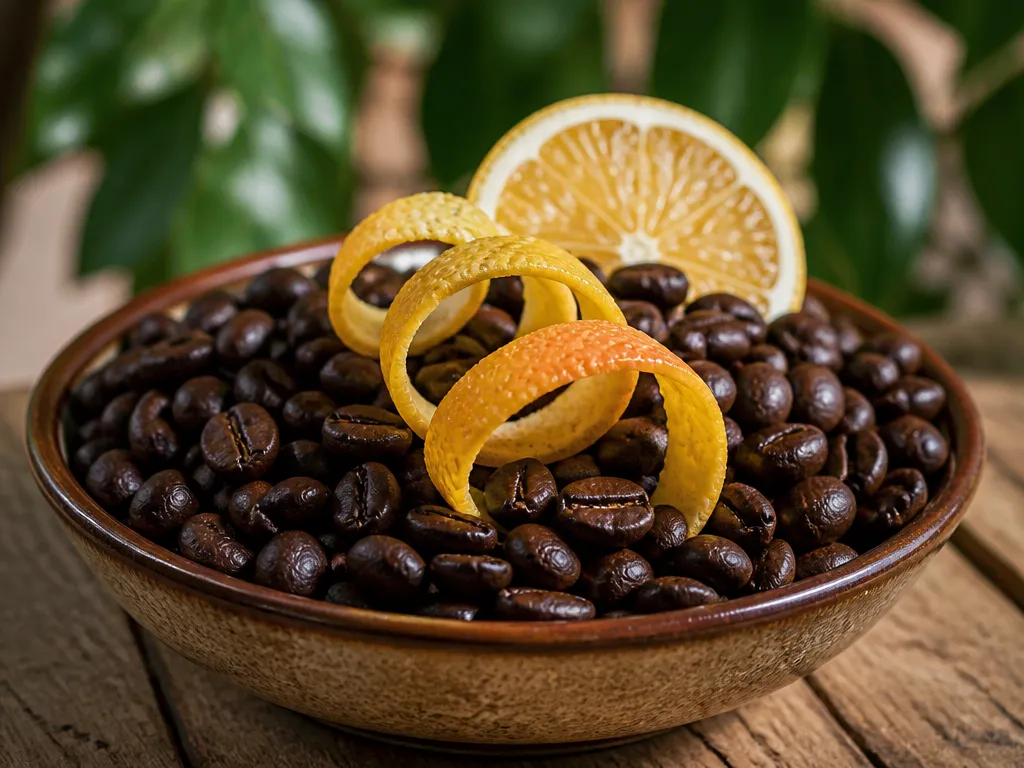
Citrus coffee beans can taste like bright orange, lemon, or grapefruit. Processing and roasting help preserve the acidity and aromatic compounds that create citrus-peel notes. When brewed well, they taste juicy and sweet rather than flat, sour, or harsh.
Use about 18 g of coffee per 300 g of water – roughly a 1:16 to 1:17 ratio. Brew with water between 195 F and 205 F, and stop adjusting upward when bitterness starts to appear.
Citrus Coffee at a Glance
- Citrus notes come from processing and roast choices that preserve acidity and aroma.
- Use a 1:16 to 1:17 ratio for brightness without excessive sourness.
- Use hotter water between 195 F and 205 F to pull clean, juicy acidity.
- Choose light to light-medium roasts for the clearest citrus character.
- Protect freshness by sealing beans and storing them away from heat, air, and moisture.
- Fix bitterness by lowering the temperature, coarsening the grind, or shortening brew time.
Citrus Coffee Flavor Profile and Tasting Notes
Citrus coffee beans usually taste like juicy fruit rather than vinegar. Common notes include citrus peel, lemon zest, mandarin, orange blossom, grapefruit pith, and a clean sweetness underneath.
In a well-brewed cup, the acidity feels crisp and lively, like citrus juice, rather than sharp and underripe. Common tasting descriptors include lemon, lime, orange, bergamot, and grapefruit. Some coffees also show a mild stone-fruit character, depending on the origin. Aroma often gives the first clue: citrus notes can appear strongly on the nose before the first sip.
Warm the cup slightly, take a short sip, and notice where the flavor lands. Citrus-forward coffees usually feel bright and aromatic at the front of the sip, then settle into sweetness through the mid-palate. A dry, metallic, or aggressively bitter finish usually points to over-extraction or a roast that has gone too dark for those aromatics.
A light roast from a citrus-friendly processing style might smell like lemon candy and orange rind. A darker roast from the same origin will often lose those top notes and move toward cocoa or caramel. “Citrus coffee” describes a flavor outcome shaped by origin, processing, roasting, and brewing – not a separate type of coffee bean.
What Makes Citrus Coffee Different From Other Coffee?
Citrus coffee beans are usually standard green coffee processed and roasted to preserve or emphasize acidity and volatile aromatics. Varietal traits, origin, processing method, roast development, and extraction all influence the final citrus impression.
Coffees marketed for citrus brightness are often processed in ways that preserve fruit-like compounds during drying and fermentation. Washed coffees tend to taste cleaner and more structured, which can make citrus acidity easier to identify. Natural and honey-processed coffees can also taste citrusy, but they are more likely to add heavier fruit sweetness.
Roasting changes the flavor quickly. A dark roast can burn off or mask many of the aromatic compounds associated with zest, shifting the cup toward toasted, chocolatey, or smoky flavors. An extremely light roast can be difficult to extract; if the brew is under-extracted, the result may taste sharp and thin instead of bright and juicy.
Read the bag, then confirm the description in the cup. Citrus-focused coffees often use terms such as “high acidity,” “bright,” “citrus,” “zesty,” “fruity,” or “floral,” with tasting notes such as lemon, orange, grapefruit, or bergamot. If the bag promises citrus but the roast date is old and the coffee tastes flat or papery, oxygen may have dulled the volatile aromatics.
How to Brew Citrus Coffee for Bright Acidity
Citrus coffee needs enough extraction to make the acidity clean and sweet without pushing the cup into bitterness. Aim for “bright and sweet,” not sharp and watery.
Start with 18 g of coffee to 300 g of water – about 1:16.7. If the cup tastes sour, grind finer or increase contact time slightly. If it tastes bitter or leaves a dry finish, grind coarser or lower the temperature by a few degrees.
Water temperature is one of the most useful controls. Use 195 F to 205 F (91 C to 96 C). Cooler water can under-extract a light roast and produce sharp acidity. Excessively hot water can over-extract citrus coffees, making the flavor taste bruised or bitter, especially with fine grinds.
Use this repeatable dial-in method for pourover or batch brew. Change one variable at a time so you know which adjustment worked.
- Choose a ratio between 1:16 and 1:17, and weigh both the coffee and water.
- Set the grinder one step finer if the coffee tastes sour, or one step coarser if it tastes bitter.
- Heat the water to 195 F to 205 F. Avoid anything much cooler for bright coffees.
- Control brew time with pour speed or grind size, and aim for consistent extraction.
- Taste each brew at the same time after brewing, because cooling changes perceived acidity.
Espresso usually benefits from a higher-ratio approach than chocolate-focused coffees. Watch shot time and taste the espresso immediately, since over-extraction can turn citrus into bitterness quickly. For milk drinks, taste the shot black first so you know how much of its brightness the milk will soften.
Which Roast Levels Highlight Citrus Notes?
Light and light-medium roasts usually show citrus notes most clearly. Acidity can remain in darker roasts, but the aromatic quality that makes it feel like citrus peel becomes harder to detect.
Light roasts preserve fruity aromatics and high perceived acidity, but they are sensitive to grind size and brewing temperature. Under-extraction can turn them sharp and thin. Light-medium roasts are more forgiving and often produce a sweeter, rounder citrus flavor without losing too much fragrance.
For most drinkers, light-medium is the better starting point when you want citrus and drinkability together. Choose light when you want the strongest zest and aromatics. Be cautious with dark roasts marketed as citrusy unless you are comfortable with cocoa and smoke surrounding a faint citrus lift.
Roast date matters as much as roast level. Even a properly roasted coffee can taste muted once oxygen dulls its volatile aromatics. If the beans smell more like toast than fruit, brewing adjustments will not fully restore the citrus character.
What Foods Pair With Citrus Coffee?
Citrus coffee pairs well with foods that echo its fruit brightness or add enough fat and sugar to soften the acidity. Rich, smoky foods tend to compete with the aromatics, especially when the coffee is a light roast.
Try it with lightly sweet breakfast pastries and desserts that are not overly chocolatey. Lemon bars, orange scones, almond croissants, berry muffins, and vanilla custard desserts can make the coffee taste brighter. For savory food, choose mild cheese or citrus-forward dishes; strong spice can overwhelm the zest notes.
Milk drinks work, but they change the balance. Milk reduces perceived acidity and softens aromatic sharpness, so citrus becomes a gentler brightness rather than a punchy lemon-peel note. If citrus character is your priority, use a smaller milk ratio and taste the coffee black first.
Use this quick pairing guide:
- Lemon desserts such as cookies, bars, and zest icing make the coffee feel sweeter.
- Orange and berry pastries bring out fruit-like aromatics.
- Almond and vanilla flavors smooth the acidity while keeping the aromatics noticeable.
- Light cheeses such as fresh, mild varieties add contrast without introducing smoke.
- Dark chocolate can work with light-medium roasts, but it can make citrus taste subtle.
The best pairing leaves enough room for the coffee to remain distinct. When the food is too intense, sweetness and salt can hide both the citrus and the coffee’s acidity.
Fixing Sour, Bitter, and Muted Citrus Coffee
Citrus coffees are less forgiving than chocolate-focused coffees because their brightness depends on extraction balance. The most common problems are sourness, harshness, muted citrus, and astringency.
Sourness usually means under-extraction caused by a grind that is too coarse, water that is too cool, or a brew time that is too short. Grind finer, use water between 195 F and 205 F, or give the coffee more contact time.
Harshness and bruised-fruit flavors usually indicate over-extraction or water that is too hot. Light roasts are especially prone to this problem. Grind coarser, shorten the brew time, or lower the temperature by 3 to 5 degrees.
Muted citrus can result from stale beans, poor storage, or an inconsistent grind. Old or badly stored coffee may taste flat, papery, or generically fruity without the distinctive zest. An uneven grind creates uneven extraction, which can dull the brightness while adding isolated bitter flavors.
Astringency feels dry and tea-like on the tongue. It often comes from a grind that is too fine, excessive agitation, or too much extraction for the brew method. With pourover, reduce turbulence, use a slightly coarser grind, and keep the water temperature within the recommended range.
Use this troubleshooting ladder:
- Sour – extract more with a finer grind, hotter water, or longer contact.
- Bitter or harsh – extract less with a coarser grind, cooler water, or shorter contact.
- Muted or aroma gone – check the roast date and storage, then confirm grind consistency.
How to Store Citrus Coffee Beans
Citrus aromatics fade when beans encounter oxygen, heat, and humidity. Store them as carefully as you would any coffee whose flavor depends on delicate fragrance.
Use an airtight container that limits oxygen exposure. A one-way valve bag works well immediately after opening, and a coffee canister can provide convenient longer-term storage. Avoid transparent containers, since light and heat fluctuations can speed aroma loss.
Keep the beans away from the oven, dishwasher, sunny windowsills, and other heat sources. Moisture can create stale flavors and raises the risk of mold if the beans get wet. A cool, dry pantry is usually the best everyday location.
Freezing can help with long-term storage if you prevent moisture and repeated thawing. Portion the beans so you open only what you need, then seal each portion tightly. Let frozen beans warm inside the sealed container before grinding to prevent condensation from forming on the beans or inside the container.
For everyday storage:
- Buy fresh when possible, and avoid stockpiling.
- Transfer beans quickly to an airtight container after opening the bag.
- Use them within weeks for the best citrus aroma, then expect a gradual fade.
- Avoid repeated opening throughout the day; portion the beans if possible.
If the coffee starts tasting like plain roasted nuts instead of fruit peel, storage is the first thing to check. Better brewing can improve extraction, but it cannot restore aromatics that have already faded.
FAQ
How long do citrus coffee beans stay bright after roasting?
Most citrus character fades over time because aromatic compounds lose intensity first. If the beans smell more like toast than lemon peel, they are probably past their peak. Buy fresh when possible, use the beans within a few weeks, and store them airtight away from heat and moisture.
Do citrus coffee beans need a special brewing method?
No. They need balanced extraction rather than a special brewing method. Once the cup tastes sweet and bright, keep those settings consistent.
Are citrus coffee beans more acidic, or do they taste sour?
Citrus coffees often taste bright because they contain noticeable acidity, but sourness usually indicates a brewing problem. Clean citrus acidity feels crisp and juicy, while sour coffee tastes sharp, watery, or thin. Adjust the grind and temperature before deciding that the coffee is too acidic.
Can I brew citrus coffee in an espresso machine?
Yes, but citrus coffees may need adjustments to avoid bitterness. Start with a conservative extraction, watch the shot time, and taste the espresso immediately. If it turns harsh, try a slightly cooler temperature or a coarser grind. For milk drinks, taste the espresso black first so you know how much brightness the milk will soften.
What is the most common mistake when brewing citrus coffee beans?
The most common mistake is failing to keep extraction balanced. Taste the coffee as it cools and make one adjustment at a time.
Citrus coffee tastes best when the beans are fresh and the extraction is balanced. Choose a light to light-medium roast, brew at a 1:16 to 1:17 ratio with 195 F to 205 F water, and store the beans airtight away from heat and air. For a quick adjustment, brew one cup black, change the grind by one step, and look for citrus peel on the nose with a clean, sweet finish.

- Espresso Tastes Watery? 10 Common Causes and How to Fix It - October 23, 2026
- 10 Common Coffee Equipment Cleaning Mistakes and How to Avoid Them - October 23, 2026
- 17 Common Coffee Grinder Problems and How to Fix Them - October 23, 2026