
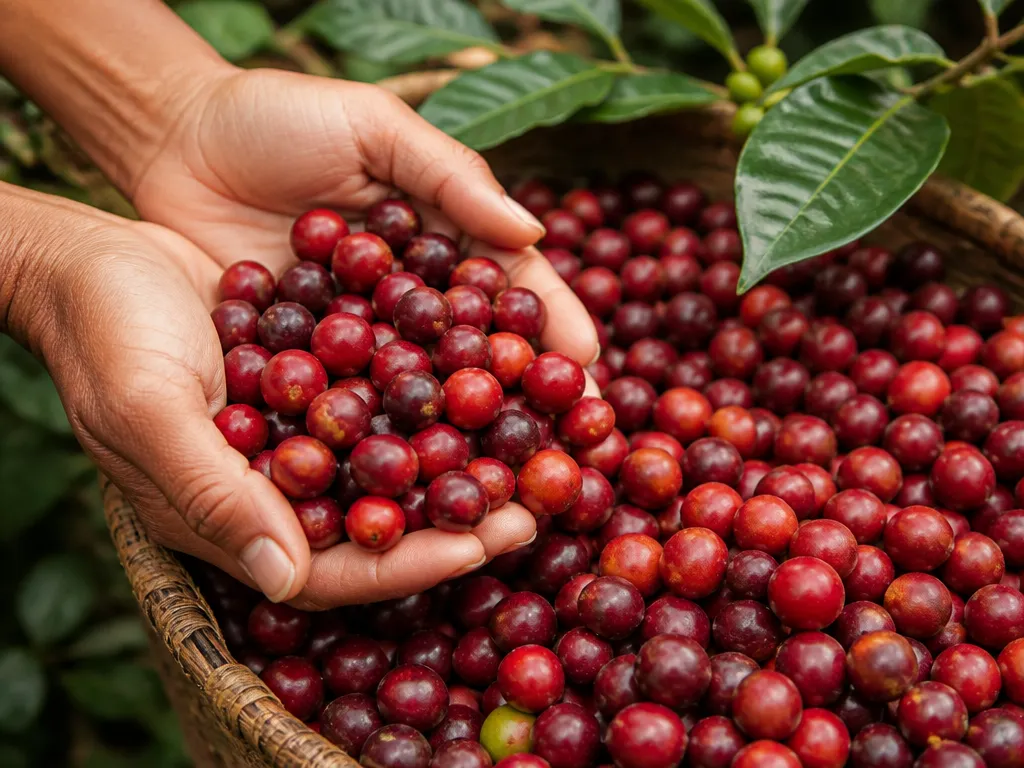
Berry coffee beans taste like fruit first and coffee second – usually blueberry, blackberry, raspberry, or mixed berries supported by sweetness, acidity, cocoa, or tea-like notes. “Berry” flavor usually comes from the coffee’s processing and origin rather than added fruit, while roast level and brewing determine how clearly those notes appear. Start with a light or light-medium Arabica, then brew around a 1:15 to 1:17 ratio with 93-96°C water and enough contact time to extract the fruit without pulling harsh bitterness.
Key Takeaways
- Processing drives the flavor. Berry notes often develop from how the coffee cherry is fermented and dried after harvest.
- Roast level controls fruit character. Light to light-medium roasts preserve berry aromas more reliably than dark roasts.
- Brewing balances acidity and bitterness. Slightly hotter water and adequate extraction can bring out berry notes, while over-extraction can bury them.
- Each brewer needs its own recipe. Espresso depends on controlled dose, yield, and grind; pour-over rewards careful grind and timing.
- Bitterness is the main trap. A grind that is too fine or a brew that runs too long can turn berry into harsh, dull fruit.
- Freshness affects aroma. Berry fragrance fades faster than the coffee’s basic sweetness and acidity, especially during long storage.
What Berry Coffee Beans Taste Like
Berry coffee beans usually taste like berries because the coffee is fruit-forward at the aroma and flavor level, not because it contains added fruit. Common tasting notes include blueberry, blackberry, raspberry, and mixed berries, with supporting flavors such as honey-like sweetness, bright acidity, cocoa, or tea. Processing and roast level determine how clearly those notes come through.
Berry character usually appears in one of two forms. Bright, aromatic coffees smell strongly of berries and carry a crisp fruit note on the palate. Jammy coffees taste thicker and sweeter, with a fruit-syrup quality and less sharp brightness. Jammy character often appears in coffees with more pronounced fermentation. For a brighter berry profile, choose a lighter roast and brew in a way that preserves acidity without over-extracting bitterness.
How Processing Creates Berry Flavor
Processing begins after harvest and determines how much of the coffee cherry’s fruit character remains in the finished bean. In washed processing, the fruit is removed quickly before drying. Natural processing leaves the whole cherry around the bean while it dries, and honey-style processing leaves some fruit material attached. Longer contact with fruit sugars and fermentation byproducts can increase fruit-like aromas, including berry notes.
Washed coffees tend to have cleaner acidity and more definition, which can taste like crisp berry at a light roast. Natural coffees are often more fruit-forward, with jammy berry flavors and heavier body. Honey-style coffees can sit between the two, offering berry brightness with added sweetness. The result depends on how the producer manages drying and fermentation.
Drying quality matters as much as the processing label. Uneven drying or over-fermentation can create funky, overly fermented flavors that some people mistake for berry. A well-made berry coffee should taste like fruit with structure, not fruit mixed with smoke or other off flavors.
Arabica vs. Robusta for Berry Notes
Most berry-forward coffee sold in the United States is Arabica. Arabica generally offers more perceived acidity and aromatic complexity, which makes blueberry and blackberry easier to recognize. Robusta can have fruit-like notes, but it more often emphasizes earthy flavors, bitterness, and strength than delicate berry aromatics.
Choose Arabica first if your goal is a clear blueberry or blackberry note. Robusta is not incapable of tasting fruity, but its fruit character is more likely to resemble dark chocolate with dried fruit than bright fresh berries. The bigger variables remain processing and roast level: a light washed Arabica can taste crisp and berry-like, while a light-medium natural Arabica can deliver a thicker, jammy sweetness.
Even an exceptional Robusta may lose its berry character if the brew emphasizes bitterness.
The Best Roast Level for Berry Flavor
Light to light-medium roasts are usually best for berry flavors. Darker roasting removes more of the delicate volatile compounds that carry berry aromas and replaces them with caramelized sugar, roast spice, and smoky bitterness. A dark roast can still taste fruity, but the fruit is more likely to resemble raisin, molasses, or generic dried fruit than blueberry or blackberry.
Roast date also affects the result. Berry aroma can fade as coffee degasses and loses its top notes. Sweetness and acidity may remain for weeks, but the fresh berry smell often softens first, especially in lighter roasts.
Use this simple buying rule: start with a bag labeled light roast or light-medium roast if you want berry notes. A medium or darker roast may still taste fruity when the processing is strongly fruit-forward, but berry flavor becomes less reliable and more vulnerable to bitterness during brewing.
How Brewing Brings Out Berry Notes
Berry notes appear when brewing extracts enough acidity and aromatic compounds without pulling excessive bitterness or astringency. Acidity often reads as berry because it gives the cup a bright, fruit-like shape. Too little extraction can make the coffee taste thin and unpleasantly sour. Too much can flatten the fruit and add harshness, dryness, or medicinal flavors.
Water temperature and contact time have an immediate effect. Hotter water and longer contact generally increase extraction, but pushing either too far can overwhelm the berry character. Aim for enough extraction to reveal sweetness and aroma, then stop before the cup becomes dry or bitter.
Grind size and agitation control how evenly water passes through the coffee bed. A grind that is too fine for the brewing method can create pockets of over-extraction, while a grind that is too coarse can leave the cup weak and watery. The same berry coffee can therefore taste subtle in one recipe and vivid in another.
Brew Recipes for Berry Coffee
Start with a light roast and a recipe that preserves acidity. For most home brewing, use a moderate grind, a roughly 1:15 to 1:17 ratio, and enough contact time to extract sweetness without dragging out bitterness.
- Pour-over baseline, 1 cup: Use 15 g coffee to 250 g water, or about 1:16.7. Brew with 93-96°C water and target 2:30 to 3:30 total brew time, depending on the brewer and grind. Keep agitation consistent with a gentle swirl once or a controlled pour pattern.
- AeroPress baseline: Use 18 g coffee to 300 g water, or about 1:16.7. Add near-boiling hot water, stir at the start, steep for 1:30 to 2:30, and press. If the cup lacks berry aroma, make the grind slightly finer before increasing the brew strength.
- Espresso baseline: Use a repeatable dose and control the yield and extraction time. If berry notes are muted, try a slightly finer grind or a slightly lower yield, meaning a shorter extraction. If the shot tastes harsh, go coarser or pull a bit less.
Change one variable at a time. Berry flavor is sensitive to both under-extraction, which produces weak fruit, and over-extraction, which produces bitter fruit. Once a recipe delivers bright berry aroma and flavor, keep the ratio and contact time stable while making small grind adjustments.
Berry-Forward Starting Points
| Brewing method | Starting ratio | Target temperature | Target total time | Best first adjustment |
|---|---|---|---|---|
| Pour-over | 1:16.7 (15 g: 250 g) | 93-96°C | 2:30 – 3:30 | Grind slightly finer if berry is weak |
| AeroPress | 1:16.7 (18 g: 300 g) | near-boiling | 1:30 – 2:30 | Shorten or lengthen steep before changing grind |
| Espresso | dose-based (keep constant) | hot group temp | watch for stable extraction | Adjust grind 1 step at a time, then yield |
Why Berry Flavor Fades in the Cup
Berry flavor usually fades for one of three reasons: the roast is too dark, the brew over-extracts the coffee, or the beans have passed their aromatic peak. If the cup tastes like fruit but not specifically like berries, the roast may be too dark or the extraction may have turned bright fruit into generic sweetness and bitterness.
Start with freshness. If the coffee is several weeks old and the aroma has become flat, fresher beans are the simplest fix. If you are brewing dark-roasted coffee and expecting blueberry, switch to a lighter roast or choose a bag that identifies berry-forward processing.
Then check extraction:
- Sour and thin with no berry sweetness: The coffee is likely under-extracted. Grind finer or increase contact time slightly.
- Dull, sharp, or dry with harshness: The coffee is likely over-extracted. Grind coarser, reduce contact time, or lower the water temperature slightly.
- Berry disappears into bitterness: Go coarser and shorten the brew time slightly.
- Berry never appears: Grind finer or increase extraction gently.
- Berry aroma is strong but flavor is weak: Try a slightly tighter ratio, using more coffee per water, and confirm that the grind is not too coarse.
- Berry turns harsh or dry: Lower the temperature a few degrees or shorten the steep.
Water can also mute fruit. Hard water may reduce perceived acidity and flatten aromatics, while softened water or a balanced brew water profile can make berry character more vivid even when the rest of the recipe is already close.
FAQ
What do berry coffee beans actually taste like?
Most berry coffee beans taste like blueberry or blackberry with bright or jammy sweetness. The berry character is often strongest in the aroma, while the palate shows acidity supported by cocoa or light caramel. If the coffee tastes like bitter fruit without a clear berry note, the roast may be too dark or the extraction may be too high.
What roast is best for berry notes?
Light to light-medium roasts are the safest starting point because they preserve more acidity and aromatic compounds. Dark roasts can shift berry into raisin-like sweetness or other darker fruit flavors, while roast bitterness may mask the berry character.
How should I brew berry coffee for the best results?
Use a recipe that preserves acidity. For pour-over, start with 1:16.7, or 15 g coffee to 250 g water, at 93-96°C, with a total brew time of about 2:30 to 3:30. If berry flavor is weak, grind slightly finer. If the cup turns harsh, grind slightly coarser or shorten contact time.
Why does my berry coffee taste flat or fade quickly?
Flat berry flavor usually comes from aging or an extraction problem. Light roasts often lose their berry aroma first, while over-extraction can turn bright fruit into bitterness. Start with fresher coffee, then adjust grind size in small steps.
Can I get berry notes from any coffee bean?
You can bring out fruit-like flavors in many coffees, but brewing cannot create true berry character when the coffee’s processing and chemistry do not support it. For a reliable berry profile, choose beans labeled berry-forward, select a lighter roast, and use brewing settings that preserve acidity.

- Espresso Tastes Watery? 10 Common Causes and How to Fix It - October 23, 2026
- 10 Common Coffee Equipment Cleaning Mistakes and How to Avoid Them - October 23, 2026
- 17 Common Coffee Grinder Problems and How to Fix Them - October 23, 2026