
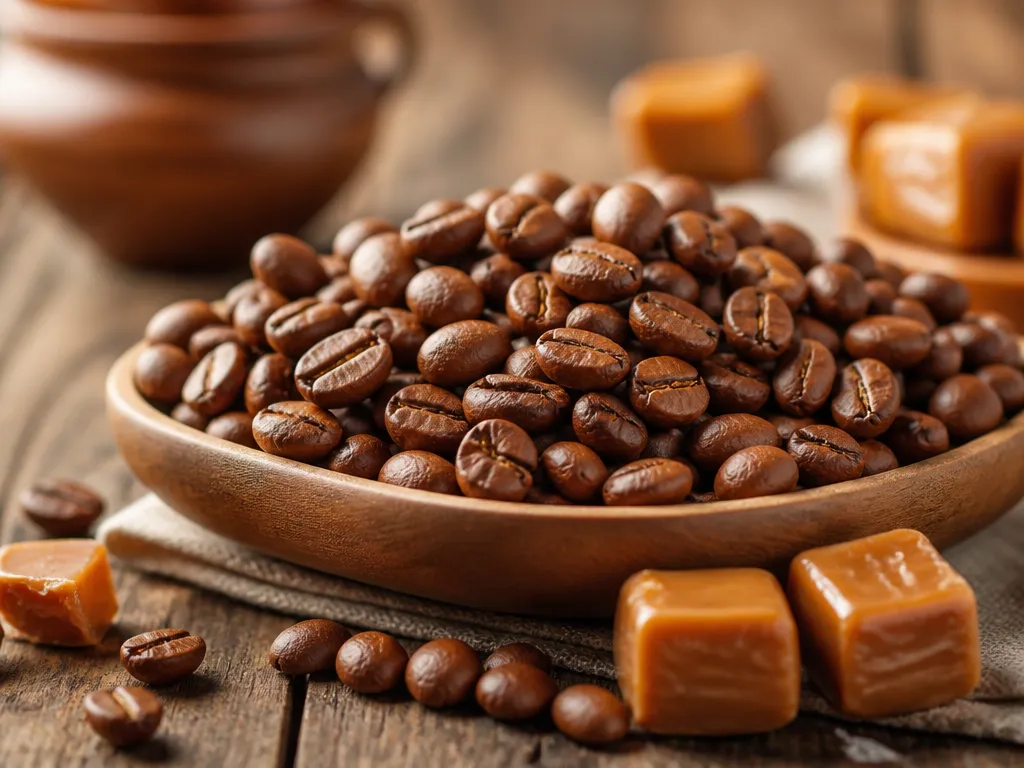
Caramel coffee beans are coffee beans with caramel-like sweetness created by roasting, a caramel-flavored coating, or both. Roasting develops brown-sugar, toffee, and toasted flavors in the bean, while a coating adds sweetness at the surface. The best examples keep enough coffee character to balance the caramel rather than tasting like candy.
Caramel flavor becomes more noticeable as the roast darkens – up to a point. Push the beans too far and sweetness gives way to bitterness, burnt sugar, or ash. Freshness matters just as much: oxygen, heat, moisture, and scorching can quickly flatten the aroma.
Caramel Coffee Beans at a Glance
- Flavor is caramel-brown. Roasting triggers browning reactions that create caramel and toffee notes.
- Sweetness needs balance. Go too dark and you trade caramel sweetness for bitterness and burnt sugar.
- Home roasting is controllable. Use small batches, watch color, and stop early if caramel notes fade fast.
- Espresso needs body and balance. Choose beans that stay sweet without turning ashy when pulled hot.
- Storage protects sweetness. Keep beans sealed, cool, and away from oxygen and moisture.
- Taste points to the fix. Flat notes suggest underdevelopment or staleness; burnt notes suggest too much heat, too much time, or excessive extraction.
Caramel Coffee Beans: Flavor and Roast Guide
Caramel coffee beans combine a coffee base – acidity, roast, chocolate, or nutty flavors – with sweetness that suggests brown sugar, toffee, and sometimes vanilla. That character can come from the roast itself or from a caramel-flavored coating added to the beans.
Roast level determines which layer comes through first. A lighter caramel-style roast can taste bright and sweet but may feel thin if the caramel flavor sits mainly on the surface. A darker roast adds body and lowers perceived acidity, making the caramel taste rounder. The trade-off is a fast-rising risk of burnt sugar and ashy bitterness.
When buying or roasting, read “caramel” as a promise of brown, sweet aromatics that should still leave room for coffee flavor. If the brewed beans taste like pure candy, they may be over-coated. If they taste like ordinary coffee with only vague sweetness, the roast may be underdeveloped or the caramel aromas may have faded.
The target is a fresh roast that smells like toasted sugar and tastes sweet enough to reduce or skip added sweeteners. Treat these beans as easy to overdo: the line between toffee and burnt sugar can be narrow.
What Makes Caramel Coffee Beans Taste Sweet?
Caramel flavor comes from heat-driven changes to sugars and other compounds. During roasting, sugars in the green bean – and in any added caramel ingredients – break down and recombine into aromatic compounds associated with caramel, toffee, and nuts.
Two factors largely determine whether the sweetness reaches the cup. The first is development: how long the beans remain in the browning phase before deeper roasting introduces smoky or burnt flavors. The second is freshness. Oxygen exposure dulls the volatile aroma compounds that carry caramel sweetness.
Caramel-coated beans can taste sweet even when the underlying coffee is not especially dark because the coating puts additional caramelized flavor on the bean’s surface. That surface flavor can fade quickly if the beans sit in warm, open air or in loose packaging.
Brewing changes the balance, too. Adequate extraction makes sweetness easier to perceive, while under-extraction can leave caramel coffee tasting thin and flat. Over-extraction can bury the sweetness under harsh bitterness.
Use a small test brew and check three things: a toasted-sugar aroma, a sweet opening note even when acidity is low, and a finish that stays clean rather than acrid. If one is missing, adjust the roast level, grind size, or brew time before deciding the beans are poor quality.
How to Roast Caramel Coffee Beans at Home
You can create a caramel-style coffee at home by roasting beans for caramelized browning and then adding a caramel element afterward, or by roasting beans that you intend to coat later. Roasting for caramel notes first gives you more control over the final balance.
Start with small batches while you learn how your beans and equipment respond. A one-pound experiment can teach you in a day, but a 4 to 8 ounce batch limits waste when you overshoot. Color helps, but caramel flavor depends on development, so track time, color, and aroma together.
A workable process looks like this:
- Preheat and load. Warm the roaster thoroughly, then add a measured amount of beans so each batch receives a consistent heat load.
- Roast to the edge. Stop earlier than you would for a classic dark roast when caramel sweetness is the priority.
- Listen for first crack. Use first crack as a timing reference, then continue only long enough to deepen the browning flavors.
- Cool quickly. Dump and cool the beans aggressively so carryover heat does not push them into burnt flavors.
- Rest and evaluate. Wait until the first day’s smoke dissipates, then brew a test batch.
If you add a caramel coating, apply it after roasting and cooling. Added sugar can scorch in the grinder or taste burnt when the layer is too thick or uneven. A light, even coat works better than a heavy one because it supports the roast’s sweetness instead of overwhelming the coffee.
Keep notes and change one variable at a time – roast duration or target development. Caramel notes are easy to overcook, and in popper roasters and small drum machines, the difference between toffee and burnt sugar can be measured in minutes.
Caramel Coffee Beans for Espresso vs. Drip
Caramel coffee beans work in espresso and drip, but espresso is less forgiving. Its concentrated extraction makes burnt or smoky roast flavors more obvious, while weak caramel sweetness can taste thin against the drink’s intensity.
For espresso, choose beans with a sweet opening note and a smooth finish. They need enough development to create caramel and brown-sugar aromatics without going so far that the cup turns ashy. If bitterness arrives before sweetness, the grind or dose may be driving excessive extraction, or the roast may be too deep.
Drip coffee gives you more flexibility. Its longer contact time and paper or metal filtration can soften some harshness, allowing caramel notes to show through in a slightly deeper roast. Stale beans still lose their sweetness, leaving a generic brown-roast flavor behind.
Use this decision rule:
- For espresso, aim for caramel-forward sweetness without a smoky edge. If you taste ash, shorten roast development or reduce extraction.
- For drip, you can roast slightly deeper than an espresso target, but stop before the beans taste burnt. A burnt-sugar finish usually means the roast went too far.
Grinding is part of the flavor control. Fine espresso grinding increases extraction intensity, so beans that taste balanced in drip can turn harsh when ground too fine or brewed too long. Treat grind size and brew time as adjustments to the bean’s flavor, not merely technical settings.
Espresso vs. Drip Starter
| Bean Profile (what you taste) | Best Method | What to Watch For |
|---|---|---|
| Toasted-sugar sweetness, smooth finish | Espresso | Avoid over-fine grind that brings out bitterness |
| Brown sugar aroma, slightly thinner body | Drip | Make sure extraction isn’t too short, which can flatten sweetness |
| Burnt sugar smell, smoky edge | Neither | Roast is too far, or coating is scorched |
| Chocolate + caramel, balanced | Both | Keep storage airtight to preserve top notes |
Storing Caramel Coffee Beans to Keep Their Flavor
Caramel sweetness depends heavily on aroma, so poor storage quickly makes the coffee taste more roasty and less sweet. Oxygen and heat strip away volatile compounds. The same problem affects coated beans, whose surface caramel aroma can fade quickly when the beans sit in loose packaging.
Use an airtight container that limits oxygen and resists humidity changes. Store it in a cool, dark cabinet rather than on a warm kitchen counter, especially if you brew frequently. Keep moisture away from the beans as carefully as you keep air away.
Buying in small amounts helps. Storing beans for weeks trades flavor for convenience, so match your batch size to how quickly you use it. Caramel character fades over time; it is not a permanent feature of the bean.
Freezing can work for long-term storage if you divide the beans into small portions and seal them properly. Repeatedly thawing and refreezing the same container draws moisture inside and degrades flavor. Open one portion, brew through it, and leave the remaining portions sealed.
Avoid moving the beans repeatedly between containers. Every opening introduces oxygen and creates temperature swings. Choose one suitable container, commit to it, and use a consistent scoop method.
Fixing Flat or Burnt Caramel Notes
When a cup misses the intended profile, compare its aroma with the roast and brewing variables before changing the beans. A small adjustment to grind size, brew time, or roast development can reveal whether the problem comes from extraction or freshness.
For a harsh cup, inspect the roast, coating, and brewing temperature together. Very fine grinding, long brew time, or excessive brewing temperature can push bitterness forward and mask sweetness. If you smell burnt sugar while the beans are cooling, stop earlier on the next batch and cool them rapidly to limit carryover heat.
Use a taste-and-fix loop:
- Change one variable: Adjust grind size, brew time, or roast depth slightly, then reassess freshness.
- Check consistency: Look for stale storage, inconsistent roast batches, or a coating that is too thick or uneven.
If drip coffee tastes burnt while espresso tastes more balanced, the problem may be a grind or brew-timing mismatch. Different recipes can extract the same beans in very different ways. Adjust one variable at a time so you can separate roast flavor from extraction bitterness.
Caramel Coffee Bean Sourcing and Freshness
Caramel coffee beans vary more than plain roasts because their sweetness can come from roast chemistry, added caramelized ingredients, or both. Freshness therefore has a larger effect, particularly when the beans are coated.
Prioritize the roast date over a “best by” date. A “best by” date indicates expected shelf life, not peak flavor. Caramel notes depend on aromatic compounds that weaken after prolonged exposure to oxygen and time.
Use this checklist before buying:
- Check the roast date. Prefer the most recent roast available, even if the package looks large.
- Look for packaging that seals well. Valve bags and airtight packaging slow oxygen exposure.
- Check the bean condition. Beans should look intact rather than severely dull or excessively dry, with no sign of oil leaks.
- Smell the bag if allowed. Fresh caramel notes should suggest toasted sugar or toffee, not merely roasted coffee.
- Plan your use window. Buy only what you will brew through in a reasonable time.
Run your own sniff test within a day or two of purchase. If the bag smells like ordinary roast with no caramel aroma, the coffee may still brew acceptably, but the sweetness will probably be weak unless your brewing method compensates.
When you are unsure, buy two options with different roast depths or flavor profiles and brew them side by side. The better choice depends on whether you want sugar-forward sweetness or caramel-laced coffee with clearer roast character.
FAQ
What Are Caramel Coffee Beans?
Caramel coffee beans are beans that taste sweet and caramel-like after brewing. The flavor comes from caramel and toffee aromatics created during roasting, a caramelized coating added to the beans, or both. Roast level, handling of the caramel component, and freshness all affect the final cup.
Why Do Caramel Coffee Beans Go Flat So Fast?
Caramel notes rely on aromatic compounds that dissipate with oxygen and heat. Beans left open to air, stored warm, or kept in loose packaging lose sweetness and begin to taste more like ordinary dark roast. Airtight storage in a cool, dark place slows that change.
Can You Roast Caramel Coffee Beans Darker Without Ruining Them?
You can, but caramel sweetness is easy to overcook. Roast too far and the flavor shifts from caramelized browning to smoky, burnt sugar that overwhelms the sweetness. At home, stop earlier than your usual dark-roast target, cool the beans quickly, and test them after resting.
Are Caramel Coffee Beans Better for Espresso or Drip?
Caramel coffee beans are more demanding in espresso because concentrated extraction makes burnt and ashy notes stand out. Drip is more forgiving, so caramel sweetness can survive a slightly deeper roast. If espresso tastes harsh, try a lighter or less-developed caramel profile, or adjust the grind and brew time.
How Do You Fix Burnt Caramel Coffee Beans After Roasting?
Change the extraction for the current batch and the roast plan for the next one. Brew the current beans with a slightly coarser grind, shorter contact time, and water that is not running too hot. For the next batch, stop roasting earlier and cool the beans immediately to limit carryover heat that turns caramel into char.

- Espresso Tastes Watery? 10 Common Causes and How to Fix It - October 23, 2026
- 10 Common Coffee Equipment Cleaning Mistakes and How to Avoid Them - October 23, 2026
- 17 Common Coffee Grinder Problems and How to Fix Them - October 23, 2026