
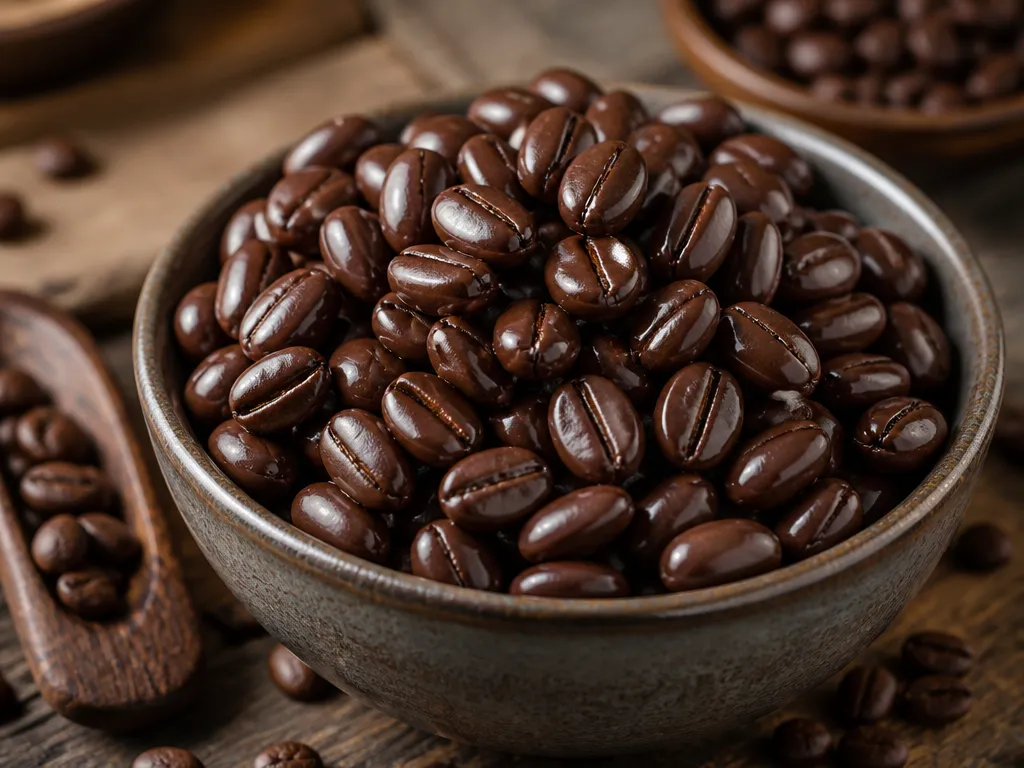
Chocolate coffee beans come in two distinct formats: chocolate-covered coffee beans, which have a chocolate shell, and chocolate-flavored coffee beans, which are roasted, blended, or infused to taste like cocoa. Choose between them based on sweetness, caffeine, and how you plan to use them.
Chocolate-covered beans work best as a snack or dessert topping. Chocolate-flavored beans are made for brewing, so their cocoa character appears in the cup rather than on the tongue. Either format brings a strong chocolate aroma, but the chocolate usually changes perceived sweetness and texture more than coffee strength.
Chocolate Coffee Beans at a Glance
- Two main types exist. Chocolate-covered beans have a coating; chocolate-flavored beans are seasoned, blended, or infused.
- Sweetness varies widely. Some are milk-chocolate forward, while others taste dark and bitter.
- Decaf is common. Many chocolate espresso bean products are sold as decaffeinated.
- Serving changes the experience. Snacking emphasizes sweetness; brewing shifts the balance toward coffee.
- Storage affects quality. Keep beans sealed to prevent chocolate bloom and moisture pickup.
- Read sugar-free labels carefully. Sugar-free products can still contain sugar alcohols, so check the ingredient list.
Chocolate-Covered vs. Chocolate-Flavored Coffee Beans
Chocolate-covered coffee beans are coffee seeds, often espresso-roast beans, coated in milk, dark, or mixed chocolate. Chocolate-flavored coffee beans are regular coffee beans designed to taste like chocolate through roasting, blending, or added flavoring.
For snacking, pay attention to the chocolate shell – whether it is smooth or brittle – and whether the coffee center tastes mild, roasted, or bitter. For brewing, focus on how clearly the chocolate aroma carries into the cup and whether the underlying coffee still tastes the way you prefer.
Trader Joe’s lists “Coffee Lover’s Espresso Beans” at $1.49 per 2.5 oz, and the ingredient list includes milk chocolate. The listed serving size is 1/2 package (35g), with calories shown as 180 per serving. Another entry shows 360, likely tied to a different packaging or calorie display. Either way, chocolate-covered beans can become a calorie-dense snack when you eat more than a small serving.
Chocolate can soften coffee acidity. Dark chocolate versions often taste roastier and less bright, while milk chocolate makes the coffee center feel rounder and sweeter. If you dislike bitterness, milk or marbled coatings are usually easier to handle. Espresso-style beans under dark chocolate deliver a more forceful coffee flavor.
Do not assume the chocolate flavor tells you how much caffeine the bean contains. A sweet shell can make a chocolate-covered bean seem mild, but the center may still be an espresso-roast coffee bean. If caffeine matters, check whether the product is caffeinated or decaffeinated before you buy.
Why Chocolate-Flavored Coffee Tastes Different
Chocolate-flavored coffee combines cocoa-like notes with roasted coffee compounds, creating a dessert-style profile. Even with a medium to dark roast, the flavor may lean toward caramel, vanilla, and sweet chocolate instead of fruit or floral notes.
That profile suits people who find straight dark roast too sharp. It can make coffee taste like a treat without syrup. The trade-off is less origin clarity: a strong chocolate flavor can cover the distinct character you might expect from a single-origin bean.
Brewing method changes the balance. One guide lists prep times of 5-10 minutes for a drip coffee maker, 4 minutes for a French press, 3-5 minutes for pour-over, and 1-2 minutes for reusable K-cups. Slower methods can make chocolate notes feel smoother, while faster methods may leave more roast on the palate.
Chocolate flavor also affects perceived sweetness. The brain often reads cocoa aromas as sweet even when a product contains little or no sugar. That is why sugar-free chocolate coffee can still feel satisfying: cocoa and roast compounds create a sweetness-like impression without necessarily adding sugar.
Choosing Chocolate Coffee Beans by Taste
Start with the chocolate type. Milk chocolate usually tastes sweeter and rounder. Dark chocolate is more bitter, roast-forward, and coffee-like, especially when paired with an espresso-roast center.
Then decide which flavor should lead. Choose dark chocolate-covered espresso beans when you want the coffee to remain prominent. Choose milk chocolate or a marbled coating when you want a dessert-style snack.
Use this taste matcher:
- For dessert sweetness: choose milk or marbled chocolate-coated beans.
- For a bittersweet snack: choose dark chocolate-coated beans.
- For chocolate flavor in a drink: choose chocolate-flavored beans intended for brewing.
- For a dependable cocoa aroma: choose a product labeled chocolate-flavored or clearly chocolate-coated rather than one that mentions “cocoa” vaguely.
One chocolate-coated listing shows “Type of chocolate: dark / milk / marbled / bend,” along with a reported “Price per oz.: $0.74” and a “Package weight: 5 lb” in its features. Variety packs can be useful when you are unsure which coating you prefer, but check each container’s contents. A “variety” description may refer to different chocolate mixes across batches.
For brewing-focused beans, read the flavor notes instead of relying on broad marketing language. Cocoa, caramel, and vanilla usually signal a coffee that will taste rounder and less fruit-forward. Descriptions such as “chocolate glaze” or strong cocoa suggest a more pronounced dessert character in the cup.
Test bitterness before committing to a large bag. Buy the smallest size available, taste one coated bean, or brew one serving if you are buying flavored beans. Snack products are easy to sample; brewing beans require a cup because the chocolate character must survive dilution.
Chocolate Coffee Beans by Taste
| Taste goal | What to buy | What it will feel like |
|---|---|---|
| Sweet dessert | Milk chocolate coated | Round, cocoa-sweet, less bite |
| Classic bittersweet | Dark chocolate coated | More roast, more bitterness |
| Mixed experience | Marbled/mixed chocolate coated | Changing flavor from bite to bite |
| Coffee still matters | Espresso bean base under dark chocolate | Strong roast center, chocolate frames it |
| Brewable chocolate | Chocolate-flavored beans | Cocoa notes in the cup after extraction |
Best Chocolate-Covered Coffee Bean Categories for 2026
For most buyers in 2026, the safest choice is a chocolate-covered espresso bean with a clearly stated chocolate type – dark, milk, or mixed – and a decaf option if caffeine matters. That combination gives you control over both flavor and timing.
Trader Joe’s Coffee Lover’s Espresso Beans are one easy-to-check example. The listing gives a price of $1.49/2.5 oz and names milk chocolate in the ingredients, so you can confirm that the product is a coated espresso bean rather than a brewable flavored coffee.
For shoppers seeking both sugar-free and caffeine-free snacking, one 2026 review page says, “The Chocolate Covered Coffee Espresso Beans are sugar-free and completely decaffeinated.” That is the product profile to look for when you want the snack experience without the caffeine hit.
Price and variety claims require closer inspection. Some “best of” lists show “Package weight: 5 lb” and “Price per oz.: $0.74,” but those figures may apply only to a particular listing or highlighted brand. Compare chocolate type, caffeine status, ingredient list, and total weight for the exact item. Use the per-ounce price only when it is attached to that product.
My ranking criteria are straightforward:
- Clearly labeled chocolate type – milk, dark, or mixed.
- Clearly labeled caffeine status – caffeinated or decaf.
- An ingredient list you can read.
- A package size you can finish before the chocolate quality fades.
To narrow the choices quickly:
- Pick milk vs. dark first for sweetness and bitterness.
- Pick regular vs. decaf second for timing and caffeine sensitivity.
- Pick single-coat vs. variety third for consistency or exploration.
That leaves two useful categories rather than one universal best product. Milk or marbled chocolate-coated espresso beans suit most sweet-snack preferences. Sugar-free, decaf chocolate-covered espresso beans suit shoppers managing both sugar and caffeine.
Sugar-Free and Decaf Chocolate Coffee Options
Sugar-free chocolate coffee products aim to preserve the cocoa and coffee experience without added sugar. They may still contain sugar alcohols or other sweeteners, so check the ingredients if you track sugar, carbohydrates, or digestive tolerance.
Decaf can apply to either format. Decaf chocolate-covered beans work well for snacking or adding a coffee bite to your day without changing your usual drink. Decaf chocolate-flavored coffee beans are better when you want to brew a dessert-like cup while keeping caffeine low.
Sugar-free and decaf versions may taste different from their standard counterparts. Less sugar can make the cocoa seem more bitter, even when the aroma remains sweet. Decaf may also feel less lively, leaving the roast and chocolate notes to carry the experience.
For a specific dietary need, do not rely on the word “chocolate” or a general “keto-friendly” claim. Look for explicit sugar-free and decaffeinated wording on the exact product listing.
Sugar-Free and Decaf Buyer
- Verify “decaffeinated” wording. Look for “completely decaffeinated,” not merely “low caffeine.”
- Check for sugar alcohols. Sugar-free products can still affect digestion.
- Choose dark chocolate for less sweetness. Its cocoa intensity can balance bitterness.
- Plan portions. Chocolate-coated beans can remain calorie-dense even when sugar-free.
Single-Origin and Flavored Chocolate Coffee
Single-origin coffee comes from one origin, such as a country, region, or farm category. Its main advantage is flavor clarity: the roast and tasting notes are more likely to retain a recognizable origin character, even when the coffee naturally tastes chocolate-forward.
Flavored coffee takes a different approach. It aims for a consistent chocolate profile rather than a distinct origin fingerprint. That can make flavored coffee more predictable from batch to batch and more forgiving if you do not want to analyze tasting notes.
Choose based on the experience you want. Flavored beans are the better match when chocolate should lead and coffee should support it. Single-origin beans suit drinkers who want chocolate as one layer of a recognizable coffee profile. Read the roast and tasting notes carefully because “chocolate” does not always mean a strong cocoa flavor.
Single-origin beans are less common in chocolate-covered snack products, where the coated experience matters more than origin nuance. Many coated beans use espresso-roast coffee for intensity. If origin complexity is your priority, chocolate-flavored beans made for brewing are usually the better place to look.
A practical shortcut is to buy a flavored single bag and compare it across drip, pour-over, and French press. If you want an immediate snack, choose coated beans and let the chocolate shell lead.
Matching Origin and Flavor to Your Goal
| What you want | Best match | Why |
|---|---|---|
| One region’s taste | Single-origin, often for brewing | Preserves more of the origin fingerprint |
| Dessert-like cup | Chocolate-flavored coffee | Designed for repeatable cocoa notes |
| Snack-first experience | Chocolate-covered espresso beans | The shell delivers chocolate immediately |
| Coffee intensity | Espresso-roast covered beans | The espresso base keeps roast present |
Serving and Storing Chocolate Coffee Beans
Serve chocolate-covered beans as a snack or dessert topping, and store them like chocolate. Humidity can cause bloom, which leaves a grainy surface and changes the coating’s texture. Excess heat can soften the chocolate and make it sticky.
Keep coated beans cool, dry, and sealed. After opening a bag, transfer the beans to a tight-lidded container to reduce air exchange. Keep them away from the stove and other heat sources, where repeated warm-cool cycles can damage the texture.
Brew chocolate-flavored beans as you would regular coffee. The chocolate character often appears more strongly in the aroma than in sweetness, so do not judge the beans from the smell of the unopened bag alone. Brew one cup using your usual method, then adjust grind size and strength.
Grind size affects extraction and perceived roast. A finer grind can intensify cocoa notes, while a coarser grind may produce a smoother, less bitter cup. For drip or pour-over, keep brew time consistent when testing different beans so the comparison is useful.
Match the serving method to the format:
- Chocolate-covered beans: serve as a snack, dessert topping, or portioned trail mix.
- Chocolate-flavored brewed coffee: use in lattes or drink it black when you want cocoa aroma without added syrup.
Storage Practices That Protect Flavor
| Storage action | Why it matters |
|---|---|
| Reseal tightly | Reduces moisture and oxygen exposure |
| Store cool and dry | Limits chocolate oil migration and texture changes |
| Keep away from odors | Coffee aromas absorb odors quickly in a sealed space |
| Use within a reasonable window | Flavor dulls over time, especially after exposure |
For guests, serve a small portion in a bowl instead of leaving out the full bag. Portioning improves the presentation and helps control sweetness and caffeine, including with decaf or sugar-free products.
FAQ
Are chocolate coffee beans the same as coffee beans?
No. Chocolate-covered coffee beans are coffee seeds coated in chocolate, often with an espresso roast. Chocolate-flavored coffee beans are regular coffee beans with cocoa-like flavor from roasting, blending, or added flavoring, and they are intended for brewing.
How much do chocolate coffee beans cost in the US?
Prices vary by brand and package size. Chocolate-covered beans often cost more per ounce than plain coffee. One concrete example is Trader Joe’s Coffee Lover’s Espresso Beans at $1.49 for 2.5 oz. Compare the exact package weight when checking other brands.
Do sugar-free chocolate coffee beans still have caffeine?
Sugar-free and decaffeinated are separate product attributes. Sugar-free does not automatically mean decaf, so check the exact product listing.
How long do chocolate coffee beans last after opening?
A cool, sealed storage setup helps protect texture and flavor. Open bags exposed to air and moisture can develop chocolate bloom and lose aroma faster than unopened packages. If you are testing a product, open it, taste it, reseal it in a tight container, and plan to finish it within a few weeks.
What is the most common mistake when buying chocolate coffee beans?
The most common mistake is overlooking the product format before buying. “Chocolate coffee” may refer to brewable flavored beans or snack-style chocolate-coated espresso beans.

- Espresso Tastes Watery? 10 Common Causes and How to Fix It - October 23, 2026
- 10 Common Coffee Equipment Cleaning Mistakes and How to Avoid Them - October 23, 2026
- 17 Common Coffee Grinder Problems and How to Fix Them - October 23, 2026