
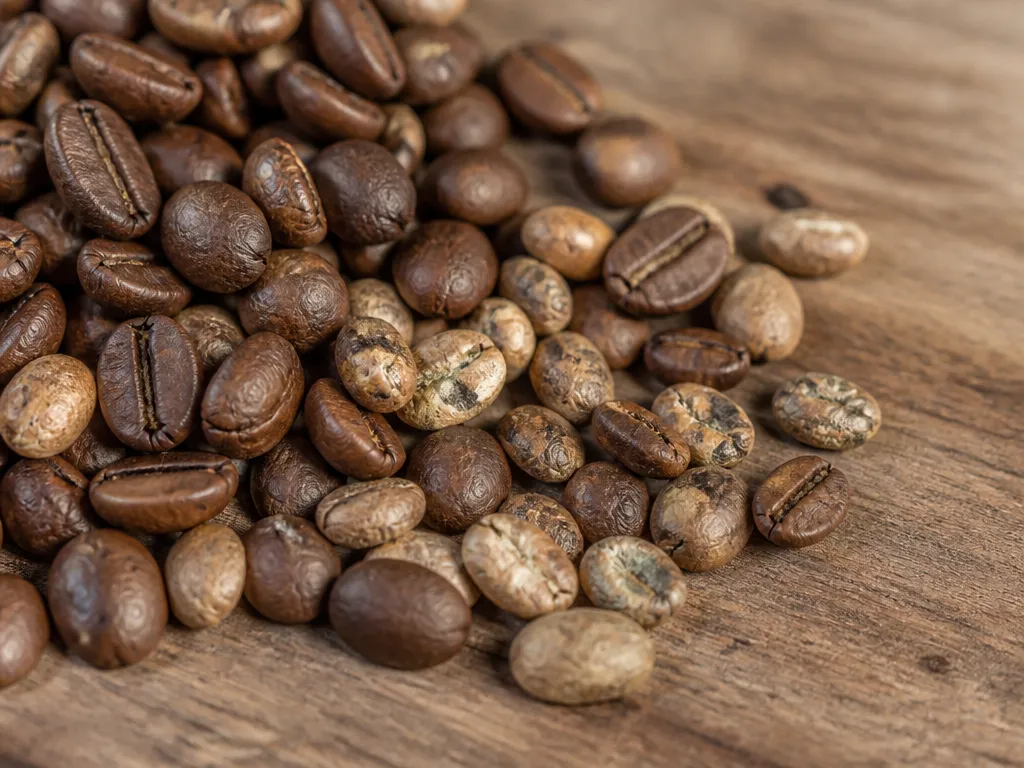
Coffee beans do not go bad like milk, but they do lose quality over time. Air, heat, light, and humidity trigger oxidation, which strips away aroma and flavor. Dry beans are usually safe past their printed date, but they may taste flat, dull, or harsh.
Whole beans typically keep 6-12 months unopened and about 2-3 weeks after opening for peak flavor. Ground coffee usually keeps 3-5 months unopened and 1-2 weeks after opening for peak flavor.
Key Takeaways
- Quality fades first. Oxidation drains coffee’s aroma and flavor even when the beans remain safe.
- Whole beans last longer. Unopened whole beans keep for 6-12 months; opened beans usually peak for 2-3 weeks.
- Green beans last years. Kept dry and cool, unroasted coffee can remain usable for a long time.
- Storage makes the difference. Keep coffee airtight, cool, and dark, and avoid repeated temperature swings.
- Freezing can help. Freeze beans only when they are sealed airtight and portioned to limit warm-air exposure.
Do Coffee Beans Go Bad? Shelf Life Explained?
Roasting starts the freshness clock. From that point on, oxygen, light, heat, and moisture steadily reduce flavor. An unopened bag slows that process, but it does not stop it.
Coffee dates are usually quality markers rather than hard food-safety deadlines. Check for moisture or visible mold, which are uncommon in properly stored dry beans but signal that the coffee should be discarded.
Typical shelf-life expectations for roasted coffee are:
- Whole beans: 6-12 months unopened, then 2-3 weeks after opening for peak flavor
- Ground coffee: 3-5 months unopened, then 1-2 weeks after opening for peak flavor
Instant coffee and brewed coffee follow different timelines, but the same principle applies to beans: opening the package exposes the coffee to more air and speeds up freshness loss.
| Coffee type | Unopened shelf life | Opened shelf life (peak flavor) | Freezer note |
|---|---|---|---|
| Whole beans | 6-12 months | 2-3 weeks | Freezer OK if sealed airtight |
| Ground coffee | 3-5 months | 1-2 weeks | Freezer optional, not preferred |
| Instant coffee | Up to 20 years | 1-2 years (after opening) | Dry pantry preferred |
How to Tell if Coffee Beans Went Bad
Smell the beans first. Fresh whole beans have a noticeable aroma that rises quickly from the bag or container. Stale beans may smell musty, papery, or almost scentless, especially after sitting open for a while.
Check the appearance next. Humidity can make beans clump, and any visible mold means they should be discarded. Surface oil alone is not proof of spoilage; dark roasts are often naturally oilier. However, an oily surface combined with a rancid or unpleasant smell signals oxidation and poor quality.
You can also taste a small brewed sample. Beans past their peak often produce a flat, lifeless cup or a harsher bitterness that overwhelms the chocolatey or fruity notes you remember. Adjusting the grind size or brew ratio may improve extraction, but it cannot restore aroma that has already faded.
Use this decision rule:
- If there is visible mold or the beans are damp, discard them.
- If the aroma is weak and the flavor is dull, the beans are stale and fresher coffee will taste better.
How Long Do Roasted Coffee Beans Last?
Roasted whole beans usually last longer than ground coffee because fewer surfaces are exposed to air. Unopened, they typically keep for 6-12 months, although the best-tasting period may be shorter when storage conditions are poor.
After opening, whole beans generally remain at peak flavor for 2-3 weeks, even when the bag is resealed carefully. Ground coffee loses freshness faster because its greater surface area exposes more coffee to oxygen. It typically keeps 3-5 months unopened and 1-2 weeks after opening for peak flavor.
Your buying habits matter as much as the printed date. A smaller bag purchased more often usually stays fresher than one large bag left open for months. Dark roasts can mask staleness with a strong, roasted taste, so the decline may become obvious only when you compare them with a fresh batch.
Buy and Store Coffee Before It Goes Stale
- Buy roasted whole beans in an amount you can finish within a month or so.
- Move opened beans into airtight storage immediately.
- Keep coffee away from the counter, where heat and light gradually accelerate flavor loss.
- Portion a large purchase so the main supply remains sealed.
How Long Do Green Coffee Beans Last?
Green coffee beans can remain usable for years when stored dry and cool. Because they have not been roasted, they have not yet entered the faster freshness decline associated with roasted coffee.
The main concern is gradual quality loss. Poor storage can expose green beans to humidity, mold, or unpleasant odors. Even without visible spoilage, beans that have aged badly may roast unevenly or produce coffee with muted aroma and flavor.
Treat green coffee like a pantry ingredient. Keep it in an airtight container away from ovens, sunlight, stoves, and other heat sources. Avoid frequent temperature swings, which can create condensation when a container is opened and closed.
Green beans do not taste like finished coffee until they are roasted, so their useful life is really a question of how well they will roast into flavorful coffee. If a familiar batch no longer develops properly or tastes muted after roasting, the beans may be past their best.
How Do You Store Coffee to Maximize Shelf Life?
Airtight storage is the most effective way to slow coffee’s decline. Keep oxygen and moisture away from the beans, and limit how often you open the container.
Light and heat also speed up flavor loss. A sunny kitchen window or a shelf above the oven exposes coffee to conditions that shorten its quality window. A cool, dark pantry or cabinet away from the stove works better for most homes.
Temperature swings create another problem. Moving coffee between cold and warm conditions can cause condensation inside the packaging. That makes refrigerator storage a poor choice for many households: if the container collects moisture, the storage method has created the very problem it was supposed to prevent.
Use this storage approach:
- Keep beans airtight.
- Keep them cool and dark.
- Portion large bags so you do not repeatedly open the entire supply.
A small daily-use container can hold the coffee you plan to brew soon, while the rest stays sealed and undisturbed until needed.
Quick Storage
- Use a container that seals tightly.
- Remove as much air as practical before sealing; do not simply fold and clip the bag.
- Store coffee away from heat, light, and steam.
- Portion large supplies so you do not constantly open the main stash.
Will Freezing Coffee Beans Make Them Last Longer?
Freezing can extend coffee’s quality window when the beans are sealed airtight and portioned before freezing. The goal is to prevent moisture from entering and to avoid repeated thawing and refreezing.
Whole beans generally freeze better than ground coffee because they have less surface area exposed once removed from storage. Ground coffee can also be frozen, but it loses freshness faster after exposure and may be more vulnerable to moisture.
Vacuum sealing works well, as does any container that keeps humid air out. Divide the coffee into portions, remove only what you expect to use soon, and leave the rest sealed in the freezer.
Allowing frozen beans to warm before opening the package helps prevent condensation from forming on the coffee. If the seal is imperfect, warm air can leave moisture on the beans, which may damage aroma and create conditions for mold.
Freezing is useful, but it is not automatic protection. Properly sealed, portioned beans can retain quality for months longer. A loosely closed bag left in a freezer drawer can absorb odors and moisture and may taste worse than coffee stored in a cool, dark cabinet.
Can Expired Coffee Make You Sick?
Mold is the important exception. Discard beans that have absorbed moisture or developed visible mold. Wet grounds in a machine, or coffee contaminated with water or milk, should be treated differently because bacteria and mold can grow in damp conditions.
Dry beans without mold are generally safe to brew even after their best flavor window has passed. The result may be disappointing, but stale roasted beans typically do not cause illness.
Brewed coffee requires more care, especially when it contains milk. Coffee with milk should be treated like a dairy-based beverage, and brewed coffee left at room temperature for too long can become unsafe.
FAQ
Do Coffee Beans Go Bad After the Expiration Date?
Coffee beans usually do not become unsafe immediately after the printed date. Whole beans typically last 6-12 months unopened and about 2-3 weeks after opening for peak flavor. If they are dry and mold-free, they are generally safe even after their aroma has faded.
How Long Do Roasted Coffee Beans Last After Opening?
Roasted whole beans are often best for 2-3 weeks after opening. Ground coffee typically declines faster, reaching its peak for about 1-2 weeks after opening. An unsealed container or storage near heat and light can shorten both periods.
Can You Freeze Coffee Beans to Make Them Last Longer?
Yes. Freezing can help when beans are sealed airtight and divided into portions. Whole beans generally freeze better than ground coffee, and repeated thawing and refreezing should be avoided. If moisture can enter the package, freezing may do little for freshness and can damage the aroma.
Is Stale Coffee Safe to Drink?
Stale coffee is usually safe when the beans are dry and free of visible mold. Discard beans that are damp, clumped from moisture, or moldy.
What Is the Biggest Coffee Storage Mistake?
The most common mistake is leaving opened coffee in a bag or container that lets in air, light, and moisture. Oxygen and humidity accelerate oxidation and drain aroma. Store coffee airtight in a cool, dark place, and use portions so you open the main supply less often.
If a bag of whole beans has been open longer than 2-3 weeks, a fresh batch will likely taste better. To stretch a purchase, freeze sealed, portioned beans and protect them from oxygen and moisture.

- Espresso Bar Wedding: Ideas, Setup, Costs, and Tips for a Memorable Coffee Experience - November 11, 2026
- How Many Grams of Espresso Beans for a Double Shot? A Complete Brewing Guide - November 11, 2026
- Brasilia Espresso Machine: Features, Performance, Models, and Buying Guide - November 11, 2026