
The best V60 recipe for light roast coffee precisely balances water temperature, grind size, and pour technique to unlock vibrant acidity and delicate aromatics.
For many coffee enthusiasts, the pursuit of the perfect cup of coffee is a lifelong journey, and few brewing methods offer the clarity and control of the Hario V60. When it comes to light roast coffees, known for their bright acidity, complex fruitiness, and often floral notes, mastering the V60 becomes an art form. As someone who has spent countless hours meticulously experimenting with variables from water chemistry to grind particle distribution, I understand the subtle nuances required to truly make a light roast shine. This guide will demystify the process, providing you with a refined approach to crafting the optimal V60 brew, ensuring every cup celebrates the inherent beauty of your chosen beans.

Understanding Light Roasts and V60 Brewing
Light roast coffee refers to beans roasted for a shorter duration and at lower temperatures than medium or dark roasts. This process preserves more of the coffee's original characteristics, including its delicate aromatics, higher acidity, and often a brighter, more nuanced flavor profile. Unlike darker roasts which develop more chocolatey or nutty notes, light roasts often present with distinct fruity, floral, or even tea-like qualities. Their density is typically higher, and they require a specific approach to extraction.
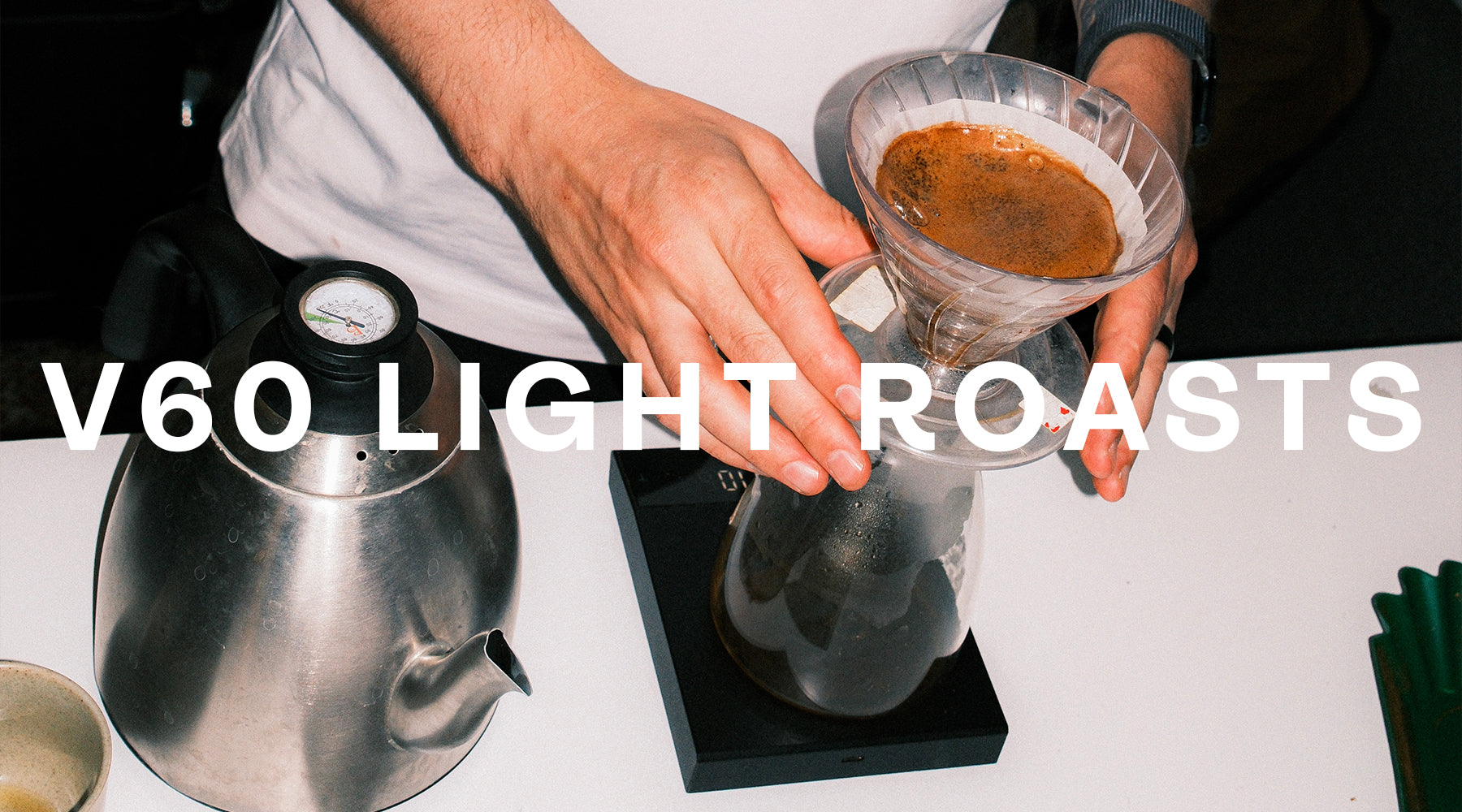
The V60 brewer, with its conical shape, single large drain hole, and ridged interior, is exceptionally well-suited for brewing light roasts. Its design promotes a fast flow rate and allows for significant control over agitation, which are critical factors in extracting the subtle complexities of these beans without over-extracting bitter notes. The open nature of the V60 also highlights the coffee's inherent clarity and brightness, making it the ideal vessel for showcasing the intricate flavors found in the best V60 recipe for light roast coffee.

Essential Equipment for the Best V60 Light Roast
Achieving the best V60 recipe for light roast coffee begins with having the right tools. Investing in quality equipment provides the consistency and control necessary for repeatable delicious results. Each piece plays a vital role in the extraction process.
Here’s what you’ll need:
- Hario V60 Dripper: Available in ceramic, glass, plastic, or metal. While materials can slightly affect temperature stability, a plastic V60 is an excellent and affordable choice, known for good thermal retention.
- V60 Paper Filters: Always use genuine Hario filters. Rinse them thoroughly before brewing to remove any papery taste and preheat your dripper.
- Burr Grinder: A high-quality burr grinder is non-negotiable for light roasts. Consistent grind size is paramount for even extraction. Blade grinders produce uneven particles, leading to both under- and over-extraction simultaneously. I've learned from experience that even a slight inconsistency in grind can completely throw off a delicate light roast brew.
- Gooseneck Kettle: This allows for precise control over your pouring speed and placement, crucial for managing agitation and ensuring even saturation of the coffee bed in your V60 light roast.
- Digital Scale with Timer: Accuracy is key. You need to weigh your coffee and water precisely, and the integrated timer helps you hit your target brew times consistently for the optimal light roast V60 brew.
- Freshly Roasted Light Roast Coffee Beans: This is the star of the show! Source high-quality, freshly roasted beans, ideally within 2-4 weeks of their roast date. Look for beans with tasting notes that appeal to your palate, such as citrus, berry, or floral.
- Filtered Water: Coffee is over 98% water. Using good quality, filtered water free of strong odors or excessive mineral content will significantly impact the final taste of your best V60 recipe for light roast coffee.

The Best V60 Recipe for Light Roast Coffee: A Step-by-Step Guide
This recipe is a culmination of years of experimentation and fine-tuning, designed to unlock the vibrant acidity and complex flavors inherent in light roast coffees. It focuses on gentle agitation and precise pouring to ensure an even and thorough extraction for your light roast V60 brew.
Here is my go-to best V60 recipe for light roast coffee:
-
Preparation (0:00 – 0:45)
- Heat Water: Bring filtered water to a temperature of 205-208°F (96-98°C). Light roasts often benefit from slightly hotter water to compensate for their density and extract their soluble compounds effectively.
- Grind Coffee: Weigh 20 grams of fresh light roast coffee beans. Grind them to a medium-fine consistency, similar to table salt or slightly finer. This specific grind size is crucial for proper extraction in a V60 light roast brew.
- Rinse Filter: Place the V60 paper filter in your dripper and rinse it thoroughly with hot water. This removes any paper taste and preheats the V60 and your serving vessel. Discard the rinse water.
- Add Coffee: Pour the ground coffee into the rinsed V60, gently shaking to level the bed.
-
The Bloom (0:00 – 0:45)
- First Pour: Start your timer and immediately pour 40-50 grams of hot water, just enough to saturate all the grounds. Pour in a slow, circular motion, ensuring even coverage.
- Allow to Bloom: Let the coffee bloom for 30-45 seconds. During this crucial phase, the coffee degasses, releasing trapped CO2, which allows for better water penetration in subsequent pours. You'll see the coffee bed expand and bubble. This initial bloom sets the stage for the rest of your light roast V60 brew.
-
Pulse Pours (0:45 – 2:30)
- Second Pour: At 0:45, begin your second pour. Slowly and steadily pour water in a continuous spiral, starting from the center and working your way outwards to about an inch from the edge, then spiraling back to the center. Aim for 80-90 grams of water, bringing the total to 120-140 grams. This pour should take about 15-20 seconds.
- Third Pour: At 1:30, begin your third pour, adding another 80-90 grams of water using the same controlled spiral technique. The total water should now be 200-230 grams.
- Fourth Pour: At 2:00, execute your final pour, adding 80-90 grams to reach a total of 280-320 grams (or your desired final weight, maintaining a 1:15 to 1:16 coffee-to-water ratio). For example, with 20g of coffee, I often aim for 300g of water.
-
Drawdown (2:30 – 3:30)
- Final Drawdown: Allow the remaining water to fully drain through the coffee bed. The ideal total brew time for this best V60 recipe for light roast coffee is typically between 3:00 and 3:30 minutes. If it drains too quickly (under 2:45), try a finer grind. If it drains too slowly (over 3:45), try a coarser grind.
-
Serve and Enjoy: Remove the V60 dripper, give your coffee a gentle swirl to homogenize the flavors, and pour into your favorite mug. Take a moment to savor the delicate aromas and bright, complex flavors of your perfectly brewed light roast.
Optimizing Your V60 Brew for Light Roast Nuances
Brewing light roasts with a V60 is a dynamic process, and achieving the best V60 recipe for light roast coffee often involves fine-tuning. Understanding the variables and how they impact the final cup is crucial.
- Water Quality is Paramount: Beyond just filtration, consider the mineral content. Water that is too soft can lead to flat, underdeveloped flavors, while water that is too hard can mute delicate notes. Many specialty coffee roasters offer specific water recommendations or sell mineral packets to create ideal brewing water.
- Temperature Control: Light roasts, with their dense cellular structure, generally benefit from higher brewing temperatures (205-208°F or 96-98°C). This extra heat helps solubilize the complex acids and sugars, leading to a sweeter, more balanced cup. If your coffee tastes sour, increasing the water temperature can often help.
- Grind Size Precision: As discussed, a consistent medium-fine grind is essential. However, minor adjustments can significantly alter your V60 light roast brew.
- If your coffee tastes sour, weak, or watery, it might be under-extracted. Try grinding slightly finer.
- If your coffee tastes bitter, astringent, or hollow, it might be over-extracted. Try grinding slightly coarser.
- Pouring Technique and Agitation: The gooseneck kettle isn't just for aesthetics; it provides control. Gentle, deliberate pours minimize channeling and ensure even saturation. Excessive agitation can over-extract fine particles and lead to bitterness, while too little can result in under-extraction. I often find that a slow, steady pour directly into the center for the main pours, with gentle spiraling, works wonders for light roasts, maintaining a flat bed that promotes even flow.
- Brew Time as an Indicator: Your total brew time, from the start of the bloom to the last drip, is a strong indicator of your grind size. Aiming for the 3:00 to 3:30 minute window for a 20g dose is generally a good starting point for the best V60 recipe for light roast coffee.
- Experimentation and Sensory Evaluation: Don't be afraid to experiment! Keep a brewing journal. Note down your coffee, grind setting, water temperature, brew time, and tasting notes. This systematic approach helps you understand what works best for specific beans and develop your palate. Remember, what constitutes the "best" light roast V60 brew can be subjective to personal taste.

The Science Behind Brewing Light Roasts
The unique characteristics of light roast coffees demand a scientific understanding to unlock their full potential in a V60. These beans are generally denser and contain a higher concentration of organic acids and complex carbohydrates compared to their darker counterparts. These compounds are less soluble and require specific conditions for optimal extraction.
- Solubility and Temperature: The compounds responsible for a light roast's vibrant acidity and fruity notes, like chlorogenic acids and various sugars, become more soluble at higher temperatures. This is why a water temperature of 205-208°F is often recommended for the best V60 recipe for light roast coffee. Lower temperatures can lead to under-extraction, resulting in a sour, undeveloped taste.
- Grind Size and Surface Area: A medium-fine grind provides an optimal balance of surface area for water to interact with the coffee particles. If the grind is too coarse, water passes through too quickly, leading to insufficient contact time and under-extraction. If it's too fine, water flow is restricted, causing over-extraction and bitterness, along with potential channeling where water bypasses parts of the coffee bed. Achieving the right grind for your light roast V60 brew is critical for even extraction.
- Agitation and Turbulence: The act of pouring water into the V60 creates turbulence, which helps to dislodge soluble compounds from the coffee grounds. However, excessive turbulence can lead to "fines migration," where tiny coffee particles clog the filter and slow down the brew, or even preferential channeling. A controlled, gentle pulse pour strategy, as outlined in our best V60 recipe for light roast coffee, ensures sufficient, but not excessive, agitation to promote even extraction across the entire coffee bed.
- Total Dissolved Solids (TDS) and Extraction Yield: Professional brewers often measure TDS to determine the strength of the brew and calculate extraction yield (the percentage of coffee mass dissolved into the water). For light roasts, an ideal extraction yield often falls between 19-22%. Achieving this range is the goal of our carefully balanced light roast V60 brew, indicating a successful extraction of desirable flavors without over or under-extracting.
Frequently Asked Questions of best V60 recipe for light roast coffee
What makes light roast coffee different to brew in a V60?
Light roasts are denser and retain more complex acids and delicate aromatics, requiring hotter water and a precise grind to extract these less soluble compounds effectively without bitterness or sourness. This tailored approach is key for the best V60 recipe for light roast coffee.
Why does my V60 light roast coffee taste sour?
Sourness in your V60 light roast typically indicates under-extraction. This can be caused by a grind that is too coarse, water that is too cool, or an insufficient brew time.
What is the ideal water temperature for light roast V60?
For the best V60 recipe for light roast coffee, aim for a water temperature between 205-208°F (96-98°C). This higher temperature helps efficiently extract the complex flavors from the dense light roast beans.
How fine should I grind my light roast coffee for a V60?
A medium-fine grind, similar to table salt or slightly finer, is generally ideal for a light roast V60 brew. Adjust as needed based on your specific beans and equipment to achieve optimal extraction.
What coffee-to-water ratio is recommended for light roast V60?
A common and effective ratio for the best V60 recipe for light roast coffee is typically between 1:15 and 1:16. For example, 20 grams of coffee to 300-320 grams of water.
My light roast V60 brew is taking too long to drain, what should I do?
If your brew is draining too slowly, your grind might be too fine, or you might be experiencing channeling. Try grinding slightly coarser to improve flow rate and achieve the target brew time.
Conclusion
Mastering the best V60 recipe for light roast coffee is a rewarding journey, transforming your daily brew into an exquisite experience. By understanding the unique characteristics of light roasts and applying precise control over variables like water temperature, grind size, and pouring technique, you can consistently unlock the vibrant acidity, delicate aromatics, and complex sweetness these beans have to offer. Remember, patience and experimentation are your greatest allies. Embrace the process, adjust based on your sensory feedback, and don't be afraid to tweak the recipe to suit your specific beans and personal taste. With the knowledge shared here, you are well-equipped to brew extraordinary coffee at home. Continue to explore, taste, and refine your technique, and share your triumphs with fellow coffee enthusiasts.

- Are Pod Coffee Machines Healthy? The Unfiltered Truth About Your Daily Cup - September 27, 2026
- Does Gatorade Have Caffeine? Here’s What’s in Each Type - September 26, 2026
- Does Powerade Have Caffeine, or Is That a Myth? - September 26, 2026