
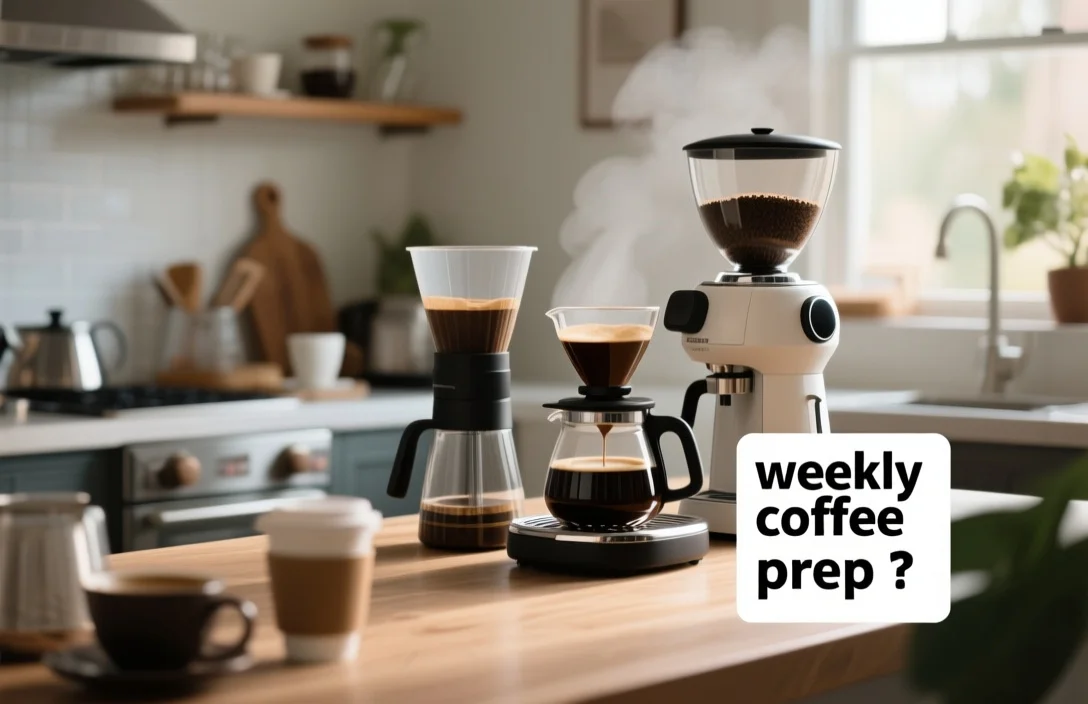
You can prepare a week’s worth of coffee ahead of time if you choose a batch-friendly method and store it properly. That is the short answer. The longer answer is more practical: weekly coffee prep works best when you match the brew method to how you actually drink coffee, then accept that you are trading a little freshness for a lot of convenience.
What weekly coffee prep means, and who it suits
Weekly coffee prep means making multiple servings in one or two sessions and keeping them refrigerated or otherwise ready to use through the week. I would use this approach if your mornings are tight and you care more about a reliable cup than the last bit of aroma from a fresh brew.
It saves time. More important, it cuts out the daily routine of grinding, measuring, and brewing when you are half-awake. For a lot of people, that is the real value.
Two choices matter most here. First, do you want coffee that is meant to be served cold or coffee that is brewed hot and stored? Second, are you comfortable with a mild drop in aromatics in exchange for convenience? Once you answer those, the rest gets easier.
Cold brew and espresso concentrate keep better in the fridge. Hot batch coffee gives you a more immediate fresh-coffee profile, but it tends to lose those volatile notes sooner.
Which weekly prep method fits your routine
Pick the brewing method first, because it determines grind size, steep time, and storage. I would not start by shopping for gear. Start with the kind of coffee you actually want to drink.
Cold brew makes a smooth, low-acidity concentrate that stores well and can be diluted for hot or iced drinks. Hot batch brew, whether from a large drip machine or a controlled pour-over setup, gives a more familiar fresh cup, but it does not hold onto its aroma as well. French press batch brewing is simple and full-bodied. Espresso concentrate, whether from a machine or moka pot, is useful for milk drinks. Japanese-style cold extraction is a slower method that preserves a brighter, more delicate flavor.
| Name | Price/Key Spec | Best For |
|---|---|---|
| Cold brew (steep concentrate) | Long steep time, coarse grind, refrigerated concentrate | People who drink mostly iced coffee or want a stable concentrate for milk drinks |
| Hot batch drip | Large-volume drip or large pour-over, medium grind, serve fresh or chilled | Households that want traditional hot coffee and will consume within a few days |
| French press batch | Immersion method, coarse grind, quick heat-and-pour | Fans of full-bodied coffee who want simple equipment and no filtration paper |
| Espresso concentrate (stovetop or machine) | High pressure or high-pressure style concentrate, fine grind | Milk-based drinkers who will reheat shots into lattes or cappuccinos |
| Japanese-style cold extraction | Slow-fracture drip cold brew, delicate flavor retention | People who prefer bright, single-origin flavors over a syrupy concentrate |
No single method is best for everyone. Cold brew gives you the most shelf stability. Hot batch coffee is strongest on day one. Espresso concentrate is the most flexible if your week revolves around milk drinks. My practical rule is simple, iced-heavy weeks favor cold brew, hot mornings with little time favor batch drip.
Beans, roast, and grind
Choose beans that fit the way you prep coffee, not just the way they taste in a café. Light and medium roasts tend to show more floral and acidic notes, but those can fade faster when the coffee is stored. Medium-dark roasts are usually more forgiving over several days. Single-origin beans can be interesting for small-batch pour-over, while blends often behave better in a weekly routine.
Buy whole beans if you can, then grind them just before the first prep session. Pre-ground coffee loses aromatics quickly, and that loss matters more when you are storing brewed coffee for several days. If whole beans are impractical, buy freshly sealed pre-ground coffee in small amounts and use it quickly.
Keep roast dates visible. If a bag does not have one, I would treat it as a less certain purchase and keep the brewed coffee’s storage window short.
Grind size should follow the method, not the other way around. Coarse grind suits cold brew and French press. Medium grind works for batch drip. Fine grind is for espresso or espresso-style concentrate. If the grind is wrong, the coffee will be either under-extracted or over-extracted, and that gets more noticeable once it sits.
A simple brew-once, drink-all-week routine
A weekly routine should reduce friction, not add another project to your Sunday. I would keep it repeatable and plain.
- Make a cold-brew concentrate:
– Combine coarse ground coffee with cool water in a large container at a ratio that matches your taste.
– Stir to saturate the grounds, cover the container, and refrigerate it for a long steep.
– Filter through a fine mesh or paper filter, decant into sealed bottles, and refrigerate.
– Dilute with hot water, milk, or ice when serving.
- Brew a large hot batch:
– Measure coffee for the total volume you expect to drink during the week, using a medium grind.
– Use a large-capacity drip brewer or make several large pour-overs back-to-back on a scale.
– If you plan to store it, cool it right away, transfer it to sealed bottles, and refrigerate it.
- Pull espresso concentrate for milk drinks:
– Pull multiple shots, or use a stovetop moka pot to create concentrated coffee.
– Cool the shots quickly in an ice bath if you intend to store them, then transfer them to an airtight container.
– Reheat gently, or combine the cold concentrate with warmed milk when serving.
A few finishing steps matter for all three methods. Cool the coffee quickly. Store it in airtight containers. Label the container with the prep date. Those are small habits, but they make the routine more predictable.
Containers and refrigeration
Storage is where a lot of weekly coffee prep goes wrong. Coffee that was brewed correctly can still taste dull if it is left in the wrong container.
Use containers that limit headspace and air exposure. Glass bottles with tight caps work well. Stainless steel vacuum bottles can work too. I would avoid loosely covered pitchers. Smaller bottles with narrower necks are better than wide-mouth jugs because they leave less air in contact with the coffee.
Refrigeration is the default for weekly prep. Unless you are using a shelf-stable concentrate made with preservatives, which most home routines are not, the fridge is the safer choice. Keep the container on a middle or back shelf rather than in the door, where temperatures swing more.
Label the bottle with the date and the method. That sounds basic, but it prevents the sort of confusion that leads to stale coffee sitting in the fridge for too long.
If you want to freeze coffee, do it only when you expect to keep it longer than a week. Use portion-sized containers so you can thaw only what you need. Freezing can alter mouthfeel, so I would treat it as a convenience move, not a quality move.
How to serve it during the week
Your daily routine should be almost automatic. The more steps you add in the morning, the less likely you are to stick with it.
For cold brew concentrate, mix one part concentrate with one or more parts water or milk, depending on how strong you want it. For refrigerated batch drip, drink it cold or warm it gently on the stovetop. I would avoid repeated microwaving when I can, since it can create uneven heating.
If you are reheating a small pour, preheat the mug with hot water first. If you are commuting, measure the concentrate directly into a travel mug. Milk-based drinks tend to be the most forgiving if the coffee has lost a little brightness, which is one reason concentrates work so well for weekly prep.
A few simple variations keep the week from feeling repetitive:
- Iced latte: concentrate, cold milk, ice.
- Hot americano-style: diluted concentrate, hot water, and a pinch of salt if you like a sharper finish.
- Coffee smoothie: concentrated coffee, banana, milk, and a spoon of nut butter.
Gear worth buying first
I would buy equipment that makes the routine easier, not equipment that looks impressive on a counter. The single best purchase is a burr grinder. A burr grinder gives you a more uniform grind, which matters more in batch brewing than a blade grinder does.
Here is the basic gear list, in the order I would usually consider it:
- Burr coffee grinder, ideally with a hopper that matches your weekly volume
- Airtight glass bottles or vacuum thermoses for storage
- A large-capacity brewer, such as a drip machine, large pour-over cone, or French press, depending on your method
- Fine mesh or paper filters for cold-brew filtration
- A digital scale for consistent dosing
If you are choosing between a grinder and a sealed bottle, I would buy the grinder first. Better grind consistency improves the coffee itself. If you care most about milk drinks, a moka pot or compact espresso machine may be the more useful single purchase.
Mistakes that make weekly coffee taste worse
There are a few habits that almost always hurt batch coffee.
One is over-steeping cold brew or grinding too fine. That usually gives you a bitter concentrate that does not improve in the fridge. Another is using stale beans or pre-ground coffee that has already lost much of its aroma. Storage cannot rescue weak input.
Cooling is another weak point. If hot coffee sits on the counter for hours before it goes into the fridge, flavor drops faster. Dirty bottles and utensils are a separate problem. They can shorten shelf life and add off-flavors.
Labeling matters too. If you do not mark the date, you will eventually forget what is in the bottle and how long it has been there.
A short checklist helps:
- Clean all containers and tools before use.
- Grind to the correct size for the method.
- Cool brewed coffee quickly and transfer it to airtight containers.
- Label containers with the date and method.
- Discard any coffee that smells sour or tastes off, or anything that is past your own freshness window.
When the batch tastes off
If your weekly coffee tastes thin, I would first look at dose and grind. A slightly finer grind or a little more coffee often fixes weak extraction. Sour notes usually point to grind that is too coarse or brew time that is too short. Bitter coffee often means the opposite, grind too fine, too much extraction, or water that was too hot.
If a concentrate tastes syrupy or heavy, dilute it with hot water or milk before deciding it is a failure. That often brings the balance back. If the flavor still seems wrong after dilution, check the beans and the container. Stale beans and poor storage are common culprits.
I would change one variable at a time. Grind, dose, steep time, and storage temperature all matter, but changing all four at once makes it hard to know what helped.
Sample weekly schedules
The best schedule is the one you can actually keep. For a five-day workweek, one session on Saturday can cover most of your needs if you make cold brew concentrate or another stored batch. If you prefer hot coffee, you may want to split the week into two brews.
Sample plan A, cold-brew focused:
- Saturday: make a full-week concentrate and bottle it into servings.
- Daily: dilute with milk or water as needed.
Sample plan B, hot brew with a midweek refresh:
- Sunday: brew a large batch for Monday through Wednesday.
- Wednesday evening: brew a second batch for Thursday through Saturday mornings.
Family size changes the math. So does whether you drink one cup or three. I would track actual use for two or three weeks, then adjust the batch size. That is usually enough to land on the right dose, grind, and storage method.
Waste, cleanup, and the practical side
Weekly prep can reduce packaging waste if you buy whole beans in larger bags and use reusable containers. It can also increase waste if you brew too much. I would rather see a slightly smaller batch that gets finished than a large one that gets poured down the drain.
Reuse glass bottles when you can. Compost coffee grounds if your local setup allows it. Some community gardens and compost programs accept them. Reusable filters are worth considering for some batch methods, and they can cut down on disposable paper use.
A kitchen scale helps here too. It keeps doses consistent and reduces the chance of overbrewing.
FAQ
How long will weekly-prepared coffee keep in the fridge?
Refrigerated brewed coffee usually stays drinkable for several days, but the flavor declines over time. The exact window depends on the method, the container, and the quality of the beans. When the coffee starts tasting sour, flat, or otherwise off, I would stop using it.
Can I freeze brewed coffee without ruining it?
Yes, if you portion it well and use airtight containers. Thaw only what you need. Freezing can change mouthfeel and soften flavor, so it is better for convenience than for peak quality.
Should I grind beans for the whole week at once?
I would not. Grinding ahead speeds up the loss of aromatics. It is better to grind only what you need for the prep session. If you have no choice, keep the ground coffee airtight, cool, and dark, and expect a shorter useful window.
Is cold brew better for weekly prep than hot brew?
For storage, cold brew is usually the safer bet. It makes a stable concentrate and holds up well in the fridge. Hot batch brew gives a fresher aroma on day one, but it typically loses those notes faster. The better choice depends on whether you value shelf stability or fresh cup character.
My practical takeaway
Weekly coffee prep makes sense if you want a simpler morning and you are willing to give up a little freshness. I would choose the method based on the drinks you already make, not on what sounds most elaborate. Cold-brew concentrate fits iced and milk drinks. Hot batch drip fits a more traditional cup. Espresso concentrate fits milk-heavy routines.
If you want to start this weekend, keep it basic. Choose the beans, measure one session’s worth, brew a single controlled batch, and write down the grind, dose, and storage date. That gives you enough to improve the next week without turning coffee into a project.

- Espresso Tastes Watery? 10 Common Causes and How to Fix It - October 23, 2026
- 10 Common Coffee Equipment Cleaning Mistakes and How to Avoid Them - October 23, 2026
- 17 Common Coffee Grinder Problems and How to Fix Them - October 23, 2026