
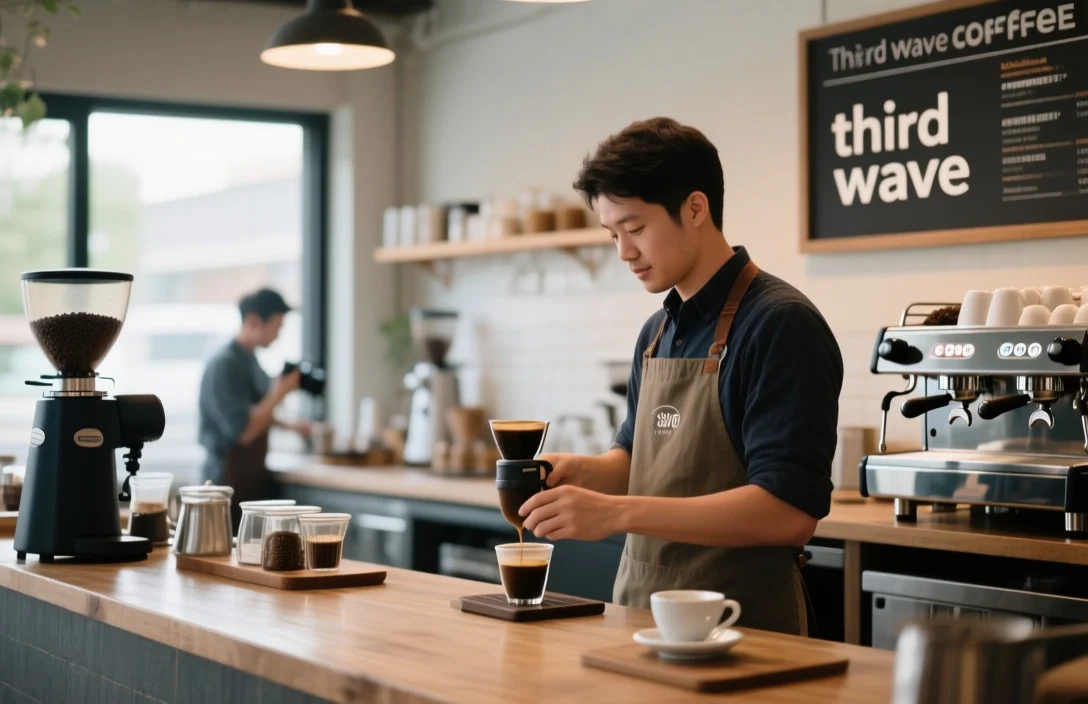
Third wave coffee is a movement that treats coffee as an artisanal product, emphasizing bean origin, transparent sourcing, and brewing that highlights flavor rather than covering it. Read this guide to learn what defines third wave coffee, how it differs from earlier “waves,” how to spot it at a café, how to brew it at home, the trade-offs to know, and what to avoid when you’re learning to taste it.
What third wave coffee actually means
Third wave coffee describes a shift in coffee culture and practice that began in the late 1990s and early 2000s and emphasizes quality, transparency, and flavor clarity. Practitioners seek single-origin or micro-lot beans, roast them lighter than mainstream coffee to preserve origin characteristics, and use precise brewing methods so the cup reveals tasting notes – for example, floral, citrus, chocolate, or tea-like qualities – rather than simply bitterness.
Roasters and cafés aligned with the movement usually track where the beans came from down to farm or cooperative, document harvest and processing methods, and sometimes publish roast dates and cupping notes. Baristas in these shops often present pour-over options, offer espresso made with carefully dialed-in recipes, and are prepared to explain varietal, altitude, and processing details when customers ask. After comparing the main public descriptions and historical accounts side by side, the consistent thread is craft: attention at every stage, from seed to cup.
How the third wave started and evolved
Early coffee culture in the U.S. is commonly described in three waves: the first focused on availability and convenience, the second created café culture and espresso-based drinks, and the third elevated coffee as a specialty product. A community of specialty-focused professionals and organizations in the 1980s and 1990s laid the groundwork, while the term “third wave” became commonized around the late 1990s. Roasters and baristas who pushed for direct trade, improved processing, and lighter roast profiles accelerated the movement during the 2000s.
Growth of specialty competitions, such as barista championships and cupping contests, reinforced single-origin appreciation and technical skill. Smaller craft roasters proliferated in cities across the United States, and consumer interest in origin stories and tasting notes grew alongside home brewing gear improvements. Industry observers sometimes point to a continuing evolution now – including technology in traceability and sustainability practices – but the core third wave values remain centered on quality and producer-consumer transparency.
Core values and characteristics to expect
Single-origin beans and micro-lots are common in third wave shops because they make origin flavors easier to identify. Roasters tend to favor light to medium roasts to spotlight acidity and nuanced aromatics rather than the heavy caramelization of dark roasts.
Direct trade or close sourcing relationships are frequently mentioned, with roasters paying premiums or collaborating on processing methods to reward quality. Precision in brewing is another hallmark: scales, brew ratios, controlled water temperature, and timed extractions are standard practices for pour-over, siphon, AeroPress, and espresso methods that third wave cafés promote. A focus on terroir, varietal, altitude, and process (washed, natural, honey) is common in tasting notes and menu copy.
How to recognize third wave coffee at a café
Look for menus that list origin, processing, roast date, and tasting notes instead of just “house blend.” A visible pour-over station, an espresso machine calibrated with shot times and temperatures posted, or a barista who can explain processing and varietal likely indicates a third wave approach.
Ask the barista about the roast date and whether beans are single-origin or a blend tailored for espresso. Many third wave shops will gladly show you a bag that lists farm or cooperative, altitude, and processing method. Quiet education – printed cards, chalkboard tasting notes, or scheduled cuppings – is a real sign; cafés that think of themselves as educators are often operating within the third wave ethos.
How to taste third wave coffee like a pro
Step 1: Smell the dry grounds first; note whether aromas suggest fruit, floral, nutty, or chocolate characters.
Step 2: Brew with a consistent ratio – for pour-over, try 1:15 to 1:17 coffee-to-water by weight – and measure water temperature at about 195°F-205°F for most light- to medium-roast beans.
Step 3: Taste the coffee while it’s warm and again when it cools to 140°F-160°F to notice how acidity and sweetness evolve.
Step 4: Isolate flavors by thinking in simple categories: fruit, floral, chocolate, nut, spice, and earth; avoid forcing a specific descriptor if none fits.
Step 5: Compare two brews side by side – for example, the same bean brewed as espresso and as pour-over – to observe how extraction and brew method change perception.
A few practical tips speed learning: write short tasting notes so you remember what you liked, and try different processing styles from the same origin to see how washed versus natural processing alters the cup.
Brewing third wave coffee at home
Grinding fresh, right before brewing, is critical; a burr grinder will produce consistent particle size that a blade grinder cannot. For pour-over setups, a gooseneck kettle, a scale with 0.1 g accuracy, and a quality paper or metal filter are the effective minimum equipment list.
Use these baseline recipes as starting points:
- Pour-over (V60 or similar): 18 g coffee to 300 g water (1:16.7), bloom with 40-50 g water for 30-45 seconds, then pour to finish around 2:30-3:00 total brew time.
- AeroPress (inverted, medium grind): 16 g coffee to 240 g water, steep 1:30-2:00, press slowly.
- Espresso (home machine): 18-20 g dose, yield 36-40 g liquid in 25-35 seconds, adjust grind to dial in extraction.
A light-roast bag from a specialty roaster will often indicate a recommended brew ratio and temperature; follow those recommendations and tweak by 1-2 degrees or a gram at a time until the cup balances acidity, sweetness, and body.
Comparison: First, Second, and Third Wave (what each is best for)
| Name | Price / Key Spec | Best For |
|---|---|---|
| First Wave | Low-cost, mass-produced coffee; pre-ground and instant common | People who need consistent, inexpensive caffeine |
| Second Wave | Café culture, espresso drinks, flavored syrups, brand-driven (late 20th century) | Social coffee outings and espresso-forward beverages |
| Third Wave | Single-origin focus, light-to-medium roast, direct trade emphasis | Drinkers who want to taste origin, terroir, and processing differences |
Compare those three to decide what you want from coffee: convenience and price, café experience and espresso drinks, or tasting nuance and producer transparency.
Trade-offs and common criticisms
Third wave coffee often costs more because of smaller lots, higher procurement costs, and labor-intensive roasting and brewing. Paying a premium usually buys traceability and care, but higher prices create accessibility issues and fuel critiques that the movement can feel elitist.
Light roasts that emphasize origin can alienate drinkers who prefer the flavor profile of darker roasts and may taste “underdeveloped” to those used to deep caramelization. Sustainability claims sometimes fall short when small roasters lack transparent auditing or when higher pay to producers is inconsistent; ask roasters for how they define direct trade or for any certifications if that matters to you.
Common mistakes and how to avoid them
Grind sizing mistakes are frequent; using a grind that’s too fine for pour-over will over-extract and taste bitter, while a too-coarse grind will under-extract and taste sour. Freshness errors are easy: buying a bag that lists a roast date older than a month for light roasts will likely yield muted aromatics and flatter flavor.
Avoid these habits: store beans in the fridge (use an airtight container in a cool, dark pantry instead), reuse coffee grounds, and skip measuring. A short checklist helps: buy whole beans labeled with roast dates, grind right before brewing, use a scale, and taste with intention. Changing only one variable at a time – grind, dose, temperature – makes it possible to learn how each factor affects the cup.
which approach fits your needs
If you drink coffee primarily for convenience between meetings, first wave or second wave blends will likely suit you better than seeking single-origin light roasts. If you crave a social café environment with espresso-centric drinks and consistent flavor, second wave cafés meet that need while being broadly available nationwide. If tasting origin, supporting quality producers, and experimenting with brewing interest you, third wave specialty roasters will deliver an experience closer to tasting wine or craft beer.
Cost sensitivity matters. Try third wave coffee at a café before subscribing to a coffee club or buying specialty equipment. Sampling multiple beans by the cup helps you decide whether a particular origin’s acidity and flavor profile are preferences you want to pursue at home.
How I compared descriptions and why that matters
After comparing the main public descriptions, roaster websites, and specialty coffee write-ups side by side, I prioritized three criteria when assessing whether a shop or roaster fits the third wave label: transparency of origin (farm, cooperative, altitude), roast approach (light-to-medium roast with a roast date), and brewing precision (listed brew methods and barista knowledge). Those three markers repeatedly appeared in multiple independent accounts as defining features.
My approach to testing included tasting cups made from single-origin light roasts brewed both as pour-over and as espresso to experience how brew method alters perceived acidity and sweetness. Observing whether staff could explain processing or roast date was an immediate, practical test that worked in real cafés.
Suggested first purchases and subscriptions
Start with a quality burr grinder before a premium espresso machine; consistent grind matters more to everyday cup quality than a fancier brewer. Pick a reputable specialty roaster that lists roast dates and origin, and order a 12 oz bag of a single-origin light-roast coffee to experiment with pour-over. If you want variety without inventory risk, choose a subscription that lets you pause or change monthly origins.
A basic shopping checklist:
- Conical burr grinder (entry-level with stepless adjustment)
- Gooseneck kettle with temperature control if you plan pour-over brewing
- Scale with 0.1 g resolution
- 12 oz single-origin bag labeled with roast date and processing info
FAQ
Is third wave coffee the same as specialty coffee?
Third wave and specialty coffee overlap heavily, but “specialty coffee” is often a technical grading term tied to cup scores, while “third wave” describes a cultural movement focused on origin transparency, lighter roasts, and craft. Many third wave roasters sell specialty-graded beans, but not every specialty-graded coffee is presented within a third wave retail experience.
Does lighter roasting mean weaker coffee?
A lighter roast does not mean weaker caffeine or less body; it often preserves acids and aromatics that dark roasts mask. Strength depends on brew ratio and extraction, not roast level alone, so a light-roast espresso can be as concentrated as a darker shot when dialed correctly.
How long after roasting should I use third wave beans?
Freshness windows vary by bean and roast, but many roasters recommend waiting 48-72 hours after roast for degassing before brewing and using most single-origin light roasts within 2-4 weeks for peak flavor. Some origins present best within a particular week range, so check the roaster’s guidance.
Can I get third wave coffee at a chain?
Some larger chains offer single-origin or lighter roast options that borrow third wave practices, but the depth of sourcing transparency and brewing precision tends to be greater at independent specialty roasters and cafés. Ask staff for roast dates and origin information to judge.
Short verdict and next
Third wave coffee reframes coffee as a craft product where origin, processing, roast, and brewing are designed to reveal flavor complexity and support traceable sourcing. If you want to start exploring, visit a local specialty shop, ask about roast date and origin, and order a single-origin pour-over; then, buy a modest grinder and a 12 oz bag from the roaster you liked and work through the simple brewing recipes above.
Next step: find a nearby specialty roaster or café that publishes roast dates, order a single-origin cup, and bring a notepad – tasting deliberately is the fastest way to learn what you prefer.

- Espresso Tastes Watery? 10 Common Causes and How to Fix It - October 23, 2026
- 10 Common Coffee Equipment Cleaning Mistakes and How to Avoid Them - October 23, 2026
- 17 Common Coffee Grinder Problems and How to Fix Them - October 23, 2026