
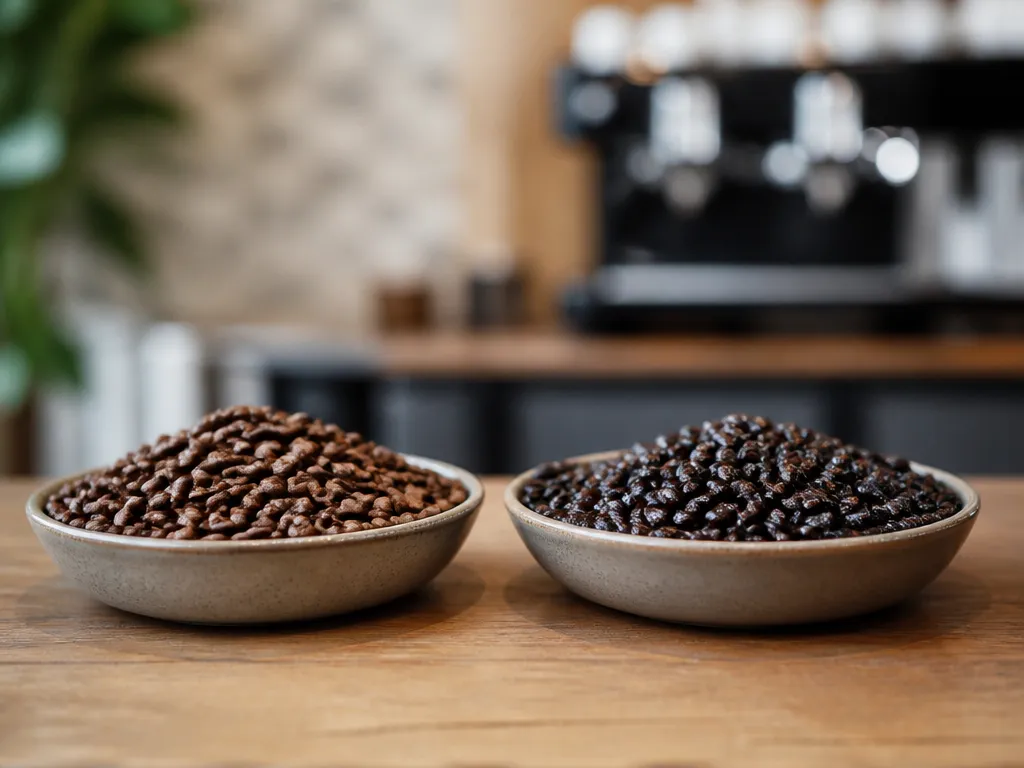
Specialty coffee and commercial coffee differ in sourcing, roasting, and grading, and those choices shape the cup. In the US market, price alone does not tell you which category you are buying. “Specialty” refers to quality control and cupping scores, not a marketing mood.
Specialty coffee generally comes from tighter sourcing and careful roasting, with an emphasis on origin character and cup quality. Commercial coffee is typically blended and traded with looser grading, prioritizing consistency, volume, and cost. Choose specialty for sweetness, clarity, and distinctive origins. Choose commercial for the cheapest reliable cup.
Specialty vs Commercial Coffee
- Grading separates the categories. Specialty is tied to cupping scores, while commercial coffee is not held to the same benchmark.
- Taste clarity varies. Specialty tends to show distinct sweetness and flavor notes; commercial coffee is usually more uniform.
- Processing changes flavor. Washed, natural, and honey methods affect acidity, body, and fruitiness.
- Roasting matters in both categories. Fresh, well-matched roasting improves the cup, especially for espresso.
- Brew according to the coffee. Specialty often rewards more careful extraction; commercial coffee usually delivers good results with simpler settings.
What’s Different
Coffee quality can deteriorate after purchase if you store it poorly, over-roast it, or roast it unevenly. Those problems flatten specialty character quickly. A well-roasted commercial blend can still be enjoyable, especially in milk drinks, where espresso sweetness and stronger flavors make subtle defects less noticeable.
How Specialty Coffee Is Graded and Defined
Specialty coffee is generally defined through professional cupping, where trained tasters evaluate aroma, acidity, body, flavor, and aftertaste. The designation depends on how the coffee performs in standardized tasting, not simply on whether the bag says “premium.”
A specialty bag will often list the farm or co-op, variety or lot information, and roast date. Those details do not guarantee that you will like the coffee, but they suggest the roaster selected it deliberately and treated it as something more specific than an interchangeable commodity.
Commercial coffee does not use the same global, standardized “high score” threshold associated with specialty coffee. Commercial lots can instead be sourced and blended to reach a target flavor profile, then roasted to reduce variation between batches.
Look for meaningful sourcing and roast-date information if you want coffee that behaves more like specialty. Vague packaging and broad claims point more often toward commercial coffee, even when the coffee itself tastes decent.
Taste and Quality Differences You’ll Notice
Specialty coffee often tastes more distinct, with identifiable sweetness, fruit or chocolate-like flavors, and a cleaner finish. You will notice that separation most clearly in black coffee, pour-over, and light to medium roasts, where clarity is part of the appeal.
Fresh specialty roasts can change quickly. They may improve during the first days after roasting, then gradually flatten as they stale. Commercial coffee can be more forgiving because it is often roasted darker or blended for a “ready now” profile, although stale coffee is stale regardless of category.
Quality also depends on defect control and consistency. Specialty coffee usually reduces the chance of harshness or muddiness caused by variability in the source. Commercial coffee can be clean, but variation between brands – and sometimes between bags – is more likely if the blend changes.
If you drink one style through one brewing method, the choice is simple. Specialty is most worthwhile when you can brew to taste and do not mind some experimentation. Commercial is the better fit when you want a predictable daily cup with minimal fuss.
Processing Methods That Shift Flavor
Processing strongly affects flavor in both categories. Specialty roasters are more likely to identify the processing method and select lots that make its character obvious.
Washed processing often produces a cleaner cup with brighter acidity and more tea-like clarity. Natural processing leaves the fruit on the beans while they dry, which tends to increase fruitiness, sweetness, and body. Honey processing falls between the two, often producing sweetness and fuller texture without the intensity of some naturals.
Roast level changes these effects. A washed coffee can lose its sparkle when roasted too dark, with bright notes giving way to generic bitterness. A natural coffee can become syrupy or muddy if roasted too dark or brewed with excessive extraction.
Use processing as a starting point. Choose washed lots for clarity and natural or honey lots for sweetness and body. Then adjust one brewing variable at a time, since grind and extraction can imitate the effects of processing.
A “flat” coffee is not automatically low quality. A grind that is too fine can cause over-extraction, while a grind that is too coarse can cause under-extraction. Processing sets the flavor potential; extraction determines how much of it reaches the cup.
Cost Trade-offs: Beans, Roasting, and Freshness
Specialty coffee usually costs more because its supply chain is more selective, and the roaster often pays for tighter lot control, careful roasting, and greater sourcing transparency. Commercial coffee usually costs less because blends are built for scale and sourcing is optimized for volume.
The tradeoff is not limited to the purchase price. Freshness has a major effect on flavor, and specialty roasters are more likely to roast close to when you buy or print a roast date. At home, the difference between a fresh specialty bag and a stale one can be substantial, especially with light roasts.
Roast style also affects value. Lighter roasts preserve more origin character but require better brewing control to avoid sourness or a thin body. Darker roasts cover brewing mistakes more easily, but they can flatten the delicate flavors specialty drinkers are paying for.
If you are budget-conscious, compare the cost per enjoyable cup rather than the price per bag. Roast date, storage, and your ability to brew the coffee well all affect the value.
Exact US price benchmarks are not included here, but the general tradeoff remains: specialty usually costs more upfront and rewards careful storage and brewing, while commercial coffee costs less and demands less from the brewing process.
Who Should Choose Specialty or Commercial Coffee?
Choose specialty coffee if you want to taste origin and processing, drink mostly black or lightly sweetened coffee, and are willing to adjust grind size and brew time. It also suits people who enjoy tinkering, because the cup responds quickly when you dial in the method.
Choose commercial coffee if you want forgiving, dependable coffee for everyday use, make many milk drinks, or need a stable flavor when your brewing setup is inconsistent. Commercial blends can be especially practical when convenience matters more than experimentation.
A combination of both is often the best value for a US household. Use specialty coffee for your main drink and commercial coffee as a bulk backup. If you mostly drink espresso with milk, a commercial blend can control costs while you reserve specialty coffee for pour-over or weekend black coffee.
Check the bag and your routine for these details:
- Look for an actual roast date and buy close to it.
- Prefer clear sourcing information. Even if you do not recognize the farm, specific details usually indicate tighter control.
- Match the roast level to your brewing comfort. If you dislike dialing in coffee, choose medium or medium-dark.
- If a coffee tastes good one day and poor the next, check storage before blaming the category.
Households with mixed preferences can brew one flavor-expressive coffee for adventurous drinkers and one “blend and forget” option for everyone else. The category choice then becomes a workflow choice, not a household argument.
How to Brew Specialty and Commercial Coffee
Brew specialty coffee to emphasize clarity, but do not overcomplicate the process. Start with a medium grind – for paper-filter pour-over, aim for a texture similar to sand – and use enough agitation for even extraction. Avoid boiling-water extremes with delicate, lighter roasts. If the coffee tastes sour or thin, increase contact time or grind slightly finer.
Brew commercial coffee for consistency rather than precision. It can still produce an excellent cup, but you usually do not need to control every variable. If the coffee is dark roasted, use a slightly coarser grind than you would for light specialty coffee. Dark roasts extract quickly and can turn bitter when pushed too far.
Milk drinks reduce the importance of the category and increase the importance of the roast match. Espresso needs to withstand pressure and extraction without becoming harsh. Many commercial blends are designed for that job, while specialty espresso blends can also work well but may reveal over-extraction more quickly because their flavors are more distinct.
Use this dial-in process with either category:
- Set the dose and ratio first – coffee weight compared with water volume.
- Adjust the grind in small steps.
- Keep the water temperature steady.
- If the coffee tastes sour, grind finer or increase contact time.
- If it tastes bitter, grind coarser or reduce contact time.
- Change other method variables only after those adjustments.
If a washed specialty coffee tastes watery, grind finer or increase brew time before switching to a darker roast. The flavor may already be present; the extraction simply has not pulled enough of it into the cup.
FAQ
What’s the main difference between specialty and commercial coffee?
Specialty coffee is evaluated through standardized cupping and usually comes in tighter, more traceable lots. Commercial coffee is typically blended for scale and dependable everyday flavor.
Is specialty coffee always more expensive?
Specialty coffee usually costs more per bag because it is sourced and selected with tighter controls. You can still get good value from it when you use fresh beans and match the brewing method to the roast level.
How long does specialty coffee stay fresh?
Specialty coffee is usually most enjoyable during the first weeks after roasting, then declines as it goes stale. Freshness depends on roast level and storage, so use the roast date as your guide and keep the beans airtight and away from heat and light.
Can I use specialty coffee for espresso?
Yes, but the roast level and extraction method matter. Lighter-roasted specialty espresso can taste sour when under-extracted, while darker blends can taste harsh when over-extracted. Adjust the grind and keep extraction balanced.
What’s a common mistake people make when switching from commercial to specialty?
Many people buy specialty beans and brew them too aggressively or too loosely without changing the grind or brew time. Specialty coffee reveals extraction problems quickly. Start with your usual method, then change one variable – usually the grind – until the cup balances.

- Unlocking the Venti: Discover the Perfect Shot Count for Your Drink - October 13, 2026
- Unpacking the Buzz: Caffeine Levels in Café Bustelo Espresso - October 13, 2026
- How to Fix Bitter Coffee: 10 Expert Ways to Improve the Taste - October 4, 2026