
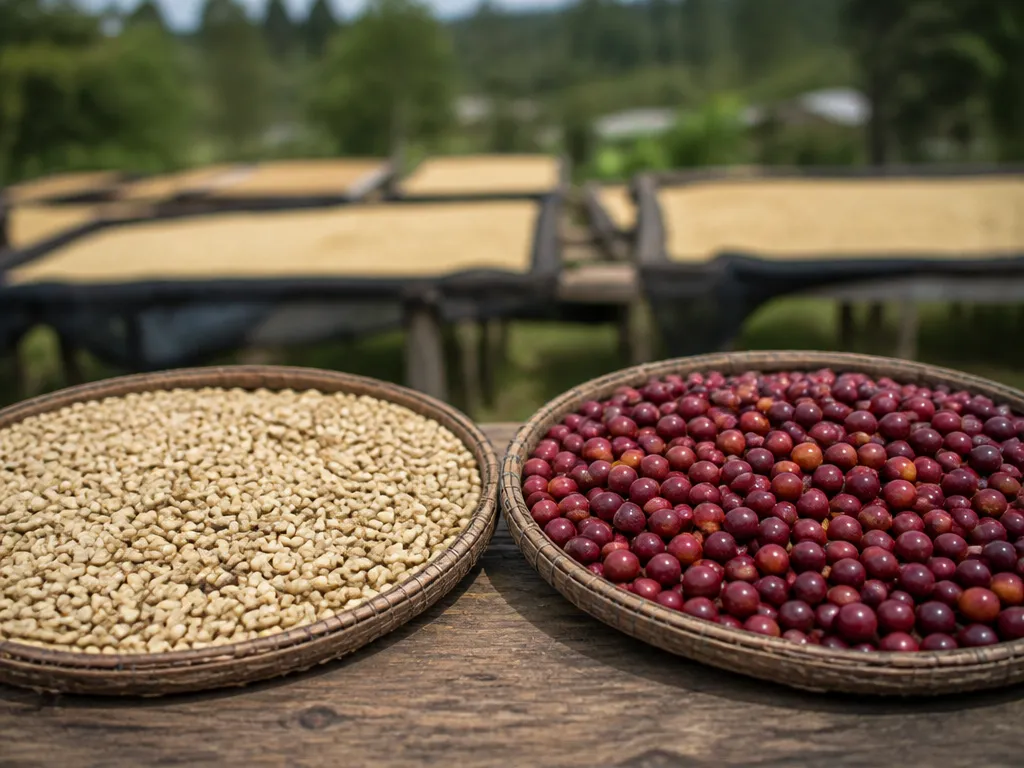
Washed coffee is the better starting point if you want clarity, brightness, and predictable brewing. Natural coffee is the better choice if you want berry, jammy sweetness, and a more expressive cup.
The processing method determines how much cherry fruit remains around the bean during drying. Washed coffee has most of that fruit removed first, while natural coffee dries inside the whole cherry. That difference affects flavor, body, acidity, aroma, and how easily the coffee behaves in a brewer.
Key Takeaways
- Cleaner cup: Washed coffee usually brews a cleaner, more consistent cup than natural coffee.
- More fruit: Natural coffee often tastes fruitier and more fermented, especially at medium to dark roast levels.
- Brighter acidity: Washed coffee commonly feels brighter; natural coffee often tastes rounder and sweeter.
- Easier brewing: Washed coffee tends to be easier to dial in for pour-over and espresso.
- Taste-first choice: Pick washed for clarity and natural for jammy fruit and extra character.
Washed vs Natural Coffee
Both methods begin with coffee cherries, but producers handle the fruit differently after harvest. In washed processing, the skin and pulp are removed before the beans dry. The beans still require careful moisture control and may undergo some fermentation, but less fruit remains on the surface during drying.
In natural processing, the cherries dry with most of the fruit still around the beans. Drying and fermentation continue while the coffee matures on raised beds or patios. Sugars and other compounds from the cherry can influence the bean’s final flavor.
That difference helps explain why coffees from the same origin can taste distinct even when they receive similar roasts. Washed coffee usually delivers clearer separation between acidity, sweetness, and aroma. Natural coffee tends to bring heavier fruit character, deeper sweetness, and sometimes noticeable fermentation.
As a buying cue, “washed” usually points toward a cleaner cup, while “natural” suggests fruit-forward aromatics that may range from berry-like to distinctly fermented.
How Processing Changes Flavor and Aroma
Washed coffee typically tastes like clearly defined fruit and florals rather than fruit blended with fermentation. With less fruit surrounding the bean during drying, washed lots usually develop fewer heavy fermented notes. Their aromatics often come across as brighter and more separated.
Natural coffee may smell like dried fruit, berry compote, or jam. Depending on the lot and roast, it can also have funky or wine-like edges. The cherry remains around the bean during drying, allowing fruit sugars and fermentation compounds to influence the coffee’s flavor development.
In the cup, washed coffee is more likely to resemble crisp fruit or clean citrus with distinct sweetness. Natural coffee more often suggests berries, tropical fruit, dried fruit, or jam. Its sweetness can feel deeper and heavier, with a longer finish.
That richness comes with a trade-off: natural coffee can be more memorable but less predictable. Quality depends heavily on how carefully the cherries were sorted, dried, and fermented.
Washed vs Natural Coffee Acidity
Washed coffees often present acidity in a cleaner, more structured way because less fruit remains around the bean during drying. That effect is especially noticeable in light and medium roasts, where citrus, stone-fruit, or floral notes can stand out.
Natural coffees may still be bright, but fermentation byproducts and fruit-derived compounds often make the acidity feel softer and more integrated. The cup can taste less pointy and more cohesive, with sweetness and body balancing the tang.
Roast level can outweigh the processing difference. A light-roasted natural may taste bright, while a darker-roasted washed coffee may taste softer and less acidic. Treat processing as a useful starting point, then let roast level and origin refine your expectations.
Choose based on your preference:
- Lively, bright coffee: Choose washed, then try light or medium roasts.
- Sweeter coffee with less crisp tang: Choose natural, and start with a light or medium roast if you want fruit without excessive heaviness.
What to Expect
Natural coffee fermentation can range from pleasant fruit richness to heavy fermented-fruit flavors. As sugars in the cherry break down during drying, they produce compounds that can add depth, sweetness, and intensity.
The best naturals offer clean fruit fermentation. The fermentation may resemble berries, raisins, dried fruit, or jam rather than an off-note. Aromas can feel wine-like, with chewy sweetness and a lingering finish.
Less carefully processed naturals can push into harsher territory. They may taste like overripe fruit, cider, or medicinal funk, depending on the lot and how the drying process was managed.
That wide range makes natural coffee exciting for adventurous drinkers and frustrating for anyone who wants consistency. If your goal is tasty fruit with clear definition, sample natural coffees carefully because their fermentation character varies considerably.
For a first natural coffee, a medium roast from a roaster known for consistent quality is a practical choice. Medium roasting can balance fermentation character with sweetness and reduce the chance of sharp, aggressive edges.
If a natural coffee tastes too fermented to you, washed coffee will probably suit your palate better. The issue may be the processing profile rather than the roast itself.
Body and Clean-Cup Differences in Brewing
Body describes how heavy, creamy, or syrupy coffee feels in your mouth. Washed coffees often feel lighter and more precise, with clean movement from acidity to sweetness to the finish.
Naturals are commonly more viscous or full-bodied, particularly at medium roast levels. That texture can make them feel more satisfying as a standalone drink, even when they lack the crispness of a washed coffee.
Clean cup is another important difference. Washed coffee often seems “tidier,” with fewer competing flavors around the main tasting notes. Natural coffee can be equally delicious and clean, but fermentation-derived flavors add layers that some people experience as complexity and others experience as muddiness.
Both processes work across brewing methods, but they reward different priorities. Washed coffee often benefits from careful extraction aimed at clarity, such as slightly higher temperatures or longer pour-over contact time. Natural coffee can remain satisfying with a slightly less precise brew because its sweetness and body carry through.
My quick rule: start with washed when you want flavor focus. Start with natural when you want flavor presence.
Brew Outcomes by Goal
- Sharper fruit and clarity: Choose washed, then brew with steady extraction and a moderate grind size.
- Jammy sweetness and fuller mouthfeel: Choose natural, then aim for an even brew that avoids under-extraction.
Which Process Works Best for Espresso and Pour-Over?
Washed coffee usually performs more predictably in espresso. Natural coffee can be more exciting, but its lot quality and fermentation character require more careful selection.
Espresso concentrates flavor quickly, so heavy fermentation notes can become intense. Washed espresso often produces a cleaner shot with clearer acidity and controlled sweetness. You can adjust grind size and dose to emphasize the roast’s intended flavors without making the cup feel overly heavy.
A well-managed natural coffee can make an excellent espresso. It may deliver thick, fruit-forward sweetness that resembles a dessert. If the coffee has pronounced fermentation, however, espresso can amplify it into overpowering tang or heavy funk.
Pour-over gives you more control over extraction, allowing both processes to shine. Washed pour-over usually feels bright and structured, making distinct origin flavors easier to taste. Natural pour-over can offer layered fruit aromatics and a more textured cup, which suits drinkers who enjoy a slower, more exploratory brew.
Choose according to how you drink coffee:
- Mostly espresso or straight shots: Start with washed.
- Pour-over focused on aroma and complexity: Try both, but start with washed if reliability matters.
- Fruity, dessert-like flavors and pleasant fermentation: Choose natural for pour-over first.
Quick Comparison
| Process | Typical Flavor Direction | Best For | Watch-Out |
|---|---|---|---|
| Washed | Cleaner, brighter, more defined acidity | Espresso, crisp pour-over | Can feel less “juicy” if you prefer syrupy sweetness |
| Natural | Fruitier, sweeter, sometimes fermented | Fruity pour-over, bold espresso shots | Fermentation character varies widely by lot |
Choosing Washed or Natural Coffee by Taste
If you prefer specific tasting notes such as citrus, stone fruit, or florals, washed coffee is usually the more direct path. It also suits drinkers who dislike heavy sweetness and prefer a crisp finish.
Natural coffee fits people who enjoy dessert-like flavors, dried fruit, berry sweetness, and small to medium amounts of winey or funky aroma. The best naturals can reveal different layers as the cup cools.
Match the process to your goal:
- Citrus-bright and clean: Washed.
- Berry, dried fruit, and jammy sweetness: Natural.
- Lower risk of funky edges: Washed.
- More character and less predictability: Natural.
If fruit-forward tasting notes consistently taste dull to you, switch processing methods before changing origins. Washed processing can make fruit flavors clearer, while natural processing can make them sweeter, heavier, and more fermented.
The Short Buying Rule
Start with washed if you want predictability, then adjust the roast level. Start with natural if you want maximum character and are willing to sample different lots. With natural coffee, adjust your brewing to avoid under-extraction, which can make fermentation flavors taste harsh.
FAQ
What is the biggest difference between washed and natural coffee?
The difference is how the cherry is handled after harvest. Washed processing removes most of the fruit before drying, which usually produces a cleaner, more structured cup. Natural processing dries more of the fruit with the beans, often increasing fruit-forward sweetness and fermentation-like flavors.
Is natural coffee more acidic than washed coffee?
Natural coffee is not automatically more acidic than washed coffee. Many drinkers find washed coffee tastes brighter and more clearly acidic, while natural coffee often tastes rounder and sweeter. Roast level can change this significantly, so use processing as a starting point and trust your palate.
Does washed or natural coffee taste better in espresso?
Washed coffee often works more predictably in espresso because concentrated shots can amplify fermentation notes. Natural coffee can be excellent in espresso, but its flavor varies more by lot. If you are new to natural coffee, try it in pour-over first.
How should I brew washed vs natural coffee for the best results?
For washed coffee, dial in extraction for clarity. Use a grind size that produces balanced sweetness without sourness or dullness, and brew at a steady temperature.
For natural coffee, prioritize even extraction and sweetness. Avoid under-extraction because it can make fermentation flavors taste harsh instead of pleasant.
What common mistake do people make when choosing between them?
Many people choose based only on roast shade and overlook processing method. Two coffees roasted similarly can taste very different when one is washed and the other is natural. If your last bag tasted wrong for your expectations, switch processing before changing every other variable.

- Unlocking the Venti: Discover the Perfect Shot Count for Your Drink - October 13, 2026
- Unpacking the Buzz: Caffeine Levels in Café Bustelo Espresso - October 13, 2026
- How to Fix Bitter Coffee: 10 Expert Ways to Improve the Taste - October 4, 2026