
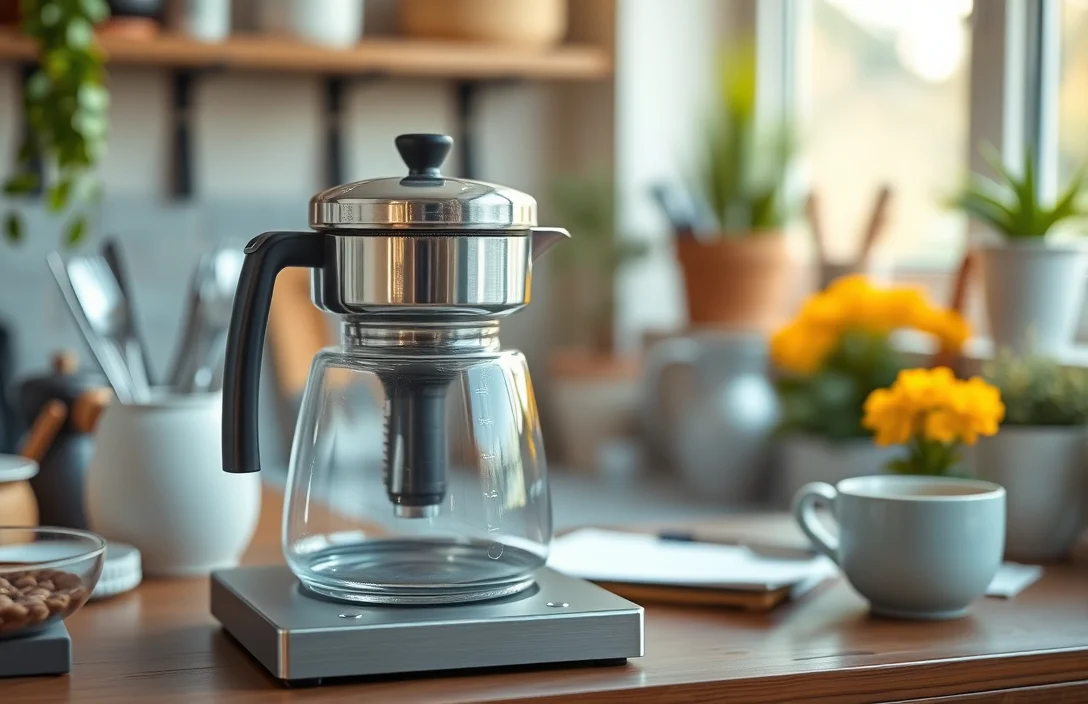
Seventy percent of Americans drink coffee daily, and the numbers on your coffee pot can make or break your brew. These markings indicate the amount of water needed for specific servings, ensuring your coffee is consistently delicious, not too weak or overly strong.
Understanding these measurements helps you brew perfect coffee every time. The markings represent cups and ounces, guiding you to the exact water quantity needed based on your preferred coffee strength.
Understanding Measurement Numbers in Coffee Makers
Measurement numbers on coffee pots indicate essential ratios for brewing. These markings help determine the amount of coffee grounds and water needed for optimal flavor. Accurate ratios ensure consistency and enhance the overall coffee experience, making it vital to understand how to read these numbers effectively.
- Identify the markings on your coffee pot. Typically, these are labeled in cups or ounces, indicating both water levels and coffee strength.
- Match the water measurement with coffee grounds. A common guideline is two tablespoons of coffee for every six ounces of water. Adjust according to personal taste.
- Visualize the coffee-to-water ratio. For example, if you want a stronger brew, use more coffee grounds while maintaining the same water level.
- Consider the type of coffee. Different beans may require slight variations in the ratio to achieve the best flavor profile.
- Experiment with these measurements. Adjust both the coffee and water levels until you find the perfect balance that suits your palate.
Water Level Indicators for Accurate Brewing
Water level markings provide crucial guidance during the brewing process. These indicators help you measure the exact amount of water needed for your coffee. Maintaining the correct water ratio ensures consistent flavor and strength in every cup you brew.
Markings on the side of the coffee pot typically represent the number of cups. Understanding these measurements allows for precise brewing tailored to your preferences. For instance, if you prefer a stronger brew, you can adjust the water amount accordingly.
Filling the pot up to the desired line guarantees that you’re using the right quantity. Avoiding over or under-filling prevents weak or overly strong coffee. Consistency in measurements leads to better-tasting results over time.
Visual cues on your coffee pot simplify the brewing process. Many models incorporate clear markings that are easy to read, making them user-friendly. Familiarizing yourself with these indicators will enhance your overall coffee-making experience.
Accurate water levels contribute significantly to your daily caffeine ritual. By regularly checking the measurements, you’ll ensure that every cup is just how you like it. Ultimately, mastering these numbers transforms your brewing into a precise craft.
Coffee Strength Settings and Their Impact
Numbers on coffee pot usually indicate brew strength or volume setting; treat the dial as a multiplier of your coffee-to-water ratio. Start with the mid-range mark, taste, then change grounds by roughly 10–15% per step to darken or lighten the cup. Record grams and dial position so you can reliably reproduce your preferred strength.
- Set dial to midpoint, brew one batch to establish a baseline strength and note the serving volume for that mark.
- Weigh coffee and water; target a consistent brew ratio (example: 1:15) and change only the grounds when moving the dial.
- Adjust grounds by 10–15% per numeric step to increase or lower strength, then record results and fine-tune until extraction and taste match your preference.
Common Brands and Their Numbering Systems
Popular coffee pot brands feature distinct numbering systems that help users identify their specific models and functionalities. For instance, Bunn models often include numeric codes that indicate the brew capacity and series. These numbers can guide consumers in selecting the right model for their daily coffee needs.
Mr. Coffee typically uses a combination of letters and numbers in their model designations. The number reflects the specific features, such as the brew strength or size. Familiarity with these designations can simplify the decision-making process when purchasing or replacing a unit.
Cuisinart employs a different approach, utilizing a series of numbers to denote the features and settings unique to each coffee maker. This system provides clarity on capabilities, such as programmable settings or thermal carafe options, making it easier for consumers to choose models that fit their preferences.
Hamilton Beach’s numbering system often highlights specific features like programmable timers or single-serve options. Recognizing these numbers allows users to quickly assess which model meets their brewing habits without extensive research.
Breville stands out with its sophisticated model numbers that indicate premium features and high-end performance. These identifiers are essential for discerning coffee enthusiasts looking for advanced brewing technology in their machines.
Maintenance Numbers for Longevity
Daily rinses and monthly descaling extend lifespan. Empty grounds and rinse the carafe after every brew; wipe the brew basket and exterior daily. Perform a weekly deep clean by soaking removable parts in warm, soapy water and running a water-only cycle. Descale every 30 days with a 1:1 white vinegar solution or 2 tablespoons citric acid per liter, following manufacturer guidance.
Label machine with maintenance numbers on coffee pot, marking 1/7/30/90 to match daily, weekly, monthly, and quarterly tasks; add a date stamp or simple log. Replace water filters every 60–90 days and inspect seals and gaskets at 180 days. Record each maintenance number to track wear and schedule component replacement before performance declines.
Troubleshooting Common Issues by Numbers
Low brew temperature readings indicate heating failure; measure brew temperature with a probe thermometer during a cycle, expect 195–205°F (90–96°C) for drip machines, below 185°F signals underheating. Clean scale, verify power supply, test element continuity with multimeter, and note if display numbers on coffee pot differ from probe by more than 10°F — contact service.
User Manuals: Deciphering the Numbers
Manuals list numbers on coffee pot: capacity, temperature, pressure and timing values; read the legend to decode abbreviations, units and tolerances, then match them to real measurements. Treat printed values as target ranges, not exact outcomes; confirm them by measuring output with a kitchen scale or measuring cup. Use the markings and your test results to set brewing defaults that match your taste.
- Read manual legend: note units, tolerances and symbol meanings.
- Check capacity markers against a measuring cup to verify volume labels match real output.
- Measure brew temperature with a thermometer to compare listed temps and record variance.
- Adjust default settings by small increments, document changes, and re-test to match desired extraction.
Quick Summary
- Numbers on coffee pots indicate the amount of coffee each pot can brew.
- Typically, these numbers represent cup measurements, where one cup equals approximately 6 ounces.
- Understanding the markings helps in accurately measuring the coffee-to-water ratio for optimal brewing.
- Some coffee pots may have different scaling, so it’s essential to refer to the manufacturer’s guidelines.
- Using the numbers can prevent over-brewing or under-brewing coffee, enhancing flavor and strength.
- The markings can also assist in serving sizes when hosting gatherings or events.
- Regularly cleaning the coffee pot is crucial to maintain accurate measurements and optimal coffee taste.
Frequently Asked Questions
What do the numbers on a coffee pot represent?
The numbers on a coffee pot typically indicate the number of cups of coffee the pot can brew. Each number corresponds to a specific volume of liquid, allowing users to measure out the amount of water needed for their desired brew strength.
How do I use the numbers to make the perfect cup of coffee?
To make the perfect cup of coffee, fill the coffee pot with water up to the desired number of cups you want to brew. Then, use the appropriate amount of coffee grounds based on the recommended ratio, usually about 1 to 2 tablespoons of coffee per 6 ounces of water.
Do different coffee pots use different numbering systems?
Yes, different coffee pots may have different numbering systems or capacities. It’s important to refer to the specific coffee pot’s manual or markings to understand how the numbers correspond to cup size and water volume.
Can the numbers on the coffee pot be inaccurate?
Yes, the numbers can sometimes be inaccurate due to manufacturing variations or wear and tear over time. It’s a good idea to occasionally measure the actual volume of water the pot holds to ensure consistency in your brewing process.
Is there a standard cup measurement for coffee pots?
In coffee brewing, a standard cup is often considered to be 6 ounces, rather than the typical 8 ounces used in other measurements. This means that if your coffee pot indicates it makes 12 cups, it will brew around 72 ounces of coffee.

- Are Pod Coffee Machines Healthy? The Unfiltered Truth About Your Daily Cup - September 27, 2026
- Does Gatorade Have Caffeine? Here’s What’s in Each Type - September 26, 2026
- Does Powerade Have Caffeine, or Is That a Myth? - September 26, 2026