
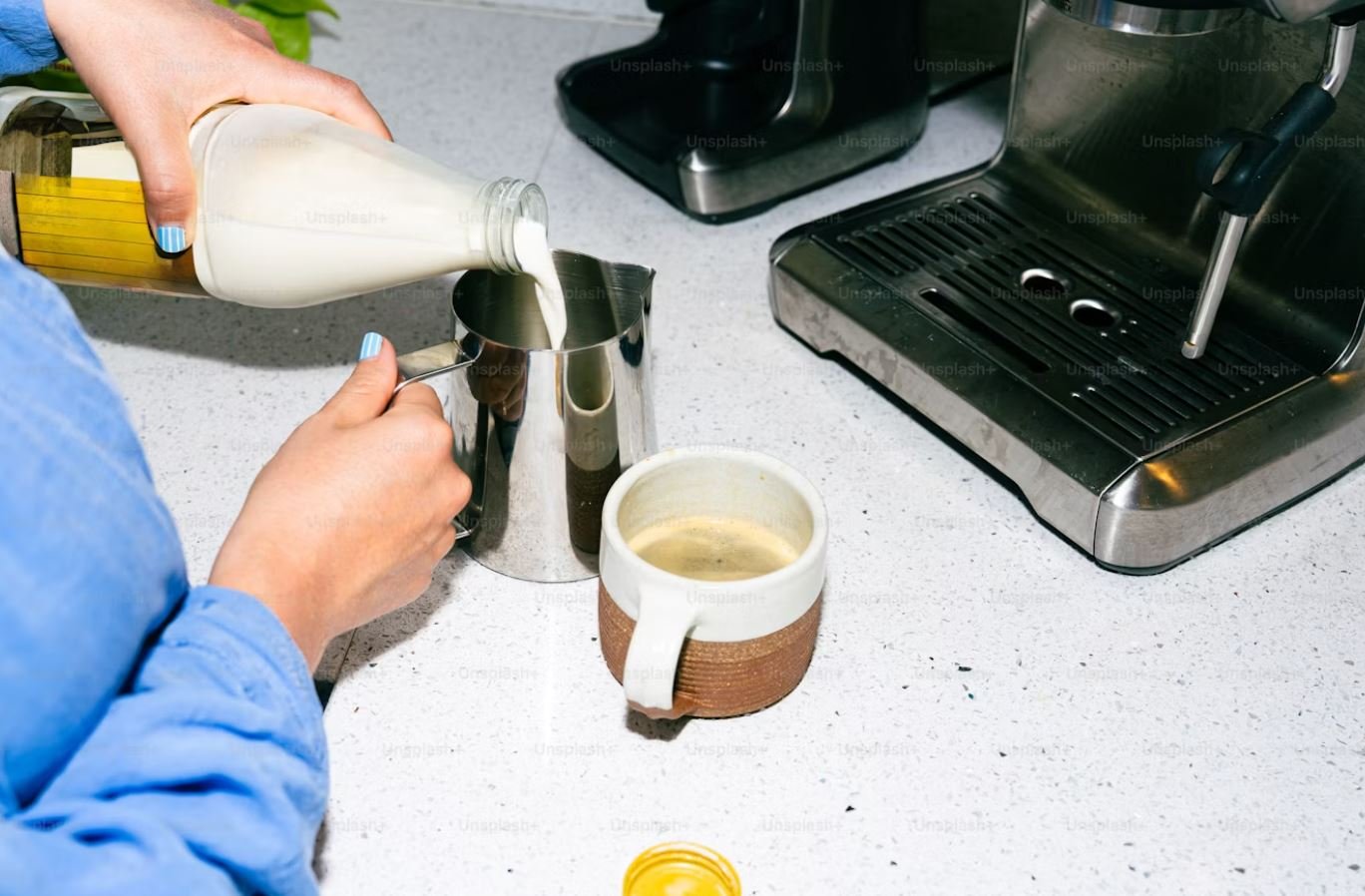
A lungo is an espresso I pull longer than usual — same 18 g of grounds, but I let extra water run through the puck so the cup comes out bigger, milder, and a little more bitter on the finish. I get asked constantly whether that’s just a weak espresso or the same thing as an Americano, so below I’ll walk through what actually changes during a long pull, why it tastes the way it does, and how I pull one at home that doesn’t taste hollow.
What a Lungo Actually Is
“Lungo” is Italian for long, and that’s exactly what I’m doing — running extra water through the same 18 g dose to get roughly double or triple the liquid of a standard shot, somewhere around 54-72 g compared to 34-40 g for a regular double. I’m not adding water after the shot; I’m extending the extraction itself, which is the detail most people get wrong when they compare it to other drinks.
Lungo vs. Americano — the difference I explain most
- A lungo: extra water pulled through the grounds during extraction
- An Americano: hot water added to a finished, standard espresso shot
- Same rough volume, different soluble compounds — so they taste and smell different
- A lungo keeps more crema and body; an Americano gets diluted crema and a thinner mouthfeel
How a Long Pull Actually Works
Every shot I pull goes through the same sequence — sugars, acids, and aromatic oils come out first, and bitter, astringent compounds show up later. Stretching a lungo out to 45-60 seconds, instead of the usual 25-32, means I’m deliberately capturing more of that late-stage extraction. Pressure stays close to 9 bar on most machines, so grind and puck prep are really the two things I have to adjust to keep a long pull from falling apart.
What I adjust for a long pull
- Grind slightly finer than my standard double — it stops early under-extraction and reduces channeling
- Brew ratio around 1:3 to 1:4 (coffee to yield), versus 1:2 for a standard shot
- Stable 93-96°C brew temperature — small swings matter more over a long pull
- Thinner crema is normal — the bigger volume dilutes the emulsified oils that form it
Why It Tastes Different, and Why That’s the Point
I pull a lungo specifically because I want that later-extraction flavor — milder acidity, less syrupy body, and more bitterness than a ristretto or standard shot gives me. It’s not a downgrade, it’s a different cup. If I want volume without post-shot dilution, or I want espresso intensity without the acidity spike, a lungo is the shot I reach for before I’d ever go to filter coffee.
Caffeine — what I actually tell people
- Standard espresso sits around 63 mg on most published tables
- A lungo tends to land around 80-100 mg, roughly, because longer contact time pulls more caffeine
- Roast, bean origin, and yield swing that number a lot — I treat it as a general range, not a guarantee
Lungo vs. Ristretto vs. Espresso, Side by Side
I find people understand this fastest when they see the numbers next to each other. Same 18 g dose, three very different outcomes — the table below is what I use as my own reference when I’m dialing in a new bean.
| Name | Dose | Yield (g / ml) | Brew ratio | Extraction time | Body | Sweetness |
|---|---|---|---|---|---|---|
| Ristretto | 18 g | 18-22 g (≈25 ml) | 1:1 to 1:1.2 | 14-20 sec | Thick, syrupy | High |
| Standard espresso | 18 g | 34-40 g (≈40 ml) | 1:2 | 25-32 sec | Full | Moderate |
| Lungo | 18 g | 54-72 g (≈110 ml often cited) | 1:3 to 1:4 | 45-60 sec | Thin, lighter | Low |
That’s why a ristretto tastes sweet and a lungo tastes dry or bitter even off the exact same dose — it’s extraction time doing the work, not just concentration. Grind, machine, and tamp are what I use to keep that shift under control.
How I Pull a Lungo at Home
I don’t need fancy equipment to get this right, just a scale, a decent grinder, and a habit of tracking both weight and time instead of guessing. Below is the exact baseline I use when I’m starting on a new bean I adjust from here once I know how it behaves under a long pull.
My step-by-step
- Weigh 18 g of freshly roasted whole beans into the portafilter
- Grind a touch finer than my usual double — I want the puck to resist water but still flow steadily
- Distribute and tamp level, firm pressure, no lateral cracks
- Lock in and start timing the moment the shot begins
- Stop around 54-72 g yield (I usually aim for ~60 g) or 45-60 seconds, whichever I hit first
- Taste it — hollow or thin means grind finer next time; choking and overly bitter means grind coarser
A few things I’ve learned the hard way
- A single-boiler home machine needs more time to stabilize between shots — don’t rush the next pull
- A scale that reads to 0.1 g makes dialing in dose and yield far more consistent
- Timing alone isn’t enough — I always track yield and time together
Mistakes I See Most Often
Most home baristas try to make a lungo by just letting a standard shot run longer, and it usually comes out thin, channeled, and disappointing. Anything wrong with your setup gets worse over a long pull, not better — early mistakes just have more time to show up in the cup.
What’s usually going wrong
- Uneven puck or light tamping causes channeling — fix it with a WDT tool and a level, firm tamp
- Using the same grind as a standard double makes it weak and watery — grind slightly finer
- Timing without watching yield means stopping too early or too late — track both
- Pouring hot water into an espresso and calling it a lungo makes an Americano, not a lungo — commit to the real long pull
- Dark roasts can turn harsh over a long extraction — try medium roast, or go coarser and cooler if you stick with dark
How I Actually Drink a Lungo
A lungo isn’t just something I sip straight — I use it a few different ways depending on the morning. It’s flexible enough to work as a milk-drink base or even in dessert recipes where that drier, more bitter edge actually complements sugar and fat instead of clashing with it.
Ways I use mine
- Straight, for a slower morning — lower acidity, more bitter notes, easy to sip over time
- In a latte or flat white when I want a less acidic, more bitter-toned milk drink — I go a little lighter on milk so the espresso still comes through
- In coffee-based desserts, where the astringent edge pairs well with sugar and fat
- Split into two small cups when I want to share a single dose without pulling two full shots
Lungo Myths I Hear All the Time
A few misconceptions about lungos come up constantly, both from customers and from people just starting to pull their own shots at home. I’ll set the record straight on the ones I hear most, so you know what to actually expect before you order one or try one yourself.
Myth vs. what I’ve actually found
- Myth: it’s just a weak espresso. Fact: it’s less concentrated, but the flavor balance actually shifts toward later-extracted compounds — it’s a different drink, not a diluted one
- Myth: it always has more caffeine than a short shot. Fact: longer contact time can pull more caffeine, but roast, bean, and yield swing that number too much to call it a rule
- Myth: any machine can pull a good one without adjustments. Fact: a long pull magnifies whatever’s already wrong — inconsistent pressure or temperature shows up fast unless grind and puck prep are dialed in
FAQ
Is a lungo the same as an Americano?
No, and I get this question constantly. I make a lungo by pulling extra water through the puck during extraction. An Americano is a finished espresso with hot water added after the fact. Same rough size, but the method changes the aroma, crema, and mouthfeel — a lungo keeps more of both than an Americano does.
How much larger is a lungo than a standard espresso?
From the same 18 g dose, I get 34-40 g out of a standard double and 54-72 g out of a lungo. When I’m dialing in a new bean, I usually aim for around 60 g as an easy, repeatable midpoint.
Does a lungo taste bitter?
More often than not, yes, compared to a ristretto or standard shot — the extra extraction time pulls in later-stage bitter compounds. I can usually soften that with the right bean and a slightly finer grind, so it doesn’t have to taste harsh.
Which beans work best for a lungo?
I reach for medium roasts with balanced acidity most of the time — they hold up well over a long pull. I go easy on very dark roasts unless I’m willing to adjust grind and temperature, since they tend to turn harsh.
Can I use a lungo in milk drinks like lattes?
Yes, I do this often. The extra liquid and lower acidity give the drink a smoother, slightly more bitter base than a standard shot would. If I want the espresso character to stay front and center, I just cut back on the milk a bit.
Why did my lungo taste thin and hollow?
That’s almost always under-extraction or channeling in the puck, in my experience. I’d check your distribution first, grind slightly finer than you would for a standard double, and make sure the tamp is even before pulling again.
Where a lungo actually sits, in my opinion: more volume, a drier bitterness, and a different aromatic balance than a short shot or an Americano — not a lesser version of either. If you haven’t had a good one, order it at a bar that actually knows how to pull one. If you’re brewing at home, start with a medium roast, an 18 g dose, and a ~60 g target yield, then adjust one variable at a time until it tastes right to you.

- Espresso Tastes Watery? 10 Common Causes and How to Fix It - October 23, 2026
- 10 Common Coffee Equipment Cleaning Mistakes and How to Avoid Them - October 23, 2026
- 17 Common Coffee Grinder Problems and How to Fix Them - October 23, 2026