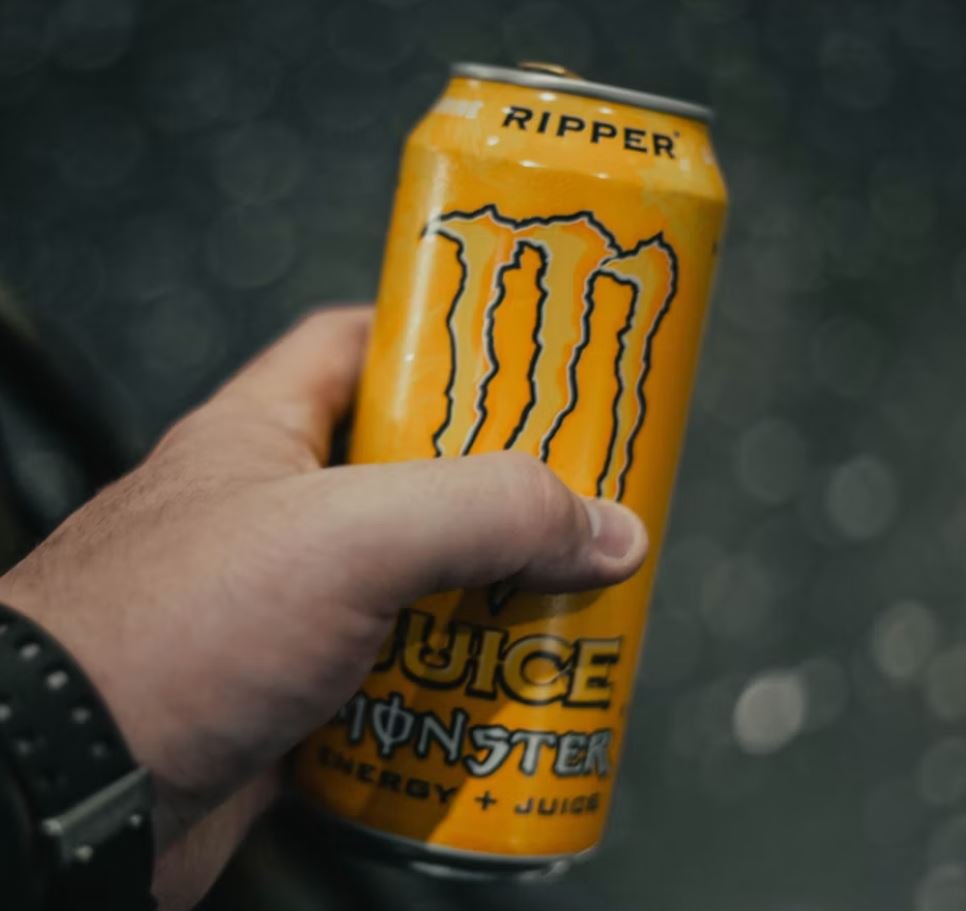
If you are wondering whether there is an age limit to buy Monster Energy in the United States, the answer is more complicated than simply saying “18” or “21.” There is no nationwide federal age requirement for buying energy drinks, but local rules and individual retailer policies can affect a purchase.
Monster Beverage’s 2025 annual filing specifically notes that age restrictions on energy-drink sales have been enacted or proposed in certain U.S. states, counties, and municipalities. For example, Lancaster, California, adopted an ordinance in January 2025 restricting the sale or distribution of energy drinks to people under 18.
| Question | Short answer |
|---|---|
| Federal age limit | No nationwide minimum |
| Local rules | Can differ |
| Store policy | May restrict sales |
| Health guidance | Teens are advised to avoid energy drinks |
Is There a Federal Age Limit for Monster Energy?
There is currently no nationwide federal minimum age for purchasing Monster Energy or other energy drinks in the United States.
That is different from products such as alcohol and tobacco, which have federal age-related restrictions.
Energy drinks are generally regulated as food or beverage products rather than as age-restricted products. The European Parliament’s research service also notes that the U.S. has no federal age restriction for energy-drink sales.
So there is not a simple federal rule saying:
“You must be 18 to buy Monster.”
However, that does not mean every purchase is governed by exactly the same rules everywhere.
Can a Minor Buy Monster Energy?
In many parts of the United States, a minor may be able to purchase an energy drink because there is no nationwide minimum purchase age.
But three things can change the answer:
- State or local regulations
- Store policies
- School or venue rules
Monster Beverage itself acknowledges that restrictions have been enacted or proposed in different U.S. jurisdictions.
Therefore, “Can a 16-year-old buy Monster?” and “Can a 16-year-old drink Monster?” are actually two different questions.
The first is primarily a sales-rule question.
The second is a health question.
Does Monster Require You to Be 18 to Buy It?
Monster Energy does not have a universal U.S. rule requiring every customer to be 18 to purchase its drinks.
The company’s current FAQ lists major retailers where Monster products can be purchased and provides a store locator, but it does not state a nationwide 18+ purchase requirement for its energy drinks.
However, Monster’s corporate materials recognize that some jurisdictions have enacted restrictions involving minors.
That means the answer can depend on where the purchase takes place.
Why Do People Think Monster Has an 18+ Rule?
A few different age rules can easily become confused.
Monster products are associated with promotions, sponsorships, websites, and events that can have their own age requirements.
For example, some Monster promotions are restricted to adults, while the company’s website terms can also contain age requirements for particular online services. Those rules concern the promotion or website—not necessarily the legal purchase of an ordinary can of Monster from a store.
So seeing “18+” in a Monster promotion does not automatically mean that every Monster beverage purchase requires the buyer to be 18.
Can You Buy Monster at 16?
In a location without an applicable age restriction or retailer-specific policy, a 16-year-old may be able to purchase Monster.
There is no general federal law making 16 too young to purchase an energy drink.
But the answer can change if the local jurisdiction has adopted a restriction or if the retailer has its own age policy.
This is why an online answer based only on someone’s age may not be enough to determine whether a particular store can legally make the sale.
Can You Buy Monster at 15?
The same basic legal distinction applies to a 15-year-old.
There is no nationwide federal minimum purchase age for energy drinks, but local restrictions and retailer policies can matter.
There is also a separate health consideration. The CDC says the American Academy of Pediatrics recommends that adolescents avoid energy drinks.
So legal availability should not be confused with a health recommendation.
Can You Buy Monster at 13?
A 13-year-old does not automatically face a federal U.S. purchase-age prohibition for Monster Energy.
However, local regulations may apply.
Monster Beverage’s SEC filing provides an important example: the City of Lancaster, California, passed an ordinance on January 14, 2025, making it an infraction to sell or otherwise distribute an energy drink to someone under 18.
This illustrates why location matters.
A rule in one municipality should not automatically be treated as a rule for the entire United States.
Does California Have an Age Limit for Monster?
California does not have a single statewide minimum purchase age for energy drinks, but local rules can create exceptions.
Monster’s 2025 annual filing specifically identifies Lancaster, California, as a city that adopted an under-18 restriction for energy drinks in January 2025.
That means someone searching “Can I buy Monster in California if I’m under 18?” needs to distinguish between California statewide law and local ordinances.
The city where the purchase occurs can matter.
What About Other States?
Energy-drink legislation has been proposed in several jurisdictions.
Monster’s 2025 annual report says bills seeking age restrictions were introduced in Connecticut, Massachusetts, Puerto Rico, and South Carolina, while certain local restrictions had already been enacted.
Legislative proposals should not be confused with laws currently in force.
A bill can be introduced, amended, delayed, rejected, or never become law.
That is why current state or municipal government sources are preferable when checking a specific location.
Can a Store Refuse to Sell Monster to a Minor?
Yes, a retailer can have its own sales policy, provided that policy complies with applicable law.
A store may choose to require customers to meet an internal age requirement even when the jurisdiction does not impose the same minimum age.
This can explain situations where:
- One store sells Monster to a teenager.
- Another store asks for identification.
- A cashier refuses the sale.
- A particular location applies stricter rules than another.
A cashier’s decision does not necessarily mean that a nationwide law exists.
Do You Need an ID to Buy Monster?
Usually, an ordinary energy-drink purchase is not subject to the same nationwide identification requirements associated with alcohol or tobacco.
However, a retailer can establish its own identification policy, and a local age restriction could also make age verification relevant.
If a store asks for ID, the simplest explanation is that the retailer may be following its own policy or complying with a local requirement.
It does not automatically prove that every store in the country has the same rule.
Are Monster Energy Drinks Legal for Teenagers?
The legal question and health question should be kept separate.
From a legal-sales perspective, there is no nationwide federal minimum age for energy drinks in the United States.
From a health perspective, the CDC says the American Academy of Pediatrics recommends that adolescents avoid energy drinks.
Monster’s own U.S. FAQ also states that its products are not recommended for children or people who are sensitive to caffeine.
So a teenager being legally able to purchase a drink does not mean health organizations recommend consuming it.
What About Schools?
Schools can have rules that are stricter than ordinary retail settings.
A school may prohibit students from bringing or consuming energy drinks even if a nearby store can legally sell them.
This is particularly relevant because energy drinks are highly caffeinated products and are commonly associated with concerns about young people’s caffeine consumption.
The CDC recommends that schools and communities educate young people about the potential risks of energy drinks.
Therefore, “Can I buy it?” and “Can I bring it to school?” may have completely different answers.
Is There a Difference Between Buying and Drinking Monster?
Yes.
A law restricting the sale of an energy drink to minors is not necessarily the same as a law prohibiting a minor from possessing or consuming one.
For example, Delaware’s 2026 House Bill 394 was introduced to prohibit the sale of energy drinks or caffeinated dietary supplements to minors while specifically stating that the proposal would not prohibit a minor from possessing or consuming them.
This distinction is important when researching age-related Monster questions.
Always check what the specific rule actually regulates:
- Sale
- Purchase
- Possession
- Consumption
- Distribution
- Advertising
They are not interchangeable.
Are There Age Restrictions Outside the U.S.?
Yes. The rules can be considerably different outside the United States.
Monster Beverage’s 2025 annual filing lists several countries with restrictions involving the sale of energy drinks to minors. It identifies countries including Poland, Romania, Hungary, Turkey, Armenia, Bahrain, and Kuwait as having restrictions on sales to people under 18, while Norway has a restriction for people under 16 and Kazakhstan under 21.
The rules are country-specific, so a U.S. answer should not automatically be applied internationally.
What Is Happening in England?
England is also moving toward an age-based restriction for high-caffeine energy drinks.
In July 2026, the UK government announced plans to introduce legislation banning the sale of high-caffeine energy drinks to children under 16. The proposed rule would apply to drinks other than tea or coffee containing more than 150 mg of caffeine per litre, with implementation planned for April 2027 subject to parliamentary approval.
This is an example of why international searches for “Monster age limit” can produce very different answers.
The law depends on the jurisdiction and the specific product definition.
Does a Monster Age Restriction Mean the Drink Is Illegal?
Not necessarily.
When a jurisdiction restricts sales to minors, the restriction generally applies to who may sell or purchase the product, rather than making the product itself illegal.
For example, Monster’s SEC filing describes Lancaster’s ordinance as making it an infraction to sell or distribute an energy drink to someone under 18.
So the existence of an age restriction does not mean Monster itself has been banned.
It means the sale is subject to a particular rule.
Why Are Age Restrictions Being Proposed?
Energy-drink age restrictions are often discussed in connection with concerns about caffeine consumption among children and teenagers.
The CDC says energy drinks can contain large amounts of caffeine and notes potential concerns including dehydration, heart complications, anxiety, and insomnia. It also cites the American Academy of Pediatrics recommendation that adolescents avoid energy drinks.
These health concerns are separate from the legal question of whether a retailer is permitted to make a sale.
A jurisdiction can therefore have no purchase-age restriction while health organizations still advise adolescents to avoid energy drinks.
Does a Higher Age Limit Apply to Monster Than Coffee?
Not necessarily.
Energy drinks and coffee can both contain caffeine, but they are regulated and marketed differently.
Monster’s SEC filing specifically notes that some energy-drink age restrictions do not apply in the same way to coffee products that may contain similar or higher caffeine levels.
This is one reason it is important not to assume that a law covering energy drinks automatically applies to every caffeinated beverage.
The exact wording of the law matters.
How Can You Check the Rule Where You Live?
If you want to know whether a minor can legally buy Monster at a specific location, check the rules in this order:
- Look for a state law or regulation.
- Check city or county ordinances.
- Ask the retailer about its current policy.
- Check whether the product is being sold in a school or restricted venue.
- Look for the most recent government information.
This is more reliable than assuming that an age number found on social media applies everywhere.
What Should Parents Know?
Parents may encounter two separate issues when a teenager asks to buy Monster.
The first is whether the store can legally make the sale.
The second is whether consuming the drink is appropriate for that teenager.
The CDC cites pediatric guidance recommending that adolescents avoid energy drinks, so a legal purchase does not settle the health question.
Parents may also want to consider the teenager’s total caffeine intake from coffee, tea, soda, chocolate, and other caffeinated products.
What Is the Simple Answer?
For the United States, there is no single nationwide federal age limit for buying Monster Energy.
However, local laws can create restrictions, and retailers can have their own policies.
Monster’s own 2025 SEC filing confirms that age-related energy-drink restrictions have been enacted or proposed in various U.S. jurisdictions and specifically identifies Lancaster, California’s under-18 ordinance.
So if someone asks, “How old do you have to be to buy Monster?” the most accurate answer is:
There is no universal U.S. age requirement, but the rules can depend on the location and retailer.
Frequently Asked Questions
Do you have to be 18 to buy Monster?
No nationwide U.S. law currently establishes 18 as the universal purchase age for Monster Energy. Local restrictions and retailer policies can differ.
Can a 16-year-old buy Monster?
There is no general federal rule making 16 too young to purchase an energy drink, but a local ordinance or retailer policy may impose an age restriction.
Can a 15-year-old buy Monster?
The answer depends on the location and retailer. There is no nationwide federal minimum purchase age for energy drinks in the United States.
Can a 13-year-old buy Monster?
There is no universal federal purchase-age restriction, but local rules can prohibit sales to minors. Lancaster, California, for example, adopted an ordinance restricting sales or distribution of energy drinks to people under 18.
Can stores ask for ID when buying Monster?
A store can have its own age-verification policy. Whether identification is legally required depends on the applicable local rule and the retailer’s policy.
Is Monster banned for minors?
No. There is no nationwide U.S. ban making Monster illegal for all minors. However, specific jurisdictions can restrict sales to minors.
Does Monster itself have an 18+ rule?
Monster’s ordinary energy drinks do not have a universal U.S. 18+ purchase requirement stated in its FAQ. Some Monster promotions, events, and online services have separate age requirements.
Is there an age limit for Monster in California?
California does not have one universal statewide purchase age for energy drinks, but local restrictions exist. Monster’s SEC filing specifically identifies Lancaster’s under-18 ordinance.
Can schools ban Monster Energy?
Yes. A school can establish its own rules concerning what students may bring or consume on school property, regardless of ordinary retail purchase rules.
Is buying Monster and drinking Monster the same legally?
Not necessarily. A regulation may prohibit a retailer from selling an energy drink to a minor without prohibiting the minor from possessing or consuming it. Delaware’s 2026 legislation provides an example of this distinction.
Final Takeaway
There is no single U.S. federal age limit for buying Monster Energy. The actual rule can depend on state or local law, retailer policy, and the setting where the drink is being sold.
Monster Beverage’s current SEC filing confirms that age restrictions have been enacted or proposed in specific jurisdictions, including an under-18 sales restriction in Lancaster, California.
For teenagers, the legal question is also separate from the health question: the CDC cites American Academy of Pediatrics guidance recommending that adolescents avoid energy drinks

- Can a 16-Year-Old Drink Monster Energy? What the Guidelines Say - September 30, 2026
- How Old Do You Have to Be to Buy Monster Energy? - September 30, 2026
- Is There an Age Limit to Buy Monster Energy? U.S. Rules Explained - September 30, 2026