
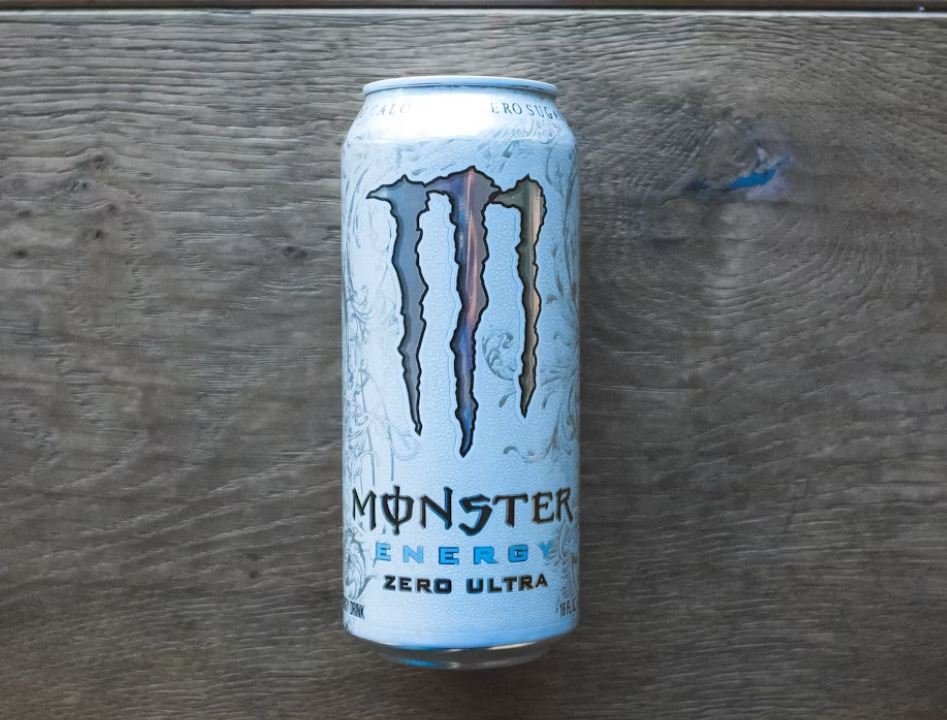
If you’re wondering whether you can bring Monster Energy to school, there isn’t one universal answer. Schools and school districts can create their own rules about what students may bring, sell, or consume on campus. The health issue is separate: the CDC says the American Academy of Pediatrics recommends that adolescents avoid energy drinks and avoid more than 100 mg of caffeine per day.
A Monster Green OG 16-ounce can contains 160 mg of caffeine, according to HealthyChildren.org, so one can already exceeds that 100 mg amount.
| Question | Answer |
|---|---|
| Can school ban Monster? | Yes |
| Is it federally banned at school? | No |
| Can a school confiscate it? | Depends on policy |
| Recommended for teens? | No |
Can You Bring Monster Energy to School?
Whether you can bring Monster to school depends primarily on the school’s student handbook, district wellness policy, or other campus rules.
There isn’t a single nationwide U.S. rule that says every student is prohibited from bringing an energy drink onto school property.
A particular school may nevertheless prohibit:
- Energy drinks
- Highly caffeinated beverages
- Drinks sold outside approved school nutrition programs
- Certain beverages during class
- Energy drinks during athletic activities
So a student should check the actual school policy rather than assuming that a rule at another school applies to them.
Can Schools Ban Monster Energy?
Yes. Schools and districts can establish rules governing food and beverages on campus.
The CDC specifically encourages schools and districts to establish or revise nutrition standards addressing the sale and marketing of energy drinks in school settings. CDC
That means a school can have a policy that is stricter than the rules at a nearby convenience store.
For example, a school could decide that:
- Students cannot bring energy drinks.
- Energy drinks cannot be sold in the cafeteria.
- Energy drinks cannot be consumed during school hours.
- Energy drinks cannot be used during sports.
- Students who violate the policy may face the consequences described in the student handbook.
The exact consequence depends on the school’s own rules.
Is Monster Banned in All Schools?
No.
There is no universal rule that every school in the United States must ban Monster Energy.
CDC information has shown that some secondary schools have allowed energy drinks to be sold through vending machines, school stores, or snack bars. CDC
That means school policies can vary considerably.
One school may prohibit energy drinks entirely, while another may have different rules about what can be purchased or consumed.
The important distinction is between what is allowed by the school and what is legally allowed in a retail store.
Can a Teacher Take Your Monster?
If a school’s rules prohibit energy drinks or outside beverages, school staff may be able to enforce that policy according to the school’s disciplinary procedures.
Whether a teacher can personally confiscate the drink, whether it must be turned over to the office, and whether it is returned later depends on the school’s rules.
There isn’t a universal Monster-specific confiscation rule.
If a student is unsure, the best source is the school’s student handbook or administration.
Can You Drink Monster During Class?
That depends on classroom and school policy.
Some schools allow students to have water or approved drinks in class while restricting other beverages. Other schools may prohibit drinks altogether except under specific circumstances.
An energy drink can therefore violate a classroom rule even if the student legally purchased it.
A retailer’s willingness to sell Monster does not give a student permission to consume it during class.
Can You Buy Monster at School?
This depends on what the school sells.
The CDC notes that some secondary schools have sold energy drinks through vending machines, school stores, and snack bars. CDC
However, schools can establish nutrition standards that restrict which beverages are available to students.
A school may therefore sell water and milk while not selling energy drinks.
School availability can also change over time as districts update wellness policies.
Why Do Schools Restrict Energy Drinks?
One reason is the caffeine content.
The CDC says energy drinks typically contain large amounts of caffeine and may also contain added sugars and other stimulants. Potential concerns include dehydration, heart complications, anxiety, and insomnia.
HealthyChildren.org also lists possible caffeine effects in children and teenagers, including:
- Fast or irregular heartbeat
- Increased blood pressure
- Anxiety
- Restlessness
- Nausea
- Sleep loss
These concerns help explain why schools may treat energy drinks differently from water or other ordinary beverages.
Is Monster Safe for School Sports?
Monster should not be treated as a sports drink simply because it is marketed around energy and athletic performance.
The CDC specifically tells coaches to educate athletes about the difference between energy drinks and sports drinks and the potential dangers of highly caffeinated beverages.
The National Federation of State High School Associations also recommends that young athletes should not use energy drinks for hydration.
For ordinary hydration during school sports, water is the straightforward option.
Can You Drink Monster Before School?
A student might drink Monster before school because they feel tired or want to be more alert.
The problem is that caffeine can interfere with sleep, which can contribute to another morning of tiredness.
HealthyChildren.org explains that caffeine can remain in the body for more than eight hours depending on metabolism and can interfere with sleep.
That can create a cycle:
Poor sleep → morning fatigue → caffeine → disrupted sleep → more fatigue.
If a student regularly feels unable to get through school without an energy drink, the underlying sleep schedule and daily routine may be worth examining.
How Much Caffeine Is in Monster?
The amount varies by product and serving size.
HealthyChildren.org lists Monster Green OG at 160 mg of caffeine in 16 ounces.
That is important for students because the CDC says the American Academy of Pediatrics recommends adolescents avoid energy drinks and avoid consuming more than 100 mg of caffeine per day.
So one 16-ounce Monster can exceed that referenced daily amount before considering coffee, soda, tea, chocolate, or other caffeine sources.
Does Monster Zero Sugar Have Caffeine?
Yes.
Choosing a zero-sugar version changes the sugar content, but it does not necessarily remove caffeine.
This is an important point for students who assume that a zero-sugar energy drink is equivalent to a caffeine-free drink.
When comparing products, check the nutrition label for:
- Caffeine
- Serving size
- Number of servings
- Added sugar
- Other stimulant ingredients
The word “zero sugar” does not mean “zero caffeine.”
Can You Bring Monster to School If It Is Sealed?
A sealed can may still violate school policy.
The issue isn’t necessarily whether the drink is open.
A school rule might prohibit students from possessing energy drinks on campus, which could include an unopened can in a backpack.
Another school might only prohibit drinking energy drinks during school hours.
Therefore, the wording of the school’s policy matters.
Can You Bring Monster in Your Backpack?
Again, this depends on school policy.
If the student handbook prohibits energy drinks on campus, putting the can inside a backpack does not necessarily make it permitted.
If the policy only addresses consumption, the situation may be different.
Students should check the exact wording rather than relying on assumptions such as:
“It’s allowed because I’m not drinking it.”
The school’s definition of prohibited conduct is what matters.
What Happens If a Student Brings Monster to School?
The consequence depends on the school’s policy.
Possible responses can include:
- Asking the student to discard the drink
- Confiscating it temporarily
- Sending it to an office
- Contacting a parent or guardian
- Applying a school disciplinary consequence
Not every school uses the same procedure.
A first-time violation may also be treated differently from repeated violations.
Can a School Ban Energy Drinks but Allow Coffee?
Yes, depending on its policy.
Schools may create their own beverage standards, and a policy might specifically identify energy drinks rather than every source of caffeine.
However, from a health perspective, coffee still contains caffeine.
HealthyChildren.org notes that caffeine is found in coffee, tea, soda, energy drinks, chocolate, and other products. HealthyChildren.org
So a school policy and a health recommendation are two different things.
Can Athletes Drink Monster at School?
A school athletic program can establish rules that restrict energy drinks.
The CDC specifically highlights young athletes when discussing energy drinks and says coaches should teach students about the difference between energy drinks and sports drinks.
There is also a practical reason to avoid confusing an energy drink with hydration.
An energy drink is designed to provide caffeine and stimulation. Hydration during exercise is a different goal.
What Should Students Drink Instead?
For normal school-day hydration, water is the simplest choice.
HealthyChildren.org specifically recommends water as a way to stay hydrated and notes that caffeine is not a substitute for adequate sleep.
Depending on school policies and individual dietary needs, other options can include:
- Water
- Milk
- Unsweetened beverages
- School-approved drinks
If fatigue is the reason for wanting Monster, improving sleep and eating regular meals may address the underlying problem more directly.
What If You Already Brought Monster to School?
If you discover that your school doesn’t allow energy drinks, follow the school’s instructions.
Don’t assume that hiding the can will solve the problem.
If you already consumed the drink and begin feeling significantly unwell, tell a responsible adult or school health professional.
Symptoms associated with excessive caffeine can include rapid or irregular heartbeat, anxiety, restlessness, nausea, and sleep problems.
Severe symptoms after a large caffeine intake require prompt medical attention.
What If You Drink Monster Every School Day?
Daily use is different from occasional consumption because caffeine can become a regular part of the student’s routine.
A 16-ounce Monster Green OG contains 160 mg of caffeine, according to HealthyChildren.org.
If a teenager drinks one every school day, that creates a repeated caffeine exposure that may also be combined with caffeine from other drinks and foods.
The CDC cites AAP guidance recommending that adolescents avoid energy drinks and avoid more than 100 mg of caffeine per day.
Does Monster Help You Study?
Caffeine can increase alertness, which is one reason students may use energy drinks while studying.
But increased alertness is not the same as replacing sleep.
HealthyChildren.org explains that caffeine can interfere with children’s sleep, while adequate sleep supports learning, thinking, mood, and daily functioning.
For an important exam, staying awake with an energy drink may therefore be a poor substitute for getting adequate rest.
Does Monster Help With School Performance?
Monster can temporarily increase alertness because caffeine is a stimulant, but that does not establish that energy drinks improve overall academic performance.
The CDC notes that energy drinks are often used by students for an energy boost while also warning about their potential health effects. involves much more than temporary alertness.
Sleep, nutrition, preparation, concentration, and regular study habits all matter.
Can You Bring Monster to School in Different States?
School rules can vary by district and individual school, so there isn’t one nationwide answer.
A student in one state might attend a school where energy drinks are prohibited, while another student might attend a school with a different beverage policy.
State and district rules may also influence what schools can sell or promote.
The safest approach is to check the specific school or district’s current policy.
Why Are Energy Drinks a School Issue?
Schools are responsible not only for teaching but also for creating an environment where students can learn and participate safely.
The CDC encourages schools to address the availability and marketing of energy drinks in school settings and provides guidance for teachers, coaches, nutrition staff, parents, and community members.
That is why energy drinks can become a school-policy issue even when purchasing them at a normal retail store is permitted.
What Is the Simple Answer?
You may or may not be allowed to bring Monster Energy to school. It depends on your school’s rules.
There is no universal U.S. rule requiring every school to ban Monster.
However, schools can establish their own beverage policies, and the CDC encourages schools to address energy drinks in their nutrition standards.
From a health perspective, the CDC says the American Academy of Pediatrics recommends that adolescents avoid energy drinks.
So three separate questions should be kept apart:
Can you buy it? Depends on applicable sales rules and retailer policy.
Can you bring it to school? Depends on school policy.
Is it recommended for teenagers? The cited pediatric guidance recommends avoiding energy drinks.
Frequently Asked Questions
Can I bring Monster Energy to school?
It depends on your school’s student handbook or district policy. Some schools may prohibit energy drinks entirely, while others may have different beverage rules.
Can schools ban Monster Energy?
Yes. Schools and districts can establish policies concerning beverages sold, brought, or consumed on school property. The CDC encourages schools to address energy drinks through nutrition standards.
Can a teacher take my Monster?
That depends on the school’s rules and its procedures for handling prohibited items. Check the student handbook or ask the school administration.
Can I drink Monster during class?
Only if the school’s classroom and beverage rules permit it. A school can restrict energy drinks even if the drink was legally purchased.
Can I bring a sealed Monster to school?
A sealed can can still violate school policy if the policy prohibits possession of energy drinks on campus.
Can I keep Monster in my backpack?
If the school prohibits possession of energy drinks, keeping the can in a backpack may still violate the rule. Check the exact wording of the policy.
Can athletes drink Monster at school?
School athletic programs may restrict energy drinks. The CDC advises coaches to educate young athletes about the difference between energy drinks and sports drinks and their potential risks.
Is Monster good for studying?
Caffeine can increase alertness temporarily, but it is not a replacement for sleep. Caffeine can interfere with sleep, which can affect school functioning.
How much caffeine is in a Monster?
HealthyChildren.org lists Monster Green OG at 160 mg of caffeine per 16-ounce serving.
Can a teenager drink Monster at school?
Whether the student is allowed to consume it on campus depends on school policy. Separately, the CDC says the American Academy of Pediatrics recommends adolescents avoid energy drinks.
What should students drink instead of Monster?
Water is a simple option for hydration. HealthyChildren.org recommends water and emphasizes that caffeine is not a substitute for adequate sleep.
Final Takeaway
Whether you can bring Monster Energy to school depends on your school’s specific rules, not simply on whether a store is legally allowed to sell the drink.
Schools can create beverage and nutrition policies, and the CDC specifically encourages schools to address energy drinks in school settings.
The health side is also important. A 16-ounce Monster Green OG contains 160 mg of caffeine, while the CDC cites American Academy of Pediatrics guidance recommending that adolescents avoid energy drinks and avoid more than 100 mg of caffeine per day.

- Can a 16-Year-Old Drink Monster Energy? What the Guidelines Say - September 30, 2026
- How Old Do You Have to Be to Buy Monster Energy? - September 30, 2026
- Is There an Age Limit to Buy Monster Energy? U.S. Rules Explained - September 30, 2026