
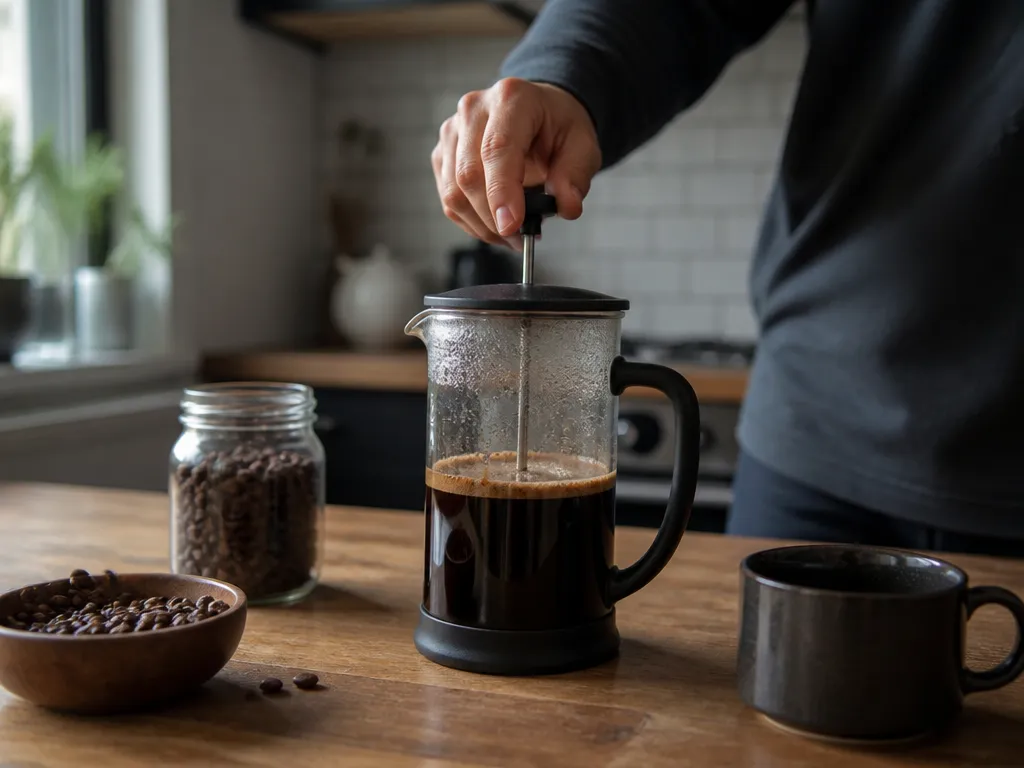
Fresh coffee at home comes down to three things: fresh beans, the right grind, and water that tastes clean. Grind the beans just before brewing, use a consistent coffee-to-water ratio, and keep the brew time and water temperature under control. Start with 1:16 – 1 gram of coffee for every 16 grams of water – then adjust based on taste.
- Use fresh beans. Whole beans taste best within a few weeks of roasting when stored airtight.
- Grind right before brewing. Pre-ground coffee loses aroma quickly.
- Start with a 1:16 ratio. Adjust gradually as you taste.
- Match the grind to the brewer. Espresso needs a fine grind; French press needs a coarse grind.
- Control brew time. Longer contact extracts more flavor.
- Change one variable at a time. That makes troubleshooting much easier.
How To Make Coffee With Beans At Home
Grind whole beans, brew them with hot water, and adjust the grind size and dose until the coffee tastes balanced. Most disappointing cups come from stale beans or coffee ground too far in advance.
Your first goal is a repeatable baseline, not perfection. Choose one brewer, use a starter ratio, and keep the process consistent for the first few cups. Once you have a cup you enjoy, adjust strength and flavor without guessing.
For most home setups, the workflow is simple:
- Choose a brewer – drip machine, pour-over, French press, AeroPress, or espresso machine.
- Weigh your coffee and water if possible.
- Grind the beans fresh.
- Brew with water that is hot enough to extract flavor but not boiling.
- Taste the coffee.
Your first target: a balanced cup
A good starting cup smells fragrant, has noticeable body, and avoids aggressive bitterness. Sour or underdeveloped coffee usually needs more extraction, which means a finer grind or longer contact time. Harsh or bitter coffee usually has too much extraction, so try a coarser grind or shorter contact time.
What you need to begin
- Whole beans you enjoy; a roast date is useful.
- A grinder. A blade grinder works in a pinch, but a burr grinder makes adjustments easier.
- A way to measure coffee and water. A kitchen scale is the most useful upgrade.
- A brewer and filter supplies if your brewer uses paper filters.
What Equipment Do You Need For Bean Coffee
Basic equipment can produce excellent coffee, but the exact list depends on your brewer. Pour-over, drip, and French press require little more than a grinder and a way to heat water. Espresso requires a machine and a grinder that produces consistent fine particles.
If you are buying equipment for the first time, prioritize the grinder. An inconsistent grinder produces a mix of fine and coarse particles, making it difficult to correct a sour, bitter, or muddy cup. Burr grinders – conical or flat – generally provide more repeatable settings than blade grinders.
- Brewers: drip coffee maker, pour-over cone and dripper, French press, AeroPress, or espresso machine.
- Kettle: any kettle that heats water; a narrow spout helps with pour-over control.
- Grinder: burr grinder or manual grinder for more consistent results.
- Scale: a kitchen scale that measures grams accurately.
- Timer: your phone works well once brew time becomes part of troubleshooting.
- Filters: paper filters for pour-over and many drip setups; French press uses a metal mesh.
what to look for
Buy whole beans that you can store properly. Look for a roast date and choose a roast profile you enjoy. Medium roasts are forgiving with many brewing methods. Beans that are months old can still make coffee, but stale flavors will make it harder to get a lively cup.
Water: the quiet variable
Coffee is mostly water, so water quality affects the final flavor. If your tap water tastes strongly of chlorine or is very hard, filtered water will often produce a cleaner cup. You do not need bottled water for every brew; use water that tastes neutral to you.
How To Grind Coffee Beans For Your Brewer
Grind size controls how quickly water extracts flavor. Fine coffee has more surface area, so it extracts faster. Coarse coffee extracts more slowly and needs longer contact time.
Espresso uses a fine grind because the water passes through quickly. French press uses a coarse grind because the coffee steeps for longer. Pour-over and drip sit between those extremes, usually calling for medium or medium-fine coffee depending on the brewer and flow rate.
Consistency matters as much as the setting itself. A burr grinder lets you repeat the same grind from one brew to the next. A blade grinder creates a wide range of particle sizes, so some pieces overextract while others underextract. The result can taste muddy, sharp, or uneven.
Practical grind starting points
Use these as starting points, then adjust after tasting:
- Espresso: fine – powdery, but not flour-like for your machine’s needs.
- AeroPress: medium-fine for many recipes.
- Pour-over: medium for most cones.
- Drip machine: medium, often close to a regular drip grind.
- French press: coarse, similar to breadcrumbs or coarse sand.
How to tell whether you need a finer or coarser grind
- Sour or thin: try a finer grind, a slower pour, or slightly longer brew time.
- Bitter or harsh: try a coarser grind, a faster pour, or shorter contact time.
- Watery and bitter at once: inconsistent particles or an incorrect ratio may be responsible. Start by improving grind consistency and checking the ratio.
What Coffee-To-Water Ratio Works Best
Start with 1:16, measured by the weight of coffee and water. That means 20 g coffee to 320 g water, 25 g to 400 g, and so on. The ratio works across many brewers because it provides a useful baseline for typical home setups.
Scoops can work when you do not have a scale, but they make consistency harder. A kitchen scale lets you repeat a recipe and identify which change improved the cup.
Adjust the ratio in small steps:
- If the coffee tastes weak, use more coffee or move toward 1:15.
- If it tastes too strong or harsh, use less coffee or move toward 1:17.
Why ratio beats guessing
A taste problem may come from the ratio rather than the grind. If the coffee is too dilute, grinding finer can increase extraction without giving you the balance you want. Set the ratio first, then use grind size and brew time to refine the flavor.
A quick ratio reference
- 1:16: balanced baseline
- 1:15: stronger
- 1:17: milder
Five Ways To Brew Coffee From Whole Beans
Different brewers use different contact times and flow rates, so switching methods makes comparisons harder. Grind fresh right before brewing and use the ratio guidance above as your starting point.
Drip coffee machine
- Fill the machine reservoir with water, or confirm that the machine heats water properly.
- Measure coffee using your target ratio, such as 20 g coffee for 320 g water.
- Grind the beans to a medium setting suitable for drip.
- Add a paper filter if the machine uses one. Rinse it first if you want to reduce paper taste; this is optional.
- Add the ground coffee, start the brew, and avoid opening or interrupting the machine.
- Taste the finished coffee. If it is weak, use slightly more coffee or grind slightly finer.
Drip brewing is forgiving. If the cup tastes wrong, adjust the ratio first and the grind second.
Pour-over with a cone and dripper
- Heat the water and preheat the dripper and server if desired.
- Measure 20-25 g of coffee and grind it to medium.
- Add the grounds to the dripper.
- Start a timer and bloom the coffee by pouring enough water to saturate the grounds. Let it sit for about 30-45 seconds.
- Continue pouring in steady circles. Aim for 320-400 g of total water within your desired total brew time, often a few minutes.
- Let the coffee finish dripping, swirl the brew to mix it, and taste.
A rushed pour can send water through channels in the coffee bed, causing under-extraction and sourness. A very slow pour or overly fine grind can push the cup toward bitterness.
French press
- Heat the water.
- Measure 25-30 g of coffee and grind it coarse.
- Add the coffee to the empty press.
- Start a timer, pour in the water, and stir gently to saturate all the grounds.
- Put the lid on with the plunger pulled up.
- Steep until the flavor suits you, then plunge slowly and serve.
French press coffee remains in contact with the water, so oversteeping can make it harsh. Shorten the steep time or grind slightly coarser if the cup tastes rough.
AeroPress
- Heat the water and prepare a paper filter if you use one.
- Measure the coffee – often at a slightly higher concentration than drip – and grind it medium-fine.
- Add the grounds to the chamber, pour in a measured amount of water, and stir for a consistent time.
- Insert the plunger without pressing, then steep briefly.
- Press at a steady pace.
- Taste the coffee, then adjust the grind and steep time.
The AeroPress can handle many recipes, but consistency makes experimentation useful.
Espresso machine
- Warm the machine and portafilter.
- Grind the beans finely for espresso and use a consistent dose.
- Distribute the grounds evenly and tamp firmly. Consistent pressure matters more than maximum force.
- Brew a measured shot into a cup placed on a scale.
- Taste the shot and adjust the grind first, then the dose or yield.
Espresso requires more mechanical adjustment, but the basic diagnosis remains the same: sour coffee usually indicates under-extraction, while bitter coffee usually indicates over-extraction.
How To Dial In Strength, Flavor, And Extraction
Changing all three at once may improve the coffee, but you will not know which change helped.
The practical adjustment order
- Fix the coffee-to-water ratio.
- Adjust grind size to control extraction speed.
- Adjust brew time or flow to control contact time.
For example, if coffee brewed at 1:16 tastes weak, move to 1:15 while keeping the same grind and method. If it still tastes weak, grind a little finer.
Strength and extraction are different
Strength describes how concentrated and present the coffee tastes, which is closely tied to the ratio and dose. Extraction describes how much flavor dissolves from the grounds, which is closely tied to grind size and brew time.
A cup can taste weak because it is too dilute, or it can taste thin and sour because it is under-extracted. A bitter cup may have plenty of strength but too much extraction. Treat those as separate problems.
Troubleshooting you can use immediately
- Sour, sharp, or thin: Grind finer or increase contact time slightly while keeping the ratio constant.
- Bitter, dry, or harsh: Grind coarser or reduce contact time slightly while keeping the ratio constant.
- Watery with little aroma: Increase the coffee ratio first, then check grind consistency.
- Bitter with lingering astringency: The grind is often too fine or the brew is too long. Adjust the grind coarser before changing the ratio.
One-change dial-in
| Symptom you taste | Most likely cause | Change to make next |
|---|---|---|
| Sour or underdeveloped | Under-extraction | Grind finer or extend contact time |
| Weak or watery | Low strength (ratio) | Increase coffee-to-water ratio toward 1:15 |
| Bitter or harsh | Over-extraction | Grind coarser or shorten contact time |
| Inconsistent cup to cup | Inconsistent grind | Improve grinder setting consistency |
How To Store Beans And Improve Stale Coffee
Once your technique is consistent, bean freshness has a major effect on flavor. Whole beans lose aroma after roasting, and oxygen speeds up that decline. Heat and light damage flavor as well, so store the beans away from all three.
Keep the beans in an airtight container in a cool, dark place. If you buy in bulk, divide them into smaller portions so the main supply is exposed to air less often.
Freezing beans
Freezing can slow freshness loss when you need to store beans for longer periods. Moisture and repeated thawing are the main risks. If you freeze the beans, portion them first and thaw only what you plan to use soon.
For most people, using beans within a few weeks of roasting without freezing is the simplest approach.
Freshness habits that help
- Store beans airtight rather than in a loose bag.
- Keep the container away from the stove and sunny windows.
- Grind immediately before brewing, not the night before.
- With old beans, focus on ratio and extraction while accepting that some stale flavor may remain.
Improve coffee made with old beans
Stale beans cannot be restored, but you can make the cup more pleasant. If old beans taste bitter, try a slightly coarser grind or shorter brew time before changing the ratio again.
FAQ
How much coffee should I use for 1 cup at home?
Start with 1:16, based on coffee weight to water weight. For example, use 20 g coffee and 320 g water. If the cup tastes weak, try 1:15 next. If it tastes harsh, try 1:17. Weighing the ingredients is the easiest way to keep the result consistent.
What grind size should I use if I do not know my brewer’s settings?
Use this basic match: espresso = fine, French press = coarse, and pour-over or drip = medium. If the coffee tastes sour, go finer. If it tastes bitter, go coarser. Change one setting at a time because grind size strongly affects extraction.
How long should coffee steep for the best flavor?
Steep time depends on the brewer. French press uses a longer steep, while pour-over is governed more by water flow. If the coffee tastes sour, increase contact time slightly. If it tastes bitter, shorten it slightly. Use a timer so you know what changed.
Is filtered water better than bottled water?
Filtered tap water is often enough for good coffee and is more practical for daily brewing. If your tap water tastes strongly of chlorine or is very hard, filtering can improve the flavor. Bottled water also works, but the goal is water that tastes neutral to you.
What is the most common mistake when making coffee with beans at home?
Pre-grinding too early is a common mistake because the coffee loses aroma quickly. Changing several variables at once also makes troubleshooting difficult.

- Espresso Tastes Watery? 10 Common Causes and How to Fix It - October 23, 2026
- 10 Common Coffee Equipment Cleaning Mistakes and How to Avoid Them - October 23, 2026
- 17 Common Coffee Grinder Problems and How to Fix Them - October 23, 2026