
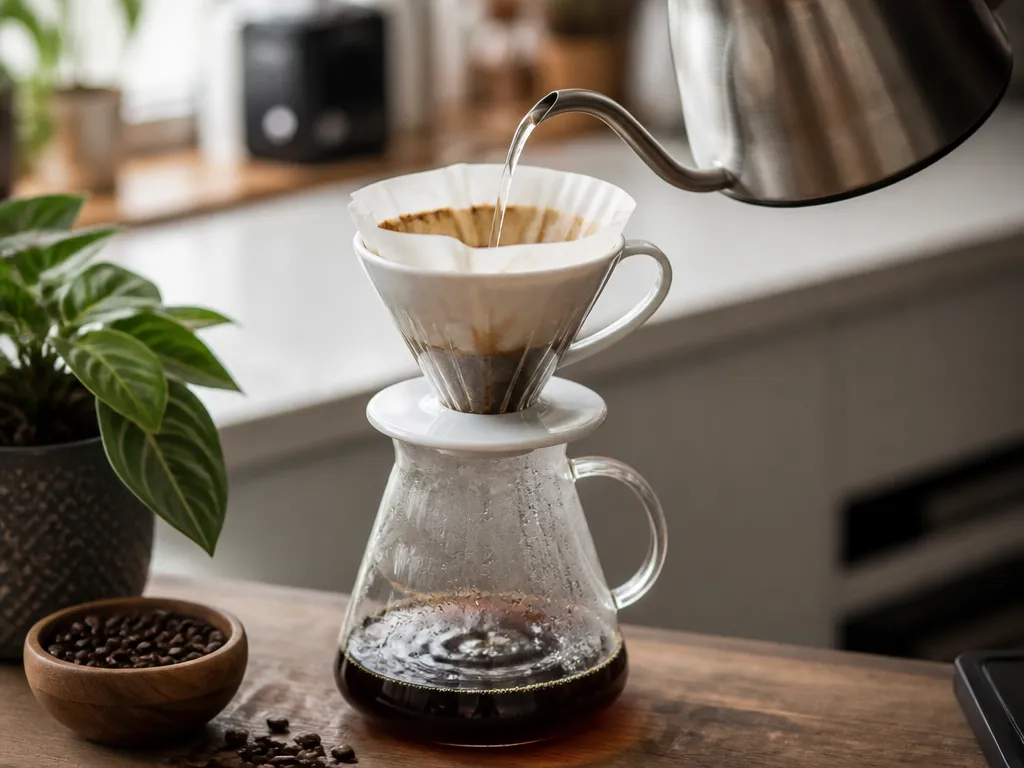
Brewed coffee from whole beans is easy to get right at home: use a consistent coffee-to-water ratio, grind immediately before brewing, and match the grind size to your brewer. A burr grinder makes the biggest difference, but you can make a good cup with basic equipment.
Start with 1:16 coffee-to-water by weight – for example, 20 g coffee to 320 g water. Most home brews work best with water around 200-205°F. Once you have a reliable baseline, adjust one variable at a time so you know what improved the cup.
Key Takeaways
- Use a burr grinder. Burrs produce more consistent particles, which improves flavor and reduces harshness.
- Match grind size to the brewer. Espresso-style coffee needs fine grounds, pour over needs medium-fine grounds, and French press needs coarse grounds.
- Measure by weight. A 1:16 ratio is a dependable starting point.
- Use the right water temperature. Aim for 200-205°F for most home brews.
- Store beans airtight. Keep them cool and sealed to slow flavor loss.
How To Make Coffee From Beans At Home
Grind the beans fresh, use the correct grind size and coffee-to-water ratio, then taste and adjust. Bitter or sour coffee usually points to grind size, brew time, or water temperature rather than poor-quality beans.
You need whole beans, a grinder – preferably a burr grinder – and a brewer. A scale helps you improve faster because the coffee-to-water ratio controls strength more reliably than scoops or tablespoons.
Choose one method based on the equipment you have: an espresso machine or other pressure-capable setup, a pour over dripper, or a French press. Follow the baseline recipe once before changing anything. Consistency makes troubleshooting possible.
What Grind Size Matches Your Brewing Method
Grind size controls how quickly water extracts flavor from the coffee. Fine grounds expose more surface area and extract faster. Coarse grounds slow extraction and reduce the risk of over-extraction.
Use these practical starting points:
- Espresso-style or any pressure-driven, short brew: fine, like table salt but slightly finer.
- Pour over: medium-fine, like regular sand.
- French press: coarse, like breadcrumbs or coarse kosher salt.
A burr grinder gives you better control than a blade grinder because it produces more even particles. If you do not have a grinder, pre-ground coffee can still work, but its grind may be too fast or too slow for your brewer, and its aroma fades faster after grinding.
The brew’s flow gives you useful feedback. Pour over should generally take a few minutes for a standard cup, while French press should steep rather than run through a filter. If pour over finishes in under a minute, the grind is too coarse, not too fine. If it takes too long and tastes harsh, the grind is too fine or the water is too hot.
How To Measure Coffee To Water Ratio
Coffee-to-water ratio determines strength. A cup can taste wrong even when grind size and brew time are otherwise well matched if the ratio is off.
Use a scale if possible. Scoops and tablespoons vary with bean density and how tightly you pack the grounds, which can change the final strength.
A reliable starting ratio is 1:16 coffee to water by weight:
- 20 g coffee to 320 g water
- 15 g coffee to 240 g water
- 25 g coffee to 400 g water
Adjust the ratio after tasting. If the coffee tastes weak or watery, use more coffee and try 1:15. If it tastes heavy or bitter, use slightly less coffee and try 1:17. This changes strength without immediately altering extraction.
Water temperature affects extraction too. Aim for 200-205°F for most home brews. Sour, thin coffee may need slightly hotter water or a slightly finer grind. Bitter, dry coffee may improve with slightly cooler water or a slightly coarser grind.
Step By Step: Brew Espresso-Style Coffee
An espresso machine or another pressure-capable setup can produce a short, concentrated coffee with a fine grind, a measured ratio, and a fast brew.
Prerequisites:
- Espresso-style tool, such as an espresso machine or a pressure-capable setup you already use
- Burr grinder
- Scale
- Grinder-fresh whole beans
Target starting numbers:
- Dose: 18-20 g coffee
- Yield: 36-40 g brewed coffee
- Time: roughly 25-35 seconds; pressure devices vary, so use taste and flow as your guide
Steps:
- Warm your equipment. Run water through the group head or preheat your portafilter parts so the first shot does not cool the coffee.
- Dose and grind fine. Grind to an espresso fine – start at a setting that feels like table salt. Weigh 18-20 g.
- Distribute and tamp evenly. Even distribution helps prevent channeling, which creates sour and bitter sections in the same shot.
- Pull a short shot. Start and stop near your target yield of 36-40 g.
- Taste immediately. Sour coffee indicates under-extraction; try a slightly finer grind or hotter water. Bitter, harsh coffee indicates over-extraction; try a slightly coarser grind or a shorter shot.
Adjustments to try:
- Watery, sour espresso: Grind slightly finer or tighten your process so you reach the same yield within the target time.
- Dark, bitter espresso: Grind slightly coarser and/or stop the shot earlier.
- Spraying or uneven flow: Grind a touch finer and focus on even distribution and tamping.
- Inconsistent shots: Weigh every dose, check the grinder setting, and repeat the same preparation steps.
Hot surfaces, steam, and pressure can cause injuries. Keep your fingers away from the group head and handle the equipment carefully.
Step By Step: Brew Pour Over Coffee
Pour over coffee uses a paper or metal filter and a controlled flow of water. Medium-fine grounds help water extract evenly as it moves through the coffee bed.
Prerequisites:
- Pour over dripper, such as a V60, origami style, Kalita, or similar brewer
- Paper or metal filter
- Burr grinder
- Scale and kettle
Target starting numbers:
- Ratio: 1:16
- Example batch: 20 g coffee to 320 g water
- Total brew time: roughly 2:30 to 4:00 for many drippers
Steps:
- Rinse the filter. Pour hot water through the paper filter to remove paper taste and preheat the brewer.
- Add the coffee. Place 20 g of medium-fine ground coffee in the filter.
- Bloom the grounds. Pour about 2 to 3 times the coffee weight, or around 40-60 g water, and wait 30-45 seconds.
- Pour in slow, steady circles. Add the remaining water in stages, keeping the coffee bed evenly wet.
- Stop at your target water weight. Pour until the scale reads about 320 g total, then let the coffee finish dripping.
Adjustments to try:
- Sour, thin coffee: Grind slightly finer or extend extraction by pouring more steadily.
- Bitter, heavy coffee: Grind slightly coarser and pour a little faster.
- A stalled brew that will not drain: The grind may be too fine, or the filter may be clogging. Try a slightly coarser grind or a slower initial pour.
- Fast dripping and a watery cup: The grind may be too coarse, or the water may be too cool. Try a slightly finer grind and maintain 200-205°F water.
The pour pattern matters less than keeping the entire coffee bed wet and avoiding large dry pockets.
Step By Step: Brew French Press Coffee
French press coffee uses coarse grounds and full immersion, making it forgiving for beginners. The trade-off is more sediment and a thicker mouthfeel than filtered coffee.
Prerequisites:
- French press
- Burr grinder
- Scale
- Spoon or stirrer, optional
Target starting numbers:
- Ratio: 1:16, or slightly stronger at 1:15 if you prefer bold coffee
- Example batch: 30 g coffee to 480 g water
- Steep time: 4:00 minutes
Steps:
- Heat the water and let it settle. Water just off the boil works in most kitchens. Aim for 200-205°F if you can measure it.
- Grind coarse. The grounds should resemble breadcrumbs or coarse kosher salt.
- Add the coffee. Put 30 g of coffee in the press.
- Start the timer and add water. Pour 480 g water over the grounds, then stir gently once to wet everything.
- Steep for 4 minutes. Put the lid on, but do not plunge yet.
- Plunge slowly. Press down steadily over about 15-30 seconds.
- Serve immediately. Leaving the coffee in the press allows extraction to continue and can add bitterness.
Adjustments to try:
- Sharp or sour coffee: Grind slightly finer or use hotter water. A coarser grind usually will not solve under-extraction.
- Bitter coffee: Use a slightly coarser grind, plunge at the same pace next time, or shorten the steep time slightly.
- Muddy coffee: Grind coarser or stir less during brewing.
- Weak coffee: Increase the coffee dose and try 1:15 before changing the grind.
French press is a useful way to learn extraction. Keep the ratio and steep time consistent, then change the grind to see how it affects bitterness and clarity.
How To Store Beans And Keep Flavor Fresh
Whole beans lose aroma and flavor when exposed to air, light, heat, and moisture. Store them in an airtight container in a cool, dark place.
Follow these storage rules:
- Buy in smaller batches. Use the beans while they still taste fresh.
- Use an airtight container. A tight seal provides the biggest improvement.
- Keep beans away from heat. A counter near the stove can damage flavor.
- Freeze only if needed. If you buy large bags, portion and freeze them. Thaw sealed portions so you do not repeatedly cycle the temperature.
If you have a 2 lb bag, split it into smaller portions. Freeze what you will not use in the next couple of weeks, then keep the active portion sealed at room temperature.
Grind immediately before brewing when possible. Once coffee is ground, aroma compounds escape much faster.
If the coffee tastes stale even when the recipe is consistent, check storage before changing the brew method.
FAQ
How to make coffee from beans at home without a scale?
Use a consistent scoop, but treat the result as approximate. Start with 1 tablespoon of coffee per 6 ounces of water, then adjust by taste. Add slightly more grounds if the coffee tastes weak; use slightly fewer if it tastes bitter. A small kitchen scale will let you target 1:16 by weight more accurately.
What grind size should I use for pour over?
Pour over usually works best with medium-fine grounds, similar to regular sand. If the coffee tastes sour or finishes quickly, grind slightly finer. If it tastes bitter or drains slowly, grind slightly coarser. Total brew time often falls around 2:30 to 4:00, depending on the dripper and batch size.
Can I use pre-ground coffee instead of grinding at home?
Yes, but expect more variation. Pre-ground coffee may have an unsuitable grind for your brewer and loses aroma faster after grinding. Buy the freshest coffee available and keep it sealed. You may need more adjustments to grind and brew time than you would with fresh-ground beans.
How do I stop coffee from tasting bitter at home?
Bitter coffee usually results from over-extraction. For a bitter cup, use a slightly coarser grind, reduce brew time, or lower the water temperature toward 200°F. For French press, shorten the steep slightly and plunge at a consistent pace. For pour over, adjust the grind so the water flows through without stalling.
Is French press coffee stronger than pour over?
French press often tastes stronger because immersion brewing extracts more oils and leaves more fines in the cup. Strength still depends on the ratio, so compare the methods using the same ratio, such as 1:16. To get similar strength, match the ratio first, then adjust grind and steep time to control bitterness.
Pick one brewer for your next 3 cups. Measure the coffee and water and keep the recipe consistent. Once you can repeat a balanced cup, you will have dependable settings for each method.

- Espresso Tastes Watery? 10 Common Causes and How to Fix It - October 23, 2026
- 10 Common Coffee Equipment Cleaning Mistakes and How to Avoid Them - October 23, 2026
- 17 Common Coffee Grinder Problems and How to Fix Them - October 23, 2026