
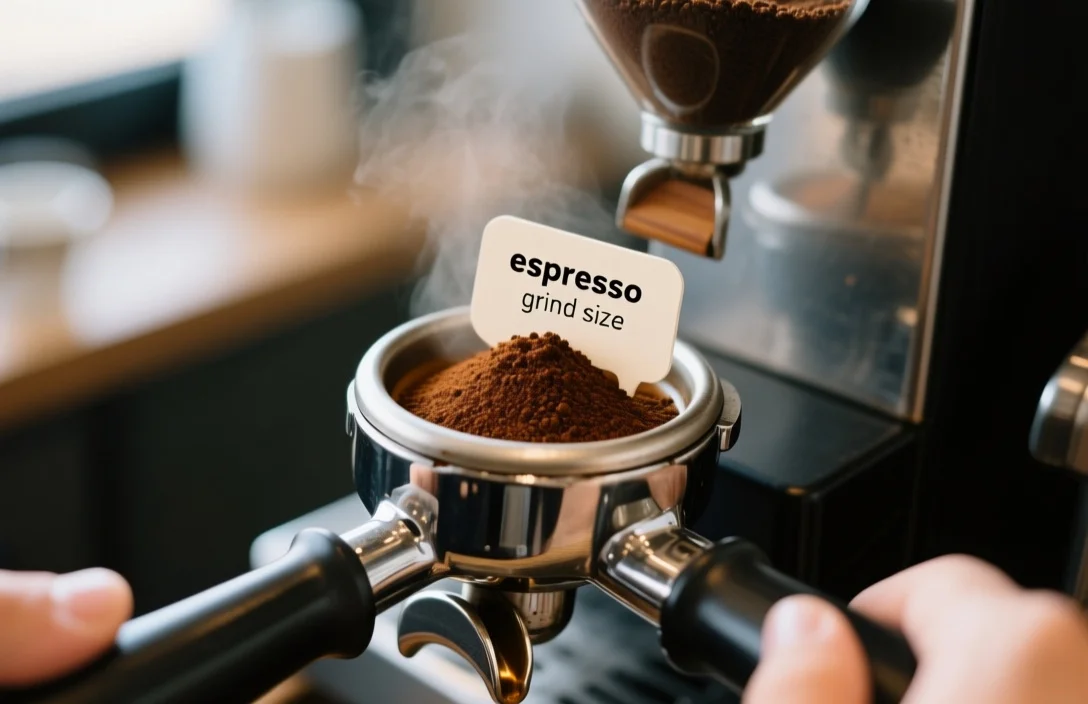
Espresso grind size determines how quickly water passes through coffee and therefore whether a shot extracts sour, balanced, or bitter. Espresso grind size should be fine enough to create 25-30 seconds of extraction for a standard single or double shot yield, while matching your dose, tamp, and machine – adjust from there.
Espresso is a concentrated coffee brewed by forcing hot water under high pressure through finely ground coffee, typically producing 25-30 ml in a single shot and taking roughly 25-30 seconds to extract. Match grind, dose, and tamp to those extraction targets and you control yield and flavor. This guide explains why grind size matters, how to dial it in, the trade-offs you will face, and how equipment, roast, and technique change what “fine” actually means.
Why grind size matters for espresso
Surface area controls extraction speed. Finer particles expose more surface area per gram, so hot water extracts soluble compounds faster and raises extraction yield during a fixed contact time. Coarser particles slow extraction for the same dose and pressure, producing a different balance of acids, sugars, and bitters.
Resistance to water flow is the practical effect of switching grind size on espresso machines that use high pressure. Finer grinding increases resistance and slows flow, while coarser grinding lowers resistance and speeds flow. That resistance interacts with basket volume, dose, tamp pressure, and machine pressure to determine how long water remains in contact with the puck – what baristas call shot time or extraction time. Aim for the typical 25-30 second window as your baseline, but use taste and flow behavior to refine the setting.
How particle distribution and consistency change results
Grind consistency describes how uniform the particle sizes are after grinding. Narrow particle distribution reduces the chance of over- and underextraction inside the same puck; wide distribution creates fines (very small particles) that overextract and boulders (large particles) that underextract. Even small changes to distribution shift flavor balance and can increase channeling.
Burr quality and wear influence distribution. Higher-end burrs and correct burr alignment produce a tighter distribution at the same grind setting compared with worn or low-cost burrs. Dosers and grinders with poor retention can also change the effective particle mix between shots, which is why many serious users prefer low-retention grinder designs for espresso.
Grind-size categories and typical outcomes
After comparing common descriptions side by side, a practical classification emerges: very fine, fine, medium-fine, and coarse relative to espresso. This table shows expected outcomes and when you should try each range.
| Name | Typical outcome | Best for |
|---|---|---|
| Very fine (clumping, slow flow) | High resistance, slow shot time, thicker body, risk of overextraction and bitterness if too slow | Low-dose, low-yield recipes; heavily roasted beans; experienced baristas correcting fast shots |
| Fine (classic espresso) | Balanced resistance and extraction time, crema formation, clear sweetness-acidity-bitter interplay | Standard espresso recipes and most home machines |
| Medium-fine (faster than classic espresso) | Faster flow, brighter/sour tendency if not adjusted for dose or yield | Single-shot or filter-roast beans, high-solubility light roasts |
| Coarse (drippy, fast) | Low resistance, short contact time, underextraction, thin body, and sourness | Troubleshooting channelling or when using high-dose, long-yield recipes (caffè crema) |
How to dial in espresso grind
Calibrating your grinder to a given coffee and machine requires a repeatable procedure. Follow these steps; each line begins with a verb so you can follow the action.
- Weigh your dose and tare the scale.
- Grind to a starting setting aimed at balanced espresso for your grinder (one notch finer than filter grind gives a baseline).
- Tamp consistently with the same pressure and level the puck.
- Run a timed shot and record yield and shot time; note appearance and taste.
- Adjust grind one small step finer if the shot runs too fast or tastes sour; move one step coarser if the shot runs too slow or tastes overly bitter.
- Repeat the pull, keeping dose and tamp constant, until shot time and taste fall into your target zone.
- Lock in the setting and pull three consistent shots to confirm repeatability.
Keep notes about ambient humidity, roast date, and bean variety during this process. Grind adjustments should be small and tested with full shots; large jumps make it hard to isolate the variable you changed.
How machine, dose, and tamp change what “fine” means
Machine type alters how you treat grind size because pump profile, preinfusion, and basket geometry change water flow. Traditional lever or plunger machines respond differently to the same grind setting than modern pump machines with PID control. Espresso baskets come in different diameters and depths; a wider basket at the same dose creates a thinner puck and faster flow.
Dose affects puck depth and resistance. Increasing dose without changing puck diameter makes a deeper puck that restricts flow more, so you may need to coarsen grind to keep extraction time the same. Tamping pressure and level change density and uniformity; inconsistent tamping introduces pathways where water can channel and overextract locally. Match grind changes to these inputs rather than changing all three at once.
Roast level, bean age, and how they change grind needs
Freshness modifies extraction rate because roasted coffee becomes more porous in the days after roasting, and chemical changes alter solubility. Darker roasts tend to extract faster at the same grind because roasting increases solubility, so they usually require a coarser setting than lighter roasts to avoid overextraction. Lighter roasts often demand a finer grind to pull sweetness out of less-soluble compounds.
Coffee stored for multiple weeks after roast will react differently to the same grind than coffee roasted days earlier. Observe that shot time can drift over a week as beans de-gas and absorb moisture. Adjust grind slightly, preferably coarser as beans age past their first week, and keep roasting date notes with each bag to speed future dialing-in.
Grinder types, burrs, and real trade-offs
Choosing grind hardware forces trade-offs between consistency, retention, and cost. Burr grinders yield far more uniform particles than blade grinders and are effectively mandatory for espresso. Conical burrs often produce fewer fines and less heat at high RPMs. Flat burrs can create a tighter distribution at the same setting but sometimes cost more and require more maintenance.
Stepless adjustments let you micro-tune grind size for precise dialing, while stepped grinders simplify repeatability at the expense of micro-adjustments. Commercial-grade grinders usually offer lower retention, higher RPM stability, and replaceable burrs – attributes that keep distribution consistent long term. Weigh budget against your tolerance for variability: invest in a better burr and low-retention path if you brew espresso daily and demand repeatability.
Symptoms, diagnosis, and fixes for common grind-related problems
Start with taste and flow behavior as diagnostic tools since they tell you whether extraction is too fast or too slow. Sour or weak shots with fast flow often signal a grind that’s too coarse, a low dose, or an underfilled basket. Dark, bitter, or delayed shots with slow flow often signal a grind that’s too fine, excessive dose, or overpacked puck.
Observe channeling – visible streams or uneven crema during extraction – as a sign of uneven puck density or distribution. Correct channeling by improving distribution (e.g., WDT – Weiss Distribution Technique), leveling, and tamping rather than only changing grind. If your puck becomes a muddy, almost cement-like puck after extraction, that indicates excessive fines or too-fine a setting; back off a micro-step. If the shot pours like water and tastes thin, go finer or increase dose.
Practical examples and recipes to test settings
Match a repeatable recipe to your grinder and machine and test it as a baseline; then make one-variable changes. Use these examples as starting points and adapt to taste.
- Example A (balanced baseline): Select a standard double dose for your basket, tamp consistently, target a 25-30 second extraction, then taste for balance.
- Example B (bright, higher-acidity profile): Use the same dose but slightly coarser grind or a slightly shorter extraction time to emphasize acidity; adjust yield down if sourness increases.
- Example C (syrupy, darker roast): Grind coarser than baseline if bitterness appears at baseline times; use a slightly higher yield to bring out body.
Document dose, grind notch, and extraction times for each test. Replicate the same recipe across three pulls to confirm a real effect rather than shot-to-shot variability.
Common mistakes and how to avoid them
Changing multiple variables at once makes troubleshooting impossible. Alter only grind or dose at a time and keep tamp constant while dialing. Over-tamping to “fix” a fast shot creates micro-channels and inconsistent extractions in many cases; prefer even tamping pressure with consistent distribution.
Rotating grind settings wildly between sessions leads to inconsistent results. Record settings tied to roast dates and beans, and reset when you switch coffee. Expect variance between machines and baskets; don’t assume a setting that works on one espresso machine will translate exactly to another.
When to upgrade your grinder
Buy a better grinder when you cannot achieve stable, repeatable shots despite consistent tamping and dosing. Grinder upgrades pay off when you brew multiple times per day, when you switch beans often, or when changes in roast date cause excessive re-dialing. Look for low retention, precise adjustment (stepless or fine-stepped), and quality burrs if crop-to-cup consistency matters.
Quick checklist before you change grind
- Measure and record current dose, extraction time, and yield.
- Taste the shot and identify whether it’s sour, thin, balanced, or bitter.
- Adjust grind a small step in the correct direction based on symptoms.
- Pull another shot and record results.
- Repeat until extraction and flavor balance match your target.
FAQ
How fine should espresso grind be compared with filter coffee?
Espresso grind is much finer than filter coffee because the brew contact time is short and pressure-driven; espresso requires a particle size that increases resistance to water flow so the extraction reaches target yield within roughly 25-30 seconds.
Can I use the same grinder setting for different beans?
You can start with the same setting but expect to dial in for each bean and roast. Roast level and bean freshness shift extraction behavior, so small adjustments will be necessary to maintain consistent shot time and flavor.
Is a stepless grinder necessary to pull great espresso?
Stepless grinders provide finer micro-adjustments for repeat dialing, but stepped grinders with a fine step size can still yield excellent results for most home users. Decide based on how often you change beans and how precise you need reproducibility to be.
Why does my espresso taste bitter after switching to a darker roast?
Darker roasts extract more readily and can produce bitter flavors at the same extraction time used for lighter roasts. Coarsen the grind a small amount or reduce extraction time to reduce bitterness.
How often should I clean my grinder?
Clean the grinder regularly to remove oils and stale fines that alter distribution and retention; frequency depends on roast level and volume, with weekly to monthly cleaning common for home users who change beans frequently.
Practical verdict
If you want consistent, repeatable espresso, treat grind size as your primary tuning knob and always change it in small steps while keeping dose and tamp fixed. Start from a setting that gives 25-30 seconds of extraction for your chosen dose and yield, taste, and then refine grind to correct sourness or bitterness. Take one concrete next step now: pick a single bean and recipe, record dose and extraction time, then adjust grind by one small step and document how taste changes – that incremental approach yields faster, reliable improvement than chasing ideal settings without data.

- Espresso Tastes Watery? 10 Common Causes and How to Fix It - October 23, 2026
- 10 Common Coffee Equipment Cleaning Mistakes and How to Avoid Them - October 23, 2026
- 17 Common Coffee Grinder Problems and How to Fix Them - October 23, 2026