
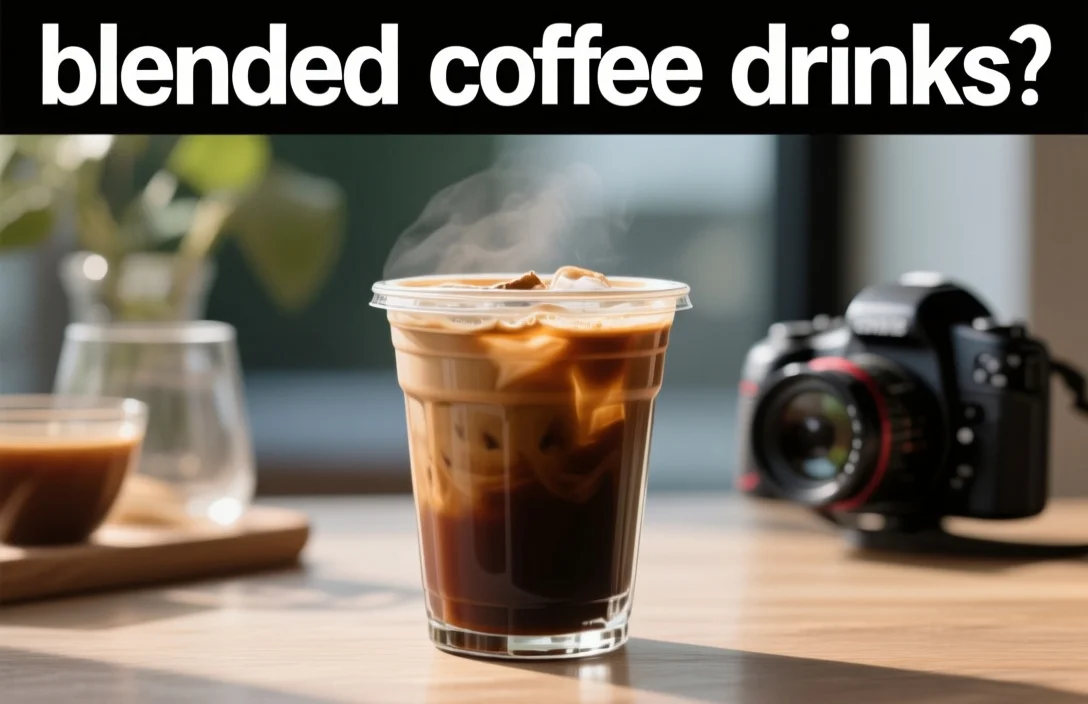
Blended coffee drinks combine brewed coffee or espresso with ice and one or more mixers – milk, cream, flavored syrup, or whole ingredients – and are blended until smooth. This guide explains the common varieties, how they differ from iced and shaken coffees, how to make café-quality versions at home, and which trade-offs matter for texture, caffeine, and sugar.
What blended coffee drinks are and why they feel different
Blended coffee drinks refer to beverages where ice is pulverized with coffee or espresso and other ingredients to create a thick, spoonable or slush-like texture. Most recipes use one base coffee (espresso, strongly brewed drip, or cold brew concentrate) combined with dairy or plant milk, sweetener, and often flavoring agents like chocolate, caramel, or fruit. Texture is the defining feature; a properly blended drink holds air and tiny ice crystals so each sip feels creamy rather than watery. Baristas aim for a stable emulsion so the beverage resists rapid separation and stays palatable down to the last sip. Expect wide variation by café and chain, because cafés tune grind strength, syrup concentration, and ice-to-liquid ratio to hit a target mouthfeel and calorie profile.
How blended drinks differ from iced coffee, frappes, and milkshakes
Espresso-based blended drinks, iced coffee, frappes, and milkshakes overlap but follow different mechanics. Iced coffee generally means chilled brewed coffee poured over ice or shaken with ice; the result is thin and rapidly dilutes. Frappes historically refer to a Greek iced coffee made by shaking instant coffee with water and ice until foamy; North American café frappes evolved into ice-blended espresso drinks with syrup and milk. Milkshakes use milk and ice cream, with little or no coffee, and rely on emulsified fat from ice cream for richness. Texture in blended coffee drinks comes from the ice particle size and emulsifiers (fat in dairy, stabilizers in syrups), while caffeine strength tracks back to the coffee concentration used in the recipe. Customers who want a spoonable, dessert-like beverage should look for descriptions such as “blended,” “frappuccino-style,” or “ice-blended” on menus.
Common varieties compared
Blended coffee drinks show up in independent cafés and large chains under many names. Comparing common varieties side by side helps decide what to order for energy, sweetness, or dietary needs.
| Name | Price / Key Spec | Best For |
|---|---|---|
| Espresso Blended (espresso + milk + ice) | Cafe-priced; espresso-forward | People who want clear coffee flavor with a creamy texture |
| Coffee Frappé / Ice-Blended Coffee | Cafe-priced; brewed coffee base | Anyone seeking a lighter, more iced-coffee style texture |
| Mocha or Chocolate Blended | Cafe-priced; chocolate syrup or cocoa added | Dessert seekers who want chocolate and coffee together |
| Cream-based Blended (with ice cream or frozen milk) | Higher calorie; richer mouthfeel | Those treating it like a milkshake |
| Fruit and Coffee Smoothie (coffee + fruit + ice) | Variable; acid-tolerant | Drinkers who prefer fruit brightness over sweetness |
| Decaf Blended | Same specs as any base but decaf coffee | Customers avoiding caffeine but keeping texture |
Menu labels and local pricing determine the actual cost per serving. Homemade versions replace café pricing with ingredient cost and equipment investment as the key trade-off.
How ingredients and technique shape the final drink
Ice quality and blender technique control particle size and emulsion stability more than the exact brand of coffee used. Use dense, hard ice and a short high-speed pulse for tiny crystals that give creaminess without melting into a watery slurry. Milk choice matters for mouthfeel: whole dairy yields the richest emulsion, reduced-fat milk produces lighter foam, and plant milks vary widely – oat milk tends to foam and blend well, while almond milk can be thinner. Syrups and sauces do double duty: they add both flavor and stabilizing sugar that slows melting and separation. Coffee preparation affects bitterness and acidity; a short, strong espresso pulls bright aromatics that cut through sweetness, while a cold brew concentrate brings lower perceived acidity and smoother body.
How to make café-quality blended coffee drinks at home
Follow these practical steps to make repeatable, balanced blends without special commercial gear.
- Measure and prepare a concentrated coffee base. Use strong-brewed drip, espresso shots, or a cold brew concentrate.
- Chill the coffee base before blending. Cold starting reduces immediate ice melt and preserves texture.
- Add milk or milk alternative for body. Choose whole milk or oat milk for creamier texture.
- Sweeten with syrup or sugar before blending. Liquid sweeteners disperse faster and help emulsion.
- Use firm, large ice cubes and pulse in a high-speed blender until crushed to a fine, slushy consistency.
- Taste, then adjust sweetness or coffee strength in small increments.
- Serve immediately in a chilled glass to preserve texture.
Every step matters for consistency. Home blenders vary in power, so start with short pulses and inspect texture; over-blending will produce warmer, thin liquid. Keep a small notebook with your preferred coffee concentration and syrup volumes so you can repeat results.
Equipment, substitutions, and quick hacks
Home equipment choices determine how close you get to café texture. A high-speed blender produces the smallest, most stable ice particles, but a personal blender or even a food processor can make respectable results with technique adjustments. Use frozen coffee ice cubes to minimize dilution; freezing brewed coffee into cubes and using those instead of plain ice preserves coffee intensity. Thickening agents like a small amount of full-fat yogurt, powdered milk, or xanthan gum can help stabilize the drink for a few extra minutes if you plan to sip slowly. Pre-made coffee syrups work well for rapid flavoring, and homemade simple syrup (equal parts water and sugar heated until dissolved) will dissolve cleanly without gritty texture. For dairy-free foam, look for barista-formulated plant milks labeled for steaming or frothing; those have added emulsifiers that mimic dairy behavior.
Customizing for texture, caffeine, and calories
Adjustments to ingredients shift the drink’s profile along three axes: mouthfeel, caffeine punch, and caloric content. To emphasize coffee flavor without raising sugar, reduce or omit flavored syrup and increase the coffee concentration or add an extra espresso shot. For richer mouthfeel without many added calories, use small amounts of heavy cream or a splash of half-and-half; fat improves emulsion so less syrup is needed to taste full. To reduce calories while preserving a creamy texture, use unsweetened plant milk plus an emulsifying agent like instant powdered milk or a tiny amount of cream to trick the palate. Sweetness perception depends on both sugar and temperature; colder drinks taste less sweet, so many cafés add extra syrup to offset chill. Caffeine per serving varies with the coffee base – espresso shots concentrate caffeine, while cold brew concentrate yields high extraction over time – so request decaf if you are sensitive.
Common mistakes and how to avoid them
Baristas and home makers make the same predictable errors when blending coffee. Using too much plain ice compared to liquid yields a grainy, watery drink as it melts quickly. Over-sweetening in the blender can mask coffee flavor and create cloying aftertaste; start with less syrup and add after a taste test. Blending at one fixed speed for too long heats the drink through friction, causing rapid melting and a diluted mouthfeel. Using freshly brewed hot coffee straight into a blender destroys the slushy texture; always cool the coffee first or use frozen coffee cubes. Mixing incompatible ingredients, for example citrus and dairy, will lead to curdling or separation – pair acidic fruit with plant milk or use stabilizing agents.
How to order a blended drink at a café without wasting money
Ordering precisely saves money and gets the beverage you expect. Ask whether a menu item is milkshake-like or coffee-forward before committing when the description is vague. Request “less syrup” or “extra coffee” rather than ordering a larger size when you want more caffeine without extra sugar. Specify decaf, alternative milk, or whipped topping only if you truly want that addition; many add-ons carry a surcharge. Check whether the chain or café lists standard serving sizes and ingredient swaps on a visible menu; staff will tell you if a recipe includes ice cream, which typically makes the item more dessert-like and calorie-dense. Consider ordering a smaller size and topping up with a separate espresso shot if your goal is stronger coffee flavor.
Flavor pairings and seasonal variations worth trying
Creative flavor pairings make blended coffee drinks memorable. Classic combinations include chocolate and orange, caramel with sea salt, and toasted nuts with a hint of cinnamon. Seasonal adaptations often replace standard syrups with pumpkin spice blends, gingerbread, or peppermint; these spices change the perceived sweetness and can make a smaller drink feel indulgent. Fruit-based blends use berries or banana for body, but balance is essential: use low-acidity fruit or offset brightness with a sweeter syrup. Texture-minded baristas pair chocolate with heavier dairy and citrus with lighter plant milk to maintain harmony between flavor and mouthfeel.
Nutritional considerations and what to ask about
Nutrition for blended coffee drinks varies widely by recipe and serving size, so verify details with the café if you need exact numbers. Ask whether a menu item contains ice cream, heavy cream, or whipped cream, because those ingredients raise fat and calorie counts significantly compared to milk or plant milks. Request ingredient lists for syrups and sauces when you have dietary restrictions or want to avoid particular allergens. Choose unsweetened milk alternatives and ask for syrup on the side if you prefer to control total sugar. For medical or strict dietary needs, insist on written ingredient information from the café or refer to the chain’s published nutrition guide when available.
Sustainable and cheaper home approaches
Home-made blended drinks dramatically reduce per-serving cost and plastic waste compared with many chain offerings. Brew a concentrated batch of coffee and freeze into cubes to preserve flavor and reduce dilution when making multiple drinks. Reusable stainless-steel straws and insulated tumblers keep texture and reduce single-use cup waste when drinking outside the home. Buy larger bottles of simple syrup or make your own in batches to avoid multiple small syrup bottles; homemade syrups store refrigerated for several days. Use a reusable blender cup for single-shot servings to avoid multiple dishes and reduce cleanup time.
FAQ
What is the main difference between a blended coffee and an iced coffee?
Blended coffee includes pulverized ice and stabilizers that create a smooth, thick texture, while iced coffee is typically brewed coffee chilled and served over ice with little or no blending. The mouthfeel and dilution behavior across time are the primary differences.
Can I make a low-sugar blended coffee that still tastes good?
Yes. Use unsweetened milk alternatives, add a small amount of a flavorful extract or a spice like cinnamon, and increase coffee concentration slightly to highlight bitter-sweet notes without relying on syrup.
Is espresso necessary for a true blended drink?
No. Many blended coffee drinks use strong-brewed drip or cold brew concentrate as the base; espresso provides a distinct flavor profile but is not mandatory for the technique of blending.
How do I prevent a blended drink from separating quickly?
Start with cold ingredients, use fine ice crystals created by short high-speed pulses, and include an appropriate emulsifier – fat from milk or stabilizing sugars from syrups. Serve chilled and drink promptly.
Which plant milk works best in blended coffee drinks?
Oat milk tends to perform reliably because of its natural creaminess and neutral flavor, but barista-formulated plant milks are designed to mimic dairy’s emulsifying properties and often produce better results.
Practical verdict and next
Blended coffee drinks span a spectrum from light ice-blended coffees to milkshake-like dessert beverages, and the right choice depends on whether you want coffee intensity, creamy texture, or lower sugar. Try a basic home recipe using a concentrated coffee base, cold milk, a small amount of syrup, and firm ice cubes to learn how texture and sweetness interact. Next step: pick one café-style recipe you like, replicate it at home with frozen coffee cubes, and keep a short log of ingredient ratios until you nail the balance that suits your palate.

- Espresso Tastes Watery? 10 Common Causes and How to Fix It - October 23, 2026
- 10 Common Coffee Equipment Cleaning Mistakes and How to Avoid Them - October 23, 2026
- 17 Common Coffee Grinder Problems and How to Fix Them - October 23, 2026