
Short answer: choose the electric grinder built for the material and the job you actually have in mind. Coffee, meat, metal, masonry, and spices each call for a different mechanism, different safety features, and a different tolerance for speed versus precision. This electric grinder guide breaks down the main types, how they work, what to check before buying, and how to use them without wearing out the machine or creating avoidable problems.
What this guide covers and how I would use it
I would read this in two passes. First, scan the sections on grinder types and the buying checklist. That gets you to a sensible choice quickly. Then come back to the maintenance and safety sections if you already own a grinder and want to use it better.
The decisions that matter most are plain ones: what material you are grinding, how precise the result needs to be, how much you will use it, how noisy or dusty the job will be, and whether the machine can be serviced later. When I compare grinder specs, I keep coming back to four items, the grinding mechanism, motor type, grind-size adjustment, and safety guards.
The main grinder types, without the jargon
Electric grinders share a name, but they do very different work.
Coffee grinders use either burrs or blades. Burr grinders focus on repeatable particle size. Blade grinders chop more unevenly, which is fine for casual use but less useful when consistency matters.
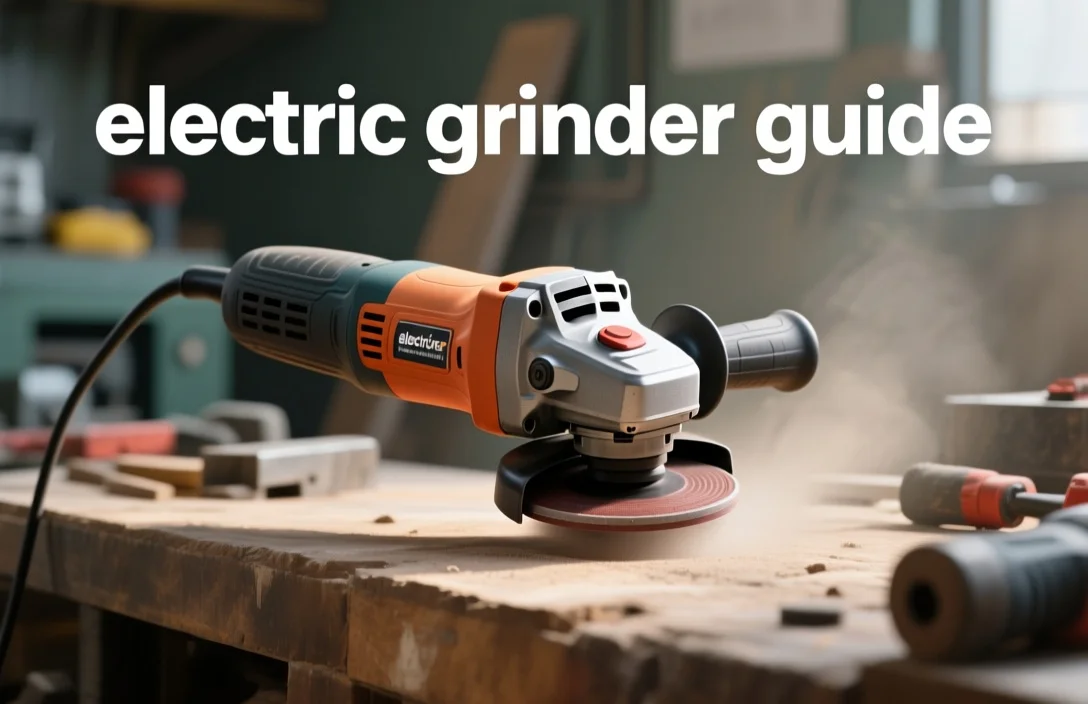
Angle grinders are handheld power tools. They cut, grind, and polish metal, tile, and masonry with the right disc attached. They run at high speed and demand respect.
Bench grinders sit on a workbench and are used for sharpening, shaping, and light stock removal. They are shop tools, not general-purpose finish tools.
Meat grinders push meat through a plate with holes of a chosen size. That is what controls whether you get a coarse grind, burger-ready meat, or something finer.
Electric spice and herb mills are smaller and simpler. They are meant for short bursts, small batches, and quick cleanup.
For coffee, I would usually lean toward a burr grinder because it gives a more even result than a blade grinder. For metalwork, an angle grinder is the tool. For sharpening blades, a bench grinder makes more sense. For food, the right grinder is the one that is easy to clean and built for sanitary use.
Quick comparison
| Name | Price / Key Spec | Best For |
|---|---|---|
| Burr Coffee Grinder | Mid-range to high, burr mechanism, adjustable grind steps | Home or specialty coffee that needs consistent grind |
| Blade Coffee Grinder | Low-cost, spinning blade, simple container | Budget buyers and occasional users |
| Angle Grinder | Variable power, disc compatibility, handheld | Cutting, grinding, and polishing metal, tile, masonry |
| Bench Grinder | Medium, two abrasive wheels, bench-mounted | Tool sharpening and light stock removal in a workshop |
| Electric Meat Grinder | Low to high, feed screw, interchangeable plates | Making ground meat, sausages, and coarse-to-fine textures |
| Spice/Herb Electric Mill | Compact, single-chamber, quick pulse control | Grinding small quantities of spices and herbs |
How electric grinders work
The basic motor is doing the same job in all of them, turning electrical power into rotation. What changes is the part doing the grinding.
A burr coffee grinder uses two abrasive surfaces, one fixed and one rotating. Beans are crushed between them. Burr shape, usually conical or flat, affects the consistency of the output.
A blade grinder works differently. It uses a fast-spinning blade that chops whatever is inside the chamber. That usually means more fine dust and more uneven pieces in the same batch.
Angle grinders use an axle and bearings to spin discs at high speed. The disc diameter and arbor size affect what the tool can do and how it handles the cut.
Bench grinders use two abrasive wheels mounted on the machine. Wheel grit and hardness determine how aggressively they remove material.
Meat grinders use an auger, also called a feed screw, to press the meat through a knife and plate. The plate hole size is what shapes the final texture.
Spice mills are smaller and less powerful by design. Their main challenge is heat. Too much friction can dull flavor or make spices clump.
How to choose the right grinder for your use
Start with the material. That matters more than brand language or sales copy.
If you brew coffee at home and want consistency, a burr grinder is the safer bet. If you only need something cheap and compact for occasional use, a blade grinder can be enough.
If you work with metal, masonry, or tile, you need an angle grinder. There is no substitute for it in that category.
If your workbench is for sharpening knives, chisels, or other edge tools, a bench grinder is the better fit.
If you are grinding food, choose a meat grinder or spice mill that is easy to clean and meant for that purpose. I would not treat food processing as a general-tool problem.
After that, think about volume. A machine that is fine for one cup of coffee or a few pounds of meat may struggle if you ask it to run all day. Duty cycle matters. So does access to removable parts, because cleaning and repair are part of ownership, not an afterthought.
Portability is the next question. A countertop spice mill is one thing. A stationary meat grinder or bench grinder belongs in a fixed workspace. For metal and masonry work, safety features move higher up the list. I would look closely at guards, switches, and mounting options before I look at accessories.
What to check before you buy
If you can test the grinder in person, bring a simple checklist and use it. Ask to see the machine handle a material close to your own. Coffee beans for coffee grinders. A small meat sample for meat grinders. A suitable test material for an angle grinder.
Pay attention to vibration. Excess vibration usually tells you more than the marketing sheet does. Listen for odd noise, too. A rough or loose sound can point to bearing issues or poor balance.
Read the specs with a skeptical eye. Motor type and warranty matter. Brushless motors usually handle heavier intermittent use better and manage heat well. I would also check whether the grinder can be taken apart without special tools if routine maintenance matters to you.
Look at the accessories and replacement parts. Burr sets, discs, plates, guards, and wheels are not minor extras. They decide whether the machine remains useful after the first wear cycle.
How to use and maintain a grinder safely
The basics are simple, but they matter.
- Unplug the grinder before cleaning or changing parts.
- Remove detachable pieces and clear away loose debris.
- Wash food-contact surfaces with warm, soapy water, then dry them well.
- Put everything back together carefully and make sure seals or retaining rings are seated.
- After a deep clean, run the grinder briefly with an inert material if the manufacturer allows it.
For burr coffee grinders, use a grinder brush to remove built-up oils and grounds. I would not reach for rice unless the maker specifically allows it.
For angle grinders, replace worn discs before they start vibrating badly. Check that the disc rating matches the tool’s maximum RPM.
For bench grinders, dress the wheels regularly so they stay flat and cut cleanly. Keep the tool rest set to the manufacturer’s recommended clearance.
For meat grinders, a light food-grade oil on the shaft may be recommended, and slightly freezing the meat before grinding can improve texture.
Mistakes that shorten grinder life
A few habits cause most of the trouble.
Overfeeding a grinder is one of them. It can clog the machine and overheat the motor. If you smell burning insulation, stop immediately.
Using the wrong accessory is another. A disc that is not rated for the tool’s speed can fail. That is not a minor mistake.
Coffee grinders run into problems when oily beans, sugar, or other sticky material are added without cleaning between batches. The result is clumping and off flavors.
Meat grinders need proper cleanup every time. If they are not fully disassembled and sanitized, residue can remain in corners and seams. A lingering odor after cleaning is a warning sign, not a quirk.
I also watch for bearing whine, wobble, and grinding noises that were not there before. Those are signs to stop and inspect the machine. The same goes for unusual heat, smoke, sparks, or a grinder that starts walking across the bench.
Safety gear and operating habits worth keeping
Eye protection is non-negotiable for angle and bench grinders. Small fragments move fast. So does abrasive grit.
Hearing protection is smart for longer sessions, especially with handheld angle grinders.
For dusty metal or masonry work, use respiratory protection if you do not have proper dust extraction. Silica dust deserves particular caution.
Clothing should fit close to the body. Loose sleeves and dangling material create avoidable risks around rotating parts. Gloves are a judgment call, but I would be careful around bench grinders and meat grinders where material can be pulled in. Use them for handling, then remove them before the tool is running.
Clamp workpieces when you can. Do not hold them by hand during bench grinding.
Keep guards in place. Do not defeat them. On handheld grinders, use both hands and keep your stance stable. For kitchen-style grinders, keep cords away from water and heat, and disconnect power before changing plates or blades.
Buying priorities that make sense in the real world
I would rank features in this order: the right mechanism for the material, ease of cleaning, safety features, build quality, and replacement-part availability.
For coffee grinders, start with burr type and adjustment range. Hopper size and noise come after that.
For metalworking grinders, disc compatibility and guard adjustability matter first. Motor serviceability comes next.
For meat grinders, look at feed screw strength, plate options, and motor cooling.
Warranty terms are worth reading closely. So is the availability of consumables and parts. Burrs, wheel rings, plates, knives, and discs should be easy to source. A cheap grinder that cannot be repaired is usually expensive in the end.
When a grinder is acting up
A few problems have plain causes.
If a coffee grinder gives you uneven grind size, check for worn burrs or a misaligned burr carrier.
If an angle grinder stalls, inspect the disc for binding and check the motor brushes.
If a meat grinder clogs, slow down the feed rate and make sure the meat is cold and cut into smaller pieces. If the problem keeps coming back, look at the knife sharpness and plate alignment.
If a bench grinder vibrates too much, tighten the mounting bolts and check wheel balance.
My practical rule is to isolate one variable at a time. Try a known-good disc, plate, or burr set. Run the machine under light load. Replace worn parts before they fail completely. A simple maintenance log helps more than people expect.
FAQ
What grinder type is best for espresso at home?
A burr coffee grinder with fine, repeatable adjustment is the best fit for espresso. That even particle size helps produce more consistent extraction.
Can I use an angle grinder to cut tile and metal with the same disc?
No. You need discs rated for the material and the grinder’s RPM. Using the wrong disc raises the risk of failure and poor cutting.
How often should I replace burrs or abrasive wheels?
Replace them when performance starts slipping, the output becomes inconsistent, or vibration increases. Visible wear is another clear sign.
Are electric meat grinders safe to use for raw meat?
Yes, if you clean and sanitize them properly, keep the meat cold, and disassemble the grinder after each use. Sanitation is the main issue.
What kind of maintenance helps a grinder last longer?
Regular cleaning, timely replacement of wear parts, proper lubrication where specified, and staying within the grinder’s intended duty cycle all help. Keep the ventilation clear, too.
The shortest practical takeaway
If you want one home coffee machine, buy a burr grinder. If you only need a compact tool for occasional seasoning, a spice mill is enough. If you are working with metal, masonry, or edge tools, choose an angle grinder or bench grinder for the specific task. For food, buy the machine made for food and keep cleaning simple.
I would finish with three checks before buying: does the grinder match the material, can you get replacement parts, and does it have the safety features the job calls for? If those answers are yes, you are usually looking at the right machine.

- Espresso Tastes Watery? 10 Common Causes and How to Fix It - October 23, 2026
- 10 Common Coffee Equipment Cleaning Mistakes and How to Avoid Them - October 23, 2026
- 17 Common Coffee Grinder Problems and How to Fix Them - October 23, 2026