
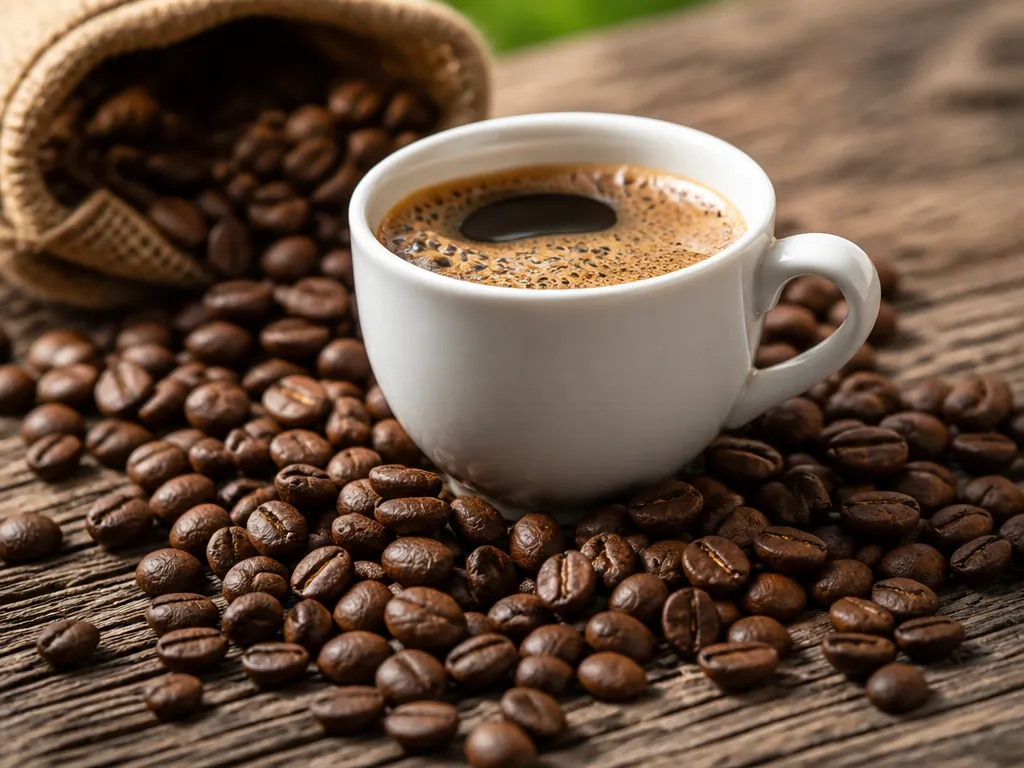
Coffee with coffee beans means brewing roasted coffee seeds from inside coffee cherries. Grind the beans, add hot water, and extract their flavor and caffeine. Much of the taste comes from what happens to the seed after harvest – especially processing, roasting, grinding, and storage.
Use fresh whole beans, grind them right before brewing, and aim to use them within the first few weeks after roasting for the best flavor. If your coffee tastes stale, the problem is usually freshness, grind size, or water temperature – not the fact that you used beans.
Key Takeaways
- Coffee beans are seeds. The coffee you brew comes from seeds inside coffee cherries on coffee trees.
- Arabica is common. Global production is about 62% Arabica and 38% Robusta.
- Robusta has more caffeine. Robusta contains 50-60% more caffeine than Arabica.
- Trees take time. Coffee trees begin producing cherries after about 3 years and reach full production around 5 years.
- Roast changes taste. Darker roasts shift flavor more than “bean species” alone.
What You’re Actually Brewing
Coffee with coffee beans is coffee brewed from roasted seeds. Those seeds grow inside coffee cherries, the fruit of the coffee tree. After harvest, the cherries are processed, the green coffee is roasted, and the roasted beans are brewed with hot water.
What you taste comes from several stages rather than one ingredient. Roasting develops aroma and flavor, while grinding controls how quickly water extracts those compounds. Two bags labeled “100% coffee beans” can taste very different if they have different roast profiles or if one has gone stale.
What Is Coffee Made Of? Coffee Beans Explained?
Coffee beans are not beans in the legume sense. They are seeds found inside the cherries of the coffee tree. The seeds are dried, roasted, and ground before brewing.
The seed sits inside several layers of fruit and tissue that affect processing before roasting. Once the green coffee has been separated and dried, roasting changes its chemical structure and creates the flavors and aromas associated with coffee. Hot water then dissolves some of those compounds and carries them into your cup.
Coffee trees grow on a continuous cycle, so flowers and cherries at different stages can appear on the same plant. That staggered growth is one reason coffee production involves repeated harvesting, sorting, and processing rather than one single event.
Inside the Coffee Cherry: From Bean to Roast
A coffee cherry matures to edible fruit in nearly 1 year after first flowering. Coffee trees begin producing cherries at about 3 years, reach full cherry production around 5 years, and are often most productive in the 7-20 year range.
After a cherry is picked, it is processed so the seed can be dried and stored as green coffee. Roasting then transforms the green coffee into the fragrant brown beans used for brewing.
The tree produces the cherry, processing determines the condition of the seed, roasting develops its flavor, and brewing controls how much of that flavor you extract. Each stage leaves a mark on the final cup.
A light roast brewed too hot or for too long can taste harsh, while a poorly extracted light roast can taste sour. Roast level sets the target, and brewing determines whether you reach it.
Know Your Species of Coffee: Arabica vs Robusta
Arabica and Robusta are the two major commercial coffee species. Global production is approximately 62% Arabica and 38% Robusta, so most coffee you encounter is Arabica unless a blend or origin mix says otherwise.
Arabica generally grows at higher altitudes with milder temperatures. Robusta grows at lower altitudes in warmer conditions. Those differences affect how each plant handles stress and how its seeds develop.
Robusta also contains more caffeine – 50-60% more than Arabica. Robusta beans are typically smaller and rounder, while Arabica beans are flatter and more elongated.
| Coffee Type | Key Spec/Price Factor | Best For |
|---|---|---|
| Arabica | About 62% of global production; grown at higher altitudes; more delicate flavor profile | Pour-over, drip, milk drinks where you want clarity |
| Robusta | About 38% of global production; 50-60% more caffeine; heartier and more resistant | Espresso blends, stronger “kick,” thicker crema (depending on roast) |
My practical recommendation for most U.S. home drinkers is to start with Arabica if you want to explore flavor. Try a Robusta-containing blend if you want more caffeine and a heavier profile. If you buy pre-ground coffee, freshness will usually matter more than the species because grinding speeds aroma loss.
How Fresh Coffee Beans Stay
Whole coffee beans stay fresh longer than ground coffee because less surface area is exposed to air. Stale coffee usually has a muted aroma and a flat, papery, or dull flavor, even if the beans once tasted good.
Flavor compounds change gradually after roasting, while volatile aromatics escape over time.
The Lifespan of a Coffee Tree and Your Cup
Coffee trees are slow-growing crops. A coffee tree can live around 100 years, but it takes multiple years to become a meaningful producer. The key milestones are about 3 years to begin producing cherries and about 5 years to reach full cherry production.
Coffee supply can therefore remain stable in one area and become fragile in another. Trees face pests, weather, and disease pressure, and the path from tree to cherry to green coffee to roasted beans takes time.
That long production cycle also helps explain price changes and why fresh coffee depends on more than marketing. Farms harvest in seasons, processing takes time, and roasters convert green coffee into inventory. When demand is high or logistics are tight, beans can taste less vibrant even when they are not “old old.”
A tree’s best output window is often around 7-20 years. When growing conditions change or trees need replacement, producers cannot quickly rebuild supply because new trees take years to reach full production.
How Roast and Beans Differ
Starbucks uses roast profiles and bean choices to shape the flavor of its coffees. The company publishes menu items and nutritional information through its menu, showing how beverage formulation and roast profile fit into the product rather than serving as afterthoughts.
Roast level affects bitterness, sweetness, smokiness, acidity, and extraction. A darker roast can taste less sharp because some acidity shifts during roasting. A lighter roast can preserve more origin character, but it may taste harsh when under-extracted.
If you buy coffee from Starbucks, treat it as a roast-specific product and match it to your brew method. A light roast generally needs careful extraction so it tastes smooth rather than sour. A dark roast can tolerate stronger extraction, but grinding too fine or brewing too long may push it toward burnt bitterness.
When a brew tastes off, change one variable at a time. Adjust grind size first, then brew time, then temperature. Bean and roast differences matter, but those brewing variables are the controls you can change at home.
FAQ
What does “coffee with coffee beans” actually mean?
“Coffee with coffee beans” means brewing roasted coffee seeds, grinding them, and extracting them with hot water. The seeds come from coffee cherries on coffee trees. Pre-ground coffee uses the same roasted seeds, but grinding exposes more surface area to air and gives you less control over freshness.
How long do coffee beans stay fresh after roasting?
Whole beans stay fresh longer than ground coffee because they lose aroma more slowly. Flavor compounds change gradually after roasting, and volatile aromatics escape over time. If the coffee smells less fragrant and tastes flat, the beans are likely past their peak even if they are not “expired.”
Are Arabica or Robusta beans stronger?
Robusta generally contains more caffeine than Arabica – about 50-60% more. Arabica accounts for about 62% of global production, while Robusta accounts for about 38%, so Arabica appears more often in coffee bags and blends. “Stronger” can also mean a darker roast or higher extraction, but Robusta is the better choice when caffeine is your main goal.
How should I store coffee beans at home?
Store whole beans in an airtight container in a cool, dark place. Open the container only when dispensing beans. Avoid the refrigerator or freezer unless you can prevent condensation from repeated temperature changes. Grind right before brewing so the aroma does not fade while the coffee sits.
What’s the most common mistake people make with coffee beans?
The most common mistake is buying good beans and brewing them after they have lost their freshness. If the coffee tastes stale, more sugar or a longer brew time will not restore the aroma compounds that have already escaped.

- Espresso Tastes Watery? 10 Common Causes and How to Fix It - October 23, 2026
- 10 Common Coffee Equipment Cleaning Mistakes and How to Avoid Them - October 23, 2026
- 17 Common Coffee Grinder Problems and How to Fix Them - October 23, 2026