
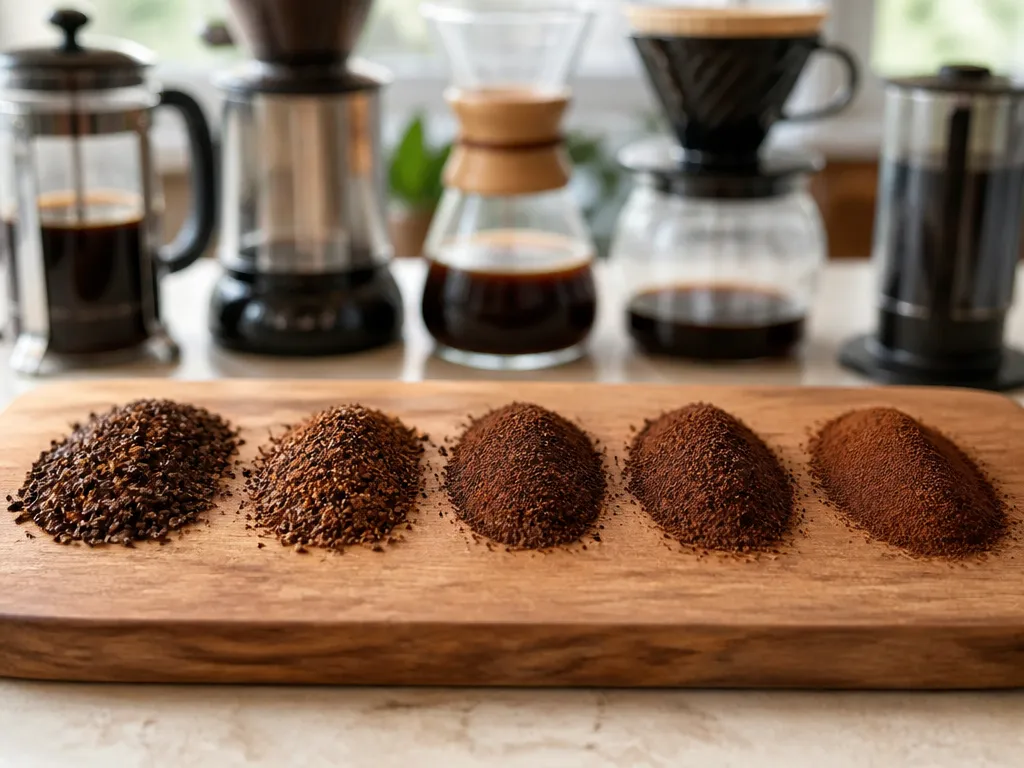
Coffee grind size changes how quickly water pulls flavor compounds from coffee. If your cup is consistently sour, bitter, or watery, the grind is usually the easiest variable to adjust. The right grind depends on your brewer, your recipe, and the flavor you want.
Coffee grind size is the size of the particles left after grinding. Finer grounds expose more surface area to water and extract faster; coarser grounds expose less surface area and extract more slowly. For most home brewing, grinding too fine makes coffee taste bitter or harsh, while grinding too coarse makes it taste sour, thin, or weak.
Key Takeaways
- Grind size controls extraction speed. Finer grinds extract faster, while coarser grinds extract more slowly.
- Surface area changes flavor. Smaller particles expose more area to water, affecting how quickly compounds dissolve.
- Time and ratio interact. Changing the grind can change extraction even when brew time and ratio stay fixed.
- Bitter often means too much extraction. Over-extraction commonly comes from a grind that is too fine or contact time that is too long.
- Sour often means too little extraction. Under-extraction commonly comes from a grind that is too coarse or contact time that is too short.
- Grinder type affects consistency. Burr grinders produce a more even particle size than blade grinders.
Coffee Grind Size Explained for Better Extraction
Coffee grind size sets the pace of extraction. When you brew, hot water dissolves soluble compounds in the grounds. Smaller particles give the water more surface area to contact, so they extract faster.
Think of grind size as a flow-control knob. A grind that is too fine can restrict water movement through the coffee bed, especially in brewers with significant filter resistance. That restriction can increase contact time and extraction. A grind that is too coarse lets water pass through quickly, so the same brew may extract fewer compounds.
Grind size is especially useful when a cup tastes wrong. If you are using the same beans, water temperature, and ratio, changing the grind is usually the quickest way to improve the result. Once the grind is close, you can fine-tune with brew time or water temperature.
A sour, sharp cup often means the coffee did not extract enough. The grind may be too coarse, the brew time may be too short, or the water may be too cool. A bitter, dry cup often means the coffee extracted too much. The grind may be too fine, the brew time may be too long, or the water may be too hot.
Grind size is not the same as strength. Strength describes the concentration of dissolved coffee in the finished cup. Grind size affects strength by changing extraction, but ratio and water volume affect it too. “Finer is always stronger” is also false. If the grind is too fine, the coffee can become harsh and bitter without achieving a balanced flavor.
How Grind Size Affects Flavor and Strength
Grind size affects flavor by changing which compounds dissolve and how quickly they dissolve. Finer grounds extract quickly and can pull intense flavors early. That is why overly fine coffee can taste bitter or rough even when it seems strong.
Grind size also affects extraction yield. When the grind is too coarse, water may under-extract the grounds, leaving a cup that tastes thin, sour, or weak even when the brew ratio is correct. When the grind is too fine, excessive extraction can add unpleasant bitterness and dryness.
Grind size, flow rate, and brew time are closely connected. In many brewers, finer grounds slow water movement and increase contact time. Coarser grounds allow faster flow and reduce the amount of extraction during the brew.
In an immersion method such as French press, water remains in contact with the grounds for the full brew window. Finer particles extract faster, so a small grind adjustment can change the flavor quickly. In pour-over or drip brewing, grind size affects both extraction and the speed at which water moves through the coffee bed and filter.
You usually do not need a large adjustment. Move one notch finer or coarser, then taste again. Large changes can be difficult to interpret because they alter flow, brew time, and extraction all at once.
Match Grind Size to Your Brewing Method
Brewing methods differ in contact time, water flow, and resistance, so each one needs a different grind range. Methods that pass water through the grounds require a grind that creates the right amount of resistance without stalling the flow.
Paper Filter Pour-Over
Paper-filter pour-over brewers, including V60-style brewers, generally work well with a medium to fine grind. The grounds need to provide enough resistance for water to extract the coffee as it passes through the bed.
If the grind is too fine, water may move slowly and the coffee may taste bitter from over-extraction. If it is too coarse, water may run through quickly and leave the cup sour from under-extraction.
Espresso
Espresso uses a very fine grind because the brewer forces water through a tightly packed puck. Small particles create the resistance and surface area needed for espresso extraction.
A grind that is too coarse allows water to channel through the puck, often producing a sour or watery shot. A grind that is too fine can raise resistance, increase extraction, and produce a bitter or harsh shot.
French Press
French press usually calls for a coarser grind than espresso because the grounds remain immersed in water and later settle or pass through a metal filter. Coarser particles also reduce sediment and help keep the coffee from becoming muddy.
A grind that is too fine can produce excessive sediment and a heavy, sometimes bitter taste. A grind that is too coarse can leave the coffee weak, thin, or sour.
AeroPress
AeroPress recipes often use a middle-range grind, although the best choice depends on brew time and dilution. The method is forgiving, but grind size still controls how quickly the coffee extracts and how easily fine particles pass into the cup.
Cold Brew
Cold brew typically uses a coarse grind because extraction happens slowly at cold temperatures. A grind that is too fine can create more sediment and pull harsher flavors during long contact times. Coarser grounds keep the brew cleaner while allowing gradual extraction over hours.
Start with a grind suited to the brewing method, then adjust according to taste. The goal is a balanced cup that suits the beans, not a grinder setting that simply looks correct.
Dial In Grind Size by Taste
Taste is more useful than a grinder number because different grinders label their settings differently. Two grinders set to the same number can produce different particle sizes because of differences in burr geometry and burr wear. Start with flavor, not the number printed on the grinder.
Change one variable at a time when possible. Grinding finer usually increases extraction speed while also increasing resistance and contact time. Keeping the ratio, water temperature, and brew time consistent makes it easier to connect the taste change to the grind adjustment.
A typical dial-in process is simple: brew at your current setting, taste it, make a small adjustment, and brew again. With pour-over or drip, the brew time may change when you change the grind. That shift is part of the result because grind size and flow rate are linked.
Write down three details after each brew: whether you moved finer or coarser, how the coffee tasted, and whether the flow speed changed. After a few brews, you will learn how your grinder and brewer respond. Future adjustments become more predictable.
Do not chase maximum extraction. Coffee usually has a point where clarity and balance peak. Once the cup crosses into bitterness, grinding finer again will usually make the problem worse, even if the coffee tastes stronger.
What Burr and Blade Grinders Change
Grinder type strongly affects consistency. Burr grinders produce a more even particle size, while blade grinders create a mixture of fine dust and larger chunks. Those particles extract at different speeds, which can produce conflicting flavors in the same cup.
A burr grinder gives you a more predictable brew. Because the particle distribution is more consistent, a small move finer or coarser is more likely to produce a clear, noticeable change. That makes it easier to learn how your recipe responds.
Blade grinders produce a wider particle range. Fine particles can over-extract quickly and add bitterness, while larger pieces can under-extract and add sourness or thinness. The result is often a muddier, less clean cup that is difficult to dial in.
A blade grinder can still make good coffee, but it requires more compensation. Brew time and ratio may need closer attention, and filter choice can affect the result because paper filters catch more fines.
Burr consistency matters even more for espresso. Espresso depends on a narrow, controlled particle-size range. A blade grinder is more likely to create channeling and uneven extraction because the puck contains particles of many different sizes.
For drip or pour-over, a blade grinder may produce acceptable coffee, but expect more variation from one brew to the next. The blades can leave a different mix of fines and larger particles each time.
If dialing in matters to you, choose a burr grinder. It will not guarantee good coffee, but it removes a major source of inconsistency and makes grind adjustments more meaningful.
Use Brew Ratio and Water Temperature With Grind Size
Grind size works alongside brew ratio and water temperature. Ratio controls the concentration of the finished cup. Temperature affects how quickly compounds dissolve. Grind size changes surface area, water flow, and extraction speed.
A grind adjustment cannot compensate for every recipe problem. A sour cup may be under-extracted because the grind is too coarse, but it may also be too diluted or brewed with water that is too cool. A bitter cup may be over-extracted, or it may result from higher temperature or longer contact time.
Start with a ratio you can repeat. Use grind size to find the right flavor balance, then use temperature for smaller adjustments when needed.
Warmer water generally extracts faster, which can help when coffee is under-extracted. Cooler water reduces extraction intensity, which can help when a cup is tipping into bitterness.
When you taste sourness, try either a finer grind or slightly hotter water, but change one first. When you taste bitterness, try either a coarser grind or slightly cooler water. Again, adjust one variable at a time.
Ratio affects strength because strength depends on both concentration and extraction yield. A very dilute ratio can produce a thin cup even when the grind is appropriate. A very heavy ratio can amplify bitterness, especially when the grind is slightly too fine.
A useful rule is to treat grind size as the extraction dial and ratio as the concentration dial. Use water temperature for fine adjustments when you are already close to the flavor you want.
Troubleshoot Bitter, Sour, and Weak Coffee
Bitter, sour, and weak coffee usually point to under-extraction, over-extraction, dilution, or a combination of these problems. Grind size is often the quickest variable to adjust.
With immersion methods, grind affects both extraction and sediment. If French press tastes bitter, the grind may be too fine or the grounds may be in contact with the water for too long. If it tastes weak, try a slightly finer grind or a longer steep, but avoid grinding so fine that the coffee becomes muddy.
For pour-over, flow rate provides a useful clue. A grind that is too fine can slow the pour and cause bitterness. A grind that is too coarse can cause fast flow and produce sourness or thinness. Adjust the grind until flow and extraction work together.
Espresso can also show shot-to-shot inconsistency. If the same shot produces both sour and bitter flavors, the grind distribution may be inconsistent – another reason to favor a burr grinder.
When troubleshooting, avoid changing three variables at once. Identify the flavor problem, adjust the grind, brew again with the same ratio and water temperature, and taste. After a few iterations, you will be able to predict how your brewer responds instead of guessing.
FAQ
What grind size is best for drip coffee?
Most drip coffee works well with a medium grind because it balances extraction speed and filter flow. If the brewer clogs frequently, the grind may be too fine.
How much should I change grind size when dialing in?
Make small changes and taste after each one. A good starting point is one noticeable setting adjustment on the grinder, brewed with the same ratio and water temperature. If you overshoot, move back in the opposite direction and make smaller changes. Aim for predictable improvements rather than drastic swings.
Is finer coffee always stronger?
Finer coffee extracts faster, so it can taste stronger. If it is too fine, over-extraction can create bitterness without producing a balanced cup. Weak or sour coffee often results from a grind that is too coarse, not from needing to grind finer indefinitely.
Can I fix bad coffee by changing only grind size?
Often, yes – especially when the ratio and water temperature are already consistent. If the problem continues after several grind adjustments, check brew time, water temperature, and grinder consistency.
Does a blade grinder ruin extraction?
A blade grinder can make extraction less consistent because it produces a wider range of particle sizes. Fine particles may over-extract while larger particles under-extract, creating conflicting flavors in one cup. You can still brew good coffee with a blade grinder, but dialing in is harder and a burr grinder usually makes the process more predictable.

- Unlocking the Venti: Discover the Perfect Shot Count for Your Drink - October 13, 2026
- Unpacking the Buzz: Caffeine Levels in Café Bustelo Espresso - October 13, 2026
- How to Fix Bitter Coffee: 10 Expert Ways to Improve the Taste - October 4, 2026