
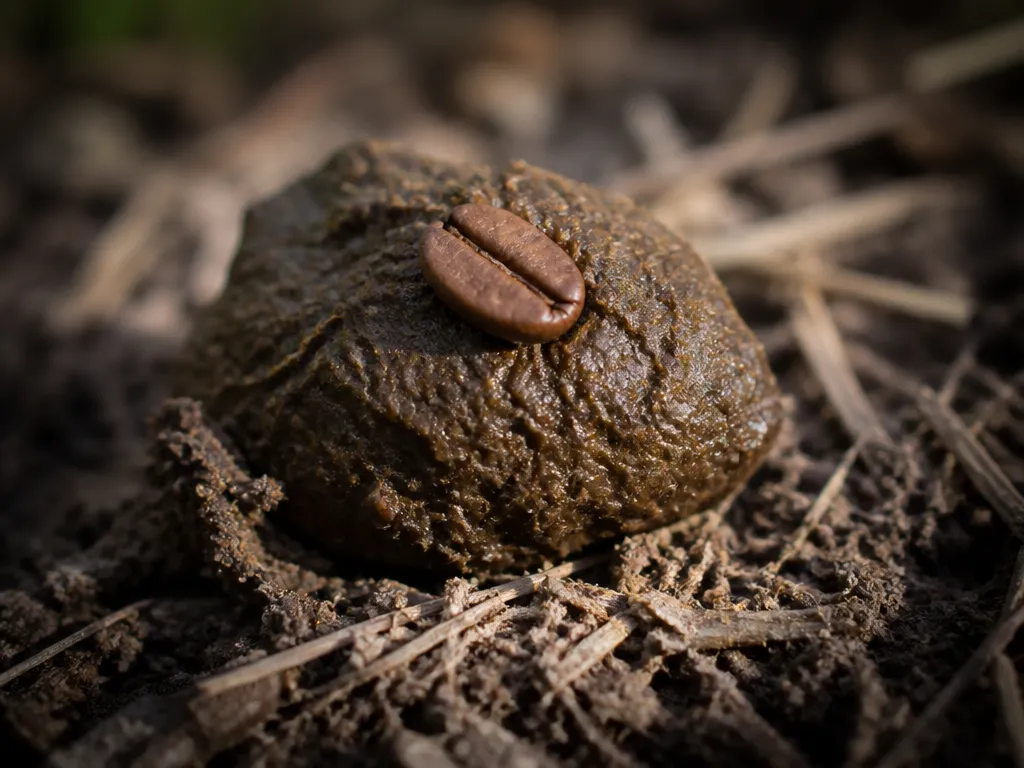
Coffee made from beans collected after an animal defecates is real. An animal eats coffee cherries, digests the fruit around the seed, and passes the seed through its digestive tract. Handlers then collect, wash, dry, roast, and grind the seeds. The best-known example is civet coffee, or kopi luwak.
Digestion can alter the seed’s chemistry before roasting, but many “poop coffee” claims exaggerate the effect. Roast level, freshness, grind, brewing method, washing, and handling can influence the cup as much as – or more than – the animal’s digestion. Quality also varies widely by source.
Key Takeaways
- Yes, digestion changes flavor. Passing coffee seeds through an animal’s gut alters enzymes and bean chemistry before roasting.
- Poop coffee is still roasted coffee. The collected seeds are washed, then roasted like regular coffee beans.
- Myths sell scarcity. Many legends ignore animal care, handling, hygiene, and consistency.
- Roasting drives most taste. Roast level and freshness can outweigh whatever digestion did.
- Production quality varies. Ethical handling and hygiene standards affect the odds of getting a good cup.
- Buy cautiously. If a seller will not explain sourcing and processing, assume greater risk.
How Coffee Beans Pass Through an Animal
Coffee made from poop starts with a coffee cherry – the fruit that surrounds the seed. An animal eats the cherry, digests much of the fruit, and passes the seed through its digestive system. Handlers collect the excreted seeds and treat them as raw, or green, coffee beans before roasting.
Digestion is the distinctive step. Enzymes in the gut can affect the outer layers of the seed and may change how compounds develop during roasting. The resulting coffee is often described as “less bitter” or “smoother,” but those qualities are tendencies, not guarantees.
Two practical steps determine whether the product is drinkable. The seeds must be washed and properly processed because they come from feces, and they must be roasted before grinding and brewing. Roast profile – light versus dark – along with grind size and brewing method controls much of the final flavor.
A useful buying question is simple: can the seller clearly describe collection, washing, drying, and roasting? If not, you are mostly paying for a story rather than a controlled food process.
What Kopi Luwak and Civet Coffee Mean
“Kopi” is Indonesian and Malay for coffee. “Luwak” refers to the civet associated with this production method, so “kopi luwak” refers to coffee from a luwak.
In the United States, sellers commonly use “civet coffee” and “kopi luwak.” Those names can be wrapped in loose marketing claims, but the underlying product is coffee collected after digestion by a civet or related small mammal and then processed for roasting.
Older or variant spellings of the animal and coffee names also appear because the product moved through multiple languages and trading routes. That can make labels confusing, especially when a company uses “kopi luwak” without identifying the exact animal species or origin.
When you see either name, check three details: which animal was involved, where the coffee came from, and how the seeds were handled after collection. A name is easy to borrow; clean processing and traceable sourcing are harder to fake.
Myths About Poop Coffee Versus Reality
The most persistent myth says poop coffee is automatically gourmet because animals choose only the best cherries. Animals eat what is available. The coffee’s quality depends more on the cherries, animal conditions, collection, washing, drying, roasting, and brewing than on a story about perfect natural selection.
Digestion also does not remove bitterness completely. It may change some compounds, but roast level and brew extraction strongly influence bitterness. A dark roast brewed with an aggressive extraction can still taste bitter even if the seed passed through an animal first.
A high price with a vague processing story usually means you are paying for the animal narrative. A high price paired with details about washing, drying, roast dates, origin, and handling may reflect actual quality control.
How Poop Coffee Is Produced
Poop coffee starts with coffee cherries because the animal can only digest what the plant produces. Coffee grows in many countries, and the main cultivated types are C. arabica and C. robusta. They have different baseline flavor profiles before digestion enters the process.
The animal stage sits between two familiar coffee steps. First, cherries are harvested and made available as whole cherries for the animals to eat. After digestion, handlers collect the seeds, wash them, dry them, and prepare them for roasting.
Animal diet and living conditions create much of the variation. Inconsistent cherry quality or poor hygiene can produce uneven seed lots and increase contamination risk. Weak washing and drying practices may show up as off-flavors or create more serious safety concerns.
Two sellers can therefore offer very different versions of “civet coffee.” One may provide consistent cherries, controlled collection, and careful drying. Another may rely on casual collection and provide no clear drying timeline. The digestion process may be similar, but the first seller has better odds of producing consistent coffee.
Use this checklist when evaluating an online listing:
- Identify the animal species – civet or another animal.
- Identify the origin – region, farm, or at least country.
- Describe collection and washing practices.
- Provide drying details and roast dates.
- Offer whole bean samples so you can inspect roast evenness.
The checklist cannot guarantee perfection, but it reduces the chance that you will pay a high price for coffee with unknown handling.
Washing, Drying, and Roasting
After handlers collect seeds from feces, preprocessing determines whether the product has been handled like food. Washing, drying, and storage all matter. Wet seeds can develop defects, while residue and poor storage can create unpleasant flavors.
Roasting then produces many of the compounds that define coffee’s aroma and taste. Roast profile can dominate perceived smoothness, chocolate, fruit, smoke, and bitterness. Two bags of the same coffee roasted at different levels can taste more different from each other than two coffees processed by different animals.
Digestion can affect the seed’s surface and how its internal chemistry responds to heat. That may shift some aromatics and mouthfeel during roasting, but it does not override the effects of washing, drying, roasting, and brewing.
| Factor | What you’ll notice | Why it matters |
|---|---|---|
| Animal digestion | Subtle-to-moderate aroma and body shifts | Enzymes and gut passage can alter seed chemistry before roasting |
| Washing and drying | Clean cup versus funky or musty notes | Hygiene affects contamination and defect formation |
| Roast level | Light versus dark sweetness, acidity, and bitterness | Roast profile largely controls tasting balance |
| Brew method | Extraction strength, bitterness, and clarity | Hot water steeping and filtration decide what dissolves into your cup |
| Freshness | Flat or stale flavors versus lively aromatics | Coffee degrades after roasting, affecting the final profile |
If you want a less harsh cup, roast date and grind size usually offer more control than the production legend. Buy whole bean if possible, choose a medium roast, and use the same ratio, water temperature, and brew time when comparing coffees. Consistent brewing makes subtle differences easier to detect.
Which Animals Produce Poop Coffee?
“Poop coffee” is not one uniform product. Civet coffee generally comes from civets, small mammals in the civet family that eat fruit and pass seeds through their digestive tract.
“Kopi luwak” is also used loosely in commerce. Some sellers mean civet coffee specifically, while others use terms such as “wild civet” or “civet blend” without explaining the details. Different animal species can produce different digestion effects, and those differences may influence flavor.
Conditions and diet matter even when the animal is the same. Seeds collected from wild animals may differ from seeds produced by captive or fed-for-collection animals. Those differences affect seed condition before roasting and can influence how evenly the beans roast and brew.
Coffee type creates another variable. Coffee comes from the seeds of the Coffea plant, and the two most commonly grown types are C. arabica and C. robusta. If a product does not identify its coffee type, you cannot separate a digestion effect from the baseline difference between arabica and robusta.
Animal Welfare, Farming, and Ecological Risks
Coffee production already involves pests, disease pressure, and environmental trade-offs. Poop coffee adds concerns related to how animals are sourced, housed, fed, and managed.
Animal collection or captivity can create welfare problems. Captive housing also creates waste-management challenges. Because feces is part of the production process, poor waste handling can increase contamination risks for people and animals.
A specialty product built around animal digestion can create pressure to scale production for profit. That may increase demand for animals and coffee cherries, and unmanaged sourcing can strain habitats, especially in regions where coffee farming is linked to land conversion.
As a consumer, treat a product story that focuses only on exotic taste as a warning sign. Look for concrete information about animal care, animal sourcing, farm practices, and waste handling. That information will not prove that an operation is responsible, but it gives you a basis for comparison.
FAQ
Is coffee made from poop safe to drink?
Safety depends on washing, drying, storage, and roasting hygiene. Because the seeds come from feces, a seller should provide clear handling information and a recent roast date. Vague claims with no processing details make the product better suited to novelty tasting than routine drinking.
Why is kopi luwak so expensive?
The price may reflect rarity claims, labor-intensive washing and sorting, animal feeding and care, and specialized sourcing. The coffee still needs to be roasted properly, just like any other coffee. A high price does not guarantee high quality, so check the roast date and processing details.
How long does it take to make poop coffee?
Digestion follows the animal’s normal eating and digestion cycle. The finished coffee also requires collection, washing, drying, roasting, and packaging. Expect a production chain similar to other specialty coffee rather than a quick turnaround.
What is the best way to brew coffee made from poop?
Brew it like other specialty coffee. Start with a medium roast if available, grind the beans fresh, and use a consistent recipe. Keep the coffee-to-water ratio and brew time the same when comparing samples. If the cup tastes too strong or bitter, grind slightly coarser or shorten contact time.
Is there an alternative to buying poop coffee?
Regular specialty coffee can offer similar tasting notes, including descriptions such as smoother or less harsh, without the animal-welfare and sourcing questions. Look for reputable roasters that provide roast dates and tasting notes you enjoy. If you want the unusual production story, treat poop coffee as a one-time tasting rather than a daily coffee.

- Espresso Tastes Watery? 10 Common Causes and How to Fix It - October 23, 2026
- 10 Common Coffee Equipment Cleaning Mistakes and How to Avoid Them - October 23, 2026
- 17 Common Coffee Grinder Problems and How to Fix Them - October 23, 2026