
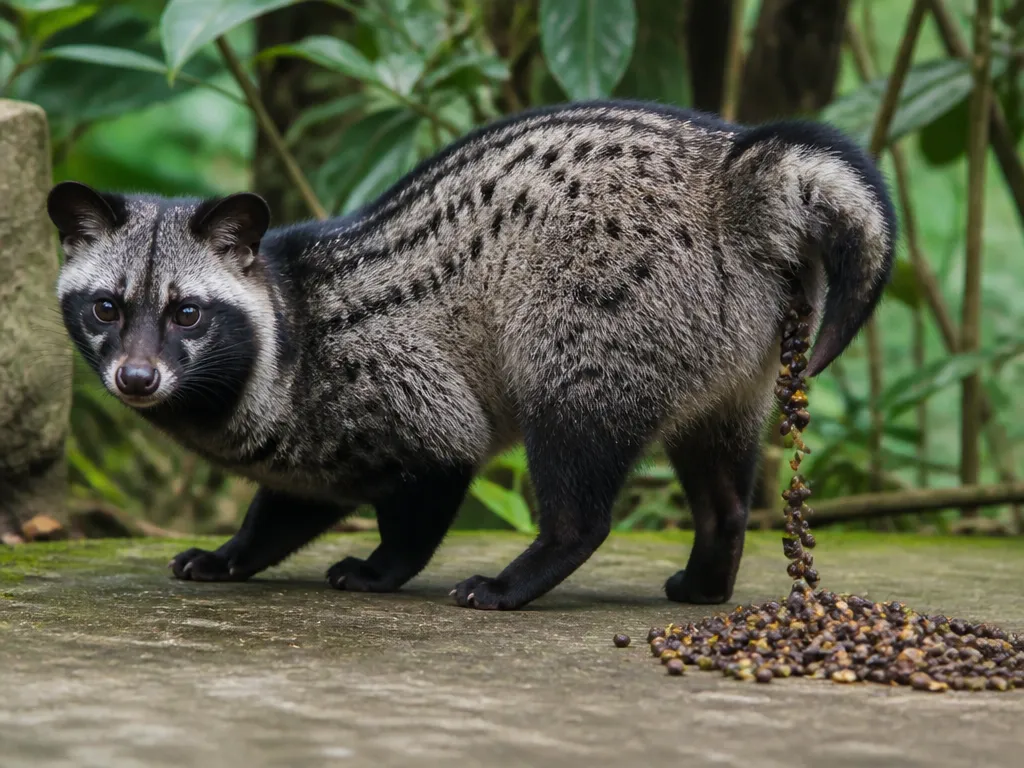
No common animal naturally passes whole coffee beans or coffee grounds as “coffee poop.” What you usually see is normal animal waste mixed with coffee grounds, coffee cherry bits, or other food scraps. An animal found coffee waste, ate or disturbed it, and left droppings nearby.
Coffee-like poop is almost never coffee passing through an animal. If whole beans or grounds appear in the pile, assume an animal ate or contacted partially digested or undigested coffee material.
Key Takeaways
- Scavengers are common. Squirrels, raccoons, rats, and some birds commonly forage near trash and compost.
- Coffee cherry matters. Animals that eat coffee cherry may leave darker droppings with fruit bits.
- Pet risk is real. Keep pets away from coffee grounds, beans, and any poop containing grounds or cherry.
- Cleanup reduces risk. Wear gloves, bag the waste, and wash the area with soap and water.
- Prevention works best. Store grounds in a sealed bin and secure compost and trash containers.
What Animal Leaves Poop Mixed With Coffee?
Signs around the site are more useful than the appearance of the droppings alone. Coffee may be litter, food waste, or partially digested material, and the animal may have accessed it in several ways.
Coffee grounds may cling to poop, or poop may sit in a coffee-stained patch. The most likely explanation is simple foraging: an animal got into a bag of used grounds, a compost bin, a fallen coffee cherry, or spilled trash. It then left droppings in the same area, where the coffee material remained visible.
You may also find droppings after the grounds were thrown out. The animal could have been attracted by the smell and returned later. Treat the mess as unknown animal waste plus coffee contamination.
Why Do Animals Leave Coffee-Contaminated Droppings?
Animals often poop where they eat, rest, or travel. When coffee waste attracts them, they may leave droppings in the same spot, creating the familiar “coffee poop” pattern.
Coffee can attract animals in two ways. Spilled grounds have a strong smell that draws scavengers, while coffee cherry – the red fruit around the bean – is sweet and may appeal to animals that eat fruit.
Coffee grounds also turn up in places animals already use. Compost piles, spaces under decks, areas near dumpsters, bird feeders with spilled seed, and open trash containers provide food, cover, or both. The animal treats the area as a predictable food stop, and coffee waste becomes part of the surrounding mess.
Which Animals Eat Coffee Cherry or Coffee Waste?
The most realistic coffee-related eating involves coffee cherry rather than roasted beans. Coffee cherry is the fruit around the coffee bean, so animals that eat fruit and berries may treat it like other garden food.
In US neighborhoods, likely visitors include squirrels, raccoons, opossums, rats, and some birds. If coffee cherry falls in a yard or lands near a walkway where fruit is discarded, insects may arrive first and attract birds.
The likely suspects shift toward scavengers and small mammals when the waste is used grounds, filters, or bean scraps. Rats and mice commonly investigate spilled kitchen waste, while squirrels raid accessible compost and trash.
Look for other signs before relying on droppings alone. Paw prints, tooth marks on fruit, gnawed plastic bags, and scratches in mulch can help identify the animal.
Can Coffee Grounds Harm Pets or Wildlife?
Yes. Treat coffee grounds as potentially harmful waste around pets. Coffee contains caffeine and related compounds that can affect animals even when the amount appears small.
The risk includes anything contaminated with coffee waste. If a dog or cat eats poop mixed with grounds, it may be exposed to coffee residue as well as germs in animal waste.
Coffee waste can also draw wildlife into yards and other human spaces, increasing trash rummaging and the chance of conflict. Animals that repeatedly eat grounds, filters, or coffee cherry bits may also receive repeated caffeine exposure.
Keep pets and wildlife away from coffee waste. Secure the grounds and compost, and clean droppings so pets cannot return to sniff or eat them.
How to Identify Coffee-Like Droppings
Color alone is unreliable. Check the texture, size, location, and surrounding evidence, including tracks, gnawing, and food scraps.
- Look for coffee bits. Whole grounds, fragments of filter paper, or small reddish fruit bits suggest access to coffee waste or coffee cherry.
- Check the shape and size. Many droppings look brown and lumpy, so compare them with known local animal waste when possible.
- Notice the location. Droppings near a trash can, compost bin, or spilled grounds point toward foraging.
- Look for nearby clues. Scratch marks, torn bags, and disturbed mulch point more strongly to small mammals than birds.
A photo taken safely from a distance can help with comparison. If the waste is inside your home or a pet area, skip the guesswork. Put on gloves and clean it up first.
How to Clean Up Droppings Mixed With Coffee
Keep dogs, cats, and children away immediately so they cannot sniff, lick, or handle the waste. Treat it as potentially contaminated material.
For outdoor droppings, wear disposable gloves and use a scoop or paper towels to place the waste in a bag. Seal the bag, wipe the area with soap and water, and then use a surface-appropriate disinfectant according to its label. Wash your hands thoroughly after cleanup, even if you wore gloves.
In a yard, patio, garage, or other pet-accessible area, remove coffee grounds and other waste nearby. Pets may follow the scent trail and chew stray grounds even after the main pile is gone.
If a pet ate coffee grounds, beans, coffee cherry, or droppings mixed with grounds, call a veterinarian or pet poison helpline right away. Explain whether the material was grounds, beans, cherry, or contaminated waste and roughly how much the pet consumed. With caffeine-containing items, early advice is safer than waiting for symptoms.
The two practical goals are to stop re-exposure and remove the residue.
How to Keep Animals Away From Coffee Grounds
Remove the access point first. Animals learn quickly when trash or compost is easy to reach.
Store used grounds in a container with a tight lid rather than an open bucket. Keep compost in a covered bin that rodents cannot chew through and raccoons cannot lift open.
Clean spills quickly, rinse residue from bins, and tie off trash bags so animals cannot drag them open. If you compost, cover coffee waste with other material so it does not remain exposed.
Secure outdoor trash cans with latches, keep lids closed, and block ground-level routes such as loose fencing gaps. If animals are already returning, use a temporary bin enclosure while you improve storage.
If you can smell the grounds outside the container, scavengers can likely detect them too.
Coffee Waste Storage That Prevents Animal Visits
| Step | What to do | Why it helps |
|---|---|---|
| 1 | Seal used grounds in a lidded container | Less scent leakage means fewer visits |
| 2 | Keep compost covered at all times | Prevents foraging and reduces mixed droppings |
| 3 | Clean spills right away | Animals track food scent patterns |
| 4 | Secure trash with latches | Stops bag ripping and repeated raids |
| 5 | Don’t leave droppings mixed with grounds | Prevents pets from re-exposure and scavenging |
FAQ
What animal poops coffee grounds?
No single animal can be identified from coffee-like droppings alone. Tracks, tooth marks, torn bags, and the type of nearby waste can help distinguish squirrels, raccoons, rats, mice, and birds.
Are coffee-ground droppings dangerous for dogs?
They can be. Coffee residue may still contain caffeine, and animal waste can carry germs. Keep your dog from sniffing or eating the droppings, then clean them up promptly with gloves. If your dog ate grounds, beans, coffee cherry, or droppings mixed with them, contact your veterinarian right away.
How can I tell whether the material is really coffee grounds?
Coffee grounds usually look granular and dark. Filter paper may be mixed in, and coffee cherry can appear as reddish, sticky fruit pieces. Checking for spilled grounds around the area is often the fastest way to confirm it.
What should I do immediately after finding it in my yard?
Block access, then use gloves and a sealed bag to remove the waste. Wash the area with soap and water afterward. Remove or secure nearby coffee waste as well, because the animal may return while the food smell remains.
What is a safer alternative to coffee grounds for compost?
To reduce animal attraction, use more neutral compost inputs such as yard clippings and shredded paper, and keep the pile covered. You can also bury coffee waste under other compost material. For pets and wildlife, the safest approach is not leaving coffee waste accessible in the first place.

- Espresso Tastes Watery? 10 Common Causes and How to Fix It - October 23, 2026
- 10 Common Coffee Equipment Cleaning Mistakes and How to Avoid Them - October 23, 2026
- 17 Common Coffee Grinder Problems and How to Fix Them - October 23, 2026