
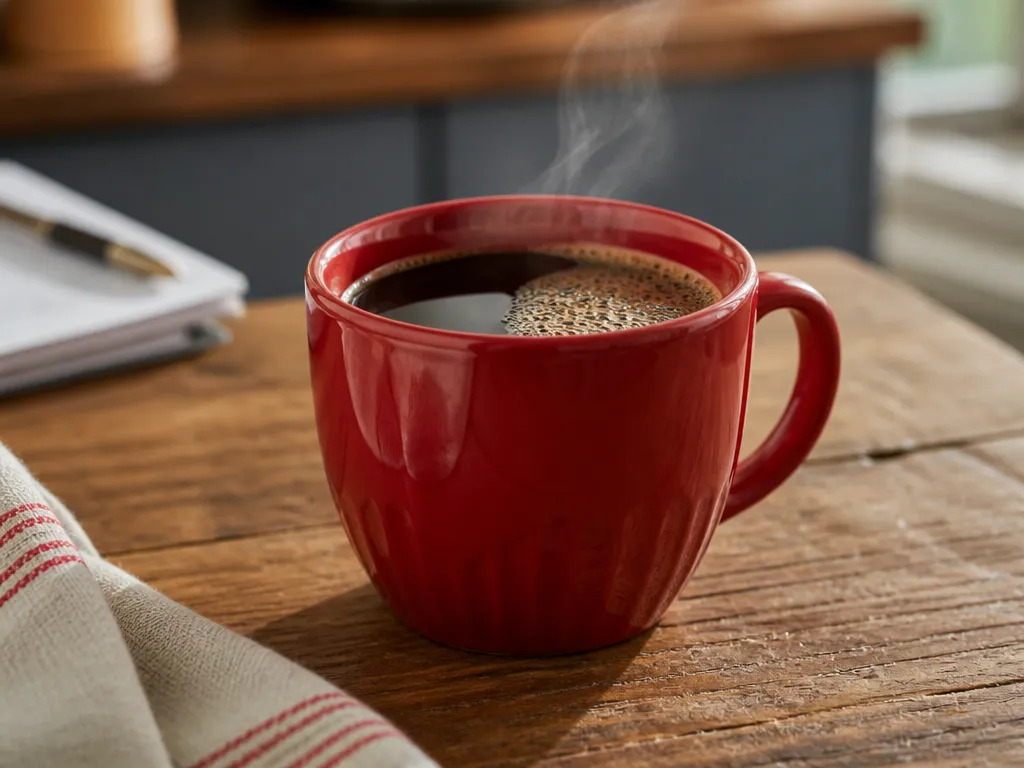
A standard 8-ounce cup of Folgers coffee contains between 60 and 110 milligrams of caffeine. Darker roasts like Black Silk sit near the lower end at roughly 60 mg per cup, while lighter Classic Roast varieties reach up to 110 mg. Instant versions provide a consistent 60 mg per teaspoon, whereas decaffeinated options still retain about 2 to 4 mg per serving.
Key Takeaways
- Roast determines strength – Lighter Folgers roasts contain nearly double the caffeine of their darkest Black Silk counterparts per scoop.
- Instant vs. Ground – One teaspoon of Folgers Instant yields a fixed 60 mg dose, while ground coffee varies by spoonful density.
- Brewing time matters – Extending contact time between water and grounds can increase extraction by up to 20 percent.
- Daily safe limit – Healthy adults should cap total daily caffeine intake at 400 mg, equaling roughly four to six cups.
- Decaf is not zero – Even Folgers Decaf contains trace amounts of caffeine, totaling 2 to 4 mg per 8-ounce cup.
- Withdrawal is real – Skipping your usual Folgers routine after daily use can trigger headaches within 12 to 24 hours.
Caffeine in a cup of Folgers by roast type
The roast level dictates the caffeine content in your cup more than most people realize. Contrary to popular belief, darker roasts do not contain more caffeine; they actually have slightly less by volume because the beans lose mass during the longer roasting process. Folgers Classic Roast, a medium blend, typically provides the highest punch, delivering around 110 mg per 8-ounce cup when brewed according to package directions. In contrast, Folgers Black Silk, their darkest option, drops to approximately 60 to 80 mg per cup because the extended heat expands the bean structure, meaning you use fewer beans by volume for the same scoop size.
If you measure your coffee using a standard tablespoon, a scoop of light or medium roast grounds packs more individual beans than a scoop of oily, expanded dark roast beans. This density difference means you are physically putting less coffee mass into the filter when you use Black Silk, resulting in a weaker caffeinated beverage despite the bolder flavor profile. If your goal is maximum alertness, stick to the Classic or Medium roasts where the bean integrity remains tighter and the caffeine concentration per scoop stays higher.
| Folgers Variety | Roast Level | Approx. Caffeine (8 oz cup) | Bean Density |
|---|---|---|---|
| Classic Roast | Medium | 110 mg | High |
| 1850 Blend | Medium-Dark | 90 mg | Medium |
| Black Silk | Dark | 60-80 mg | Low |
| Decaf | N/A | 2-4 mg | Varies |
| Instant Original | N/A | 60 mg (per tsp) | N/A |
Folgers caffeine content vs other coffee brands
Folgers sits in the moderate range compared to national competitors, offering a predictable middle ground for average drinkers. When stacked against Starbucks bottled Frappuccinos or their café-brewed Pike Place, Folgers generally contains less caffeine per ounce. A 9.5-ounce Starbucks bottled coffee drink can pack 135 mg or more, while an 8-ounce cup of Folgers averages closer to 90 mg. This difference stems from the bean blends and roast profiles; mass-market brands like Folgers often use Robusta blends in specific products to boost caffeine, but their standard ground lines rely primarily on Arabica beans which naturally have lower caffeine content than the high-caffeine Robusta varieties found in some espresso-focused brands.
Dunkin’ Donuts original blend offers a comparable experience to Folgers Classic, hovering around 90 to 100 mg per 8-ounce cup, making them direct competitors for the standard home brewer. However, specialty brands that focus on “high-caffeine” labels, such as Death Wish Coffee, claim upwards of 300 mg per cup by utilizing specific high-caffeine bean varietals and lighter roasts. For the typical consumer buying Folgers at a grocery store, the experience is designed for consistency rather than maximum stimulation, ensuring you get a reliable wake-up call without the heart-racing intensity of niche high-caffeine brands.
In practice, this means switching from Folgers to a dark roast specialty brand might actually lower your caffeine intake if that brand uses a very dark roast profile, even if the price point is higher. The value proposition of Folgers remains its stability; you know exactly what range of stimulation you are getting without needing to analyze single-origin bean specs. If you need a stronger kick than Folgers provides, adding a second cup is often safer and cheaper than hunting for exotic high-caffeine blends that may taste bitter or burnt.
Impact of brewing method on Folgers caffeine levels
Your brewing technique changes the final caffeine count just as much as the bean type does. Water temperature and contact time are the two critical variables that determine extraction efficiency. Using boiling water (200°F to 205°F) extracts caffeine more rapidly than water that has cooled slightly, pulling more stimulant from the grounds in the same amount of time. If you use a standard drip machine that cycles water quickly, you might extract only 80 percent of the available caffeine compared to a French press where the grounds steep for four full minutes.
A cold brew made with Folgers grounds will yield a different result depending on your dilution ratio. Cold brewing typically requires a higher coffee-to-water ratio to compensate for the lack of heat, often resulting in a concentrate that holds significantly more caffeine per ounce before you add water or milk. If you drink that concentrate straight, you could easily ingest 200 mg or more in a single serving. Conversely, using a paper filter traps some oils and fine particles, potentially reducing the total dissolved solids slightly compared to a metal mesh filter that allows more sediment and caffeine through.
To maximize caffeine from your existing Folgers can without buying new coffee, grind your beans finer if you are using a drip machine, or extend the steep time if using a press. Finer grounds increase surface area, allowing water to dissolve caffeine faster. Just be careful not to go too fine for your equipment, as this leads to over-extraction and a bitter, astringent taste that masks the coffee’s natural flavor. The sweet spot for most home brewers is a medium grind with a brew time of roughly four to five minutes for optimal balance between flavor and stimulation.
Daily caffeine limits for Folgers drinkers
Healthy adults should aim to keep their total daily caffeine consumption under 400 milligrams to avoid negative side effects. This threshold equals roughly four to six 8-ounce cups of Folgers Classic Roast, depending on how strongly you brew each pot. Exceeding this limit regularly can lead to chronic issues like increased blood pressure, disrupted sleep patterns, and heightened anxiety. The FDA cites 400 mg as the safe upper bound for most healthy individuals, but sensitivity varies wildly based on genetics and body weight.
Pregnant individuals face a much stricter limit, with major health organizations recommending no more than 200 mg per day. For a pregnant person, this translates to just two cups of Folgers Classic or three cups of the lower-caffeine Black Silk. Since caffeine crosses the placenta and the fetus cannot metabolize it efficiently, staying well below this cap is crucial for fetal development. If you are trying to conceive or are in your first trimester, swapping one of your morning cups for decaf is a simple way to cut your intake in half immediately.
Children and teenagers have even lower tolerances, with pediatricians suggesting limits based on body weight rather than a flat number. A teenager weighing 100 pounds might handle 100 mg (one strong cup of Folgers) without issue, but smaller children should avoid regular caffeine entirely due to its impact on developing nervous systems and sleep cycles. Tracking your cups becomes essential if you drink multiple beverages throughout the day; that afternoon soda or chocolate bar adds to the total load from your morning coffee, pushing you closer to the limit faster than you might expect.
Health effects of moderate Folgers consumption
Drinking Folgers in moderation offers several documented health benefits beyond simple alertness. Regular coffee consumption is linked to a reduced risk of Type 2 diabetes, likely due to antioxidants and minerals like magnesium found in the beans. Research indicates that drinking three to four cups daily correlates with a lower incidence of liver disease and certain types of cancer, including liver and endometrial cancer. These protective effects appear consistent across both caffeinated and decaffeinated versions, suggesting the beneficial compounds are not solely dependent on the caffeine content.
Caffeine itself acts as a mild diuretic and metabolic booster, temporarily increasing your resting metabolic rate by 3 to 11 percent. This spike helps mobilize fatty acids from fat tissues, making them available for use as energy, which is why many pre-workout supplements include caffeine. For Folgers drinkers, this means your morning cup might slightly enhance physical performance if consumed about an hour before exercise. The mental benefits are equally significant, with improved focus, reaction time, and mood reported consistently among moderate consumers.
However, these benefits rely heavily on what you add to the cup. Loading your Folgers with sugar and heavy cream can negate the metabolic advantages and introduce risks associated with high calorie and sugar intake. Black coffee or coffee with a splash of milk preserves the health profile, turning your daily habit into a net positive for long-term wellness. The key is consistency; sporadic heavy drinking does not offer the same protective associations as steady, moderate daily consumption over years.
Recognizing signs of excessive caffeine intake
Jitteriness and a racing heart are the most immediate signals that you have crossed your personal caffeine threshold. When you consume more than your body can metabolize efficiently, adenosine receptors in the brain become overwhelmed, leading to feelings of anxiety, restlessness, and trembling hands. If you find yourself unable to sit still or feeling unusually irritable after your second cup of Folgers, your body is telling you to stop. These symptoms often escalate quickly if you continue drinking, potentially leading to palpitations or shortness of breath.
Sleep disruption is another critical warning sign that often gets ignored until it becomes chronic. Caffeine has a half-life of roughly five to six hours, meaning half of what you drank at 2 PM is still active in your system at 8 PM. If you struggle to fall asleep or wake up frequently during the night, your afternoon Folgers habit is likely the culprit. Over time, this poor sleep quality creates a vicious cycle where you feel tired the next day and reach for more coffee, further degrading your rest and increasing your tolerance.
Headaches and digestive distress round out the common symptoms of overconsumption. While caffeine can relieve headaches in small doses, withdrawal or excess can trigger severe migraines. High acidity in coffee combined with high caffeine levels can also stimulate gastric acid secretion, leading to heartburn or an upset stomach, especially on an empty belly. If you experience these physical reactions consistently, reducing your portion size or switching to a darker roast with less caffeine is a practical first step toward rebalancing your intake.
FAQ
How much caffeine is in a single teaspoon of Folgers Instant?
One level teaspoon of Folgers Classic Instant Coffee contains approximately 60 mg of caffeine. This amount is consistent across servings because instant coffee granules are standardized during manufacturing, unlike ground coffee where scoop density can vary. Two teaspoons would therefore provide roughly 120 mg, nearing the limit for sensitive individuals in a single sitting.
Does Folgers Black Silk have more caffeine than Classic Roast?
No, Folgers Black Silk has less caffeine per cup than Classic Roast. The dark roasting process expands the beans, reducing their density, so a standard scoop contains fewer beans and less total caffeine. You can expect about 60 to 80 mg per cup of Black Silk compared to 110 mg for Classic Roast.
Can I drink Folgers Decaf before bed without affecting sleep?
While significantly lower in stimulants, Folgers Decaf is not 100% caffeine-free. Each 8-ounce cup retains about 2 to 4 mg of caffeine. For most people, this trace amount is negligible and won’t disrupt sleep, but highly sensitive individuals might still experience minor effects if consumed immediately before bed.
How long does Folgers caffeine stay in your system?
Caffeine from Folgers typically has a half-life of 5 to 6 hours in healthy adults. This means if you drink a cup with 100 mg of caffeine at noon, about 50 mg remains in your bloodstream at 5 or 6 PM. Factors like pregnancy, smoking, and genetics can extend or shorten this duration significantly.
Is it safe to drink 5 cups of Folgers every day?
Drinking 5 cups daily puts you near or above the 400 mg recommended limit, depending on the roast and brew strength. Five cups of Classic Roast could exceed 500 mg, increasing risks of anxiety, insomnia, and elevated blood pressure. It is safer to limit intake to 3 or 4 cups or mix in decaf to stay within safe guidelines.

- Are Pod Coffee Machines Healthy? The Unfiltered Truth About Your Daily Cup - September 27, 2026
- Does Gatorade Have Caffeine? Here’s What’s in Each Type - September 26, 2026
- Does Powerade Have Caffeine, or Is That a Myth? - September 26, 2026