
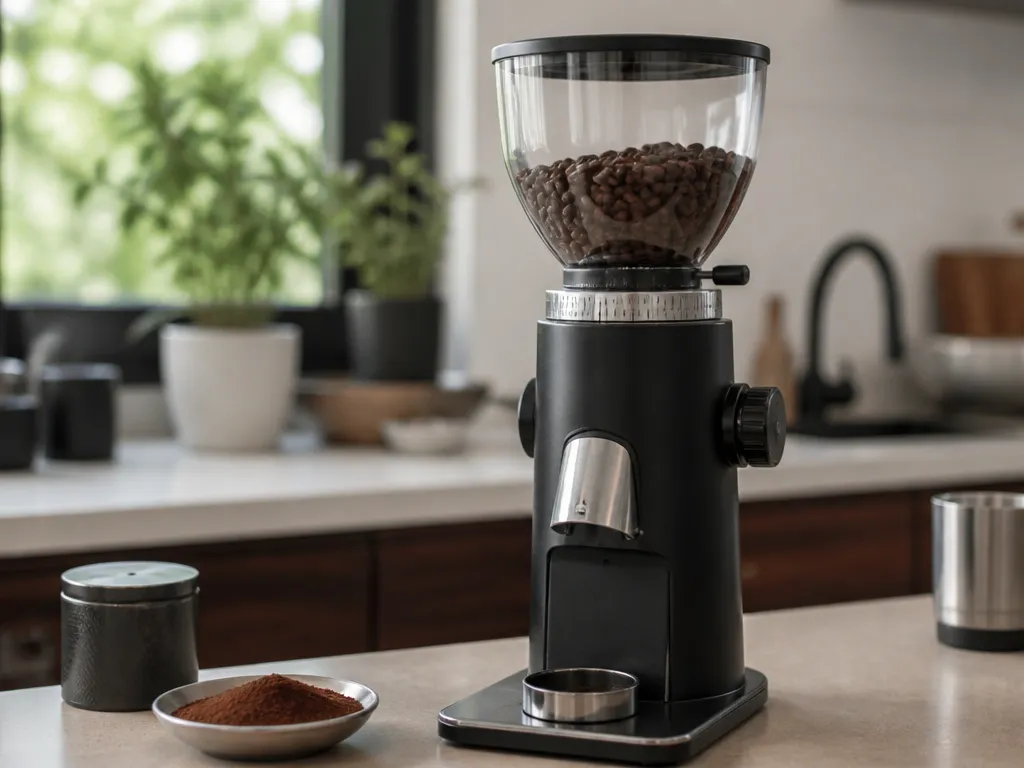
A burr grinder mills coffee beans between two abrasive surfaces, producing a more uniform grind size than a blade grinder. That consistency helps water extract the coffee more evenly. If your coffee tastes sour and harsh even when you are using good beans, your grinder is the first place to inspect.
- Burr grinders use two abrasive burrs to mill beans evenly.
- Grind consistency matters because it creates more uniform extraction.
- Conical and flat burrs differ in heat, feel, and typical grind profile.
- Electric grinders save time while manual grinders save money and simplify maintenance.
- Grind settings control extraction from coarse French press coffee to fine espresso.
- Maintenance protects flavor because old oils and grounds can contaminate fresh coffee.
What Is a Burr Grinder and How Does It Work?
A burr grinder is a coffee grinder that mills beans into more uniform particles by crushing them between two abrasive surfaces called burrs. Unlike a blade grinder, which chops beans unevenly, a burr grinder controls the space through which the beans pass. The result is a narrower range of grind sizes and a more balanced cup.
Most burr grinders have one stationary burr and one rotating burr. As beans move into the grinding chamber, the distance between the burrs determines whether the coffee comes out fine or coarse. A dial or stepped adjustment system changes that distance. Some grinders offer more than 15 grind settings to cover common brew methods.
Grind consistency matters because extraction is a timing problem. Water pulls different flavors from coffee at different rates depending on particle size. Very small particles extract quickly and can taste bitter, while larger particles extract slowly and can taste sour or thin. A burr grinder reduces that mismatch, giving the brew fewer competing extraction rates.
For example, a pour-over made with inconsistent pre-ground coffee or blade-ground coffee may taste sour at first and bitter later, even when the water temperature is appropriate. Burr-ground coffee gives you a more predictable starting point, and adjusting the grind lets you correct the flavor more precisely.
How Burr Grinder Mechanisms Grind Coffee
Burr grinders force whole beans through a controlled gap between two grinding surfaces. That gap determines the target particle size. The process is similar to a pepper mill: the burr teeth pull in the beans and break them down until the pieces fit through the available space.
Burrs come in two main shapes. Flat burrs use two parallel discs, while conical burrs use a cone that rotates inside a ring. In both designs, the rotating burr draws beans into the teeth and crushes them. The tooth shape also affects how particles break, which is why two grinders can produce different results even when both are set to “espresso fine.”
Grinding speed and heat also affect the workflow. Faster grinding can create more friction, and heat can affect coffee oils and aromatics. Conical burr grinders often grind more slowly than some flat-burr setups, which can help limit friction heat during aroma-focused brewing. Electric grinders can still produce excellent coffee, but burr design and grind speed influence the result.
The practical differences between burr and blade grinders are straightforward:
| Aspect | Burr Grinders | Blade Grinders | Winner |
|---|---|---|---|
| Particle Size Consistency | Uniform particle size (critical for extraction) | Inconsistent sizes (poor for espresso) | Burrs |
| Heat Generation | Low heat (preserves flavor) | High heat (damages flavor) | Burrs |
| Grind Control | Precise adjustment (essential for espresso) | No real control (time-based only) | Burrs |
| Durability | Burrs last 5-10+ years | Blades dull quickly | Burrs |
| Price | More expensive ($100-600+) | Very cheap ($20-50) | Blade |
| Coffee Quality | Excellent (suitable for espresso) | Poor (drip coffee only) | Burrs |
Conical vs. Flat Burr Grinders
Conical burr grinders use a cone-shaped burr inside a ring. Flat burr grinders use two parallel discs. The layout changes how coffee moves through the burrs, which affects the grind profile, speed, noise, and adjustment feel.
Conical burr grinders often offer a broad grind range and tend to grind more slowly. That can reduce friction heat and suit delicate, aroma-focused filter coffee. Flat burr grinders usually grind faster and can produce a highly uniform output for espresso when the burrs are properly aligned and the grinder is well dialed in.
Flat burrs are popular with espresso drinkers who want precise, repeatable adjustments. Many high-end espresso grinders use flat burrs. The trade-off is that flat-burr grinders may demand more attention to alignment and maintenance because small changes in burr condition can appear in the espresso.
Your most common brew method should guide the choice. If you mainly make drip coffee, pour-over, and cold brew, a conical grinder is often a practical fit. If you regularly make espresso and want tight control over fine adjustments, a flat-burr grinder is a common choice.
Noise and workflow differ too. Conical grinders can feel more forgiving during adjustment, while flat grinders often feel more precise once set. Neither design is automatically better; the better match depends on the coffee you make most often.
Manual vs. Electric Burr Grinders
Electric burr grinders are faster and more convenient. Manual burr grinders are simpler, often cheaper, and easier to maintain. Both can produce consistent coffee when they use decent burrs and are adjusted correctly.
A manual grinder uses a hand crank to turn the burrs. Its advantages are portability, low cost, and a simple design with fewer parts to fail. The drawback is effort. Grinding espresso-fine coffee or preparing large batches can become tiring. For one or two small cups, however, a manual grinder is a realistic option.
An electric grinder automates the process, making it easier to repeat the same grind each day. That repeatability matters when you are adjusting a recipe. If you rush the grind or stop early, the particle-size distribution changes and so does the extraction. Electric grinding removes some of that human variability, making flavor changes easier to connect to grind adjustments.
Price also affects the decision. Burr grinders generally cost more than blade grinders because their mechanisms are more complex and their burrs usually last longer. First decide whether you grind for one main method, such as drip coffee, or switch between methods, such as espresso in the morning and French press later. Frequent switching makes electric convenience more valuable.
For example, an electric grinder can save time and maintain a consistent setting when you make two pour-over cups daily. A manual grinder makes more sense if you brew occasionally, travel often, or want a lower initial budget.
Choosing Grind Size for Each Brew Method
Grind size is your primary extraction adjustment. Shorter, faster brews generally need finer grounds, while longer, slower brews generally need coarser grounds. The exact dial position depends on the grinder, but the direction stays the same.
Use these targets as starting points:
- French press: Coarse, because the long steep time calls for larger particles and fewer fines that can clog the filter.
- Pour-over (V60, Chemex-style): Medium to medium-fine, because flow rate and extraction depend on consistent resistance.
- Drip machine: Medium, because most machines offer limited control over flow and contact time.
- AeroPress: Medium to fine, because you can change the water amount, immersion time, and dilution.
- Espresso: Fine, sometimes very fine, because pressure-driven extraction requires smaller particles.
Adjust based on taste. If the coffee tastes sour and thin, go finer to increase surface area. If it tastes bitter, go coarser to reduce over-extraction. Change one variable at a time and give the next brew a few minutes to confirm the result.
Many grinders provide marked settings, sometimes 15+ steps, so you can repeat a recipe. Do not assume the numbers match across brands. A “7” on one grinder may produce a different grind from a “7” on another because burr geometry and calibration vary.
Dose and brew ratio affect extraction too. Changing the amount of coffee changes how the water moves through the grounds and how much it extracts. Start with a consistent recipe, adjust grind size first, and then refine the dose and water settings.
Why Grind Consistency Changes Coffee Flavor
Burr grinders generally generate less heat than blade grinders as they operate. Lower grinding heat can help preserve coffee oils and delicate aromatics, contributing to a fresher taste from the first cup of the day to the last.
If you already use a burr grinder and the coffee still tastes wrong, inspect retention and freshness. Grounds left in the chamber can mix with fresh beans and alter the flavor, especially when you switch coffee types or roast levels.
Burr Materials and Burr Design
Burr material affects durability, sharpness retention, and, in some cases, flavor nuance. Stainless steel is common because it is durable and affordable. Ceramic burrs resist heat buildup and can retain their sharpness for a long time.
Stainless steel is a practical middle ground for many home users. Steel burrs are tough, widely available, and consistent under normal use. They can wear over time, but a quality set can last years when you clean the grinder and operate it properly.
Ceramic burrs resist heat buildup and are often valued for long-lasting sharpness. Their practical advantage is stable grind quality over time, which can reduce the need for frequent adjustment. Ceramic burrs are also typically less prone to corrosion.
Flat versus conical is only part of burr design. Tooth shape, tooth count, and gap calibration also influence particle distribution and the ease of dialing in fine settings. Two conical-burr grinders can behave differently when grinding for espresso.
Material choice does not remove the need for maintenance. Old grounds cling to burr teeth, and oil residue can build up inside the grinding chamber. That residue can contaminate fresh coffee, especially when you switch between dark and light roasts. Brush out the chamber, purge stale grounds periodically, and clean more thoroughly when the flavor changes.
Buy according to your actual brew method and routine. If you grind daily and want long-term stability, burr material and maintenance access matter more than extra features. If you grind occasionally, a simpler burr grinder can still produce excellent coffee when it is cleaned and adjusted properly.
FAQ
What Is a Burr Grinder Used For?
A burr grinder grinds whole coffee beans into particles sized for brewing. It is especially useful for methods where grind consistency affects taste, including espresso and pour-over.
Are Burr Grinders Better Than Blade Grinders for Drip Coffee?
Yes, especially if you care about repeatability and flavor balance.
How Much Should You Spend on a Burr Grinder?
Burr grinders usually cost more than blade grinders, and many models fall into the $100-600+ range depending on burr type and build quality. If you mainly brew one method, look for a reliable conical or flat-burr grinder with clear grind adjustment. If you make espresso often, prioritize a broad grind range and stability at fine settings.
Do Burr Grinders Need Adjustment for Different Brew Types?
Yes. Adjust the grind size for each brew method using the basic rule: finer for espresso and coarser for French press. Use the marked settings as a starting point, then refine the grind based on taste. Once you own a decent burr grinder, changing the grind size usually affects the cup more than changing grinder brands.
What Is a Common Burr Grinder Mistake?
A common mistake is switching beans without cleaning and purging the grinder. Old grounds and coffee oils can contaminate fresh coffee and make grind adjustments difficult to judge. Another mistake is making large grind changes instead of adjusting one step at a time and tasting the result.
Choose your brew method first, then choose the burr design. For mostly filter coffee, a conical-burr electric grinder or a solid manual grinder is usually a good starting point because it offers consistency and adjustment. For regular espresso, choose a grinder with reliable fine control. Set the grinder so you can move from medium to fine without running out of adjustment range.

- Unlocking the Venti: Discover the Perfect Shot Count for Your Drink - October 13, 2026
- Unpacking the Buzz: Caffeine Levels in Café Bustelo Espresso - October 13, 2026
- How to Fix Bitter Coffee: 10 Expert Ways to Improve the Taste - October 4, 2026