
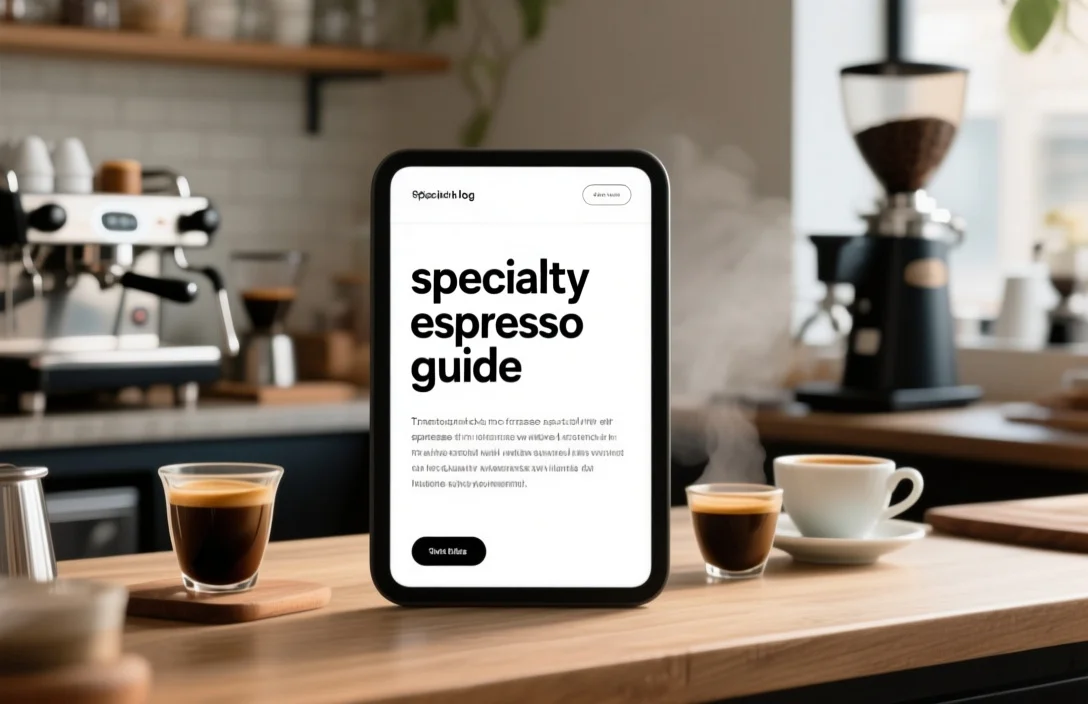
Specialty espresso is espresso made with the same care you would expect from specialty coffee more broadly. The beans are chosen for clarity and sweetness, the roast is set to preserve distinct flavor, and the shot is pulled with tight control over dose, grind, and yield. If you want the short version, that is the point: specialty espresso is meant to taste like the coffee itself, not like roast alone.
What specialty espresso actually means
Specialty espresso uses coffee graded and sourced to express origin, processing method, and varietal character through concentrated extraction. In practice, that means roasters and baristas treat espresso as a brewing method, not as a default dark finish. The cup should give you floral, citrus, chocolate, or fruit notes when the coffee supports them.
I would start with the trade habits that usually define this style. Lot-specific buying, roasting that preserves acidity and aromatics, and extraction that aims for sweetness, acidity, and body in balance are the usual markers. A bag label matters, but only if the shot is pulled with repeatable, weight-based measurements. Eyeballing tamp pressure or guessing by shot color will not get you far.
Why it tastes different from regular espresso
Commercial espresso often leans toward uniformity. It is usually blended and roasted darker, which smooths out origin differences and pushes the cup toward caramel, toast, or smoke. Specialty espresso takes the opposite route. It tries to keep the coffee readable.
That difference starts in extraction. Lighter roasted coffees release soluble compounds differently from dark roasts. Grind size, water temperature, and dose all shift the balance between acidity, sweetness, and bitterness. My practical rule is simple: if you want to understand the coffee, measure the coffee. Use mass, time, and particle size. Do not rely only on pressure gauges or crema.
How to read the beans before you ever pull a shot
Roaster labels tell you a lot if you know what to look for. I would check for the farm or cooperative, the lot name, the processing method, the roast date, and the tasting notes. Roast date is the one item I would not skip. It tells you more about freshness than a marketing line ever will.
Single-origin coffees usually show more distinct flavor notes. Blends are built for a specific profile, and in espresso they are often designed for steadier crema and more body in milk drinks. Neither is automatically better. Choose based on what you actually want in the cup.
Roast level changes the result in obvious ways. Lighter-to-medium roasts usually preserve fruit and floral notes and are common in specialty espresso. Darker roasts tend to flatten brightness and bring in more roast-driven caramel and smoke. If you drink straight shots, lighter roasts will show more detail. If you drink mostly milk drinks, a slightly darker roast or an espresso blend may make more sense.
Freshness matters too. Store unopened bags in a cool, dark place. Once opened, use an opaque, airtight container and keep it away from heat and strong odors. I would not recommend refrigeration or freezing for daily use, since moisture and odor transfer become real problems every time the container opens. For most home drinkers, a bag is best used within 2-4 weeks after roast for clarity.
The equipment that actually changes the cup
If you are trying to improve specialty espresso at home, the grinder is the place to begin. Not the machine. Not the cup. The grinder.
| Name | Price / Key Spec | Best For |
|---|---|---|
| Entry-level burr grinder (stepped or basic conical) | Consumer-tier; coarser particle distribution, stepped adjustments | Home users who want lower cost and acceptable shots for milk drinks |
| Precision stepless burr grinder (commercial-style) | Prosumer-tier; fine, consistent particle distribution, stepless adjustment | Home and small cafes dialing single-origin espressos; repeatable shots |
| Doserless heavy-duty grinder (commercial flat burrs) | Commercial-tier; high throughput, stable under load | Busy specialty cafes needing volume and consistent particle distribution |
Burr type matters because it shapes particle distribution. Flat burrs usually give a narrower distribution at the same price point. Conical burrs are often quieter and can run a little differently under continuous use. Either can work, but I would care more about consistency than brand language.
Espresso machines matter, but less than grinders for flavor clarity. Look for stable temperature control, a reliable 9-bar pressure system, and a steam wand that works predictably. For home use, a single-boiler machine with PID control is often a sensible balance. For more demanding setups, E61 groups or saturated groups give better thermal stability.
And yes, you need a scale and a timer. Weight-based dosing turns guesswork into something repeatable. A scale accurate to 0.1 g and a timer are basic tools, not upgrades you buy later.
A simple way to dial in a shot
If you want the shot to reflect what the roaster wrote on the bag, use a repeatable method. Weight, not sight, should guide you.
- Weigh the dose. Put the ground coffee into the portafilter and weigh it.
- Distribute and tamp. Spread the grounds evenly, then tamp level and consistently.
- Zero the cup and start the shot. Put the cup on a scale, tare it, and start the timer.
- Stop at your target yield. Pull until you reach the planned liquid weight.
- Taste and adjust. If it is sour, go finer or extend the shot. If it is bitter or puckery, go coarser or shorten it.
This is where specialty espresso becomes much less mysterious. Dose, yield, time, and grind are the variables that matter most. Roaster guidance is a good starting point, but it is still a starting point. Record what you do. Dose, yield, grind setting, and taste notes are enough to build a workable pattern.
What grind size is really doing
Grind particle distribution controls how water moves through the puck. Finer grinds increase surface area and slow the shot. Coarser grinds do the opposite. That part is straightforward.
What causes trouble is inconsistency within the grind. A wide particle distribution can lead to uneven extraction. Some particles overextract while others underextract, and the cup gets muddy. If a shot is spraying or running unevenly, I would look at distribution and tamping before I start blaming the beans.
At home, you can watch the flow. A steady stream that darkens gradually is usually a better sign than sputtering or spraying. Change one variable at a time. Grind, dose, and yield should be adjusted separately if you want to know what actually fixed the problem.
Burr maintenance is not optional. Dirty or worn burrs change both heat and grind consistency. Clean the grinder regularly and replace burrs when shot quality starts slipping.
Milk texturing and espresso drinks
Milk changes the cup in ways people often underestimate. Good texture adds sweetness and body. Bad texture hides the coffee and leaves you with foam and confusion.
I would start with cold milk and a brief steam wand purge. The target is microfoam with a glossy surface and small, even bubbles. For lattes, the milk should be a little thinner. For cappuccinos, you want more structure and more foam. Stretch the milk early, then roll it to fold the bubbles in, and finish by polishing the surface.
Roast choice matters here. A light single-origin shot can disappear under too much milk. An espresso blend, or a slightly darker roast made for espresso, usually holds up better in cappuccinos and lattes. If you want the coffee to stay visible in the drink, use less milk rather than trying to force a delicate shot to behave like a blend.
How to tell when a shot is off
Taste is the final test, but it helps to know what you are tasting for.
Sour, sharp acidity with a thin body usually means under-extraction. Go finer or run the shot a little longer. Harsh bitterness with a dry finish usually points to over-extraction or stale beans. Ashy or burnt notes can mean the roast is too dark for your preference, or the shot is being pushed too far.
A good specialty shot should have a clear center of flavor, whether that is fruit, floral, chocolate, or something else the coffee naturally gives you. It should finish sweet and clean. Crema matters less than people think, though it should look stable rather than thin and ragged.
Temperature changes how the cup reads. Hotter shots tend to emphasize bitterness. Slightly cooler shots often make sweetness and fruit easier to notice. If you are comparing adjustments, taste shots in roughly the same temperature window.
A simple tasting checklist helps:
- Aroma, fresh or stale
- Acidity, bright or flat
- Sweetness, present or missing
- Bitterness, pleasant or harsh
- Body, thin or syrupy
- Aftertaste, clean or lingering
Buying roasted beans and storing them well
If you are buying specialty espresso beans, I would look first for roast date and lot information. If the roaster recommends a dose or ratio for that coffee, use it as your first baseline. That is often more useful than generic espresso advice.
Choose based on how you drink. If you mostly make milk drinks, blends are often the safer pick. If you want straight shots with more distinct flavor, single-origin espresso offerings usually make more sense. There is no law that says one is better. The question is what you want in the cup.
At home, smaller bags are usually the smarter buy. Use an opaque, airtight container and keep the beans at room temperature, away from heat and odor. If you drink espresso only occasionally, buying less coffee more often is usually better than letting a large bag sit around for months. Grind right before brewing if you can. Pre-ground coffee loses aroma quickly, and specialty espresso depends on those volatile notes.
Mistakes I would avoid
- Using appearance alone to judge a shot. Color helps, but weight and time matter more.
- Ignoring grinder maintenance. Burr wear and buildup create inconsistency fast.
- Choosing a dark roast to cover up bad technique. It hides mistakes and flattens flavor.
- Forgetting that baskets and group heads behave differently. Recalibrate when the setup changes.
- Texturing milk without a target drink in mind. A cortado, latte, and straight espresso do not need the same milk approach.
The fix is usually boring, and that is fine. Make one change at a time, write it down, and test again.
How to evaluate a cafe before ordering
If you want to judge a cafe’s specialty espresso, ask what they recommend for straight shots versus milk drinks. A barista who can answer that plainly is usually working with intent. If they mention roast date or origin, that is a good sign too.
I would order a straight shot first if I wanted to assess the espresso itself. If you want milk, ask for a smaller ratio so the coffee still comes through. Look at the workflow. Scales, consistent dosing, clean group heads, and a purged steam wand all matter more than polished branding.
Single-origin espresso often changes more from week to week than a blend does. That is normal. A blend is usually the safer choice for milk drinks, while a single-origin coffee may be more interesting on its own. If the coffee tastes stale or heavily roasted, ask for a different roast or a fresh pull.
Quick troubleshooting
- Shot is too sour: grind finer or increase yield or time slightly.
- Shot is too bitter and drying: grind coarser or shorten the shot slightly.
- Shot runs too fast: dose more or grind finer.
- Shot sprays or channels: check distribution, tamping, and puck integrity.
- Milk has large bubbles or separates: improve steaming and fold the milk longer.
- Shots vary from cup to cup: clean the group head, purge, and check grinder consistency.
FAQ
How soon after roast should I use beans for espresso?
Many coffees need a short resting period after roast, often a few days. For most home use, a two to four week window from roast gives good clarity. Some coffees are better a little earlier or later, depending on roast level and processing.
Can I use any espresso machine for specialty espresso?
You can make specialty-style espresso on many machines. The easier path is a machine with stable temperature control, a reliable pump, and a good steam wand. Those features make consistency much less frustrating.
Is a blend or a single-origin better for milk drinks?
Blends are usually built to work well with milk because they offer more body and balance. Single-origin coffees can be excellent, but they are often more delicate once milk is added.
Do I need an expensive grinder?
You do need a grinder that can make fine, consistent adjustments. Moving from a basic stepped grinder to a better burr grinder usually makes a larger difference than changing the machine first.
How should I store beans if I buy them weekly?
Keep them in an opaque, airtight container at room temperature and away from heat and strong odors. Buy in smaller amounts so the coffee stays fresh while you use it.
Bottom line
If you want specialty espresso that tastes clear and deliberate, start with the grinder, then use weight-based dialing and fresh beans with a roast date. That order matters. A precise machine can help, but it will not rescue stale coffee or a sloppy grind. My practical advice is to buy a small bag, set up a scale and timer, and make a few measured shots before you change anything else. That is the quickest way to get a cup that tastes like the coffee you meant to brew.

- Espresso Tastes Watery? 10 Common Causes and How to Fix It - October 23, 2026
- 10 Common Coffee Equipment Cleaning Mistakes and How to Avoid Them - October 23, 2026
- 17 Common Coffee Grinder Problems and How to Fix Them - October 23, 2026