
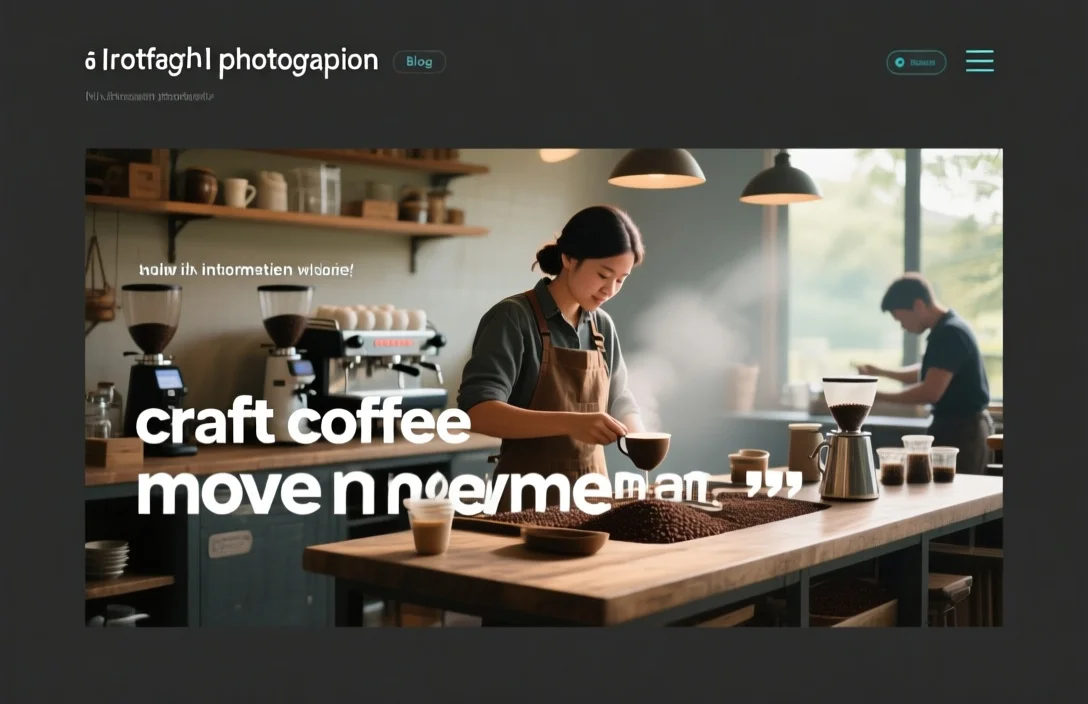
The craft coffee movement centers on coffee grown, processed, roasted, and brewed with attention to flavor, traceability, and small-batch care. Readers who want better-tasting coffee or to support transparent supply chains should expect clearer origin information, fresher roast dates, and an emphasis on brewing technique.
What the craft coffee movement is and why it matters
Craft coffee is a consumer and producer trend that prizes flavor clarity, source transparency, and artisanal handling across the supply chain. Producers and roasters in this movement prioritize single-origin lots, careful processing (washed, natural, honey, and variations), and roast profiles that highlight bean character instead of masking it with dark, uniform roasting. Consumers receive more tasting information – origin, farm or cooperative, processing method, and roast date – so they can judge coffee by flavor rather than brand alone.
Quality and traceability drive the movement as much as taste. Roasters who call themselves “craft” typically buy smaller, carefully curated lots and roast in limited batches to preserve distinct aroma and acidity notes. Baristas and home brewers then treat each lot as an ingredient that benefits from specific brewing adjustments rather than applying a one-size-fits-all recipe. That attention produces more nuanced cups and, for some consumers, a stronger connection to the people and places that produced the beans.
Transparency about premiums, payments to producers, and sustainability claims are part of the conversation. Publishers, roasters, and cafés in the craft space often talk about direct trade, higher-than-commodity prices, and relationship-building with growers. Readers should treat those claims as part of a supplier story to be verified, not a guaranteed outcome.
Core principles that define craft coffee
Single-origin sourcing appears consistently in roaster descriptions tied to craft coffee. Single-origin means beans from a specific farm, cooperative, or region rather than blended lots intended to produce a standardized flavor. Traceability often accompanies single-origin work and can include farm name, elevation, processing method, and lot size. Roasters committed to craft practices publish this information because subtle processing and terroir differences are central to their product.
Roast approach distinguishes craft roasters from mainstream commercial roasting. Lighter roast profiles that preserve acidity, fruit, and floral notes are common because they reveal origin characteristics. Roasters calibrate roast curve and development time for each lot, fine-tuning how sugars caramelize and acids transform. Freshness rules matter too: craft roasters typically recommend selling or brewing within a comparatively short window after roast so volatile aromatics remain pronounced.
Micro-lots and seasonal releases are common tactics in craft coffee to showcase high-quality, limited-quantity harvests. Those lots may come with higher prices but offer tasting variety and the possibility of exceptional flavor complexity. Ethical sourcing models – labeled as direct trade, pay-premium programs, or partnerships – often appear in craft narratives, although terms and transparency vary by roaster.
How craft coffee differs from commodity and chain coffee
Contrast clarifies what craft coffee prioritizes. Chain or commodity coffee generally focuses on consistency, low cost, and high throughput. Roast profiles for large-scale supply favor darker, more uniform flavors that tolerate variable storage and extraction conditions. Supply chains for commodity coffee rely on blending and large-volume contracts, which dilute lot-level traceability.
Craft coffee flips those priorities: flavor specificity and traceability rise; uniformity and low cost decline. Smaller purchase volumes let roasters select standout lots and roast each lot to a profile that accentuates its best attributes. Retail footprints are smaller for many craft roasters, though some have scaled successfully while trying to retain sourcing principles.
After comparing the main options side by side, a practical way to understand trade-offs is to look at where each model succeeds and where it compromises. The table below frames the most relevant distinctions for consumers choosing where to buy or what to prioritize.
| Name | Price / Key Spec | Best For |
|---|---|---|
| Craft coffee (specialty, small-batch roasters) | Price: generally higher per pound; Key spec: single-origin lots, roast-date transparency, small-batch roasts | Home brewers and cafés that want distinctive flavor, traceability, and seasonal variety |
| Chain coffee (national chains) | Price: retail at scale; Key spec: consistent blend, standardized roast, broad availability | Customers who want predictable flavor and convenient service |
| Commodity/instant coffee | Price: low-cost, bulk supply; Key spec: blended and processed for shelf stability | High-volume use where cost and shelf life outweigh flavor nuance |
How to identify authentic craft coffee at a café or roastery
Authentic craft coffee signals appear in labeling, staff knowledge, and business practices. Look for roast dates printed on bags and signage, single-origin or named-lot descriptions, and explicit processing notes. Staff who can describe a coffee’s origin, tasting notes, and recommended brew methods usually reflect a roaster or café that engages with its product beyond commodity purchasing.
Ask targeted questions to test claims. Request the roast date, ask whether the beans are single-origin or blends, and inquire about whether the roaster owns its supply relationships or purchases through intermediaries. Observe the café’s equipment and barista technique; craft-focused places often use freshly ground beans, calibrated grinders, and extraction parameters suited to the specific coffee rather than a single setting for everything.
Packaging and procurement transparency matter but do not guarantee quality on their own. A robust craft approach includes consistent communication about producer relationships and, when present, documented payments or premiums paid to farmers. If a roaster or café uses words like “direct trade” or “craft” without accompanying details, treat the language as marketing until you see more information.
Practical steps to evaluate and buy craft coffee (numbered checklist)
- Inspect the bag for a roast date and origin details. Roast date visibility is one of the clearest indicators of a roaster focused on freshness.
- Smell the beans and ask for a brewed sample when possible. Aroma is a reliable early clue to how recently the coffee was roasted and how it was stored.
- Ask for tasting notes and processing method. Clear, specific tasting descriptors (e.g., citrus, stone fruit, chocolate) and a processing label (washed, natural, honey) indicate attention to lot characteristics.
- Seek smaller roast runs or micro-lot labels. Small-batch runs suggest selection and curation rather than commodity blending.
- Confirm grinder and brewing practice at the shop. Fresh grinding and extraction adjustments tied to the coffee show operational commitment to brewing quality.
- Compare multiple roasters for the same origin. Tasting the same origin roasted differently will reveal the roaster’s stylistic choices and help you identify your flavor preference.
- Ask about sustainability and pricing transparency. Specifics about premiums, relationships with producers, and reuse or recycling practices are preferable to vague sustainability claims.
How to brew craft coffee at home without guesswork
Home brewing for craft coffee emphasizes fresh beans, a consistent grind, clean water, and brewing technique tailored to the lot. Choose whole beans and grind immediately before brewing to preserve volatile aromatics. A burr grinder that produces uniform particle sizes will make extraction more predictable than a blade grinder.
Match grind size to your chosen method: medium-coarse for immersion filters, medium-fine for pour-over, and fine for espresso-style extraction. Calibrating grind, dose, and brew time for a given lot matters more with craft coffee than with darker blends because delicate flavor notes can be under- or over-extracted if parameters aren’t adjusted. Use filtered water with neutral flavor and avoid water that tastes strongly of chlorine or minerals; water quality affects perceived acidity and sweetness.
Equipment choices change the level of control. Manual pour-over brewers and scales make it easier to repeat a recipe and taste differences between lots. Automatic brewers offer convenience but can mask nuances if they apply a single extraction profile to all beans. Storage matters too: keep green or roasted beans in a cool, dry place away from light and strong odors; airtight containers reduce oxidation after you open a bag.
Bulleted essentials for home craft brewing:
- Whole-bean purchase with visible roast date.
- Burr grinder and grinder calibration by method.
- Clean water and consistent pouring technique.
- Brewing recipes adapted to the lot’s tasting profile.
- Tasting notes logged to track preferences.
what you give up for craft coffee and when it’s worth it
Choosing craft coffee usually means paying more, accepting variability between lots, and investing time in learning to brew. Higher retail prices reflect smaller purchase volumes, higher quality control costs, and occasionally higher premiums paid to producers for exceptional lots. Flavors will vary seasonally and from lot to lot; consistency becomes a matter of roaster style rather than identical flavor every week.
Value appears when you prefer nuance and are willing to invest brewing time. Home brewers who enjoy sensory exploration, cafés that want a unique product, and customers who prioritize traceability will often find craft coffee worth the expense. Customers who prioritize low price, convenience, or a completely uniform cup will prefer chain or commodity models.
Risk factors also exist. Marketing can appropriate craft language without the sourcing backbone to match it. Claims such as “single-origin” or “direct trade” require verification if those practices matter to you. Small roasters can sometimes scale into hybrid models that dilute original practices, so look for ongoing transparency rather than one-off claims.
Common mistakes when getting into craft coffee
Rushing to buy a specialty bag without checking roast date is the most frequent error. Beans lose aroma and volatile flavor compounds over time; old roasted beans will deliver muted results regardless of origin. Grinding too coarsely or too finely for the brewing method will hide desirable flavors or amplify bitterness. Using flawed equipment or poor water further masks nuanced tasting notes.
Expecting craft coffee to always taste the same is unrealistic. Variance between harvests and lots is part of the product; learn to appreciate differences rather than chasing a single, repeatable taste. Another common mistake is substituting equipment quality for technique. A high-end grinder will not replace consistent dose control and proper extraction parameters. Investing in technique – measuring, timing, tasting – returns more in cup quality than buying the most expensive gear first.
Where to buy, and how to support ethical craft practices
Local roasteries, farmer markets, and well-documented online roasters are the most direct ways to find craft coffee. Purchasing directly from roasters who publish lot details and roast dates is often the best path to transparency. Some roasters also run subscription services or limited releases for micro-lots; those models can provide predictable delivery while exposing you to new origins.
Supporting ethical outcomes requires scrutiny. Look for specifics about relationships with producers: named farms, documented premiums, or long-term partnerships. Certifications such as organic or Fair Trade can be one part of the story, but direct trade or buyer-reported payment data sometimes tells a clearer human story of pricing and relationships. If roasters cannot or will not share sourcing details, treat their ethical claims cautiously.
Small roasters may lack the capacity to publish full supply chain data; in those cases, ask pointed questions about sourcing practices and whether they work directly with exporters or cooperatives. When roasters give concrete answers, you have evidence to support your purchasing choice.
Checklist: quick shopping and brewing checklist you can use today
- Check the roast date on packages before buying.
- Prefer whole beans and grind immediately prior to brewing.
- Ask baristas about origin, processing, and roast profile.
- Buy from roasters that name farms or cooperatives where possible.
- Track tasting notes and brewing parameters for each lot.
- Reassess purchases after trying three different roasters to find stylistic preferences.
FAQ
Is “craft coffee” a regulated term in the United States?
No universal regulatory definition governs the term “craft coffee” in the United States. Many businesses use the label to describe small-batch or specialty practices, but the word itself is not a legally enforced standard. Consumers who need a strict definition should look for specific sourcing and roast information rather than rely on the label alone.
How long after roasting should I use craft coffee?
Roast-to-brew freshness preferences vary by roaster and style, and exact optimal windows depend on roast profile and storage. Roasters typically provide guidance on their packaging or website; follow their recommendations and perform simple aroma and taste checks to decide for yourself.
Can I get craft coffee on a budget?
Yes, but expect trade-offs. Look for local small-batch roasters offering sampler packs, seasonal discounts, or open-house sales. Buying slightly larger amounts when a price is reasonable can lower per-pound cost, but storage and freshness need attention.
Does craft coffee mean more ethical sourcing?
Craft practices often include ethical sourcing claims, but ethical outcomes depend on transparency and documented payments. Verify ethical aspects by asking roasters about producer relationships and any premiums paid to growers.
What brewing method highlights craft coffee best?
Different methods highlight different attributes. Pour-over and manual immersion methods frequently reveal delicate acidity and floral notes, while espresso emphasizes concentrated sweetness and body. Taste several methods to discover which suits a given lot.
How should I store craft coffee at home?
Store sealed bags in a cool, dry place away from light and strong odors. Avoid refrigerating opened coffee long-term because humidity and odor transfer can degrade flavor; use airtight containers and buy amounts you can reasonably use within the roaster’s freshness recommendation.
Practical verdict: If you want clearer flavor distinctions, traceability, and a more engaged brewing practice, start by buying a single-origin bag with a roast date from a local micro-roaster and brew it with freshly ground beans. Next step: taste that coffee side-by-side with a standard commercial blend to hear the differences for yourself and refine what you prefer.

- Espresso Tastes Watery? 10 Common Causes and How to Fix It - October 23, 2026
- 10 Common Coffee Equipment Cleaning Mistakes and How to Avoid Them - October 23, 2026
- 17 Common Coffee Grinder Problems and How to Fix Them - October 23, 2026