
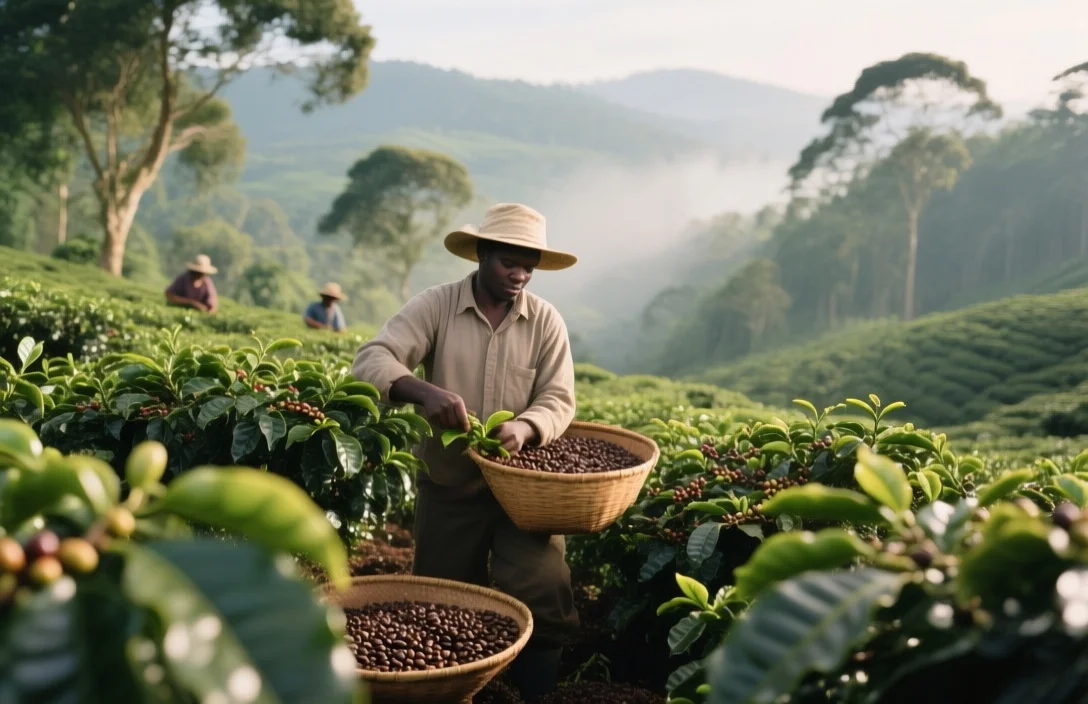
Organic coffee farming means growing coffee without synthetic fertilizers, herbicides, or insecticides, and relying instead on soil-building practices, approved organic inputs, and close day-to-day management. In practice, it is less a single technique than a whole way of running the farm. Soil health, biodiversity, and careful recordkeeping sit at the center.
For U.S. readers, the practical question is usually this: what changes on the ground, what does certification involve, and what trade-offs come with it? I would start there, because the label only matters if the farm can support it.
What organic coffee farming means in real terms
Organic coffee farming uses biologically based practices instead of synthetic agroinputs. That includes compost, mulch, cover crops, shade trees, and permitted organic products when a problem cannot be solved through management alone.
Certification can validate an organic claim for buyers, but the farm itself is defined by the practices. A grower may use organic methods without being certified, though most coffee sold as organic in commercial channels is backed by a certifier recognized by the buyer.
The important point is that organic coffee is not a box to check. It is a system. If the soil, shade, pests, and harvesting practices are handled as separate problems, the farm usually pays for it later.
How the system works on the farm
Organic coffee production starts with site design. Farmers combine agroforestry, mulching, compost, cover crops, and varietal choice to keep plants healthy without synthetic chemicals.
Shade trees matter because they moderate temperature and reduce sun stress. Companion plants can add nitrogen. Diverse plantings also help keep pest pressure lower by supporting predatory insects and birds.
I would think of this as management by observation. Instead of routine chemical applications, the grower watches plant vigor, pest pressure, and seasonal changes, then responds only where needed.
Picking land, variety, and layout
Land choice shapes everything that follows. Slope, elevation, rainfall, and soil all need to fit the variety and the management system.
My practical rule is to test small plots before committing large acreage. A variety that looks promising on paper can still struggle if the microclimate is wrong or disease pressure is higher than expected.
Layout matters too. Planting corridors, shade-tree mixes, and terraces or benches can reduce erosion and make harvest easier. Water access for processing and road access for buyers should be part of the decision from the start, not an afterthought.
Soil fertility without synthetic inputs
Organic coffee depends on building soil organic matter and biological activity. The main tools are compost, farmyard manure, vermicompost, and green manure cover crops.
Soil testing should guide amendments. I keep coming back to that because it stops growers from guessing. Small plot trials, using different compost blends or amendment rates, are often more useful than broad assumptions about what the farm needs.
Foliar feeds and rock-based minerals can be used when testing shows a specific deficiency. The point is not to avoid all inputs. The point is to use the right ones, in the right place, for the right reason.
Pest, disease, and weed control
Organic pest control is mostly preventive. Prune for airflow. Manage shade density. Remove diseased berries promptly. Keep processing areas clean.
Biological controls are part of the picture too. Beneficial insects, predatory birds, and bats can help suppress pests when the habitat supports them. That is one reason diversified farms often do better than stripped-down plantings.
When pest pressure crosses a threshold, permitted organic products may be used. I would prioritize products with low non-target impact and use them as narrowly as possible. Regular scouting and records make that possible.
Harvest and processing
Organic status does not rescue poor post-harvest handling. Harvest timing and processing quality still shape the final coffee value.
Hand-picking ripe cherries, sorting carefully, and controlling fermentation or drying reduce defects. Those steps matter as much as the production method when buyers judge the lot.
Processing areas also need strict hygiene. If you sell organic coffee, you have to trace lots and show separation between organic and non-organic batches. That is not paperwork for its own sake. It protects the claim.
Certification, paperwork, and buyer expectations
Certification helps with market access, but it also adds documentation and inspection requirements. The exact pathway depends on the certifier and the buyer.
I would line up potential buyers before choosing a certifier. That sounds simple, but it saves trouble. Buyers sometimes accept different standards or documentation formats, and it is better to know that before the farm is already in transition.
Exact certification fees and transition requirements were not available in the material reviewed here. Farmers should contact a local certifier or the relevant national organic program for current fee schedules and transition rules before budgeting.
Costs, yields, and the trade-offs that matter
Organic production affects three things right away: yield, input costs, and labor. During transition, yields may drop while soil biology and pest balance adjust.
That does not mean the system is doomed to stay lower-yielding. It does mean the farm needs enough financial room to absorb the change period.
Price premiums can exist, but they are not guaranteed. Cup quality, traceability, and buyer relationships all matter. I would rank those ahead of the organic label alone. A weak cup rarely becomes a strong business because it is certified.
A practical seasonal routine
A useful schedule turns organic principles into habits.
Early in the cycle, planting and shade-tree maintenance take priority. Mid-season, canopy management, nutrient monitoring, and flowering or fruit-set checks matter more. Harvest and processing demand the most labor and the tightest hygiene.
Recurring tasks usually include:
- Mulching after harvest to protect soil
- Monthly pest scouting walks
- Weekly compost checks during active composting
- Logging inputs, labor, and harvest lots
- Using cover crops or mulches to conserve soil moisture
That kind of routine is not glamorous, but it is what keeps the system from drifting.
Mistakes that cause trouble
The most common mistake is trying to replace a whole system with one organic input. Compost alone will not fix poor drainage, bad shade management, or a pest habitat problem.
Another weak habit is leaning too hard on purchased organic inputs while neglecting on-farm fertility. Costs rise, and the farm becomes dependent on outside products.
Warning signs are usually obvious if you are paying attention:
- Poor plant vigor even after regular composting
- Repeated pest outbreaks despite cultural controls
- Buyer requests for records you cannot supply
If those show up, I would start with soil testing, then a second look at shade, drainage, and pest pressure. Small pilot trials are more useful than a full-scale gamble.
A practical checklist to get started
- Assess soil, slope, water access, and microclimate through testing and local observation.
- Choose coffee varieties that match elevation and disease pressure.
- Design the planting layout with shade trees and access corridors.
- Build compost infrastructure and begin green manure production.
- Set up pest-scouting protocols and action thresholds.
- Create a recordkeeping system for inputs, labor, harvest lots, and sales.
- Contact buyers and certifiers so the production plan fits the market.
Comparing organic coffee with common alternatives
Price and certification costs vary by program and market, so this table keeps to broad practical differences rather than exact fees.
| Name | Price / Key Spec | Best For |
|---|---|---|
| Conventional coffee | Lower upfront labor; uses synthetic fertilizers and pesticides; no organic paperwork required | Growers prioritizing immediate high yield and lower labor per unit produced |
| Certified organic coffee | Avoids synthetic agrochemicals; requires certification and documented management; exact certification costs were not found here | Farms targeting organic specialty markets or buyers requiring certified supply |
| Shade-grown organic coffee | Integrates agroforestry, supports biodiversity, may improve cup profile; requires careful canopy management | Producers selling to buyers who value biodiversity and climate-related practices |
Recordkeeping and traceability
Records are not an administrative side issue. They are what connect farm practice to buyer claims.
Typical records include:
- Purchase invoices for permitted inputs
- Compost recipes
- Harvest dates by lot
- Notes on pest management
- Separation measures for organic and non-organic product lines
If you are selling through a cooperative, to a roaster, or directly to buyers, good traceability makes the whole operation easier. It also makes certification audits less painful.
Where to verify current rules and costs
Current exact fees for certification, allowed-product lists, and market premium statistics were not available in the material reviewed here. Farmers should verify certification fees, transition requirements, and allowed inputs with the USDA National Organic Program or a relevant certifier.
Local extension services, commodity boards, and organic certifiers can help fill in the current numbers. I would compare more than one certifier if possible, because fees and paperwork expectations are not always identical.
The organic practices that usually help most
Some practices come up again and again because they do real work.
Mulching reduces moisture loss, suppresses weeds, and adds organic matter as it breaks down. Intercropping with legumes can add biologically available nitrogen and reduce erosion on bare ground. Compost supplies nutrients slowly and improves nutrient retention. Pruning and selective thinning improve airflow and sunlight penetration, which helps reduce fungal disease.
None of that is complicated. The discipline is in doing it consistently.
Labor, equipment, and shared processing
Organic coffee often needs more labor than conventional production, especially for pruning, hand-picking, sorting, and recordkeeping.
Mechanization is possible in some settings, but terrain and shade systems limit the options. Steep slopes usually narrow the choices fast.
Shared processing facilities and cooperatives can help small growers by spreading out the cost of drying, washing, and storage. Shared quality-control rules also make traceability easier when several farms combine lots for one sale.
Environmental benefits and limits
Organic coffee farming can reduce synthetic chemical runoff, improve soil carbon, and support biodiversity. Those benefits are real, but they are not automatic.
The size of the benefit depends on how the farm is managed and what surrounds it. Farms with riparian buffers, erosion controls, and shade-tree corridors usually do more for the landscape than farms that only meet the minimum organic rules.
There are limits too. Organic management can raise labor or land costs, and certification by itself does not guarantee better biodiversity outcomes. The actual practices matter more than the label.
FAQ
How long does a farm need to use organic practices before it can be certified?
Certification programs require a documented transition period, and certifiers may have specific rules. Current exact transition durations and conditions were not found here, so contact the relevant certifier or the USDA National Organic Program for current timelines.
Can I sell organically grown coffee without certification?
Yes, in some direct or local markets, if buyers accept the claim. Large commercial buyers and retailers commonly require certification, so it is wise to confirm buyer requirements before relying on an uncertified organic claim.
Which shade trees are best for organic coffee?
That depends on elevation, rainfall, and farm goals. Nitrogen-fixing trees can contribute nutrients, and fruit trees can diversify income. I would trial a few species in small numbers before planting widely.
Will organic coffee always fetch a higher price?
No. Organic status can help, but price still depends on cup quality, buyer demand, and market conditions. Strong traceability and consistent quality usually matter more than certification alone.
What records does a certifier want to see?
Typical records include input purchase invoices, compost and amendment recipes, harvest logs showing lot separation, and pest-management notes. For an exact checklist, contact the certifier.
Bottom line
Organic coffee farming is a management system, not a marketing label. It asks for more observation, more recordkeeping, and usually more labor, but it can support soil health, biodiversity, and access to certain markets.
If I were starting from scratch, I would begin with a soil test, a small-scale trial block, and a buyer check before expanding. That sequence keeps the project grounded in reality instead of wishful thinking.

- Espresso Tastes Watery? 10 Common Causes and How to Fix It - October 23, 2026
- 10 Common Coffee Equipment Cleaning Mistakes and How to Avoid Them - October 23, 2026
- 17 Common Coffee Grinder Problems and How to Fix Them - October 23, 2026