
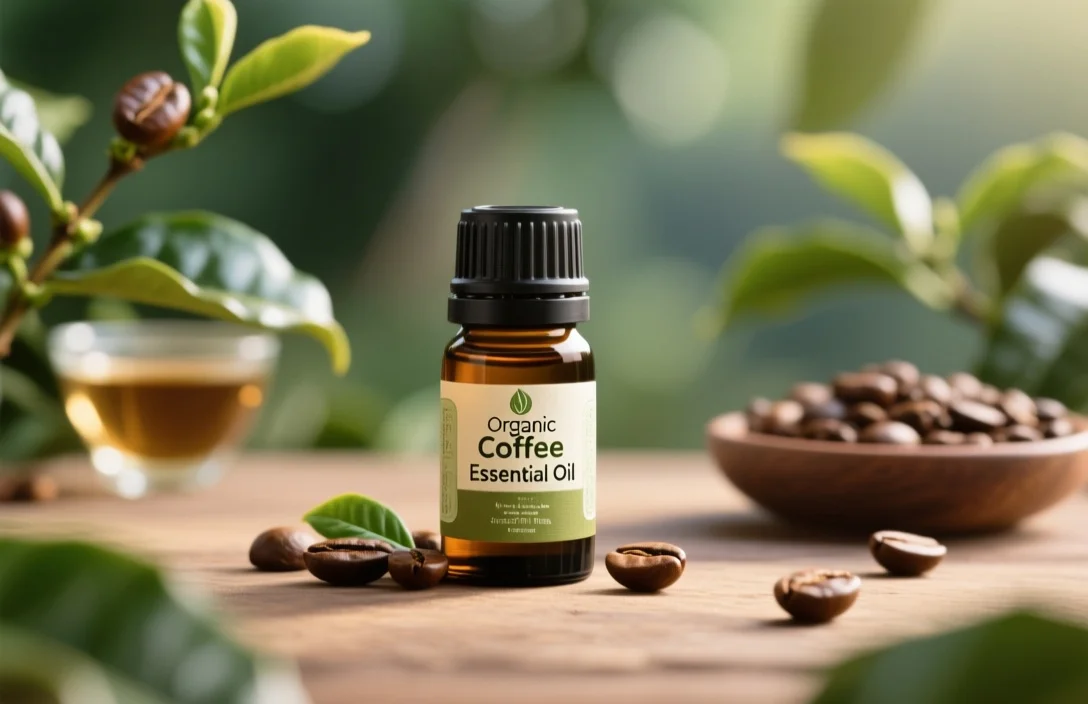
Organic coffee essential oil is usually a coffee aroma extract made from organically grown beans. In practice, the label can mean different things, so I would start by checking the extraction method before I look at anything else. If you need the short version, this is a fragrance ingredient more often than a true steam-distilled essential oil, and the exact product type matters.
What organic coffee essential oil actually is
Organic coffee essential oil is a commercial label for aromatic extracts made from coffee beans that are certified organic. The organic part usually means the beans were grown without synthetic pesticides or fertilizers and handled under organic standards at some stage of production.
The harder part is the phrase essential oil. With coffee, that label is often used loosely. The aroma is commonly captured through supercritical CO2 extraction, solvent extraction, or infusion in a carrier oil. True steam distillation is uncommon for coffee and usually does not give the same full roasted aroma. If I were buying, I would treat the extraction method as the real product name and the marketing label as secondary.
How coffee extracts are made
Coffee aroma is delicate and complex, especially after roasting. That means the extraction method changes both the scent and the way the ingredient behaves in formulas.
Supercritical CO2 extraction is often used for coffee because it can pull a broad aroma profile without solvent residue. Solvent extraction produces a coffee absolute, which usually smells denser and lasts longer in perfume. Steam distillation rarely gives a full coffee profile because many of the roasted notes are not easy to carry over that way. It is used more often with green coffee or special fractions.
Roast level matters too. Light roasts tend to give brighter, more floral or fruity notes. Darker roasts lean toward caramelized, smoky, and chocolate-like aromas. Some suppliers blend origins or roast levels to get a specific scent. Others dilute a concentrated extract in carrier oil if the product is meant for topical or cosmetic use.
What people use it for
The clearest use for coffee extracts is aroma. Perfumers use them as base or heart notes to give a blend a roasted, bitter-sweet depth. Candle makers and soap makers use them for a café-style scent. Cosmetic formulators may add a little to creams, balms, or body oils when fragrance is the goal.
Aromatherapy buyers often look for coffee aroma for alertness or mood, but I would be careful with big claims here. Coffee extracts vary a lot in composition and strength, so the effect is not uniform. If you are looking at food use, check for food-grade certification. Many fragrance products are not meant to be ingested. For skin use, think of it as a scent ingredient first, not a therapeutic one.
How to judge quality
I keep coming back to the same basic checklist: the label should tell you what the ingredient actually is.
Look for:
- extraction method
- organic certification type, such as USDA Organic or an equivalent
- country or region of origin
- roast level if roasted beans were used
- batch or lot number
- GC-MS report or technical data sheet
- dark glass packaging and storage guidance
If those details are missing, the product may still be usable, but you know less than you should. A clean-looking label is not enough. A product called “coffee essential oil” can be a CO2 extract, an absolute, or an infusion, and those are not the same thing.
Coffee extract types, compared
| Name | Price / Key Spec | Best For |
|---|---|---|
| Organic Coffee CO2 Extract | Exact pricing was not found; look for CO2 listed on the spec sheet and organic certification | Perfumery and high-end fragrance blends where a full-roast profile is needed |
| Organic Coffee Absolute (solvent-extracted) | Exact pricing was not found; labeled as “absolute”; may have solvent-history claims on spec sheet | Perfume bases and formulations needing strong, long-lasting roast notes |
| Organic “Coffee Essential Oil” (ambiguous label) | Exact pricing was not found; check extraction method because the industry term is inconsistent | Buyers who want ready-made aromatherapy or fragrance oil but must verify extraction |
| Organic Coffee-infused Carrier Oil | Exact pricing was not found; product is a carrier oil infused with roasted beans | Personal care products and topical use where dilution and moisturization are desired |
| Green Coffee Distillate or Hydrosol | Exact pricing was not found; may be water-based distillate | Cosmetic formulations seeking lighter, greener coffee notes |
My practical rule is simple: trust the extraction method more than the product name. If a listing says “essential oil” but the spec sheet says solvent extraction or infusion, then that is the product you are really buying.
Safety, dilution, and when to be cautious
Coffee extracts are not all treated the same on skin. Concentrated absolutes and CO2 extracts can contain compounds that may irritate sensitive skin. I would not apply any undiluted coffee extract directly to the skin.
A cautious approach is to use low concentrations in leave-on products and patch test first. If you plan topical use, test a small amount on the inside of the forearm and wait 24 to 48 hours. That does not guarantee a reaction-free result, but it is better than guessing.
Inhalation is the usual route for fragrance use. People with severe respiratory conditions or strong scent sensitivity should be careful with concentrated aromatics. Coffee extracts are not typically known for the kind of phototoxicity associated with some citrus oils, but the supplier’s safety data sheet is still worth checking. If a company provides an SDS and a technical data sheet, that is more useful than a polished product page.
Pregnancy, breastfeeding, and medication interactions are separate questions. A licensed healthcare provider should handle those decisions.
How to buy one without getting the wrong product
If I were shopping, I would rank vendors by clarity, not by the prettiest description. Organic certification helps, but it does not answer the main question, which is what kind of extract this actually is.
Use this checklist:
- Ask for the extraction method and batch-specific GC-MS or certificate of analysis.
- Verify the organic certification label and ask for the certifier name if it is not shown.
- Smell a sample if you can, first on a blotter and then after a few minutes.
- Patch test before topical use.
- Confirm whether the product is meant for perfumery, cosmetic use, or food flavoring.
- Buy a small amount first, especially if you are using it in a formula.
A supplier who will not disclose the extraction method or batch testing is one I would skip. That kind of silence usually causes problems later.
Mistakes that are easy to avoid
The most common mistake is treating every coffee-scented product as the same thing. An infusion, a carrier-oil blend, an absolute, and a CO2 extract can all smell like coffee, but they behave very differently.
A few other errors come up often:
- buying a large volume before testing a sample
- assuming organic certification means identical composition across brands
- forgetting to check whether the product is cosmetic-grade or food-grade
- ignoring batch-specific documentation
- relying on the marketing label instead of the technical sheet
If you are using the ingredient commercially, keep a record of supplier responses, lot numbers, and any test results you receive. That is basic due diligence, not overkill.
Where coffee extracts fit in formulas
Perfumery is the easiest place to use coffee extracts. They can add depth, bitterness, and a roasted edge. Vanilla, tonka, vetiver, and dark chocolate notes are common companions.
Candle and soap makers should test carefully. Absolutes and CO2 extracts can affect color and burn behavior, and soap can change the scent during saponification. I would not assume a coffee note will survive the formula exactly as it smells in the bottle.
For body oils and lotions, dilute the extract into a carrier oil or finished base and test the final scent and skin feel. Coffee extracts are usually used for fragrance, not for a proven skin benefit.
FAQ
Is “organic coffee essential oil” the same as coffee oil used for flavoring?
Not always. Some products labeled as essential oil are intended only for fragrance and may not be food-grade. If you plan to ingest it or use it in food, ask the supplier whether that exact lot is certified for food use.
Can I use coffee essential oil in diffusers?
Yes, people often use coffee extracts in diffusers for aroma. Concentrated absolutes or CO2 extracts may leave residue in ultrasonic diffusers, so use a small amount and follow the diffuser maker’s instructions.
How do I know if a coffee oil is truly organic?
Look for the certifier’s name on the label or technical sheet. If the product only says “organic” without documentation, ask for the certificate or certifier number.
Are coffee extracts safe for pregnant people?
That depends on concentration and use. I would avoid topical or internal use of concentrated extracts during pregnancy unless a medical professional says otherwise. Low-level scent exposure is a different matter, but personal medical advice is still the safer route.
What does GC-MS tell me about a coffee extract?
A GC-MS report shows the volatile compounds in a batch and helps check consistency from one lot to another. It does not capture everything, so it should be read alongside the extraction method and any other technical information the supplier provides.
A practical way to decide
Start with your use case. If you want fragrance, look for a coffee CO2 extract or absolute with clear documentation. If you want a topical product, be more cautious about dilution and skin testing. If you want food use, confirm food-grade status before you do anything else.
I would order a small sample from at least two vendors, compare the scent on blotters, and see how each one behaves in the formula you actually plan to use. That is the cleanest way to separate a useful coffee extract from a promising label.

- Espresso Tastes Watery? 10 Common Causes and How to Fix It - October 23, 2026
- 10 Common Coffee Equipment Cleaning Mistakes and How to Avoid Them - October 23, 2026
- 17 Common Coffee Grinder Problems and How to Fix Them - October 23, 2026