
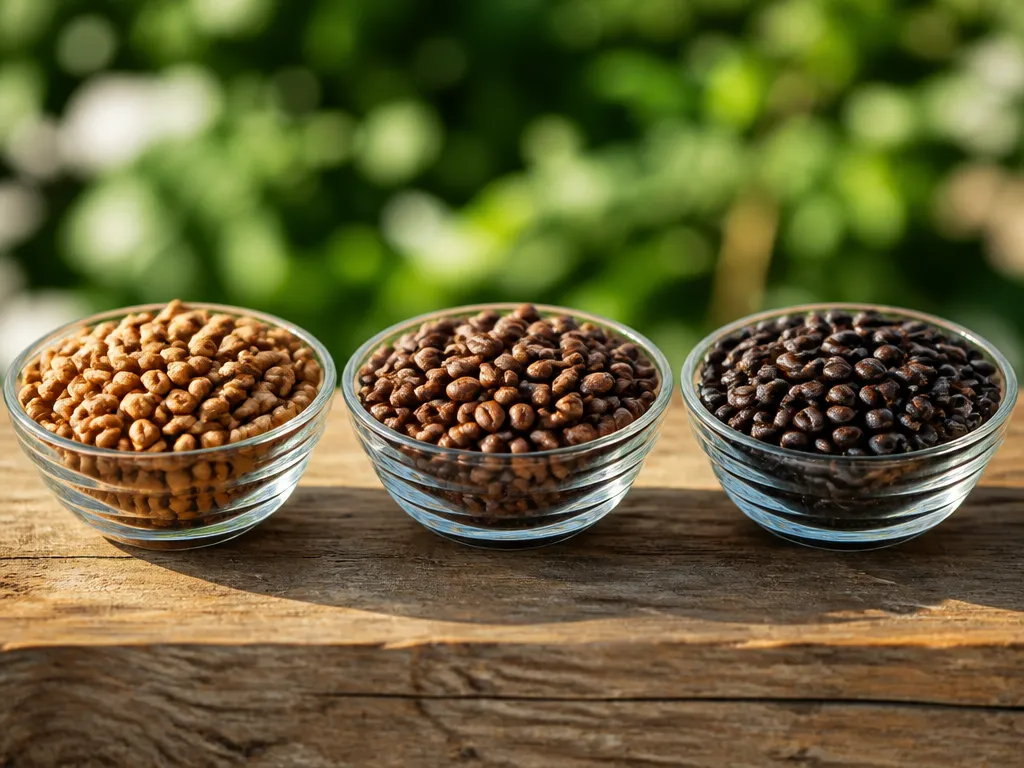
Light, medium, and dark roast differ mainly in how long and how hot the beans are roasted. Light roast tastes brighter and more acidic, medium roast balances sweetness and body, and dark roast delivers heavier, smokier flavors with less perceived acidity. Caffeine usually changes very little by roast level, so bean density, brew strength, and coffee-to-water ratio matter more.
Choose light roast for citrusy, floral, or fruity flavors; medium for a balanced everyday cup; and dark for chocolatey, smoky depth. The best choice also depends on your brew method: medium and dark are usually easier for espresso, while light and medium often suit drip and pour-over.
- Light roasts taste brighter and more acidic, with more pronounced origin flavors.
- Medium roasts balance sweetness and body, with fewer sharp edges than light roasts.
- Dark roasts taste smoother and heavier to many people, but they are often smokier and more bitter.
- Caffeine is usually similar by weight, although brew strength and bean density change the amount in your cup.
- Brew matching matters because espresso and filter methods reward different roast profiles.
How Light, Medium, and Dark Roasts Differ
Roast level describes how much heat coffee beans receive after they are harvested and processed. It depends on how far the beans are roasted, not on color alone. As roasting continues, the beans lose moisture and develop deeper roasted aromas, while some sharper, fruity notes fade.
Light roast ends earlier, so the coffee usually shows more of the bean’s origin character. Common notes include citrus, flowers, berries, and other bright flavors. Medium roast lands between light and dark, bringing out more sweetness and caramel-like flavors while preserving some brightness.
Dark roast stays in the roaster longer and may develop visible surface oil. Its flavors lean toward chocolate, smoke, roasted nuts, and char. The tradeoff is that heavy roast flavors can cover the subtler qualities associated with the bean’s origin.
A useful mental model is simple: light roast lets the bean speak, medium roast balances bean and roast character, and dark roast puts the roast itself in charge.
How Roast Level Changes Flavor
Light roast usually tastes brighter and more complex at first sip. Its acidity can feel lively or sparkly, and you are more likely to notice citrus, stone fruit, floral notes, or light brown sugar as the coffee cools.
Medium roast tends to feel rounder and sweeter, with less high-note brightness. Many people find it easier to drink because it offers flavor variety without the sharper edge that some light roasts have.
Dark roast usually tastes heavier, smokier, and more consistently roasty. Chocolate, char, and toasted flavors can dominate, covering fruit and floral notes. Dark coffee can still taste smooth and satisfying, but it is usually the wrong choice if you want bright fruit or high clarity.
Temperature changes how these flavors come through. Light roasts often reveal more detail as they cool slightly, while dark roasts may taste more uniform from hot to warm.
Which Roast Has More Caffeine?
Caffeine depends less on roast color than coffee labels often imply. When you brew the same coffee at the same strength, the caffeine difference between light and dark roast is usually small. Extraction and brew ratio generally have a larger effect than shade.
Roasting makes dark beans less dense because they expand and lose mass. As a result, one volume scoop of dark roast can contain slightly less coffee, and therefore slightly less caffeine, than one scoop of light roast. Measured by volume, light roast may provide a small caffeine advantage per serving.
For a fair comparison, measure both roasts by weight. Use the same grams of coffee and the same coffee-to-water ratio, such as 1:16. Under those conditions, the caffeine difference is usually even smaller.
Brew strength remains the biggest variable. Increasing the coffee-to-water ratio raises caffeine regardless of roast level.
Which Roast Has More Body and Less Perceived Acidity?
Dark roast generally has less perceived acidity and more body, which makes it appealing to people who find light coffee too sharp. Deeper roasted flavors create a heavier impression and can overwhelm the bright acidic notes found in lighter coffee.
Light roast usually has more perceived acidity and a lighter-to-medium body. The exact mouthfeel still depends on the coffee’s origin and brew method, and some light roasts can feel rich. Their profile is typically clearer and tangier than a dark roast, though.
Medium roast is the middle ground. It often feels smooth and moderately full while retaining more brightness and flavor variety than dark roast.
If you want less perceived acidity, start with medium roast. If you are especially sensitive to sharpness, try dark roast. For body without a burnt flavor, look for a medium roast labeled “balanced” or “city” style. These often offer more thickness without pushing fully into smoky bitterness.
Which Roast Works Best for Each Brew Method?
Roast level and brew method can change the same coffee dramatically. Espresso, drip, pour-over, and immersion brewing extract coffee differently, so a roast that works well in one method may need adjustment in another.
- Espresso: Medium and dark roasts often work well because their chocolatey, roasted flavors provide depth in a concentrated drink. Light roast espresso can be excellent, but it requires careful grind and extraction adjustments to avoid a sour or overly sharp shot.
- Filter coffee, including drip, pour-over, and immersion: Light and medium roasts often perform well because these methods emphasize clarity and origin character. Dark roast can still work, but it may taste flat or overly bitter when its heavier roast flavors dominate.
Medium roast is the easiest starting point for a home espresso machine because it offers a workable balance between sweetness, body, and acidity. For pour-over, choose light or medium roast if you want clarity and distinct flavor notes.
Brew temperature and grind size also matter. Light roasts may need a different grind to develop sweetness instead of acidity, while dark roasts can over-extract quickly and turn harsh. Do not assume one recipe will work equally well for every roast.
What Changes When You Switch Roast Levels?
A new roast can taste wrong even when it matches your stated preference because your existing brew settings may no longer fit it. Roast switching often requires a small recipe adjustment.
If you move from light to dark roast but keep the same grind and ratio, the coffee may taste extra bitter or ashy. Dark beans extract differently and already carry stronger roast flavors. If you move from dark to light without changing the recipe, the coffee may taste sour or thin because under-extraction leaves acidity in control.
Grinder accuracy and freshness can expose the difference further. Dark roasts tend to hide some extraction problems behind their strong roast flavor. Light roasts reveal those problems more clearly, so small changes in grind and dose can have a bigger effect.
Water and recipe matter too. Hard water can make acidity feel more aggressive in light roast, while very soft water can flatten sweetness in medium roast. For a predictable adjustment, keep everything stable and change one variable at a time. Start with one notch on the grinder, then adjust the ratio if necessary.
Treat a roast change like any other dialing-in process: change the coffee, make small brew adjustments, and stop when the cup tastes balanced rather than chasing a fixed recipe.
How to Choose a Roast for Your Taste
Choose light roast if you enjoy bright, fruity, floral, or crisp flavors. It is more likely to show distinct origin character and can produce a lively, aromatic cup. The tradeoff is that it may taste sour when under-extracted, so your brew settings may need more attention.
Choose medium roast if you want a sweet, balanced cup without too much sharpness. It usually offers more body than light roast while keeping moderate acidity.
Choose dark roast if you prefer a heavier, smoother-tasting cup with chocolatey, smoky, or roasty notes. It suits people who find light coffee too edgy and works well when you want the roast character to stand out. The tradeoff is less subtle origin flavor and a greater risk of bitterness or ashiness.
| Roast level | Flavor direction | Acidity feel | Body feel | Best first pick for |
|---|---|---|---|---|
| Light | Bright, fruity, floral, crisp | Higher | Lighter to medium | Pour-over and people who like clarity |
| Medium | Sweet, caramel, balanced roast | Moderate | Medium | Drip, everyday versatility, “balanced” taste |
| Dark | Chocolatey, smoky, roasty | Lower (often) | Heavier | Espresso, people sensitive to acidity |
A small “three-bag test” can make the choice easier. Brew light, medium, and dark roasts with the same recipe by weight: use the same grams of coffee, the same water ratio, and a similar brew time. Taste for the qualities you care about, especially brightness, sweetness, and bitterness. Once you find the roast that suits you, refine one variable at a time, usually grind size.
Roast level is a preference dial, not a quality ranking. Match it to the flavors you want, then adjust extraction to keep the cup sweet rather than sour or bitter.
FAQ
Is light roast always more energizing than dark roast?
Caffeine differences between light and dark roast are usually small. When you measure by weight and keep brew strength the same, light roast is not dramatically higher in caffeine. When you scoop by volume, dark beans are less dense, so light roast may provide slightly more caffeine per scoop. Brew ratio has a larger effect on how much caffeine reaches your cup.
Does dark roast taste less acidic to everyone?
Dark roast usually has lower perceived acidity, which is why many people find it smoother. However, acidity can mean tartness, brightness, or sourness caused by under-extraction. A light roast can taste pleasantly bright when brewed well or sharply sour when brewed poorly.
Which roast is best for espresso?
Medium and dark roasts are usually the easiest choices for espresso because they deliver chocolatey depth with less risk of sourness. Light roast espresso can taste excellent, but it often requires more precise adjustments to grind, dose, and extraction.
How do I switch roasts without ruining my usual brew?
Change one variable at a time. After switching roast level, begin with a small grind adjustment: go slightly coarser for darker roast and slightly finer for lighter roast. Keep the coffee-to-water ratio the same at first, especially if you use the same grinder dose and brew time. If the cup still tastes off, adjust brew time next.
Is there a better alternative than changing roast level?
Yes. Try a different coffee within the same roast level and adjust your brewing recipe before making a large jump. Two medium roasts from different origins can taste very different in sweetness and brightness. If you want more comfort without smoky flavors, choose another medium roast instead of moving straight to dark. If you want more sweetness from a light roast, adjust grind and extraction first.

- How to Fix Bitter Coffee: 10 Expert Ways to Improve the Taste - October 4, 2026
- Why Does My Coffee Taste Bad? 20 Common Problems and Fixes - October 4, 2026
- How to Get Better Crema With Café Bustelo Coffee - October 2, 2026