
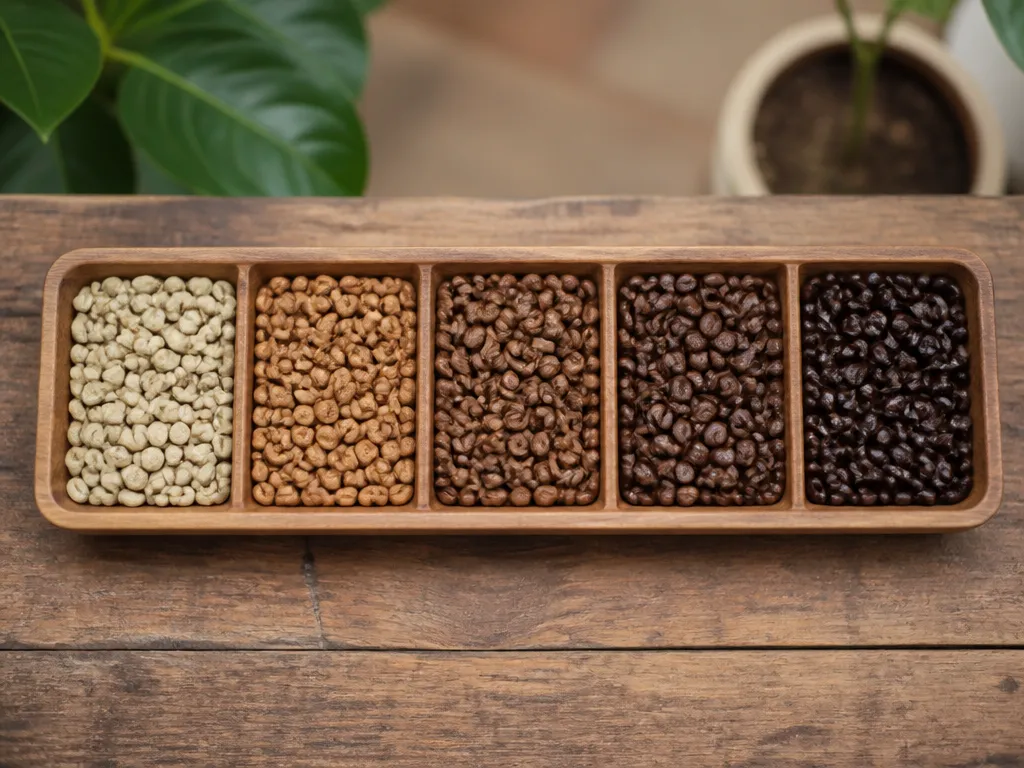
Roast level is the quickest way to predict a coffee’s flavor. As beans go from light to dark, they lose more of their original fruitiness and develop deeper notes such as caramel, chocolate, smoke, and char. The main differences show up in acidity, body, sweetness, and bitterness.
For a reliable starting point, choose medium roast. Move to light roast for brighter, fruitier cups or dark roast for heavier, smokier flavor.
Key Takeaways
- Light roast flavor is usually brighter, more acidic, and closer to fruit or floral notes.
- Medium roast flavor often tastes sweeter, with chocolatey depth and moderate acidity.
- Dark roast flavor tends toward smoky, bitter, and lower-acid profiles.
- Roast level is not origin – the same origin can taste different across roasts.
- Pick by brew method – use lighter roasts for filter coffee and darker roasts for espresso if you want bold intensity.
- Freshness beats roast guesswork – taste coffee within 2-4 weeks after roasting for the clearest flavor.
Coffee Roast Levels by Flavor
Roast level works like a flavor dial. Light roasts preserve more of the bean’s original character, which may taste fruity, floral, or tea-like. Medium roasts develop more caramelized sugar and chocolate notes. Dark roasts emphasize smoke, char, and bitterness, while many of the bean’s origin flavors fade into the background.
Acidity and roasted aroma are useful anchors when you shop or order coffee. Light roast usually has the highest perceived acidity and a lighter body. Medium roast tends to taste smoother, sweeter, and fuller. Dark roast usually feels heavier, with lower perceived acidity and a more obvious bitter or smoky edge.
| Roast level | Typical aroma | Typical flavor | Acidity | Body | Best starting point |
|---|---|---|---|---|---|
| Light | Floral, grainy, roasted grain, light caramel | Fruity, tea-like, bright chocolate hints | Higher | Lighter | Pour-over and Aeropress |
| Medium | Toasted sugar, caramel, cocoa | Balanced sweetness, nuts, milk chocolate | Medium | Medium | Drip coffee and espresso “starter” |
| Dark | Dark chocolate, smoke, char | Smoky, bold, bittersweet | Lower | Heavier | Espresso, French press |
Bag labels are not standardized. “City,” “Full City,” and “French” are common marketing terms, and two brands can roast very differently while using the same name. Flavor cues remain more useful than the label: look for the balance of acidity, sweetness, body, and roasted aroma.
Choosing a Roast for Your Brew Method
Light roast works well in pour-over and Aeropress coffee, where a longer, controlled brew can bring out its acidity and fruit character. It can taste sharp or sour when the grind is too coarse or the extraction is too short.
Medium roast balances sweetness, acidity, and roasted flavor, making it a forgiving espresso starter that may require less adjustment.
Dark roast suits espresso and French press when you want a bold, heavy cup. Its lower perceived acidity and smoky flavor can stand up to milk, but over-extraction may make it taste harsh or burnt.
Keep the brew method, dose, and water the same when comparing roast levels. That way, the roast is the main variable rather than grind size or extraction.
Home-Roasting Setup and Preparation
Home roasting starts with clean, dry green coffee beans. Moisture or uneven defects can produce uneven roasting, leaving some beans sour while others taste burned. Remove obvious defects such as broken pieces and heavy shells, then weigh each batch so you can repeat the roast. Stay within the roaster’s stated capacity because a full drum cools differently from a half-full one.
Prepare a metal bowl or roasting tray for rapid cooling. A fan and good airflow help, and you should have a ventilation plan you are comfortable using. Keep a notebook or phone notes open to record batch weight, timing, and roast results. “Dark in 10 minutes” is not a repeatable roast plan.
A Repeatable Home-Roast Workflow
- Measure your batch in grams so you can compare roasts.
- Preheat the roaster until it reaches stable operating conditions.
- Load the beans and start the timer immediately.
- Watch the development cues rather than relying only on total time.
- Cool the beans immediately when they reach your target roast level. Do not let the hot drum continue roasting them.
Total time is only a rough guide. Heat rate, drum loading, bean density, and ambient temperature all change the schedule. First crack, color, and aroma give you better information than minutes alone.
Doneness Cues for Light, Medium, and Dark Roast
- First crack often marks the transition into light roast territory. After this point, the beans move from light toward more developed roasts quickly.
- Color helps identify roast level, but oily beans and certain roast styles can make visual judgment unreliable.
- Aroma shifts from grainy and toasty toward deeper caramel, then smoke-like notes as the roast gets darker.
Without a roaster, the practical alternative is to buy pre-roasted beans and blend them. Combining a light and medium roast can adjust sweetness and acidity without the risk of an uneven home roast.
Arabica and Robusta Roast Differences
Arabica and Robusta behave differently during roasting, which changes how light, medium, and dark roasts taste. Coffea arabica and Coffea robusta are the two most commonly grown coffee bean types. Robusta often tastes more intense and bitter, even at lighter roasts, while arabica generally offers more nuanced aromatics.
Arabica tends to provide more clarity in light and medium roasts. Robusta usually contributes heavier body and a stronger roasty impression earlier in development, so it can taste dark or harsh sooner if the roast goes too far.
Species also affects how heat-driven moisture loss appears during roasting. Two coffees labeled “medium” may taste very different when one contains a high proportion of robusta because the beans respond differently to the same roast profile.
Adjusting Roast Choice by Species
- If a light roast tastes thin, try a medium roast from the same origin. The arabica may need more development.
- If a medium roast tastes sharp or bitter, try a lighter roast, especially with robusta blends that can lean harsh.
- If you like bold espresso, robusta-heavy blends often hold up well to darker roasting without tasting overly sour.
Roast level cannot be judged by time and temperature alone. Bean species changes how raw flavors become roasted flavors, and the difference shows up in the cup.
How Roasting Changes Coffee Chemistry
Heat transforms the compounds in green coffee. Raw beans contain carbohydrates, amino compounds, acids, and other flavor precursors. As the temperature rises, some compounds break down while new aroma and flavor molecules form through heat-driven reactions.
Light roasts stop earlier, preserving more of the bean’s original character and creating fewer roasted flavors. Medium roasts allow more caramelization and browning, which brings out sweetness and cocoa. Dark roasts continue farther into breakdown and charring, making smoky and bitter notes more prominent.
The cup changes along with the chemistry. Light roasts often taste brighter because development is less advanced. Dark roasts usually taste lower in acidity and more bitter because bright acids are reduced or overshadowed by stronger roasted compounds.
What Each Roast Tends to Taste Like
- Light roast feels crisp and lively, with flavors that may suggest fruit, flowers, or lighter cocoa.
- Medium roast tastes rounded, with brown-sugar sweetness and more chocolate depth.
- Dark roast tastes smoky, bitter, and heavier, with fewer obvious origin nuances.
Treat roast level as a style and intensity setting, not a quality ranking. Dark roast is not automatically worse, and light roast is not automatically better. Choose based on whether you prefer brightness, sweetness, body, or classic roasted flavor.
How Origin and Processing Affect Roast Flavor
Growing conditions and processing determine which flavors are available for roasting. Plant genetics, climate, and cherry processing all shape the flavor precursors in green coffee, so two coffees roasted to the same level can taste very different.
Washed processing often produces cleaner cups with more defined acidity and clarity. Natural processing can bring heavier fruitiness and deeper sweetness, which may remain pronounced in light and medium roasts. Honey and other intermediate methods often fall between those profiles.
A light roast from one origin may taste distinctly fruit-forward, while a light roast from another may taste thin or grassy until it reaches medium roast. The same label feels different because the starting flavors are different.
A Practical Buying Rule
Change one variable at a time when trying a new coffee. If a light roast tastes underwhelming, try the same coffee as a medium roast before switching origins. That isolates roast level and makes it easier to understand your preference.
If the same coffee is unavailable in several roasts, compare processing styles instead. Washed coffee is more likely to taste bright and clean, while natural coffee is more likely to taste fruitier and heavier, even before roast level enters the comparison.
Roast Consistency, Freshness, and Storage
Large-scale roasters use controlled profiles and quality checks to keep flavor consistent. Small changes in airflow, drum temperature, bean moisture, and batch size can change when first crack occurs and how quickly the beans develop.
Freshness adds another variable. Coffee bags sit in warehouses, move through shipping networks, and spend time on store shelves, so the best brewing window depends on the supply chain. In the US, buy from a roaster that prints roast dates clearly and aim to brew within 2-4 weeks after roasting. Fresh coffee usually tastes clearer, while stale coffee can taste dull, papery, or flat regardless of roast level.
Roasters also use different internal targets for bean density and color. That is why one company’s “light” roast can taste like another company’s “medium.” Use acidity, sweetness, and roasted aroma as your final guide.
Checking Roast Consistency at Home
Buy two bags from the same brand at different times – for example, one now and one a few weeks later. Brew both with the same method and dose. If one tastes dramatically darker or more bitter, the roast profile or freshness handling may have changed.
Espresso requires its own adjustments. If a roast tastes harsh, reduce the dose or shorten the extraction, even when the roast level seems appropriate. Roast level, freshness, and extraction work together.
Storage, Defects, and Off-Flavors
Poor storage can ruin coffee before brewing. Green and roasted beans can absorb odors from spices, cleaning agents, diesel fumes, and other strong materials. Those odors may overwhelm the roast character.
Insect damage can create defects that roast unevenly. The resulting cup may taste harsh or contain unpleasant off-notes that normal grind or extraction adjustments cannot fix.
Store green or roasted coffee in a clean, dry area with good ventilation and no nearby chemicals or strong odors. Airtight packaging and controlled storage reduce the chance of tainted beans.
What to Check Before Buying
- Smell the bag. Skip coffee that smells musty or chemical.
- Check the roast date and packaging. Fresh coffee in sealed packaging is less likely to have picked up unwanted flavors.
- Store beans properly. Use an airtight container and keep it away from heat, light, and moisture.
Pests do not need to touch the coffee for storage problems to affect flavor. Poor handling is enough to produce a bad cup.
FAQ
What does light roast coffee taste like?
Light roast coffee usually tastes brighter, with higher perceived acidity and pronounced fruity or floral notes. The body is lighter than that of darker roasts, and the roasted flavor tends to be toasty rather than smoky. If the coffee tastes sour or grassy, try a medium roast, a slightly finer grind, or a longer brew.
Is medium roast better than light or dark roast?
No roast is universally better. Medium roast balances acidity with roasted sweetness, while light roast emphasizes brightness and dark roast emphasizes bold, smoky intensity.
Why does the same roast label taste different between brands?
Roast labels are inconsistent because roasters use different internal targets. Terms such as “City” and “French” do not compare perfectly across companies.
Species, moisture, and processing also affect how a coffee develops. When dialing in your preferences, compare light, medium, and dark coffees within the same brand first, then change origins.
Can I brew light roast as espresso without it tasting sour?
Yes, but light roast usually needs more extraction adjustment. If it tastes sour, grind finer and extend contact time slightly. If it tastes harsh, shorten the shot to reduce bitterness.
What is the most common roast-level mistake?
The most common mistake is buying by roast label alone while ignoring freshness and brew method. A very fresh light roast brewed too coarsely can taste sharp, while a stale dark roast can taste flat and burnt.

- Unlocking the Venti: Discover the Perfect Shot Count for Your Drink - October 13, 2026
- Unpacking the Buzz: Caffeine Levels in Café Bustelo Espresso - October 13, 2026
- How to Fix Bitter Coffee: 10 Expert Ways to Improve the Taste - October 4, 2026