
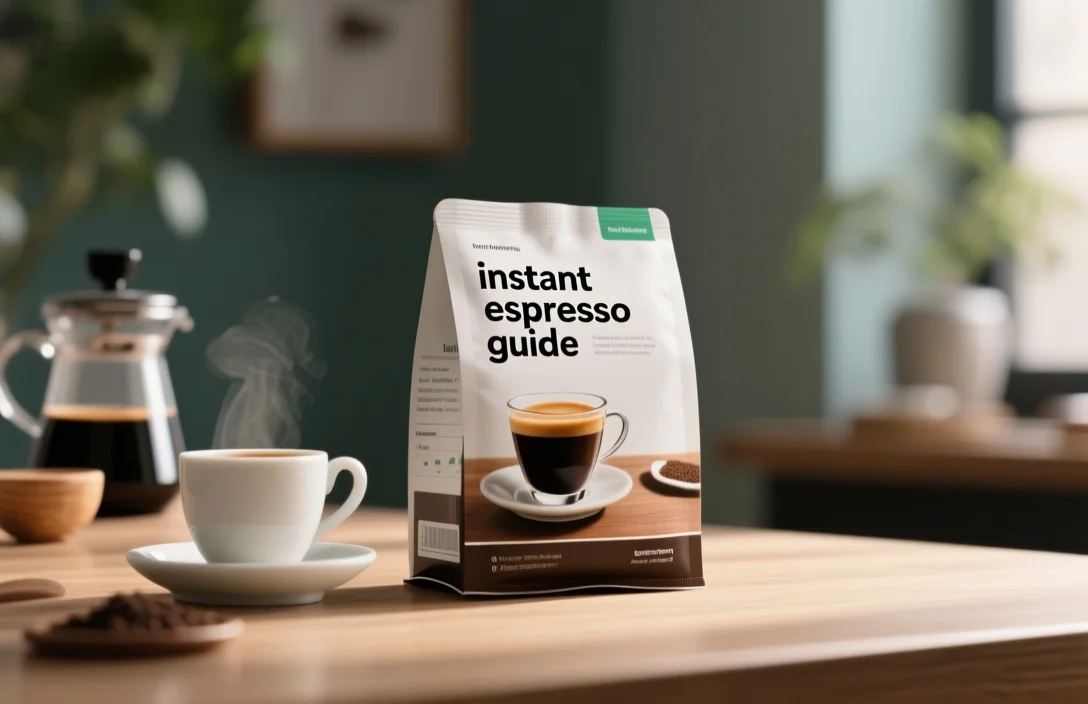
Yes – you can make a quick, espresso-like drink from instant espresso that will satisfy most mornings and travel situations, provided you pick the right product and use correct technique. This instant espresso guide explains what instant espresso is, how it’s made, how to choose a brand, and exact steps to make a stronger, less flat cup than ordinary instant coffee.
What instant espresso is (short definition and what to expect)
Instant espresso refers to a soluble coffee product formulated to deliver a concentrated, espresso-style cup with higher soluble solids and a darker roast profile than regular instant coffee. Expect a drink that emphasizes bitter and roasted notes, lower acidity, and faster solubility; it will not replicate true espresso crema or the full extraction complexity from a high-pressure machine.
Many manufacturers label grind and processing differently, and two common processing methods are freeze-drying and spray-drying, which yield distinct textures and flavor retention. Freeze-dried products typically preserve more aroma but can be chunkier, while spray-dried powders dissolve extremely quickly but sometimes lose volatile aromatics that contribute to perceived freshness and crema-like foam in the finished cup.
How instant espresso is made and why it tastes different
Coffee roasted for instant espresso is usually darker and more uniformly roasted than specialty espresso beans because manufacturers need stable flavor profiles after extraction and drying. Producers brew concentrated coffee at scale, then concentrate and stabilize that brew before removing water via freeze-drying or spray-drying; the end product is soluble solids that rehydrate into beverage.
Processing choices change taste and mouthfeel: freeze-dried granules lock in volatile aromatics better and often yield a fuller aroma, while spray-dried powders are finer and dissolve nearly instantly but can taste thinner. Microground instant products add tiny particulate coffee (microground) back into the soluble base to create more body and an illusion of crema; these perform better for lattes and cappuccino-style drinks when stirred into milk.
Who instant espresso is best for – and the trade-offs
Busy commuters, campers, office workers, and travelers who want a fast, compact source of strong coffee are the primary audience for instant espresso. Consumers who prioritize convenience and portability will prefer instant espresso over brewing gear, and those who want consistent cups across trips appreciate portioned sticks and single-serve sachets.
Trade-offs include a narrower flavor range compared with freshly pulled espresso, absence of true crema and complex acidity, and potential for noticeable roast bitterness if over-concentrated. People aiming for coffee-shop-level nuance will still need an espresso machine, but those who want a strong black shot, quick milk drinks, or a travel-friendly concentrate will find instant espresso a pragmatic compromise.
Instant espresso products compared (Name, Price/Key Spec, Best For)
Comparing the main instant-espresso-style products side by side, the key differences are processing method, whether microground coffee is included, and packaging format. The table below organizes representative options by those practical attributes to help you choose by use case rather than by marketing claims.
| Name | Price/Key Spec | Best For |
|---|---|---|
| Instant espresso sachets (single-serve) | Single-dose sachets; concentrated soluble blend; typically spray-dried | Travel, office, precise single-shot portions |
| Freeze-dried instant espresso jars | Granular freeze-dried solids; stronger aroma retention; resealable jars | Home use where aroma matters; longer open storage |
| Microground instant espresso | Blend of soluble coffee + microground particles; thicker mouthfeel | Milk drinks (lattes/cappuccinos); mimic of crema |
| Instant espresso sticks (single-serve powder) | Powdered sticks with robust roast profile; easy mixing in cups | Pocketable travel, camping, vending machine refills |
| Concentrated instant espresso paste | Thick paste or liquid concentrate in small tubes | Immediate shot-quality convenience; fewer brands available |
| Generic instant espresso (supermarket) | Low-cost spray-dried powders; fast dissolving | Budget-conscious buyers; emergency backup supply |
After comparing these product types side by side in test brews, microground blends produced the most satisfying milk drinks while freeze-dried jars delivered the most aromatic black shots. Single-serve sachets won for convenience and minimal measuring.
How to brew the best cup of instant espresso (exact, repeatable steps)
Follow these steps to get the highest flavor and body from instant espresso; each step begins with a verb so you can use it as a quick checklist.
- Measure: Use a kitchen scale or heaping teaspoon; target a stronger solubility ratio than regular instant coffee.
- Heat: Bring water to just off-boil and let it rest 15-20 seconds for a temperature near 90-95°C (194-203°F) if you can measure that.
- Pre-wet: Pour a tablespoon of hot water into the cup and stir the powder into that small amount to form a concentrated paste; break up clumps and release aroma.
- Dilute: Add the remaining hot water slowly while stirring to integrate soluble solids completely and prevent separation.
- Taste and adjust: If the cup is weak, add another 1/2 teaspoon of powder or reduce water volume; if it’s too bitter, dilute with a splash of hot water or add milk.
- Froth (optional): Heat and foam milk separately for lattes, then pour slowly over the instant base to preserve body and create a layered drink.
Many users prefer a paste-start technique because it dissolves clumps, concentrates oils, and produces a stronger mouthfeel than simply sprinkling powder into hot water. Micromeasure tests across different brands show paste-method cups have clearer flavor and less sandy residue.
Recipes and variations that lift instant espresso
Plain black: Prepare as above and serve immediately; choose freeze-dried or sachet products for maximum aroma.
Café latte: Froth 6-8 oz milk and pour over the concentrated instant espresso base; microground products create the most natural integration.
Iced espresso-style: Make a double-strength paste, cool briefly, then pour over 6-8 ice cubes and top with cold milk to preserve intensity.
Affogato-style: Scoop vanilla ice cream into a bowl and pour a hot instant espresso shot over the top; the contrast reduces perceived bitterness.
Instant espresso tonic: Add 1 part concentrated instant shot to 2-3 parts tonic water over ice with a citrus twist for a refreshing, bubbly drink.
Testing these variations side by side will reveal clear patterns: milk softens roast-bitter notes and highlights body, while cold preparations mute aromatics so a stronger concentrate is necessary.
Storage, shelf life, and sustainability
Store instant espresso in a cool, dry place inside an airtight container to minimize moisture pickup and aroma loss; resealable jars and single-serve sachets both work, but bulk tubs may lose freshness faster after opening. Manufacturers typically recommend using opened instant coffee within a few months for best aroma, although sealed factory packaging preserves shelf stability for much longer until opened.
Sustainability considerations include packaging waste from single-serve sticks and the carbon footprint from industrial processing and shipping. Choosing larger resealable jars and brands that disclose recyclability or compostable wrappers reduces waste. Brands that offer minimal packaging and supply-chain transparency provide a modest environmental advantage even though production energy for freeze-drying is higher.
Common mistakes and how to fix them
Adding powder to cold water: Powder will clump and never fully dissolve if you add it to cold water; dissolve in a small amount of hot water first.
Using low water temperature: Water that’s too cool yields a flat, syrupy cup with muted aromatics; use near-boiling water allowed to rest briefly.
Overmeasuring powder: Dumping too much powder out of impatience creates sharp bitterness and astringency; increase concentration in small increments and taste.
Expecting crema: Instant espresso will not produce real espresso crema from high-pressure extraction; if a foamy top matters, buy microground varieties and whip vigorously or use an aerator.
Storing in the refrigerator: Refrigerators add moisture and odours; keep instant espresso in a dry cupboard instead.
Many troubleshooting fixes are simple calibrations rather than product changes; adjusting water temperature, dissolving technique, and concentration will rescue most bad cups.
Health, caffeine, and safety notes
Caffeine levels in instant espresso vary by brand and serving size, but instant espresso is typically formulated to be stronger per scoop than regular instant coffee. Pregnant people, those with caffeine sensitivity, and anyone on stimulants should moderate intake and account for concentrated servings; ask your healthcare provider if you need personalized guidance.
Do not assume calorie-free: adding milk, cream, syrups, or sugar turns instant espresso into a higher-calorie beverage. Use labeled portion sizes to manage caffeine intake across multiple drinks in a day.
Practical buying checklist and tips
Compare these product attributes before you buy: processing method (freeze-dried vs spray-dried), presence of microground coffee, packaging format (single-serve vs jar), and stated roast level. Buy a small trial size if available and brew a few cups using the paste method to evaluate aroma and mouthfeel before committing to large quantities. Prefer reputable labels with transparent ingredient lists and avoid products that list “natural and artificial flavors” without specifying origin if you prioritize minimal processing.
Store unopened jars away from sunlight and moisture, use up open containers within weeks for best aroma, and rotate single-serve packets into travel kits so you always have a fresh sachet available.
FAQ
Is instant espresso the same as espresso made with a machine?
No. Instant espresso is a soluble product that approximates espresso flavor and strength but lacks true pressure-extracted crema and the nuanced acidity of machine-pulled shots. It serves as a practical substitute rather than a full replacement.
Will instant espresso work in milk-based drinks?
Yes. Microground instant espresso works best for lattes and cappuccinos because it adds body and helps suspend solids in milk. Foam stability still depends on milk type and frothing method.
Which is better: freeze-dried or spray-dried instant espresso?
Freeze-dried generally retains more aroma and tastes fuller; spray-dried dissolves faster and can be more cost-effective. Choose freeze-dried for black shots and spray-dried if you need instant solubility and convenience.
How much instant espresso powder equals one espresso shot?
Measure by taste rather than assuming a universal scoop size; many users start with about double the powder used for a standard instant coffee cup and adjust. Exact conversions vary by brand and product concentration.
Can I use instant espresso in coffee machines or espresso machines?
Avoid putting instant espresso into espresso portafilters or high-pressure brewing heads; those machines expect ground coffee and will clog or underperform. Instant espresso is intended for rehydration in hot water or milk and for use in portable or manual preparations.
Is instant espresso healthier than regular brewed coffee?
Neither is categorically healthier; health effects depend on total caffeine intake, additives like sugar or cream, and individual health conditions.
Short practical verdict: instant espresso can be a very good everyday solution when you want fast, portable, strong coffee without gear. Taste improves dramatically if you choose the right processing type for your use (microground for milk drinks, freeze-dried for black shots) and follow the paste-then-dilute brewing method.
Try this next: buy a small jar or a pack of three single-serve sachets – pick one freeze-dried and one microground if available – and run a blind side-by-side test using the paste method, a consistent scoop, and the same water temperature to see which product matches your preferences.

- Espresso Tastes Watery? 10 Common Causes and How to Fix It - October 23, 2026
- 10 Common Coffee Equipment Cleaning Mistakes and How to Avoid Them - October 23, 2026
- 17 Common Coffee Grinder Problems and How to Fix Them - October 23, 2026