
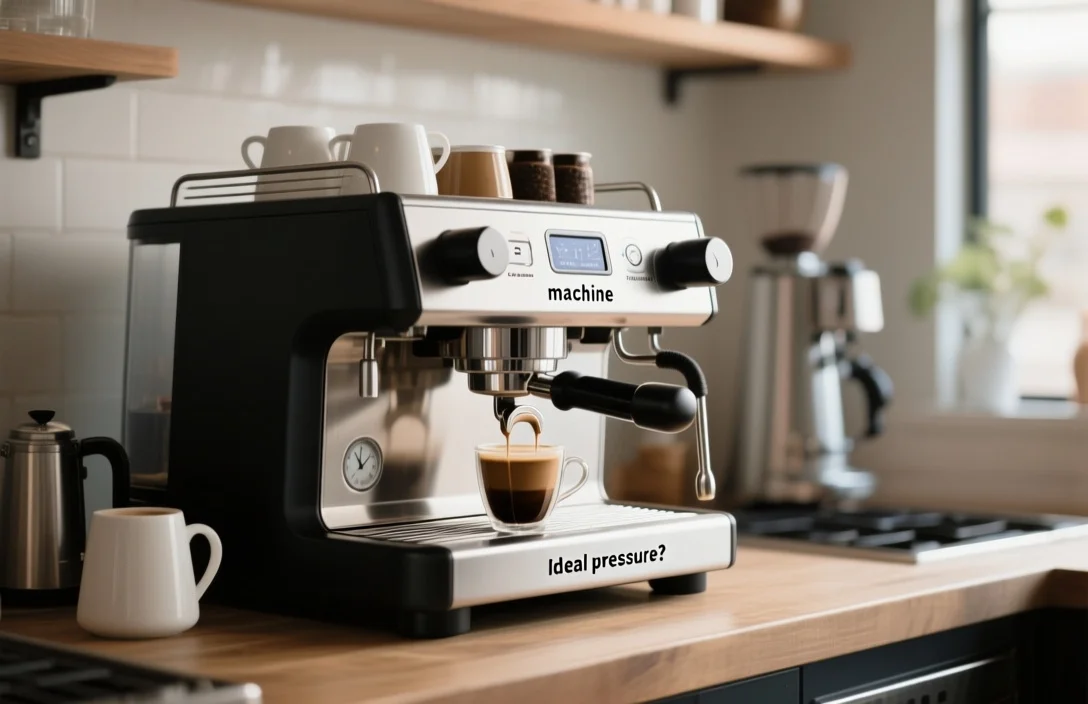
The ideal pressure for a coffee machine depends on the brew method: espresso-style extraction needs a pressurized, short-duration flow under the machine’s recommended brew pressure, while non-pressurized methods rely on immersion or gravity and do not use that same pressure. Focus keyword: ideal pressure for coffee machine.
How pressure actually affects extraction
Pressure forces hot water through compacted coffee grounds, increasing contact forces and changing which compounds dissolve. That process raises extraction of oils and soluble solids that produce crema, body, and concentrated flavor in espresso. Pressure also modifies flow rate and the balance between acids, sugars, and bitter compounds.
Water temperature and contact time interact with pressure. Higher pressure can speed flow through the puck unless you compensate with finer grind or heavier tamping. Grind size, dose, and tamp determine puck resistance; that resistance sets the working pressure the pump or lever will register. Machines with fixed pumps supply a potential maximum pressure, but the actual pressure across the coffee bed is the combination of pump capability and puck resistance during the shot.
Pressure is not an isolated “magic” number. Taste and visual cues – shot volume in a fixed time window, crema texture, taste balance, and flow behavior – are the practical indicators that pressure is hitting the right zone for your beans and recipe. A machine’s gauge or built-in profiling display helps, but sensory checks remain the final arbiter.
Why pump rating and brew pressure are not the same
Manufacturers often spec a pump rating to market power: that number represents the pump’s maximum capability rather than the pressure you will actually use during extraction. A high-rated pump can deliver strong pressure if the flow path offers little resistance, but the brew pressure at the puck will equalize based on puck resistance and the machine’s valves. A pressure stat, OPV (over-pressure valve), or flow restrictor commonly limits brew pressure to protect the puck and ensure consistent extraction.
Domestic and commercial machines use different control strategies. Some rely on a fixed OPV and a single-pump speed, creating a stable but static pressure profile. Others include pressure profiling, PID temperature control, and adjustable OPVs to let you alter the pressure curve during a shot. Manual lever machines let the operator control pressure dynamically by hand, which changes the extraction profile but requires skill.
Puck resistance and hydraulic geometry matter more than raw pump bar specs. Changing your grind size, dose, or distribution affects the pressure your puck creates under the same pump. Swapping beans or roast levels will usually require pressure-related adjustments at the grinder and tamp stage.
Ideal Pressure for Coffee Machine by brew type
Espresso-style shots use pressurized extraction and need active control of puck resistance and flow. Moka pots, percolators, pour-over, French press, and cold brew depend on heat and immersion/flow rather than machine pressure, so the same brew-pressure discussion does not apply.
A practical approach divides methods into pressurized and non-pressurized categories and sets different expectations for each. Pressurized domestic “espresso” machines aim to produce concentrated, crema-topped shots. Super-automatic and capsule systems often add extra mechanical steps to achieve crema without the precise puck prep expected from a manual espresso workflow. Lever and commercial prosumer machines give you direct influence over the pressure profile during extraction.
Comparing machine families highlights trade-offs you will live with:
| Name | Price / Key Spec | Best For |
|---|---|---|
| Pump-driven home espresso | Pump with factory-set limiting device; integrated boiler or thermoblock | Home users who want consistent, repeatable shots with modest tuning |
| Super-automatic machines | Integrated grinder, fixed brew cycle, closed-system pressure control | Convenience-first users who prefer single-button espresso |
| Manual lever machines | User-controlled pressure profile; no pump-based automation | Enthusiasts wanting hands-on extraction control and pressure profiling |
| Steam-driven machines / Moka-style | Steam pressure and boil-driven water displacement | Users who want strong stovetop coffee, not true espresso |
| Commercial prosumer machines | Adjustable OPV and stable boilers; serviceable components | Small cafés and experienced home baristas who tune pressure and temperature |
How to measure and test your machine’s working pressure
Measure the working pressure with the tools and sensory checks that match your machine’s design. A pressure gauge mounted on the grouphead, a portafilter-mounted gauge (so-called “manometer shot”), or a dedicated brew-pressure test kit gives you a readout during extraction. Manufacturers sometimes include a gauge; aftermarket solutions thread into the grouphead or replace a shower screen for testing.
Start with a controlled test procedure:
- Stabilize temperature by running a blank shot or warming group components.
- Fit a pressure gauge to the grouphead or portafilter adapter according to the device instructions.
- Use a consistent dose, tamp, grind setting, and basket; record the pressure trace throughout the shot.
- Observe flow rate and shot time for a fixed target volume.
- Taste the result and note crema quality and mouthfeel.
Repeat tests after one variable change – grind finer, then coarser; change dose by a gram; or vary tamp pressure. Log the pressure trace and sensory outcomes for each change. A steady shot with smooth ramp-up and an even flow is the best sign your puck resistance and working pressure are well matched.
How to change effective brew pressure without modifying the pump
Most home users should avoid internal pump modifications or bypassing the OPV. Practical, reversible adjustments let you tune working pressure without tampering with the machine internals.
- Grind coarser to reduce puck resistance and lower working pressure during extraction.
- Grind finer to increase puck resistance and raise working pressure, watching for channeling or clogging.
- Increase dose to raise resistance; reduce dose to lower it.
- Alter distribution and tamp technique to avoid uneven paths that let water bypass the puck at lower effective resistance.
- If your machine has an adjustable OPV or pressure profiling mode, use the manufacturer interface to change the profile rather than mechanical modifications.
Calibration through these variables keeps you in safe operating ranges and preserves warranty coverage. Using a blind basket to perform a pump-only test can reveal whether the OPV or pump is achieving expectations, but stop tests if the machine overheats or the boiler cycles unusually.
Pressure-related problems and how to fix them
Symptoms of pressure issues present as visual cues and taste flaws. Thin, pale crema and rapid pour often indicate under-extraction or insufficient puck resistance. Dark, slow-flowing shots with burnt flavors usually mean over-extraction or excessive resistance. Channeling appears as rivulets or inconsistent flow through the puck and frequently accompanies uneven tamping or bad distribution.
Troubleshooting checklist:
- Check grind distribution and modify to eliminate channels.
- Inspect basket and puck for clogs or compacted fines; clean or backflush the grouphead.
- Verify the basket size matches your dose; overfilling a small basket causes excessive pressure.
- Clean or descaling the machine if flow is erratic; mineral buildup changes internal flow and pressure behavior.
- Replace worn grouphead seals or basket screens; leaks alter the pressure seen at the puck.
When swapping beans, expect pressure-taste differences. Lighter roasts often require finer grind and slightly different flow to reach the same sensory balance. Darker roasts compress more easily and can increase working pressure for the same grind setting.
Practical
Follow a repeatable sequence to dial in shots. The numbered steps here start with equipment checks and end with sensory verification.
- Clean and warm the machine and portafilter to thermal stability.
- Use a consistent basket and a measured dose; grind to a starting baseline for your beans.
- Distribute grounds evenly and apply a level tamp with consistent force.
- Start the shot and time it; watch for steady flow and even crema development.
- If the shot finishes too fast, grind finer or increase dose; if too slow, grind coarser or decrease dose.
- Make only one variable change per shot and record pressure trace if you have a gauge.
- Taste each iteration, focusing on body, sweetness, acidity, and bitterness.
- Stop tuning when the sensory balance meets your preference and the pressure trace shows stable control.
Repeat this process when you change beans, roast date, or seasonal humidity. Keeping a short log keyed to grind, dose, tamp, and pressure trace helps you reproduce the same result later.
Pressure profiling, advanced control, and when to bother
Pressure profiling means intentionally varying pressure during the extraction cycle rather than using a static level. Professional baristas and advanced home users use profiling to emphasize certain flavor elements – for example, a low initial pressure bloom to gently wet the puck, then a ramp to higher pressure to increase body and crema.
Machines with integrated profiling let you program ramps, holds, and seconds of peak pressure. Manual lever machines allow tactile profiling by the operator. Profit from profiling when you want to extract specific characteristics from a single-origin bean or when competing in technical preparation.
Profiling requires repeatable puck prep, a stable temperature platform, and patience to taste the differences objectively. It will not fix a badly roasted or stale coffee. Use profiling as a targeted tool after you have mastered grind/dose/tamp basics and have a clear sensory goal.
When the machine is likely the problem – service and parts
Persistent irregularities in pressure trace, unexpected pressure spikes, or inability to reach consistent extraction despite repeated tuning usually points to hardware issues. Over-pressure valve drift, worn pump couplers, clogged flow restrictors, and failing seals all change delivered pressure.
Before scheduling service, perform basic checks: descale according to manufacturer guidance, replace worn gaskets, and clean shower screens and solenoid valves. If the machine is still unstable, consult the manual for diagnostic modes or error codes. Warranty or manufacturer service is the safest route for machines under coverage.
Replacing internal components without manufacturer guidance can void warranty and introduce safety risks. Use authorized service centers for high-pressure boiler systems and electrical repairs. For older machines, evaluate repair cost versus replacement based on part availability and expected longevity.
Common mistakes and the pressure myths to avoid
Many hobbyists chase a single-number “ideal” pressure and neglect the broader system. Rigid focus on a gauge reading ignores changes in grind, roast, and dose that shift the working conditions. Pressure alone cannot rescue a poorly prepared puck or stale beans.
Avoid these pitfalls:
- Tuning pressure while using inconsistent doses and tamps.
- Modifying pumps or OPVs without understanding boiler safety features.
- Blaming low crema on pressure alone when age of coffee or roast level is the real cause.
- Assuming higher pump spec automatically means better shots; a stronger pump can make extraction unmanageable without a matching puck setup.
- Neglecting routine cleaning that affects flow and pressure behavior.
Practical coffee preparation treats pressure as one variable in a system that includes temperature, flow, grind, dose, and bean chemistry. Balance each factor rather than seeking a single numerical ideal.
Quick reference: sensory signs tied to pressure behavior
Use this checkpoint list when tasting shots and interpreting flow:
- Fast pour, light crema, thin body – probable under-extraction; increase puck resistance.
- Slow pour, dark crema, burnt or harsh bitterness – probable over-extraction; lower resistance or shorten brew time.
- Short, sputtering flow with sudden stops – possible channeling or clogged basket; check distribution and cleanliness.
- Consistent ramp to an even flow with creamy crema and balanced taste – puck and working pressure are well matched.
Taste is the final judge. Keep notes on visual cues and adjustments so you can reproduce the preferred outcome.
FAQ
How can I check my machine’s brew pressure if it has no gauge?
Attach a portafilter-mounted test gauge or use a commercial grouphead manometer adapter. Run a test shot after warming the machine and follow the device instructions. If you cannot measure, rely on consistent grind/dose/tamp workflows and sensory cues to judge pressure indirectly.
Can I increase pressure by changing the pump?
Increasing the pump’s maximum rating will not necessarily change brew pressure at the puck and risks damaging the machine if you bypass or remove pressure-limiting devices. Adjust grind, dose, and OPV settings where available to get the practical effect you want.
Does higher pressure always make better espresso?
No. Higher pressure without corresponding puck resistance and correct timing usually produces over-extracted, bitter flavors or uneven extraction. Matching pressure to grind, dose, and bean characteristics is necessary for improvement.
Should I adjust pressure for different roast levels?
Yes. Lighter roasts typically require finer grind or slightly different flow to extract desirable sweetness and acidity, while darker roasts often need coarser settings to prevent excessive bitterness. Adjust puck resistance rather than changing the machine’s hardware.
Is crema a reliable indicator of correct pressure?
Crema signals emulsified oils and trapped gases, so it correlates with adequate pressure and freshness but is not a perfect quality marker. Thin crema can result from stale beans; thick crema with harsh taste can indicate over-extraction or burn.
When should I seek professional service for pressure issues?
Seek service if pressure traces are erratic after cleaning, the machine cannot sustain stable temperature, or mechanical noises and leaks appear. Professional diagnostics will assess OPV function, pump health, and boiler integrity.
Practical verdict: treat pressure as one adjustable element in a system that includes grind, dose, tamp, and temperature; use gauges and profiling tools to read performance, but rely on taste and flow behavior to decide whether the pressure is “ideal.” Next step: choose a single bean and follow the step-by-step tuning sequence above while recording grind, dose, tamp, and the machine’s pressure trace (if available).

- Espresso Tastes Watery? 10 Common Causes and How to Fix It - October 23, 2026
- 10 Common Coffee Equipment Cleaning Mistakes and How to Avoid Them - October 23, 2026
- 17 Common Coffee Grinder Problems and How to Fix Them - October 23, 2026