
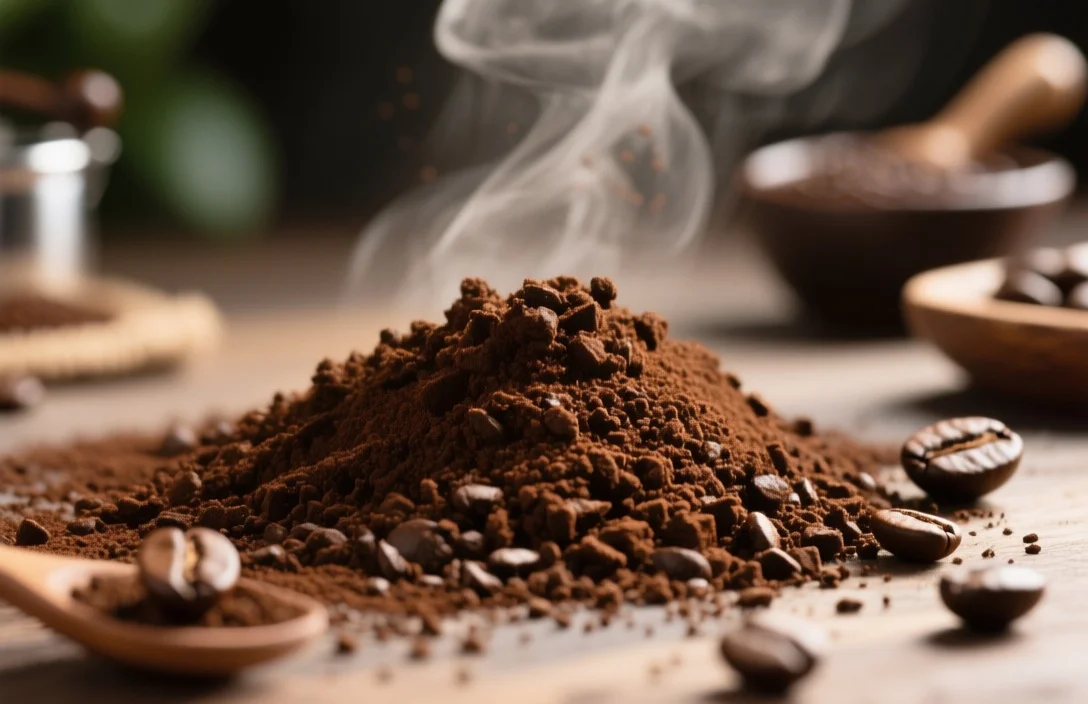
Crushed coffee particle size describes how large and how varied the broken pieces of roasted coffee are after you crush or grind beans. This guide explains what that size means for extraction, how to evaluate it at home without specialized equipment, and which particle profiles match common brewing methods.
What crushed coffee particle size means and why it matters
Crushed coffee particle size refers to two linked properties: the average diameter of individual coffee fragments and how widely those diameters vary. Average diameter controls how quickly water dissolves soluble compounds from the coffee, while distribution – sometimes called particle distribution or uniformity – determines whether extraction is even or patchy.
Extraction speed increases as particles become smaller because total exposed surface area rises with more fragments. Uneven particle distributions create a mix of over-extracted fines and under-extracted coarse pieces, which produces bitter and sour notes in the same cup. Practical brewers focus on both the target size (coarse, medium, fine) and tightening the distribution so most particles cluster around that target.
Crushed coffee differs from mechanically ground coffee because crushing methods (mortar and pestle, rolling pin, manual presses) tend to produce jagged, irregular particles with a higher proportion of fines and slivers. That irregularity matters as much as mean size. Consistent particle profiles let you predict brew times, dose, and water temperature with confidence. Read on for simple tests you can do at home and concrete adjustments to match your brewing method.
How particle size changes extraction chemistry
Surface area per gram of coffee increases as particles become smaller, so chemical extraction proceeds faster on finer particles. Water first dissolves acids and caffeine, then sugars, and finally heavier bitter compounds; speed changes the order and balance of these extractions. Faster extraction can produce bright, high-acidity cups if stopped early, or predominantly bitter cups if left too long.
Particle distribution affects channeling during immersion and pressure brewing. A mix with many fines compacts differently than a uniform bed, creating preferred flow paths that let water bypass parts of the puck or bed. That bypass results in under-extraction from untouched coarse pockets plus over-extraction from areas flooded quickly – a frequent cause of imbalance in hand-crushed preparations.
Mechanical grinders produce more controlled particle spectra because burr geometry and spacing cut beans into predictable sizes. Crushing by hand tends to increase the tail of very small particles. Those fines act like micro-filters and change flow resistance, which matters for espresso and pour-over alike. Adjusting water contact time, agitation, or using a coarser target size are the main levers to compensate for an unusually high fines fraction.
Typical particle profiles and visual cues
Coarse: Particles feel rough and large between your fingers, similar to coarse sea salt or breadcrumbs. Coarse profiles have a wide range but generally include many visibly intact bean fragments. Coarse crushes brew slowly and are best for long contact methods.
Medium: Texture resembles granulated sugar or fine breadcrumbs. Visual distribution shows fewer flakes and fewer large intact halves. Medium results balance extraction speed and surface area, making it versatile across devices.
Fine: Particles look and feel like table salt or slightly sand-like grit. Very few whole bean pieces remain visible. Fine profiles extract quickly and suit pressured or short-contact methods.
Very fine/powder: Particles appear flour-like and can clump when pinched. Pressure systems and Turkish-style brews use this profile.
| Name | Key Spec (how it looks/feels) | Best For |
|---|---|---|
| Coarse | Large, rough fragments; like coarse sea salt | French press, cold brew, percolator |
| Medium | Granular, uniform; like granulated sugar | Pour-over, drip machines, Aeropress (longer recipes) |
| Fine | Sand-like; few whole fragments | Espresso, Aeropress (short, press recipes) |
| Very fine | Flour-like, can clump | Turkish coffee, very fine espresso adjustments |
Visual and tactile cues work when you cannot measure in microns. Grasp a small pinch and rub; coarse will feel chunky and shift under pressure, medium will break down without dust, fine will leave a light residue on the skin.
How to measure particle size at home without lab gear
Collecting a quick, practical read on particle size requires simple tools and consistent procedure. Kitchen sieves or a multi-mesh test sieve set give the most informative results you can achieve at home. Several inexpensive mesh sizes stacked let you separate coarse, medium, and fine fractions and compare proportions.
Step-by-step home sieve method:
- Weigh a representative sample of crushed coffee on a digital kitchen scale.
- Stack sieves from largest mesh on top to smallest at the bottom.
- Add the sample to the top sieve and shake or tap for a fixed time interval.
- Weigh the material retained on each sieve to determine percentage by mass per fraction.
- Record the distribution and repeat with a fresh sample to check repeatability.
A visual-only check works when sieves are unavailable. Spread a tablespoon of the sample across white paper under good light and photograph it from above with a reference object (a coin or rule). Inspect the photo at 1:1 zoom to see relative sizes; count or estimate how many pieces are large vs. fine. Repeating the photograph after altering your crushing technique shows whether your changes narrow the distribution.
Microscope or strong magnification helps you inspect fines and slivers but is not necessary for most home brewers. Consistency in sample size, shaking time, and handling matters more than absolute precision; compare relative results rather than chasing exact numbers absent laboratory tools.
How crushing methods change particle distribution
Manual crushing methods introduce variability that mechanical burrs avoid. Crushing with a mortar and pestle typically produces broad asymmetrical fragments, a high number of fines, and needle-like slivers. Pressing with a rolling pin tends to produce sheets and flakes interspersed with intact halves. Hand-cranked mills can do better but still vary with feed rate and applied force.
A blade grinder or chopping action slices beans irregularly and produces both large chunks and powdery fines in a single pass. Burr grinders separate beans into more consistent annular rings as they pass between stationary and rotating surfaces, producing a tighter distribution around the selected gap. The gap setting controls the target mean particle size, while burr sharpness and alignment control the spread.
Changing technique changes outcomes predictably. Multiple light passes with a crushing tool give a different profile than two heavy hits. Sorting by sieving after crushing will remove some fines but at the cost of lost material and extra handling. Practical tip: standardize your crushing motion (same number of strokes, consistent pressure) and keep a simple log of the resulting brew adjustments so you can reproduce a preferred profile.
Matching particle size to brewing methods and recipes
Selecting the right particle profile is an exercise in matching extraction rate to brew contact time and agitation. Coarse particles extract slowly and tolerate longer immersion without becoming bitter. Fine particles extract quickly and require short contact times or higher flow resistance to avoid over-extraction.
Pour-over and drip systems use a mix of surface area control and controlled flow. A medium profile reduces the need for precise tamping while giving predictable drawdown times. Espresso requires a compact puck with consistent resistance across its cross-section; consistent fine particles reduce channeling risk but increase sensitivity to dose and tamp technique.
Aeropress is flexible and can work with both medium and fine profiles depending on whether you use long immersion or inverted short-contact recipes. French press and cold brew use coarse profiles for prolonged immersion; those methods benefit when the particle bed is open and allows easy flow and steeping.
Practical mapping guide:
- Use coarse when steeping for many minutes or hours and aim for mild extraction.
- Use medium when relying on gravity and moderate flow without pressure.
- Use fine when brewing under high pressure or when contact time is intentionally brief.
Adjust grind or crush sizes in small steps and taste. Keep a short notebook: record the method, particle description, dose, water temp, and the sensory result. Reproduce the closest successful entry rather than attempting large jumps between profiles.
Troubleshooting common problems and fixes
Problem: Bitter, hollow tasting cup with uneven flavors.
Fix approach: Check for an excess of fines or overly long contact time. Use a coarser crush or reduce immersion time. If you crush manually, stop at the stage that visually matches your previous successful medium/fine reference.
Problem: Watery, sour coffee with weak body.
Fix approach: Look for too many large fragments and under-extraction. Increase surface area by crushing finer or extending contact time. For pressure systems, ensure consistent tamping and compress the bed to improve flow resistance.
Problem: Channeling in espresso or rapid drawdown in pour-over.
Fix approach: Inspect particle distribution for a high fines fraction that compacts unevenly. Re-distribute grounds during dosing, or sieve out the extreme fines if necessary. A modest change in dose or tamp technique often reduces channel paths.
Problem: Gritty mouthfeel or sediment in cup.
Fix approach: Coarser filters or a coarser grind reduce fines that pass through filter media. For manual crushing, allow grounds to settle before decanting, or use a secondary fine filter for clarification.
Perform one adjustment at a time and brew repeat samples. Taste differences after single-parameter changes provide clearer diagnosis than simultaneous multi-variable shifts.
Tips to tighten distribution and improve repeatability
Consistency beats theoretical perfection for everyday brewing. Calibrate your crushing routine by adopting fixed motions and timing. Stopping at repeatable visual endpoints produces a predictable profile you can tune with time and water variables.
Batch-crush technique works well: crush a slightly larger batch, then use a small sample for daily brewing. That approach yields a stable reference and reduces grind-to-grind variance when you repeat the same crushing method. Using a single, consistent crushing surface or tool also lowers variability compared with switching tools frequently.
Sifting after crushing narrows the distribution if you tolerate extra work and minor waste. Simple meshes separate extremes and let you recombine fractions into a narrower target. Alternatively, use pre-ground bags from reliable roasters when precision is critical; those products are processed by calibrated burr grinders and offer consistent starting points.
Maintenance matters. Clean crushing surfaces and grinders regularly to prevent old fines and oils from contaminating new batches. Replace or re-sharpen burrs when they dull; blunt burrs create more fines and reduce predictability. Keep a short log of device settings and sensory outcomes so you can backtrack to successful profiles quickly.
How to decide whether to crush or buy pre-ground coffee
Crushing at home gives control and freshness benefits but demands technique to reach consistent results. Pre-ground coffee offers convenience and consistent particle distributions when produced by quality burr grinders, but it sacrifices the immediate freshness gained from grinding just before brew.
Choose crushing when freshness and experimentation matter most. Small-batch crushing lets you adjust texture for single methods and explore how particle size affects flavor. Select pre-ground when time, equipment limitations, or consistent results without effort are higher priorities.
Budget and frequency also matter. Crushing by hand requires minimal capital but higher labor; mid-range burr grinders reduce variability and support a range of methods. Consider the time you want to spend, the number of people you serve, and the desired sensory control when picking between crushing and buying pre-ground.
FAQ
How can I tell if my crushed coffee has too many fines?
A simple test is to pinch and rub a small handful between fingers; a dusty residue indicates a high fines presence. Another sign is an excessively slow pour-over drawdown or a compacted puck during pressure brewing.
Will crushing change the flavor more than grinding with a burr?
Crushing typically creates more irregular particles and fines than burr grinding, which increases the chance of uneven extraction and mixed flavors. That difference often appears as simultaneous bitterness and sourness in the cup.
Can I use crushed coffee for espresso?
Crushed coffee can be used for espresso, but achieving the uniform, compact puck espresso requires is difficult without controlled particle distribution. Expect to make tamping, dose, and time adjustments and to deal with more channeling unless you sieve and sort fractions.
Do I need a microscope or laser analyzer to measure particle size?
Most home brewers do not need laboratory tools. Sieves and visual/tactile comparisons provide actionable information. Specialized instruments give precise numbers but are unnecessary for daily brewing decisions.
How often should I change my crushing technique?
Change only after you have recorded enough brews to judge the effect – typically several brews under the same method. Sudden, frequent changes make it hard to correlate cause and effect.
Verdict and next
Crushed coffee particle size governs extraction speed and balance through two levers: mean particle diameter and distribution uniformity. Matching the particle profile to your brewing method and tightening distribution are the most effective steps to improve cup quality. Try a simple sieve or the pinch test today, then adjust crush coarseness one small step and repeat a controlled brew to find your preferred profile.

- Espresso Tastes Watery? 10 Common Causes and How to Fix It - October 23, 2026
- 10 Common Coffee Equipment Cleaning Mistakes and How to Avoid Them - October 23, 2026
- 17 Common Coffee Grinder Problems and How to Fix Them - October 23, 2026