
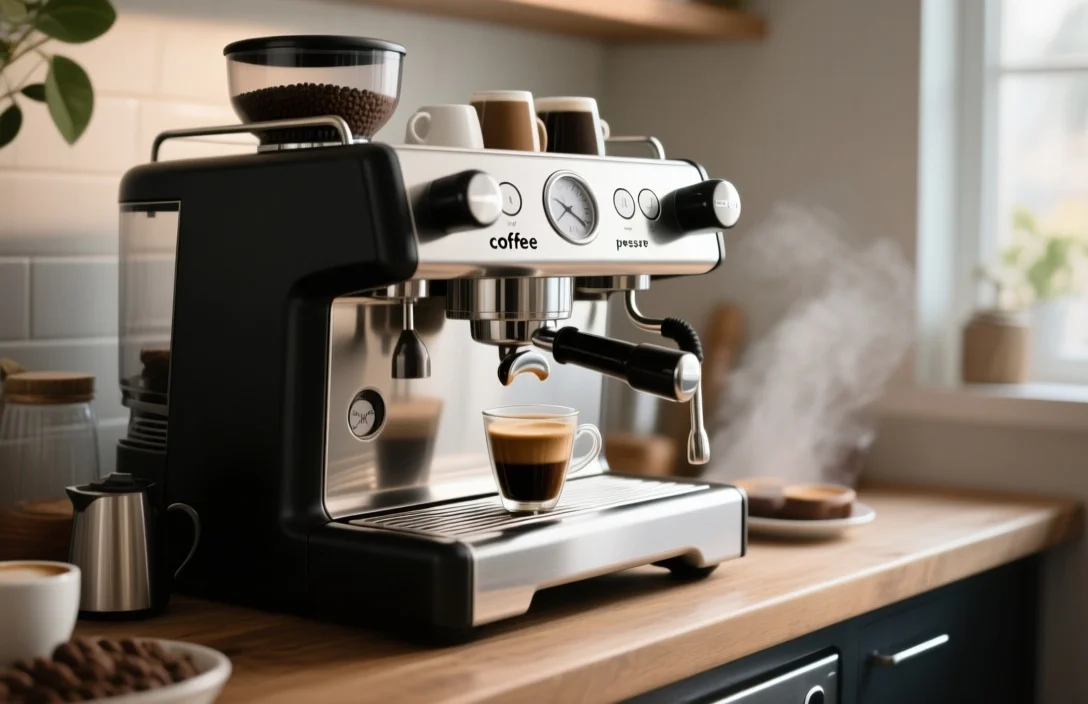
Coffee machine pressure dictates how quickly water forces its way through a compacted bed of coffee, fundamentally altering extraction, crema quality, and flow rate. Understanding how pressure functions and separating marketing claims from reality is essential for pulling consistently great espresso.
What Espresso Machine Pressure Really Means
Expressed in bars, pressure represents the mechanical force driving water through tamped coffee grounds. Adequate pressure extracts soluble compounds from the beans while establishing a balanced flow and forming crema, avoiding both over-extracted bitterness and under-extracted sourness.
Manufacturers frequently advertise a maximum headline pressure number, but that figure only tells part of the story. Pump pressure, grouphead pressure, and active brew pressure are rarely identical.
- The Mechanics: Pumps push water into the grouphead or portafilter, while pressurestats and regulators govern boiler limits. Internal plumbing and restrictive flow paths alter the pressure the coffee actually encounters.
- Accurate Measurement: Evaluating pressure requires a portafilter-mounted gauge or a calibrated inline gauge. Always verify device-specific behavior before altering grind size, dose, or tamping technique to fix pressure issues.
How Pressure Shapes Extraction and Flavor
Pressure controls flow speed, dictating contact time between water and coffee grounds.
- Flow Dynamics: Higher applied pressure accelerates flow, shortening contact time and extracting specific compounds. Slower flow lengthens contact time and extracts others. Because extraction chemistry is complex, pressure must work alongside grind size, dose, tamp technique, water temperature, and bean freshness.
- Crema Production: Crema formation depends on pressure and carbon dioxide release from fresh coffee. Higher force emulsifies oils and suspends fine bubbles for thicker crema, while lower force produces thinner layers.
- Sensory Impact: The effects of pressure are non-linear. Minor pressure fluctuations during the initial seconds of contact—known as pre-infusion or pressure profiling—substantially alter sweetness, clarity, and perceived bitterness.
Common Pressure Systems and Their Behavior
Different machine configurations manage water delivery through distinct internal mechanisms:
- Vibratory Pumps: Compact and common in consumer machines, these deliver strong bursts of pressure but can experience variable consistency during long extractions.
- Rotary Pumps: Quiet and built for continuous use, these maintain steady pressure, making them ideal for small cafés and high-volume environments.
- Lever Machines: Manual force applied to a piston or spring grants direct control over the pressure curve, though success depends heavily on user technique.
- Boiler Layouts: Steam boilers and single-boiler heat exchangers influence available steam and brew performance. Separating these duties ensures stable brew pressure while maintaining steam power.
- The Marketing Trap: Consumer espresso machines often advertise a single headline figure without clarifying whether it represents peak pump pressure, regulated brew pressure, or an aspirational rating.
What You Can Trust: Navigating Pressure Claims
Marketing metrics serve as rough starting points rather than absolute truths.
- Gauge Placement: A pressure gauge attached to the pump line yields entirely different readings than one positioned at the grouphead under load. Portafilter-mounted gauges provide the most accurate assessment because they measure pressure directly where water meets the coffee.
- Advanced Features: Machines advertised with adjustable pressure or profiling require careful verification. Confirm that the interface modifies active brew pressure during extractions rather than merely simulating a curve using internal throttle valves.
Practical Steps to Check and Adjust Pressure at Home
- Measure: Attach a portafilter-mounted gauge or a blind basket equipped with a pressure gauge to capture readings during a live extraction.
- Establish a Baseline: Pull a test shot using your standard dose and grind to record baseline pressure and flow behavior.
- Adjust Grind: Switch to a coarser grind size if pressure runs unusually high during flow, then re-test.
- Refine Tamping: Modify your dose or improve distribution and tamping if flow patterns indicate channeling or uneven pressure drops.
- Incorporate Pre-Infusion: Briefly soak the puck at low pressure before ramping to full pressure to stabilize the extraction.
- Consult Manuals: Check boiler and pump specifications in your manufacturer manual before attempting internal adjustments. Over-tightening valves or replacing components without guidance risks permanent damage and voids warranties.
Troubleshooting Pressure Problems
- Slow, Syrupy Extractions & Bitter Flavors: Indicates excessive restriction or a grind that is too fine for the applied pressure.
- Fast, Pale Pours & Sour Flavors: Points to low resistance or an overly coarse grind.
- Puck Deficiencies: Dry channels, uneven wetting, or puck blowouts signal that pressure forced water to bypass portions of the coffee bed.
- Mechanical Anomalies: Gurgling sounds, tapping noises, or erratic pump behavior point to air in the lines, a failing pump, or clogged inlet filters. Flush the system with a blind basket and pressure gauge to check for stable initial readings and pressure drift.
Balancing Pressure with Grind, Dose, and Temperature
Pressure cannot solve extraction issues independently.
- Grind Size: Sets the foundational flow resistance, which pressure then works against.
- Dose: Influences puck thickness and resistance pathways.
- Tamp Technique: Dictates how evenly water navigates the coffee bed.
- Water Temperature: Governs solubility rates; matching temperature to pressure ensures flavor consistency.
- Pressure Profiling: Ramping pressure through discrete stages highlights trade-offs between sweetness and clarity. Lower initial pressure gently expands the puck, while a later rise extracts body. Machines lacking profiling rely on static pressure, prioritizing simplicity over fine-tuned control.
Pressure Roles and Best-For Scenarios
| Name | How Pressure Affects Brew | Best For |
| Gentle / Soft Pressure | Slower initial flow, more controlled pre-infusion, and heightened sweetness | Single-origin coffees, light roasts, and flavor clarity |
| Standard Steady Pressure | Consistent flow and balanced extraction across various origins | Daily, straightforward espresso for most users |
| High / Direct Pressure | Faster extraction, fuller body, and thicker crema when paired with correct grinds | Dark roasts, shorter shots, and crema-focused presentations |
Preventive Maintenance for Pressure Stability
- Routine Backflushing: Clean with a recommended detergent weekly (or daily in commercial settings) to clear oils and mineral build-up that restrict water flow.
- Seal Replacements: Regularly replace group gaskets and shower screens to prevent leaks and uneven pressure distribution.
- Water Filtration: Utilize inline water filtration to protect boilers and pumps from scale accumulation, which alters pressure output.
- Component Inspections: Check pump mountings and hoses for looseness that causes noise or transient pressure fluctuations, and clear debris from inlet screens.
When to Call a Technician
Contact a certified technician if you encounter strange machine noises, rapid pressure collapse during a shot, persistent leaks following seal replacements, or pressure readings that refuse to stabilize. Avoid replacing pumps or regulators independently unless you possess correct replacement parts, service manuals, and specialized plumbing experience. If your machine remains under warranty, contact manufacturer support first.
Common Mistakes to Avoid
- Relying on pressure claims as the sole purchasing criterion.
- Chasing headline pressure without first stabilizing grind and tamping variables.
- Ignoring pre-infusion capabilities on machines that offer them.
- Attempting internal regulator modifications without proper tools or documentation.
- Skipping routine backflushing and gasket checks, allowing small leaks to compound into major pressure instability.
Troubleshooting Quick Reference
- Example 1 (Slow, bitter 30-second shot): Move to a slightly coarser grind, reduce the dose slightly, and clean the grouphead dispersion screen. Check for clogged filters if pressure remains high.
- Example 2 (Fast, sour 15-second shot): Use a finer grind and firmer tamp. If pressure reads low despite resistance, inspect the pump and suction line for air leaks.
- Example 3 (Inconsistent crema and channeling): Run a blind filter test to check pressure stability during a dry run, clean or replace worn gaskets, and add a short low-pressure pre-infusion stage if available.
Frequently Asked Questions (FAQ)
What pressure should I expect from a home espresso machine?
Most manufacturers quote pump output in bars, but that figure often represents peak pump pressure rather than the actual pressure experienced by the coffee puck during extraction. For a useful, practical reading, use a portafilter-mounted gauge that measures conditions right where the water meets the coffee.
Can I adjust pressure on a consumer machine without a technician?
Some machines feature user-adjustable pressure knobs or built-in pressure profiling interfaces. If your machine lacks these controls, you can indirectly manage pressure behavior through grind size, dose adjustments, and flow restrictors. Internal regulator modifications should always be left to trained technicians to avoid safety hazards or voiding your warranty.
Will higher pressure always give thicker crema?
Not necessarily. While higher pressure can increase crema formation by emulsifying oils and trapping carbon dioxide bubbles, crema quality heavily depends on bean roast level, freshness, water quality, and grind consistency. Pressure alone does not guarantee a better crema.
How often should I backflush to keep pressure stable?
Backflushing frequency depends on your usage volume and the beans you use. For daily-use home machines, a weekly cleaning routine clears out coffee oils and residues that slowly constrict water flow. Heavy commercial or office use requires daily backflushing and frequent component checks.
Is pressure profiling necessary for good espresso?
Pressure profiling is a powerful tool rather than a strict requirement. It offers advanced control for skilled operators looking to highlight specific flavor notes in delicate beans. However, many exceptional, consistent espresso shots are produced using machines with stable, static brew pressure paired with precise grind and dose control.
Final Verdict
Pressure is a vital component of espresso extraction, but it operates as part of an interconnected system alongside grind size, dose, tamping technique, and water temperature. Begin by measuring pressure directly where water meets the coffee, stabilize your grind and dose, and introduce minor adjustments like pre-infusion or optimized pump behavior to dial in your ideal shot.

- Espresso Tastes Watery? 10 Common Causes and How to Fix It - October 23, 2026
- 10 Common Coffee Equipment Cleaning Mistakes and How to Avoid Them - October 23, 2026
- 17 Common Coffee Grinder Problems and How to Fix Them - October 23, 2026