
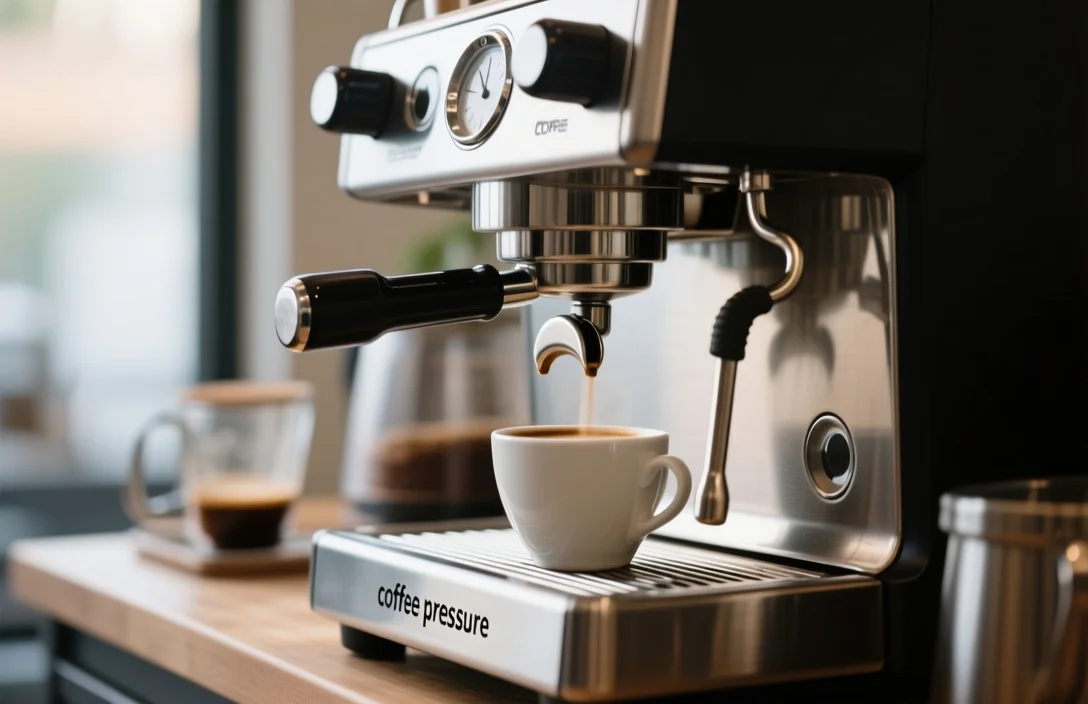
Coffee machine pressure controls how fast water moves through coffee and therefore shapes extraction, crema, and bitterness. The phrase coffee machine pressure appears in this guide because matching pressure to method and grind is the single most direct way to change a shot or cup without swapping beans.
How coffee machine pressure affects extraction and taste
Pressure pushes water through compacted coffee; that pressure-to-flow relationship determines how many soluble compounds dissolve and which ones dominate the cup. Different compounds dissolve at different rates, so a faster through-flow favors acids and bright notes while a slower through-flow brings out sugars and bitter oils.
Extraction also influences body and crema in espresso-style drinks. Crema forms from emulsified oils and entrained gas that the pressure forces out of the grounds and mixes with hot water. Pressure that is too low can make shots thin with weak crema. Pressure that is too high tends to over-extract, producing bitterness and harshness.
Roast level and grind interact strongly with pressure. Finer grind increases resistance so the same pump will produce slower flow and higher extraction. Coarser grind reduces resistance and yields faster flow and lower extraction. Adjusting pressure, grind size, dose, or tamping are the four control points you have; changing one forces adjustments to the others.
Machine design dictates how faithfully set pressure translates to consistent extraction. Machines that regulate brew pressure mechanically or electronically will hold more stable extraction across sequential shots than designs that rely on the user to generate pressure manually. Manufacturer documentation is the only authoritative source for exact setpoints on a given model, so check your manual before assuming any number.
Types of pressure systems in coffee machines and what they mean
Pressure systems vary by mechanism, complexity, and how they allow you to control pressure during a shot. Pump-driven systems, lever mechanisms, steam-driven devices, and gravity-fed drippers are the main categories most home or café users encounter.
Pump-driven systems use an electric pump to push water through the coffee. Electronic controls or a simple on/off pump determine flow, with some machines including a pressure gauge or electronic feedback to modulate output. Pump systems tend to be the easiest for consistent shots because the pump supplies steady force independent of a user’s manual strength.
Lever systems create pressure by a mechanical lever that forces water through the grounds. Users can vary extraction dynamically by modulating lever speed, which gives a hands-on control favored by some baristas. Lever designs require practice to hit consistent flow profiles and can produce a different flavor profile because of variable pre-infusion and ramping.
Steam-driven devices heat water and use steam pressure to force liquid through grounds; these are most common in inexpensive or very small machines. Steam devices generally generate variable and hard-to-control pressure for extraction, so they are less suitable for precision espresso-style shots.
Gravity-fed and immersion brewers operate effectively without forced pressure. Pour-over, drip, and French press rely on gravity or soaking, not machine pressure, to extract. Taste results in these methods are driven by brew ratio, grind, contact time, and water temperature rather than machine-applied pressure.
Table: Common pressure system types and who they suit
| Name | Pressure characteristic | Best for |
|---|---|---|
| Pump-driven (electric pump) | Steady, machine-supplied force; may include gauge or PID control | Home users and cafés wanting consistent espresso shots |
| Lever (manual) | User-variable mechanical pressure; allows dynamic control over ramp and pre-infusion | Enthusiasts who want hands-on control and barista technique |
| Steam-driven | Indirect, variable pressure from steam; limited control | Budget machines or non-espresso uses |
| Gravity/immersion (no pressure) | Extraction by gravity or immersion; pressure not a control variable | Pour-over, drip, and French press drinkers |
How to measure pressure on your machine
Start with the manufacturer’s manual; many models list how pressure is represented and whether the machine reports brew pressure, steam/boiler pressure, or both. Pressure terms are frequently grouped into boiler pressure (for steam) and brew pressure (for extraction), so identify which one the gauge or display refers to before taking readings.
A visible pressure gauge on the front of a machine typically reports either boiler or pump output. Confirm gauge labeling because some machines place both gauges close together; misreading one for the other will mislead any tuning you attempt.
Follow these steps to measure and verify brew pressure:
- Inspect the front or top of the machine for a labeled pressure gauge or digital readout.
- Fill the water tank and warm the machine until normal operating temperature or indicator light appears.
- Lock the portafilter into place with a blind or standard basket and start a shot to see the gauge movement during flow.
- Observe gauge behavior during pre-infusion and the main phase; note whether it holds steady, ramps up, or drops as the shot proceeds.
- Repeat with a standard puck and measure repeatability across three consecutive shots.
A blind basket (a basket without holes) helps detect pump strength and pressure build-up safely. Watch for pressure climbs that do not plateau; that behavior signals restrictive flow or blocked pathways. Test with several grind sizes to understand how your machine’s pump responds to resistance change.
Pressure profiling tools and aftermarket gauges exist that can measure dynamic pressure during the entire shot if you want granular data. Installing such devices can require a technician or at least mechanical aptitude. If you plan to modify plumbing or install inline gauges, consult a technician and the machine manual to avoid voiding warranty or causing safety risks.
Troubleshooting pressure-related problems and fixes
Symptoms of pressure issues often show in flavor and visual cues. Thin, sour, or under-extracted coffee points to low effective pressure or excessive flow. Bitter, burnt, or harsh shots point to over-extraction from slow flow or overly high effective pressure. Visual signs include weak or no crema, sputtering flow, or a shot that starts strong then collapses.
Low pressure causes can include a clogged group head, worn pump, scale or mineral buildup in the boiler or lines, or an incorrect basket or distribution of coffee. Clean the shower screen, group head gasket, and portafilter basket first. Run backflush cycles with a machine-approved detergent for machines designed for backflushing.
If cleaning does not restore flow characteristics, next check water supply and internal scale. Replace the water with filtered water if you use very hard tap water. Scale can restrict flow paths inside the machine and reduce both pump efficiency and boiler heat transfer.
Pump failure or weakening shows as an inability to reach and hold normal pressure during a shot. A trained technician should inspect or replace the pump, especially for high-end pump-driven models. Replacing seals and gaskets can restore normal pressure behavior on machines where age and wear are factors.
Steam and boiler pressure problems often manifest as poor steam power rather than poor extraction. Check the boiler pressure gauge if present and follow manufacturer instructions for boiler maintenance or safety valve servicing. Professional service is recommended for boiler and safety-valve work due to the hazards of high-pressure hot water and steam.
How to tune pressure for specific drinks and grinds
Adjusting how the machine sees resistance is the practical path to tuning extraction without changing your machine’s hardware. Changing grind, dose, distribution, and tamp are the usual levers. Finer grind and heavier dose increase resistance and slow flow; coarser grind and lighter dose decrease resistance and speed flow.
Pre-infusion and ramp control alter how pressure is applied at the start of a shot. Machines that allow a low-pressure pre-infusion then ramp to full pressure can gently saturate a puck to reduce channeling and improve consistency. Using manual lever techniques achieves similar profiles by slow initial descent followed by full-pressure application.
Tamping technique matters for pressure consistency. An uneven tamp creates high- and low-resistance paths that cause channeling; channeling makes pressure effectively lower through the dense channel and higher elsewhere. Use a calibrated tamper or a tamper with a flat base and practice consistent pressure distribution.
For milk drinks, steam pressure and temperature interplay with brew pressure matters because shot strength should balance milk sweetness. Stronger shots may need shorter milk textures to avoid overpowering taste; weaker shots call for denser milk foam or less dilution. Taste and adjust recipe variables rather than only chasing a pressure number you found online for a different machine.
Machines with adjustable pressure profiling let you set pressure curves by software or mechanical overpressure valves. Use profiling features conservatively and document each change so you can compare sensory outcomes versus previous settings.
what to look for in pressure controls
Decide whether you need hands-on pressure control or consistent presets when choosing a machine. Home users who value convenience and repeatability benefit from machines with an electronic pump and either a pressure gauge or PID temperature control. Enthusiasts who want to learn barista techniques will appreciate machines with manual levers or pressure profiling.
Look for clear labeling of which gauge monitors brew pressure and which monitors boiler pressure. Some vendors supply misleading images, so read product manuals and user forums to confirm what the instrument actually reports. Warranty and service availability matter because pressure components like pumps and valves experience wear and must be repaired or replaced during the machine’s life.
Serviceability and spare-part availability should factor into the buying choice. Machines with modular pumps or widely available replacement parts simplify long-term upkeep. Consider the local service ecosystem for the brand and model; machines that require factory-only service can be expensive to maintain.
Water hardness and filtration options should influence your purchase and accessory choices. Hard water increases scale formation and reduces pump and valve life, which indirectly affects the system’s ability to produce consistent pressure. Include a water filtration solution in your buying checklist if your source water is hard or untested.
Budget trade-offs exist between integrated pressure gauges and advanced profiling. Entry-level machines often omit a brew pressure gauge but may deliver acceptable results when paired with good technique. Mid- and high-tier models offer more precise control and feedback, which benefits repeatability and experimentation.
Maintenance routines that preserve pressure performance
Routine maintenance preserves pump life and prevents scale-related pressure changes. Backflushing, shower-screen cleaning, and gasket replacement on a set schedule stabilize flow resistance and avoid pressure drops. A scheduled descale program that follows the manufacturer’s chemistry and intervals prevents hard-mineral scale from narrowing internal passages.
Filter and water changes matter because particulate and dissolved minerals both affect flow. Replace line filters and tank filters per manufacturer guidance. Testable outcomes like flow rate and shot timing provide objective measures that your maintenance is effective; track these over time to notice slow declines before they become failures.
Lubrication and seal checks are common maintenance tasks that keep valves and moving parts sealing correctly under pressure. Replace worn gaskets proactively rather than waiting for leakage or a sudden change in pressure response. Keep a parts log and date stamps on replaced components; machines with documented maintenance histories are easier to service.
Professional servicing at periodic intervals helps with complex pressure-control components like pressure switches, unloader valves, and pump rebuilds. Technician inspection is the recommended option when you see erratic gauge behavior or when your troubleshooting steps – cleaning, filters, and gasket replacement – haven’t fixed the issue.
Common mistakes and what to avoid with pressure management
Relying on a single number for pressure without controlling the other variables creates inconsistent results. Pressure in isolation means little if grind, dose, distribution, and temperature change from shot to shot. Avoid assuming the pressure gauge is gospel; verify what the gauge measures and whether it reflects the moment-to-moment behavior during full flow.
Over-cleaning with aggressive acids or incompatible chemicals can damage seals and surfaces and ultimately impair pressure control. Use only manufacturer-approved cleaners for backflushing and descaling. Excessive force when tamping or using improper tools can deform baskets and group heads, changing flow paths and creating pressure anomalies.
Ignoring water quality accelerates wear on pressure components. Hard water deposits narrow internal lines and valves, which raises resistance unpredictably and shifts extraction characteristics. Running a preventative filtration strategy keeps mineral loading down and maintains consistent pressure over months and years.
Attempting DIY internal pump or boiler repairs without technical training risks safety and warranties. High-temperature, high-pressure systems pose real hazards. If a pump replacement or boiler valve replacement is needed, consult a qualified technician or the manufacturer’s service center.
Practical adjustments
Use a short checklist when you suspect pressure is the issue. Clean the group head and screen, inspect the portafilter and basket for buildup, verify water supply is full and unblocked, try a coarser grind to see if flow increases, and switch to filtered water if you suspect scale.
Quick tests include timing a shot while noting gauge behavior and tasting for sourness or bitterness. A consistent shot time across consecutive pulls signals functional pressure stability. Swap a known-good portafilter and basket if you have access to one; hardware wear in baskets and rims can change flow behavior unexpectedly.
If you have access to another machine of the same model, performing a side-by-side comparison with identical grind and dose isolates machine-specific pressure issues from grind or bean variation. Document settings and results for each test so you can roll back changes confidently.
Short list of routine checks:
- Clean shower screen and gasket monthly or by manufacturer schedule.
- Backflush with recommended cleaner on machines that support it.
- Descale on a predictable interval based on water hardness.
- Replace water filters and softeners per vendor guidance.
- Keep spare seals and gaskets on hand for quick swaps.
FAQ
How does higher pressure change an espresso shot?
Higher effective pressure forces water through grounds more slowly when resistance is present, generally increasing extraction of oils and bitter compounds and producing a fuller body and darker tasting profile. Adjust grind or dose if you increase pressure to avoid over-extraction.
Can I set pressure myself on a home machine?
Some machines provide user controls for pressure or pressure profiling; others do not. Check your manual to see whether your model allows adjustment and follow the manufacturer’s recommended procedure for altering setpoints.
Why is my pressure gauge showing different values during a shot?
Gauges reflect dynamic conditions; a spike during pre-infusion or a drop as grounds compress are normal on many machines. If the gauge never stabilizes or shows erratic jumps, that suggests blockages, pump issues, or a failing gauge.
Does water quality affect machine pressure?
Yes. Hard water deposits narrow internal channels and impair pump flow and valve operation, which changes how pressure translates into extraction. Use filtration and scheduled descaling to maintain consistent performance.
Final verdict
Pressure is the primary mechanical lever your machine uses to shape extraction; learning how it interacts with grind, dose, and tamp is the fastest route to predictable shots. Start by confirming what your machine’s gauges actually measure, then use cleaning, simple tests, and small recipe changes to tune extraction before attempting hardware modifications. Try a systematic test today: run three timed shots with identical grind and dose after a full cleaning, note gauge behavior, and adjust grind one step finer or coarser to see how your coffee responds.

- Espresso Tastes Watery? 10 Common Causes and How to Fix It - October 23, 2026
- 10 Common Coffee Equipment Cleaning Mistakes and How to Avoid Them - October 23, 2026
- 17 Common Coffee Grinder Problems and How to Fix Them - October 23, 2026