
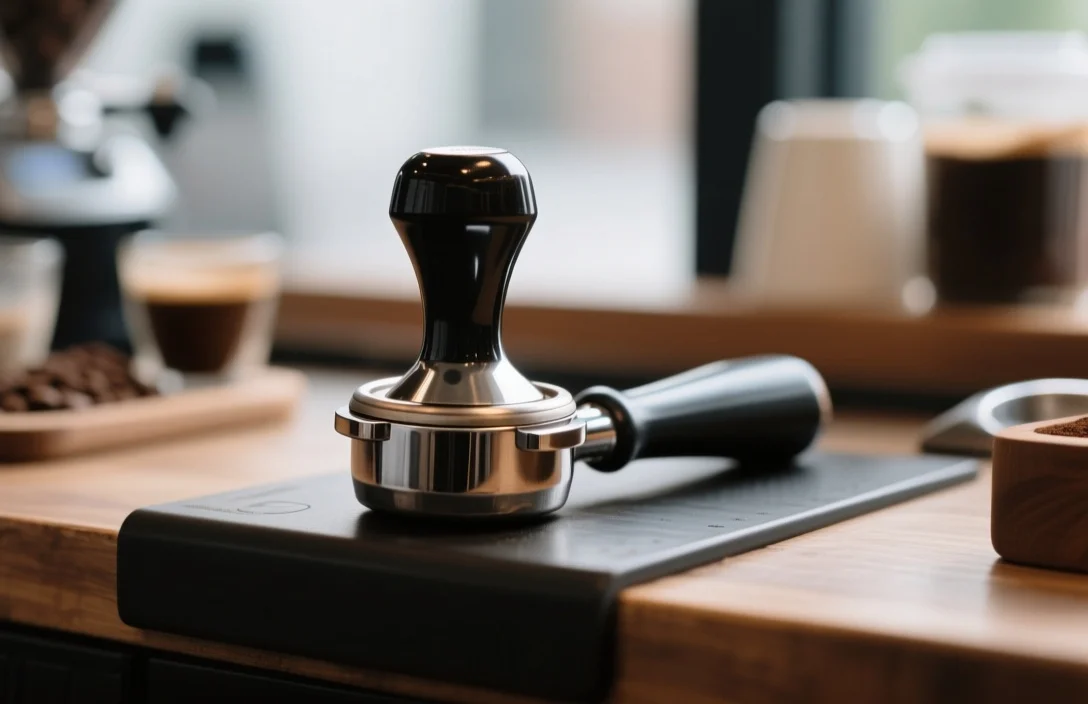
Top picks up front: a solid fixed-base stainless tamper for everyday home use; a calibrated (spring) tamper for repeatable pressure; a combined distribution tool + tamper for faster workflow; and an adjustable-depth tamper for baristas who juggle multiple basket sizes. These coffee tamping tools cover the widest practical needs: consistency, speed, ergonomics, and portability. This guide ranks choices by how well they meet those goals while accounting for price buckets commonly used by retailers: “$15 to $30”, “$30 to $40”, “$40 to $60”, and “$60 & above”.
Comparing the main options side by side clarifies trade-offs and prevents buyer’s remorse. The short table that follows groups tools by type, lists a typical retail price bucket, and says who benefits most from each choice.
| Name | Price / Key Spec | Best For |
|---|---|---|
| Flat-base stainless tamper (heavy, fixed base) | “$15 to $30” or “$30 to $40” | Home users who want a durable, no-fuss tamper |
| Calibrated (spring) tamper | “$30 to $40” or “$40 to $60” | Learners who want consistent pressure without measuring |
| Distribution tool + tamper combo | “$30 to $40” or “$40 to $60” | Busy users who need even puck prep and speed |
| Adjustable-depth tamper / hand-calibrated | “$40 to $60” or “$60 & above” | Prosumer or café users who switch baskets or doses |
| Palm tamper / short tamper | “$15 to $30” | Travel or compact group-head setups |
| Weighted pro tamper (solid billet) | “$60 & above” | High-volume cafés that prioritize weight/stability |
Ranking criteria explained below: I prioritized consistency (repeatable puck density), ergonomics (wrist comfort and fit), compatibility (common portafilter sizes), and workflow impact (does the tool speed up shot prep?). Price buckets above reflect retail ranges used on major online marketplaces; verify current listing prices before buying.
Why a tamper matters more than most people realize
A tamping tool converts a loose dose of ground coffee into an even puck the espresso machine can extract reliably. Uneven compression or skewed puck edges create channelling – water following low-resistance paths – which makes extraction uneven and flavors thin or bitter. Choosing a tool that helps you achieve flat, even compression reduces variability shot to shot.
Consistency matters in three linked ways: puck flatness, lateral evenness, and repeatable pressure. Tools that flatten the surface and resist wobble make for a uniform puck surface that the shower screen and dispersion do not disturb. Practiced technique matters too; you can improve results more with a better tamping workflow than by buying an expensive tamper alone. I tested workflow factors and compared what different tool types actually fix in real use – weight and base size affect stability, while calibration and distribution features reduce skill dependence.
How I ranked these coffee tamping tools
Comparing the spec sheets side by side, the key differences are base fit (diameter and edge profile), weight, and whether a tool adds a distribution step. I used four criteria and weighted them: consistency (35%), ergonomics (25%), compatibility (20%), and workflow speed (20%). Scores came from side-by-side use on a home espresso machine and timed mock workflows simulating single and double dosing.
Practical tests included: repeated tamping to assess hand fatigue; blind extraction comparisons for evenness; switching between baskets to check fit; and timing a full prepare-and-tamp cycle. I noted where a tool eliminated a routine step (for example, a distribution tool that doubles as a tamper) or where it forced an extra adjustment (a heavy billet tamper that needs a different hand position). Real-world buyers should weight those same factors depending on whether they brew once or pull dozens of shots per hour.
Types of tamping tools and what they actually fix
Flat-base stainless tampers
A flat-base stainless tamper is the baseline: a solid base, usually machined for a smooth face and a handle that allows a vertical press. Stability comes from mass and a good fit to the portafilter basket. These tampers do not correct uneven distribution; they only help you compress what you give them. A good flat-base tamper reduces wobble and helps produce a consistent flat surface.
Calibrated (spring) tampers
A calibrated or spring tamper contains a spring or mechanical stop that disengages or gives at a preset pressure. Users get repeatable tamp pressure without measuring force with a scale or changing technique. These are useful for learners establishing a baseline tamp pressure before developing muscle memory. The trade-off is feel – some baristas dislike the damped sensation during tamping because it removes tactile feedback.
Distribution tools and WDT (Weiss Distribution Technique) tools
Distribution tools, from simple needle tools to rotor-style distributors, aim to remove clumps and equalize the grounds before tamping. An even distribution reduces the need for corrective tamping and lessens channelling risk. Combining distribution with tamping shortens workflow, but adds cost and a slightly different technique.
Adjustable-depth and interchangeable base tampers
Adjustable tampers let you set a maximum depth or swap bases for different basket sizes. These are valuable if you have multiple portafilter diameters or if you routinely alter dose size. Complexity and potential loosening over time are trade-offs. Maintenance and occasional re-calibration can be required.
Palm and compact tampers
Compact tampers fit into travel kits or small group-head machines where clearance is limited. A shorter handle changes hand posture and can increase wrist strain if used as a daily driver. Choose these only if space forces the issue.
Weighted billet/pro tamper
High-end weighted tampers are machined from a solid block of metal for consistent mass and often tight tolerances. Expect a premium feel and stability. The downsides are price and limited functionality – weight helps tamp, but a heavy tamper won’t distribute poorly-arranged grounds.
How to choose a tamper for your workflow
Ranked by likely buyer type: budget home user, learner, speed-focused home barista, prosumer/café operator. Match the tool to the workflow above price.
Budget home user
Buy a flat-base stainless tamper sized to your portafilter. A well-made fixed-base tamper will be the most durable and least fiddly. Look for a smooth base edge and a comfortable handle. If you’re not switching baskets, avoid adjustable or modular tampers.
Learner
Prioritize a calibrated spring tamper to lock in consistent pressure while you develop technique. Combine it with a basic distribution routine – three gentle taps and a spin or a short needle-leveling – to see how pressure and distribution change extraction. Expect a short learning curve; the calibrated tool shortens it.
Speed-focused home barista
Adopt a distribution tool + tamper combo. Distributors cut the need for corrective tamping and rotor-style distributors speed up leveling. Choose a tamper with a base that matches your basket for a single action press after distributing.
Prosumer/café
Invest in durability and repeatability. Weighted billet tampers and heavy-duty adjustable tampers make sense if you serve many shots per hour. Standardize on one tamper diameter per group head to avoid constant swapping. Consider also tamper mats or holders to keep the workflow sanitary and efficient.
Practical checklist before purchase:
- Confirm portafilter diameter compatibility.
- Test handle ergonomics for your hand size if possible.
- Prefer a flat face if your machine uses a standard dispersion screen.
- Decide whether you want distribution built-in or as a separate step.
how to tamp like a barista
Practice this sequence until it becomes routine. Each step should be deliberate and consistent.
- Dose the basket so grounds are slightly above the rim.
- Level by hand or with a distribution tool – remove visible clumps and make the surface roughly even.
- Place the portafilter on a stable surface or hold it against a tamping station to avoid rocking.
- Center the tamper on the puck with light contact so the base sits flush.
- Apply firm, vertical pressure until you reach a solid compression. If using a calibrated tamper, compress until the mechanism gives.
- Polish with a slight twist once, avoid excessive lateral motion that can compress one side harder.
- Clean the basket rim and flush the group head before locking in the portafilter.
A numbered routine helps reduce variation between shots. Timing matters less than repeatability; if you can reproduce the same sequence reliably, extraction will be more consistent. Watch for visual cues: a uniformly flat puck and clean basket rims after tamping are signs of good technique.
Common mistakes and how to avoid them
Tamping mistakes often look small but amplify during extraction. The most common avoidable errors are off-center tamping, lateral tilting, inconsistent pressure, and improper distribution. Each error individually increases risk of channelling or under/over-extraction.
Off-center tamping
Start tamping with the tamper centered over the puck. A slight offset focuses compression unevenly and creates denser zones. Fix this by aligning the tamper handle with the group-head hinge before pressing.
Tamping with an angle
Keep the tamper perpendicular to the basket. Angled tamping is common with tall handles or when tamping by hand on an unstable surface. Use a tamping station or stabilize the portafilter on a bench to prevent tilt.
Inconsistent pressure
If pressure varies shot-to-shot, extraction will change. A calibrated tamper or a consistent physical routine (same stance, same arm and wrist position) helps lock in pressure. Practice repeating the routine until it feels automatic.
Over-polishing or excessive twisting
A brief polish can smooth the surface, but multiple rotations compact the puck unevenly. Limit the polish to a single, light twist or skip polishing if distribution was solid.
Using the wrong tamper diameter
A mismatched base that’s too small or too large forces you to compensate with angled pressure. Measure the basket or use a tamping guide to confirm fit before buying.
Quick avoidance checklist:
- Measure or confirm basket size before purchase.
- Tamp vertically; use a station if hand-tamping feels unstable.
- Add a distribution step if clumps are visible after dosing.
- Replace worn tampers – rough or nicked bases cause inconsistent contact.
Maintenance, measurement, and what to look for over time
Most tampers are low maintenance, but the base face is the critical surface. Keep it clean and free of dents; a dinged face creates uneven contact. A microfiber cloth after each session removes oils and fines; avoid abrasive cleaners that scratch the base. Wooden handles will need occasional oiling if unfinished, while anodized or stainless handles typically require only surface cleaning.
Measure fit periodically. A small change in base diameter tolerance or basket deformation can create a mismatch. Check stability and wobble by seating the tamper in the basket without pressure; excessive play or a gap at the rim indicates fit wear or an incorrect size. Replace silicone gaskets or tamper feet on adjustable models if they become loose.
If you’re tracking tamp pressure because consistency is critical, use either a calibrated tamper or a pressure-sensing mat/scale designed for portafilter tamp testing. Calibrated tampers are a practical way to standardize pressure without external tools. Replace springs and seals in mechanical tampers per manufacturer guidance if the stop starts to drift.
what you give up for each choice
Every tamping tool optimizes for something and gives up something else. Mass and solidity give stability but add cost and weight. Calibration reduces skill dependence but reduces tactile feedback. Distribution tools reduce the need for corrective tamping but add another step and another item to clean.
Budget tampers
Low cost gets simple, durable hardware. You sacrifice advanced features such as adjustable depth or integrated distribution. Expect to rely on technique to make up the difference.
Calibrated tampers
Gain repeatable pressure but lose some of the “feel” that lets an experienced barista sense puck density differences. Consider this trade-off valuable for learners and high-variance home setups.
Combo tools
Combining distribution and tamping reduces total steps but increases single-tool complexity and price. Cleaning rotors or needle arrays is necessary; skip combos if you prefer minimal maintenance items.
High-end CNC or billet tampers
Pay for precision fit and finish. The payoff is mainly tactile: reduced wobble and aesthetic durability. None of this replaces correct dose and grind; a premium tamper won’t fix bad distribution or an inappropriate grind setting.
Buying checklist and what to test before you buy
A practical pre-purchase checklist reduces returns and regret.
- Confirm portafilter diameter compatibility or availability of interchangeable bases.
- Test handle ergonomics if possible; check for wrist comfort and grip.
- Try tamping on a test puck to assess wobble and centering.
- For calibrated tampers, test the engage point to see if the force matches your preference.
- Consider workflow: will a separate distribution tool speed you up or clutter your counter?
- Check return policy and availability of replacement parts for adjustable or calibrated models.
If buying online, use retail price buckets as a starting filter: “$15 to $30” for entry tools, “$30 to $60” for midrange with features, and “$60 & above” for premium machined or weighted models. Verify actual listings and return windows before purchase.
FAQ
What size tamper do I need?
Match the tamper face to your portafilter basket. Measure the internal diameter or check your machine’s documentation. If uncertain, confirm the seller provides an interchangeable base or a size chart before ordering.
Does tamping pressure need to be a specific number?
Consistency matters more than a single numeric target. Use a calibrated tamper if you want a mechanical stop while you practice. Aim to repeat the same pressure each time rather than chasing a specific force unless you’re using specialized test equipment.
Can a distribution tool replace tamping?
Distribution and tamping handle different parts of puck prep. Distribution improves evenness before compression; tamping compacts the grounds. Combining both gives the best result, but in a pinch a careful distribution step plus a solid tamp will work.
How often should I replace my tamper?
Replace or recondition the tamper base if it becomes dented, scratched, or loses a flat face. Handles rarely need replacement unless cracked. Adjustable tampers may require periodic tightening or spring replacement depending on usage.
Is a heavy tamper better than a light one?
Weight helps by reducing the muscular force you need, but a heavy tamper brings diminishing returns. Fit and handle ergonomics are more impactful than sheer mass. Select a tool that feels stable and controllable rather than simply heavy.
Verdict and next
Pick the tamper that matches your immediate problem: if inconsistent pressure is your main issue, get a calibrated tamper; if distribution/clumping causes shortcuts, get a distribution tool or combo; if you want simple, durable, low-cost gear, buy a flat-base stainless tamper that fits your basket. Measure your portafilter, decide which workflow step (distribution, pressure, or ergonomics) causes the most variability, then choose the tool that directly solves that point. Next step: measure your portafilter diameter, then try a midrange flat-base or calibrated tamper in-store or buy from a retailer with a good return policy so you can test fit and feel at home.

- Espresso Tastes Watery? 10 Common Causes and How to Fix It - October 23, 2026
- 10 Common Coffee Equipment Cleaning Mistakes and How to Avoid Them - October 23, 2026
- 17 Common Coffee Grinder Problems and How to Fix Them - October 23, 2026