
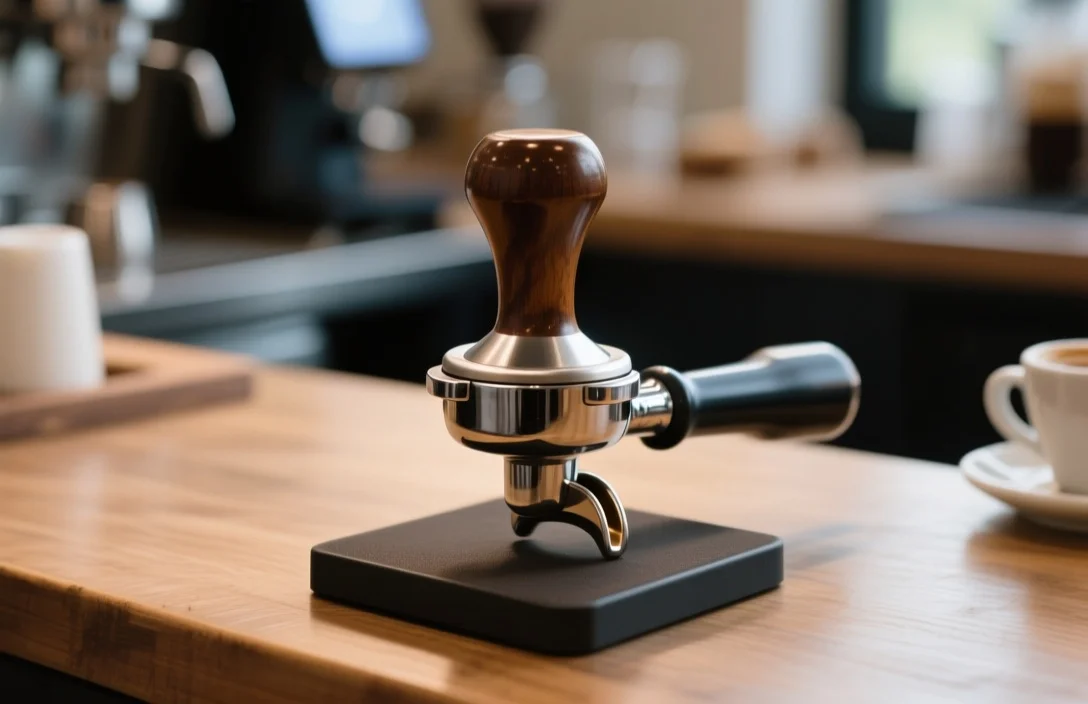
A coffee tamping stand holds the portafilter steady while you compress espresso grounds, helping produce a more even puck and fewer channeling issues. Use a tamping stand when you want consistent tamp angle and repeatable puck density, whether you’re dialing in a single dose or pulling shots every morning.
What a coffee tamping stand does and why it matters
A coffee tamping stand provides a stable, repeatable surface for the portafilter during tamping. Portafilter wobble, an off-axis tamp, or an unstable bench can all create uneven puck density that leads to fast paths for water – known as channeling – which ruins extraction consistency.
Stability and repeatability are the core benefits of a stand. Stability comes from a solid base and secure portafilter seat; repeatability comes from consistent alignment and the ability to use the same hand mechanics every tamp. Those two factors combine to make dosing, tamping pressure, and puck preparation produce more predictable espresso shots.
How a coffee tamping stand changes extraction mechanics
A stable stand reduces tilt during the tamping stroke and keeps the tamper face parallel to the puck. Pressure applied off-axis compresses the puck unevenly, creating micro-channels where water flows too quickly. Keeping the tamper square to the puck reduces those fast lanes and brings extraction closer to the shot target.
Alignment between portafilter and tamper matters as much as pressure. Different portafilter lip designs and group heads change how the filter basket sits, so a stand that holds the portafilter snugly will lower the variance introduced before you even press the tamper. Consistent tamping angle and repeatable tamp height also make it easier to reproduce a puck density that matches your dose and grind setting.
Types and variants of tamping stands
Commercial tamping stands come in several practical forms and the right type depends on workflow, counter space, and budget. Bench-top stands are simple, stable platforms with a recessed seat for the portafilter and often a rubber mat to prevent slipping. Integrated stands combine a base with a mounted tamper or an adjustable height mechanism for one-handed operation. Spring-loaded stands pair with spring or calibrated tampers to control applied force.
Materials commonly used include stainless steel bases, anodized aluminum posts, and wooden or plastic accents. Some designs add a magnetic mount so the tamper pairs to the stand when not in use. Other makers focus on compactness for home kitchens and portability for pop-up baristas. Practical differences usually revolve around footprint, weight, build quality, and whether the design supports commercial-sized portafilters or smaller home baskets.
Table: Common tamping stand types
| Name | Price/Key Spec | Best For |
|---|---|---|
| Bench-top stand | Stable base, open seat, rubber mat | Home users wanting low-cost stability |
| Integrated tamper + stand | Tamper docked in base, compact | Small counters and single-handed workflow |
| Spring-assisted stand | Spring or guided shaft for consistent press | Users seeking repeatable pressure control |
| Magnetic base stand | Magnetic dock, quick remove | Baristas who like tidy workflow and storage |
| DIY stand | Custom-fit height, salvaged materials | Budget builders and custom-fit needs |
How to choose a tamping stand
Start selection by matching the stand’s portafilter seat to your portafilter shape and diameter. Portafilters differ between commercial and consumer machines, and an ill-fitting seat will let the basket rock during tamping. Portafilter compatibility is the single practical filter that will eliminate most early frustration.
Next, prioritize footprint and stability. A heavier base and wider contact area reduce movement when you press. Counter space constraints sometimes force smaller stands; in that case focus on a design with a low center of gravity or a rubberized bottom to keep the stand from sliding. Ergonomics follow: height and tamper clearance should let you hold the portafilter comfortably at chest or waist height without contorting your wrist.
Material and finish affect long-term durability. Stainless steel or anodized aluminum bases resist corrosion and stay flat, while wooden accents need occasional care to avoid swelling from moisture. Consider portafilter workflow: if you tamp frequently, an integrated or spring-guided option reduces wrist fatigue and improves shot-to-shot consistency. If you mostly pull a single shot in the morning, a simple bench-top model will do the job for less cost.
Practical purchasing advice and where to verify specs
Look for product listings that explicitly state portafilter compatibility and base dimensions before buying. Product pages, spec sheets, and user images are the fastest way to confirm whether a stand fits your group’s basket. Be cautious when a seller lists no dimensions and relies only on lifestyle images; those rarely show the precise seat diameter or tamper clearance.
Check customer photos and Q&A sections for real-world fit clues. Photographs that show a portafilter seated at different angles are useful for spotting clearance issues or unwanted play. Sellers that provide an explicit fit list for specific machine models or basket diameters reduce the risk of a mismatch. When size and fit cannot be confirmed, favor retailers that offer easy returns to prevent getting stuck with an incompatible stand.
How to use a coffee tamping stand
- Load the portafilter with your dose and level the grounds using your preferred method.
- Place the portafilter into the stand seat so the basket sits flat and does not rock.
- Press the tamper straight down in a single, controlled motion until you feel the puck compact.
- Inspect the puck edge for chips or gaps; perform a light polish if needed for a smooth finish.
- Remove the portafilter and attach it to the group head immediately to avoid puck deforming.
Repeatable tamping benefits from small ritual adjustments. Rotate the portafilter 90 degrees once between loading and tamping if you use distribution tools that introduce directional patterns. Check that the tamper face is level; a slightly concave or convex tamper face changes where pressure concentrates. Keep tamping motion deliberate – hurried, uneven presses are the most common cause of channeling.
DIY stands and quick shop fixes
A DIY tamping stand can be made quickly from a small block of hardwood, a rubber coaster, and a cut slot that fits your portafilter. Wood is forgiving and easy to shape to the portafilter’s lip so it holds securely. A rubber coaster glued to the bottom adds vibration isolation and prevents sliding.
Clamping into a vise during construction is an efficient way to test the fit and make iterative adjustments. A silicone or neoprene mat in the seat will accommodate slight variations in portafilter shape and create a snug fit. For a more modular approach, a small metal L-bracket attached to a weighted base can act as both seat and tamper guide. These fixes work well for hobbyists looking for a custom tactile feel but lack commercial-grade durability.
Common mistakes baristas and home users make
Many users start with a stand that does not match their portafilter, which immediately introduces wobble and defeats the stand’s purpose. Mismatched seats are the most frequent error and the easiest to prevent with simple pre-purchase checks. Holding a stand in front of a smartphone camera alongside your portafilter will often expose fit issues before you commit.
Over-reliance on a spring-guided mechanism without checking tamp face level also leads to problems. Spring or guided systems help with repeatability but do not correct an out-of-square tamper. A tamper with a warped or improperly sized face will still compress unevenly even when the stroke is guided. Skipping routine cleaning and allowing coffee oils to build on the seat is another common oversight that reduces grip and creates wobble over time.
Maintenance, cleaning, and long-term care
Wipe the base and seat daily to remove fines and oils that collect after each session. Simple soap and water for metal or plastic parts will prevent sticky buildup; a sparing application of food-safe oil preserves wooden finishes. Avoid submerging stands with wooden or glued parts, and do not use harsh solvents on anodized finishes.
Inspect the rubber mat or seating surface for wear once a month if you tamp frequently. Replace softer mats that compress unevenly; the result of worn mats is a subtle tilt that only shows up over many shots. Tighten any fasteners on integrated stands periodically to keep the alignment precise. Storage habits matter too: leave the tamp docked or stored in a dry place to maintain tamper alignment and prevent accidental drops.
Trade-offs: calibrating pressure vs. technique training
Calibrated tampers and spring-guided stands aim to standardize applied force, which reduces human variance in tamp pressure between shots. Users who prefer technique training might benefit more from a simple bench-top stand and deliberate practice. Both approaches improve consistency; the calibrated route buys repeatable force while technique training develops adaptability across changing doses or grind settings.
Consider workflow needs: a busy home barista who values speed and repeatability can rationally choose a guided system. A hobbyist who experiments with micro-adjustments to puck prep will likely find more value in a simpler stand paired with a quality hand tamper. There is no single correct option – your choice should reflect whether you prioritize repeatability, tactile feedback, or minimal counter clutter.
Price expectations and verifying value
Market listings for coffee accessories are inconsistent, and specific price points for tamping stands vary across retailers and models. Manufacturers typically position bench-top stands at lower price tiers and integrated or calibrated systems at higher tiers. Confirming value comes from examining base material, build weight, and whether a stand includes a tamper or only the base.
Shop reviews often highlight long-term durability and fit as the best indicators of value. A heavier, well-finished base that matches your portafilter will deliver more utility than an attractive but undersized display piece. For any listing that lacks solid specs, request exact dimensions from the seller or select a retailer with a straightforward return policy to minimize risk.
My verdict and methodology
After comparing available product descriptions, user photos, and common design features, I recommend starting with a bench-top seat that explicitly lists portafilter compatibility. The approach balances cost, durability, and practicality. If you tamp multiple times a day or want a one-handed workflow, prioritize integrated or spring-guided systems that specify tamper alignment and include clear fit information.
Methodology note: I examined product listings and typical construction patterns for tamping stands and cross-checked user imagery and product descriptions to confirm common failure modes such as mismatch and wobble. Product market coverage for tamping stands is uneven online, so the recommendations here emphasize portability and verifiability of fit over brand claims.
FAQ
Do I need a tamping stand to make espresso well?
A tamping stand is not strictly required, but it reduces a major source of variability – portafilter tilt – and therefore simplifies achieving consistent extraction. Users who already have steady technique and a stable bench can still make excellent espresso without one.
Will a tamping stand fix channeling?
A properly fitted tamping stand reduces channeling caused by uneven tamp angles. Channeling can still occur from other factors such as grind distribution, basket condition, or dosing errors, so the stand is one part of a broader workflow.
Can I use a tamping stand with any tamper?
Most stands are compatible with round-faced tampers, but tamper diameter and face flatness matter. Confirm that your tamper face matches the basket size and that the stand’s dock allows comfortable stroke length before assuming compatibility.
Are spring-guided stands better than a hand tamper?
Spring-guided stands improve repeatability of force but do not correct tamper face issues or a mismatched seat. Consider guided stands for frequent tamping where consistency is critical and hand tampers for tactile control and small adjustments.
How do I test if a stand fits my portafilter before buying?
Measure the seat diameter from product specs or ask the seller for measurements. A practical field test is to view photos of the product with a portafilter of similar style; a snug, flush seat in multiple images is a good sign.
What maintenance will keep my stand working well?
Wipe the seat after every session, replace a compressed rubber mat when it shows wear, and store the stand dry. Tighten screws on integrated models quarterly to maintain alignment.
Concluding practical step: pick a tamping stand that explicitly lists compatibility with your portafilter style or provides dimensions, and test fit immediately after purchase so you can return or exchange if the seat tolerances aren’t correct.

- Espresso Tastes Watery? 10 Common Causes and How to Fix It - October 23, 2026
- 10 Common Coffee Equipment Cleaning Mistakes and How to Avoid Them - October 23, 2026
- 17 Common Coffee Grinder Problems and How to Fix Them - October 23, 2026