
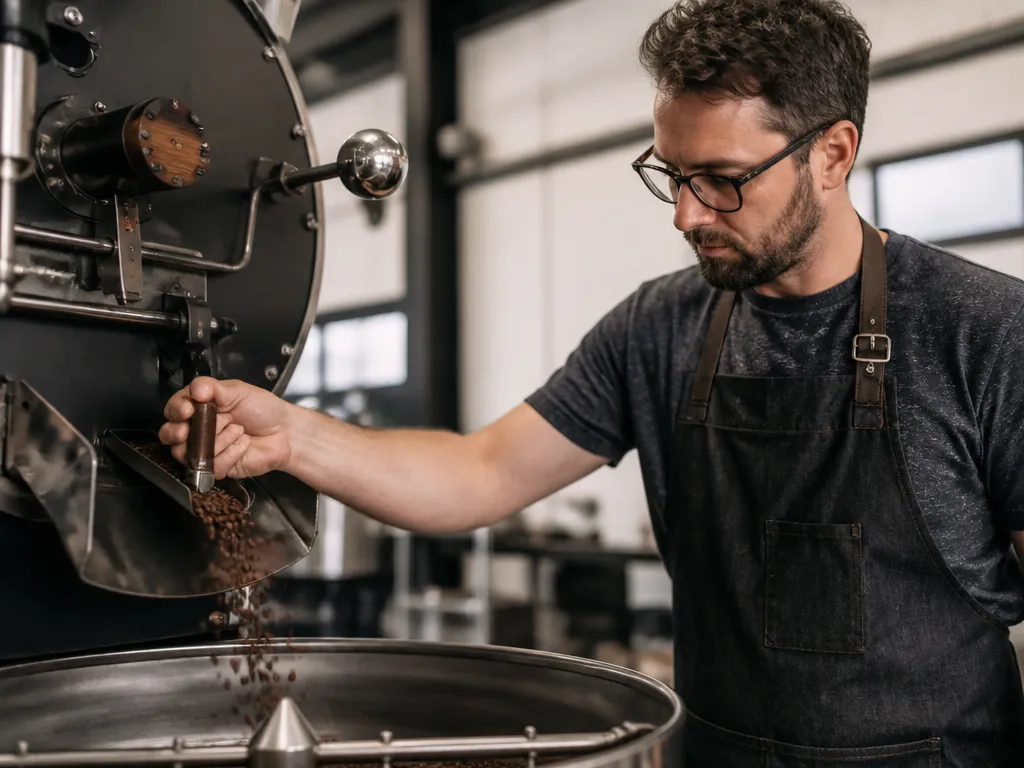
Coffee roasting turns green coffee beans into the fragrant, drinkable coffee you buy. Controlled heat drives off moisture, changes the bean’s structure, and triggers chemical reactions that create flavor and aroma. The roaster manages heat, airflow, agitation, and time until the beans reach the desired roast level, then cools them quickly to stop the process.
Roasting starts with drying and warming. As the beans heat, they lose water, expand, and eventually crack. After first crack, the roaster controls the development phase, stopping before or around second crack for lighter roasts or continuing further for darker flavors. Once cooled, the beans release carbon dioxide during degassing, so they often need a rest period before brewing.
Key Takeaways
- Roast progress is heat-managed. You drive moisture out while controlling temperature and time to reach a target flavor.
- First crack is a key milestone. It signals major structural changes in the bean and usually marks the start of the development phase.
- Second crack indicates deeper roasting. Extending the roast into this stage can produce heavier, more bitter, or smoky flavors.
- Maillard reactions shape early flavor. They create many brown, toasty, nutty, and bread-like notes as bean temperatures rise.
- Cooling stops the roast quickly. Rapid airflow cooling limits carryover cooking and helps stabilize the final roast.
- Degassing affects extraction. Freshly roasted coffee releases carbon dioxide for days, which can change espresso and filter results.
How Coffee Roasting Works From Green to Roast
Coffee roasting heats green beans in a drum or fluid-bed roaster until heat-driven chemical reactions create new flavors and aromas. The roaster then stops the process at the chosen roast level. Green beans are dense and relatively dry, so successful roasting depends on controlling how heat moves through the beans, not simply running the roaster for a set length of time.
A roaster transfers heat through hot air, contact with the drum, or both. Water inside the green bean turns into steam and escapes, changing the bean’s weight, structure, and heating behavior. As the roast continues, the beans expand, darken, and develop new aromas while their internal chemistry changes.
Three processes happen at the same time:
- Moisture loss removes water and changes the bean’s structure.
- Temperature rise carries heat from the surface into the center of each bean.
- Flavor chemistry creates aroma compounds as the beans reach different temperature ranges.
The main controls are drum temperature, airflow, drum speed, and roast time. Together, they determine how evenly the beans heat and how quickly the roast moves toward its target.
The journey from green bean to finished roast follows this sequence:
- Green coffee starts: the beans are hard and smell grassy, with high moisture compared with roasted beans.
- Drying removes moisture: steam escapes and bean mass drops slightly.
- Cracking events change the structure: the beans expand and may reach first crack and, in darker roasts, second crack.
- Development sets flavor: the roaster controls how long the beans remain in the period after first crack.
- Cooling ends the roast: the beans are dumped from the roaster and cooled rapidly.
- Degassing prepares the beans for brewing: carbon dioxide escapes before the coffee reaches its preferred flavor and extraction balance.
Home roasting works better when you target a repeatable flavor profile rather than one fixed time. The same roast time can produce different results because bean density, moisture, batch size, roaster design, and ambient conditions all affect heat transfer.
What Happens During the Main Roast Heat Stages
Early roasting is dominated by warming and moisture loss. As the bean temperature climbs, more energy goes into browning reactions and thermal breakdowns that create flavor compounds and change the beans’ color.
During the first part of the roast, the beans absorb energy while water leaves them. Time to first crack provides a useful rough reference, but it does not tell the whole story. Moisture levels, bean size, density, and the amount of heat reaching the batch all affect how quickly the beans progress.
As the beans heat further, browning reactions and thermal breakdowns produce aromas that may resemble toast, nuts, caramel, or darker roasted flavors. The roaster’s job is to keep the roast moving steadily while avoiding a heat surge that scorches the outside or produces harsh flavors.
The stages are easier to recognize through several observable changes:
- Drying stage: the beans lose moisture, smell grassy or hay-like, and begin warming throughout.
- Light browning stage: toasty aromas appear and the beans shift from green to tan or light brown.
- Crack transitions: first crack, often similar to popcorn popping, signals a major structural change.
- Development stage: the roaster shapes the final flavor during the period after first crack.
- Finish and stop: the beans are removed from the heat and cooled before they roast beyond the target.
Drum roasters expose the beans to hot air and heated drum surfaces. Fluid-bed roasters rely mainly on moving hot air to heat and agitate the beans. Both designs follow the same basic physics: heat must move through the bean at a controlled rate without scorching the surface.
Exact timing rules such as “always stop at X minutes” rarely transfer well between coffees or roasters. Watch crack timing, color, aroma, and the final cup, then adjust the roast based on what you taste.
How Maillard Reactions and Caramelization Build Flavor
Maillard reactions and caramelization create many of the flavors associated with roasted coffee. Maillard reactions generally become active as the roast warms beyond the drying stage, producing bread-like, nutty, and toasty notes often associated with light and medium roasts. Caramelization involves the thermal breakdown and transformation of sugars, adding sweetness and deeper brown flavors as the roast progresses.
Brown color alone does not guarantee good flavor. Beans can darken while developing unevenly, especially when heat is too aggressive and scorches the outside before the interior catches up. The balance of time and temperature matters as much as the final color, so two beans that look equally dark can taste very different.
Maillard reactions involve amino compounds and sugars reacting at elevated temperatures. Caramelization specifically describes the heat-driven transformation of sugars. Together, these processes create many of the aroma compounds that contribute to the complexity of roasted coffee.
The bean’s changing structure affects these reactions. As moisture leaves and the bean expands, its internal pathways change and heat penetrates differently. Poor control can leave the outside dark while the inside remains underdeveloped.
Two common home-roasting mistakes occur near the end of the roast:
- Moving too fast through the end of the roast can produce harsh or flat flavors.
- Extending development too long after first crack can push sweetness toward bitterness and smoky notes.
Drying Phase and What First Crack Changes
The drying phase removes moisture and warms the entire green bean. The bean temperature usually rises steadily while the aroma shifts from grassy toward hay-like and mildly toasty. The beans lose a small amount of mass as water escapes, so roast progress is measured through changes in aroma, color, sound, and behavior rather than time alone.
First crack is the most recognizable milestone because it is audible. As water turns to vapor, pressure builds inside the bean. The bean expands and its structure changes until it produces a series of popping sounds, often compared with popcorn.
First crack changes more than the sound of the roast. The bean becomes more porous, and its expansion and moisture loss affect how quickly heat moves through it. The roast can accelerate after first crack if power and airflow are not managed carefully.
What happens after first crack has a major effect on the final cup:
- Stopping at or near first crack usually produces a lighter roast with more acidity and grain-like clarity, depending on the origin.
- Continuing beyond first crack adds brown flavors and body while reducing perceived acidity.
- Extending the roast much further increases darker roasted flavors and the risk of bitterness or smoke.
Coffee does not respond identically from batch to batch. Dense beans may reach roasting milestones differently from lighter or more fragile lots, and origins vary in their sugar and moisture profiles. The same target roast can therefore taste different across coffees.
Second Crack, Development Time, and Roast Level
Second crack marks a deeper stage of roasting in which the bean’s internal structure continues changing and thermal breakdown becomes more intense. Many light and medium roasts stop before second crack to preserve sweetness, acidity, and origin character.
Development time is the period after first crack when the roaster determines much of the final roast level. Two coffees can have a similar surface color but taste very different if one spent longer in development. Longer development generally increases roast character and can add bitterness when pushed too far. Shorter development tends to preserve brightness and aromatic complexity.
Roast level is the result of the entire heat path through the bean, not simply a light-to-dark color scale. A gentle, steady roast can create a cleaner dark profile than a fast, high-heat roast. The label “medium-dark” can describe different flavor results depending on how the roast reached that color.
The usual flavor progression looks like this:
- Light roast, often before or just around first crack: more acidity and origin character, with less roast-driven sweetness.
- Medium roast, after first crack with moderate development: more balance, caramel, body, and toast.
- Dark roast, approaching or beyond second crack: heavier roast flavors, with smoky or bitter notes if the roast goes too far.
Second crack provides a useful warning that the roast is entering a deeper structural change. If you hear it, slow the roast or stop it quickly if your goal is a lighter profile. Once second crack becomes pronounced, the beans can overshoot the target quickly.
How Airflow, Drum Speed, and Heat Transfer Affect Flavor
Airflow and drum speed determine how evenly heat reaches the beans. In a drum roaster, drum speed keeps beans moving so they do not sit against hot spots. Airflow carries heat around the coffee while removing moisture, smoke, and volatile compounds.
Low airflow combined with aggressive heat can produce uneven development and scorching. Excessive airflow or excessive early power can also change how the beans dry and heat, producing different sweetness and aroma profiles. Neither maximum heat nor maximum airflow is automatically better.
The basic goal is consistent surface heating and internal warming. Air improves heat transfer and carries moisture away. Drum movement or hot-air agitation helps each bean contact the heated environment evenly.
Drum speed and airflow also affect crack timing and other roast landmarks. A roaster that mixes beans more aggressively may reach first crack at a different time from a slower-mixing setup, even when the displayed temperature looks similar. A recipe that works on one roaster may therefore fail on another.
Use these symptoms to guide adjustments:
- Uneven roasts: change drum speed and confirm that the beans tumble consistently.
- Baked or flat flavors: examine late-stage heat and airflow during development.
- Harsh flavors after reaching crack: reduce post-crack heat or improve cooling speed.
- Underdeveloped flavors: extend development after first crack in small increments.
Displayed bean temperature is useful, but it is not the whole picture. Sensors can lag or produce different readings depending on their placement and the airflow pattern. Taste remains the final judge, so use temperature data alongside crack timing, appearance, aroma, and brew results.
Cooling, Degassing, and When Coffee Is Ready to Brew
Cooling stops the roast before residual heat pushes the beans past the intended level. Dump the beans into a cooling tray or use forced air to lower their temperature quickly and evenly. The flavor-forming reactions continue while the beans are hot, so slow cooling can make a roast darker and more bitter than planned.
Degassing begins after cooling. Freshly roasted coffee releases carbon dioxide that remains trapped inside the beans. That gas affects brewing because it can change how water moves through the grounds and how extraction develops. Espresso and filter coffee may taste different during the first days after roasting even when the grind and recipe stay the same.
Coffee is technically brewable immediately after cooling, but many roasters wait several days for a more stable, less gassy cup. The preferred rest period depends on taste and brew method. A consistent rest window is more useful than following a universal calendar because it makes different roasts easier to compare.
Resting also reduces variation between shots or brews. If you are testing a change in development time, using coffee at different ages can obscure the result. Keeping the rest period consistent gives the comparison a better chance of revealing what the roast actually changed.
Use these practices after each roast:
- Cool quickly to limit over-roasting from residual heat.
- Record cooling time because it can affect the final roast level.
- Use a consistent rest window for repeatable brewing results.
- Treat espresso as more sensitive to freshness than many filter recipes.
Harsh or muddled coffee may result from overdevelopment, slow cooling, or brewing too soon after roasting. Flat or overly sharp coffee may be underdeveloped or may need more time to stabilize.
FAQ
How long does it take to roast coffee from start to finish?
Most coffee roasts take minutes rather than hours. For many home and small roasters, the full process commonly takes around 8 to 15 minutes, depending on batch size, roaster type, and how quickly heat moves through drying and development. Total time matters less than when first crack occurs and how long the beans develop afterward.
What causes first crack in coffee?
First crack occurs when steam pressure and structural changes build inside the bean during roasting. As water turns to vapor and the bean expands, its structure gives way with an audible crack, often like popcorn popping. The change also affects heat movement through the bean, so decisions after first crack strongly influence the final flavor.
Is it safe to roast coffee at home without special equipment?
Home roasting is generally safe with proper ventilation and careful handling, but it is not risk-free. Roasting produces smoke and chaff, and the equipment and beans become very hot. Use a safe setup that can exhaust smoke, avoid roasting indoors without adequate ventilation, and never leave the roaster unattended.
How do I choose the right roast level for brewing?
Choose the flavor profile you want, then use development time after first crack to guide the roast. Light roasts usually emphasize acidity and origin character. Darker roasts emphasize roast flavor and can reduce perceived brightness. Many people find a medium range easier to dial in for espresso, but the best level depends on the coffee and your brewing recipe.
Does degassing mean I should wait days before brewing?
Degassing often improves brewing consistency during the first days after roasting, especially for espresso. Resting can produce more stable extraction and reduce gassy flavors. You can brew immediately after cooling, but if your shots or brews vary noticeably, use the same rest period each time for that brew method.

- Unlocking the Venti: Discover the Perfect Shot Count for Your Drink - October 13, 2026
- Unpacking the Buzz: Caffeine Levels in Café Bustelo Espresso - October 13, 2026
- How to Fix Bitter Coffee: 10 Expert Ways to Improve the Taste - October 4, 2026