
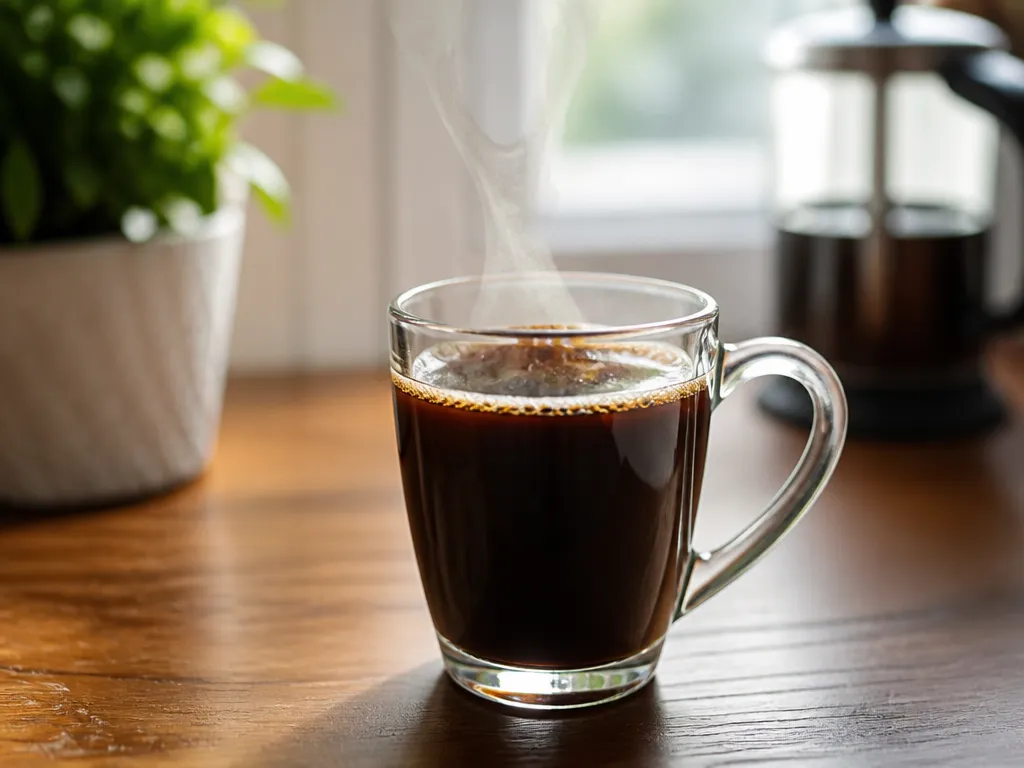
Folgers instant coffee delivers 50 to 90 milligrams of caffeine per teaspoon. This range shifts based on the roast level and how tightly you pack the spoon. A standard 8-ounce cup made with two teaspoons lands between 100 and 180 mg, providing enough alertness for most people without triggering the jitters common in high-potency brews. Pinning down this number helps you manage your daily stimulant intake without guessing.
Classic Roast sits squarely in the middle of that 50-90 mg spectrum. Darker roasts often dip slightly lower because the beans lose density during extended heating, meaning a teaspoon holds less actual coffee mass. While this figure is generally lower than a comparable cup of drip-brewed coffee, the gap narrows if you heap your spoon or use three teaspoons instead of two.
Key Takeaways
- Typical caffeine range. One level teaspoon contains 50 to 90 mg of caffeine.
- Serving size impact. Most drinkers use two teaspoons per cup, totaling 100 to 180 mg.
- Roast influence. Darker roasts may deliver slightly less caffeine by volume due to bean expansion.
- Brewed comparison. Instant coffee usually has less caffeine per ounce than standard drip coffee.
- Dosing consistency. Instant granules offer more predictable caffeine levels than variable home-brewing methods.
Folgers instant coffee caffeine content per serving
A single teaspoon of Folgers instant coffee typically holds between 50 and 90 milligrams of caffeine. This variance stems from bean density, roast duration, and specific product formulations. Since most consumers scoop rather than weigh their coffee, understanding the volume-to-caffeine ratio is practical. A heaping teaspoon naturally delivers more stimulation than a level one.
The standard recommendation for an 8-ounce cup is two teaspoons of granules. Using this ratio, a typical mug contains roughly 100 to 180 milligrams of caffeine. This dose triggers alertness in most adults but stays below the threshold that causes severe anxiety for average users. Individual sensitivity dictates how this amount feels; some may need only one teaspoon, while others require three.
Adding a third teaspoon pushes the total to 150-270 milligrams, approaching the upper limit many health organizations suggest for a single sitting. “Instant” does not mean “weak.” The concentration of caffeine in the dry granules is high because manufacturers have removed all the water.
Varieties within the Folgers line show slight differences in caffeine density. Classic Roast serves as the baseline for these estimates. Decaffeinated versions contain trace amounts, usually under 5 milligrams per serving. Always check the label if you strictly monitor your intake, as formulations can shift over time.
Caffeine levels in Folgers vs brewed coffee
Brewed drip coffee generally packs more caffeine per ounce than instant coffee. A standard 8-ounce cup of home-brewed drip averages 95 to 165 milligrams. This overlaps with the lower end of the instant range but often exceeds it when strong brewing methods are used. The difference lies in extraction efficiency and the coffee-to-water ratio used during preparation.
Instant coffee starts as concentrated brewed coffee before manufacturers remove the water via freeze-drying or spray-drying. Some caffeine dissipates during dehydration, resulting in a final product slightly less potent by weight than fresh grounds. However, since you control the powder amount, you can easily match the strength of drip coffee.
To match a strong cup of drip coffee (150 mg), use about two level teaspoons of Folgers instant. If you prefer a weak drip coffee (95 mg), one and a half teaspoons of granules will suffice. The convenience of instant coffee allows precise adjustment without changing grind size or brew time.
Table: Caffeine Comparison (8 oz Cup)
| Coffee Type | Typical Caffeine (mg) | Variability |
|---|---|---|
| Folgers Instant (1 tsp) | 50 – 90 | Medium |
| Folgers Instant (2 tsp) | 100 – 180 | Medium |
| Drip Brewed (Standard) | 95 – 165 | High |
| French Press (Strong) | 120 – 180 | Medium |
| Espresso (1 shot) | 63 – 75 | Low |
Variability in drip coffee comes from bean origin, grind consistency, and water temperature. Instant coffee eliminates these variables. Every teaspoon from the same jar carries nearly identical caffeine content. This predictability benefits anyone tracking daily stimulant intake for health or performance reasons.
Comparing Folgers to other instant coffee brands
Folgers sits in the mid-range for caffeine content among major instant brands. Premium specialty instant coffees, often marketed as “micro-ground” or “freeze-dried single-origin,” may boast higher caffeine densities. These products frequently use 100% Arabica beans, which carry different caffeine profiles than the Robusta blends found in budget options.
Robusta beans contain nearly twice as much caffeine as Arabica beans. Brands using high percentages of Robusta produce more stimulating instant coffee. Folgers primarily uses Arabica in its premium lines, contributing to a smoother taste and moderate caffeine levels. Budget-friendly competitors may blend in Robusta to cut costs and boost potency.
Brand comparisons reveal subtle gaps. Nescafe Clasico, for instance, reports similar levels to Folgers, ranging from 60 to 80 mg per teaspoon. Store-brand instant coffees vary widely, with some containing as little as 40 mg per teaspoon. Without lab testing every batch, general industry averages serve as the best guide.
Price does not always correlate with caffeine content. An expensive freeze-dried option might taste superior but hold the same caffeine as a cheaper spray-dried version. Processing methods affect flavor retention more than caffeine stability. Caffeine is a stable molecule that survives commercial dehydration well.
Seek maximum caffeine by looking for labels reading “extra strength” or those explicitly stating Robusta content. Folgers offers “Black Silk” or dark roast options, which provide bolder flavor but not necessarily more caffeine. Darker roasts can sometimes hold slightly less caffeine by volume due to bean expansion during the roasting process.
Factors affecting caffeine in instant coffee
The amount of powder you use drives the caffeine count in your cup. Scoop size varies significantly between users. A casual dip might yield 1.5 teaspoons, while a deliberate scoop could pack 2.5. This 60% difference in volume translates directly to a 60% swing in caffeine intake.
Bean type remains another critical factor. Robusta beans outpace Arabica in caffeine content. Folgers blends are proprietary but generally lean toward Arabica for flavor. If a brand alters its blend ratio, the caffeine content shifts, making exact numbers difficult to pin down without current lab data.
Processing method impacts flavor more than caffeine. Freeze-drying preserves volatile aromatics better than spray-drying, yet both retain caffeine effectively. Loss during processing is minimal, usually under 5%. Consequently, the original brew strength before dehydration determines final potency.
Water temperature plays a minor role compared to ground coffee. Instant coffee dissolves in cold water, but hot water ensures complete dissolution. Using boiling versus warm water won’t significantly change caffeine content because the factory already extracted it.
Storage conditions degrade flavor over time, but caffeine remains stable. An old jar of Folgers holds the same caffeine content as a new one, even if it tastes stale. Moisture causes clumping, making accurate measurement difficult and leading to inconsistent dosing.
Measuring caffeine in Folgers Classic Roast
Measuring caffeine at home requires specialized equipment. You cannot taste caffeine reliably; it is only mildly bitter and masked by other compounds. Reliance on standardized estimates is necessary. For Folgers Classic Roast, the industry standard estimate is 60 to 80 mg per teaspoon.
Use a proper measuring spoon rather than a random kitchen utensil for consistent dosing. Kitchen teaspoons vary in size and shape. A standardized 5-milliliter teaspoon ensures you know exactly how much powder you consume. Level off the spoon for a baseline measurement.
To reduce caffeine without sacrificing volume, mix half a teaspoon of regular Folgers with half a teaspoon of decaf. This creates a custom blend with roughly half the caffeine. Decaf instant coffee still contains trace caffeine, usually 2 to 5 mg per teaspoon, allowing fine-tuned control.
Digital scales measuring grams offer higher accuracy than volume. One teaspoon of instant coffee weighs approximately 1.8 to 2 grams. Knowing the caffeine content per gram (typically 30-40 mg/g for instant coffee) lets you calculate your dose precisely, useful for athletes or those with strict medical limits.
“Classic Roast” is a medium roast balancing flavor and caffeine. Darker roasts like “Black Silk” feel stronger due to bold flavor notes, but their caffeine content per gram is similar or slightly lower. Lighter roasts retain marginally more caffeine by weight, though the difference is negligible for most drinkers.
Health implications of Folgers caffeine intake
Caffeine acts as a central nervous system stimulant by blocking adenosine receptors in the brain, preventing fatigue signals and increasing alertness. Most healthy adults can safely consume up to 400 milligrams daily. This equals about two to three cups of Folgers instant coffee, assuming two teaspoons per cup and using moderate caffeine content.
Exceeding this limit invites side effects like insomnia, nervousness, restlessness, and stomach upset. Individuals with anxiety disorders or heart conditions may react to much lower doses; even 100 milligrams can cause jitters. Know your personal tolerance.
Pregnant women should limit intake to 200 milligrams per day – roughly two cups of Folgers made with two teaspoons each. Excessive caffeine during pregnancy links to low birth weight and other complications. Consult a healthcare provider for personalized guidance.
Caffeine has a half-life of 3 to 5 hours in the average adult. A 4 PM cup leaves half that caffeine in your system by 7 to 9 PM, potentially interfering with sleep quality even if you feel ready for bed. Avoid instant coffee in the late afternoon if sleep is an issue.
Instant coffee also contains antioxidants like chlorogenic acid, which offer benefits such as reduced inflammation. While caffeine grabs attention, the antioxidant profile adds value to moderate consumption. Balancing these benefits against overconsumption risks keeps your habit healthy.
FAQ
How much caffeine is in one teaspoon of Folgers instant coffee?
One teaspoon contains approximately 50 to 90 milligrams of caffeine. The exact figure depends on the specific roast and how densely the powder packs into the spoon. Classic Roast typically falls in the middle of this range.
Is Folgers instant coffee stronger than drip coffee?
No, Folgers instant coffee is generally weaker per ounce than standard drip coffee. However, since you control the powder amount, you can brew a cup just as strong. Two teaspoons of instant coffee roughly equal one cup of average drip brew.
Does dark roast Folgers have more caffeine?
No, dark roast Folgers does not have more caffeine. In fact, dark roasts may have slightly less caffeine by volume because beans expand during roasting. The bold flavor often mimics intensity, but the stimulant content is similar or lower.
How can I reduce the caffeine in my instant coffee?
Mix regular instant coffee with decaffeinated instant coffee. A 50/50 blend cuts the caffeine in half. You can also simply use less powder per cup. Note that decaf Folgers still contains trace caffeine, usually under 5 mg per teaspoon.
Is it safe to drink Folgers instant coffee every day?
Yes, daily consumption is safe for most adults. Limit total daily intake to 400 milligrams of caffeine. This equals about two to three cups made with two teaspoons each. Monitor your body for signs of sensitivity.

- Are Pod Coffee Machines Healthy? The Unfiltered Truth About Your Daily Cup - September 27, 2026
- Does Gatorade Have Caffeine? Here’s What’s in Each Type - September 26, 2026
- Does Powerade Have Caffeine, or Is That a Myth? - September 26, 2026