
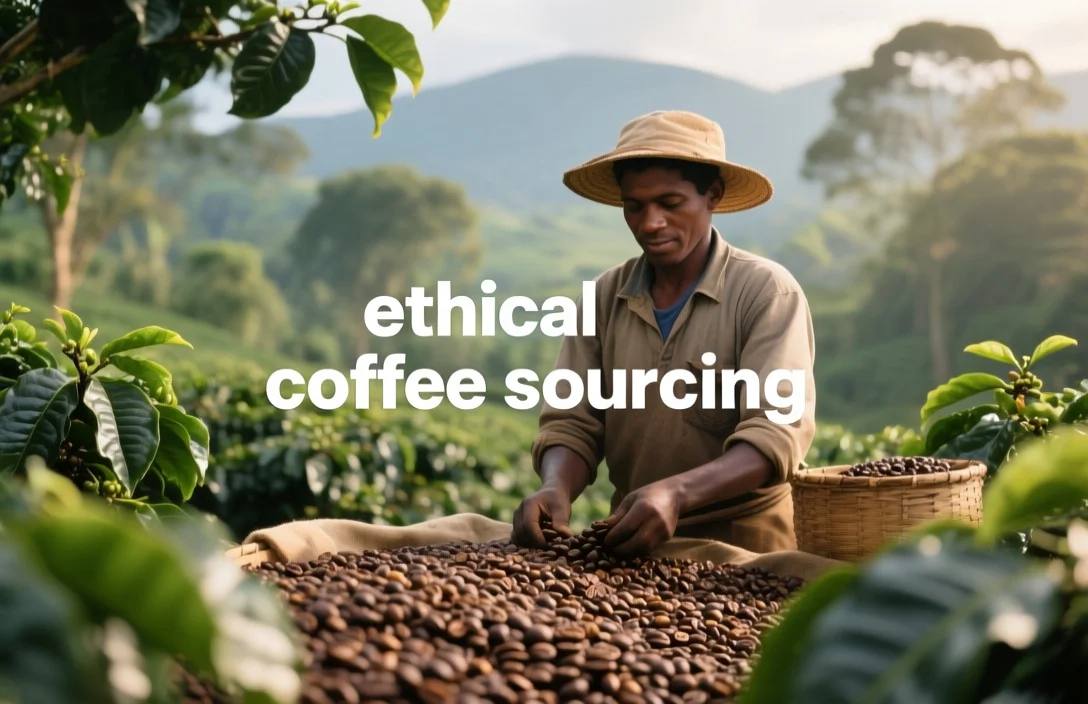
Ethical coffee sourcing means buying coffee in ways that aim for fair pay for farmers, healthier growing regions, and supply chains you can actually trace. That sounds straightforward. In practice, it usually means accepting trade-offs between price, verification, and how much of the chain you can see.
What ethical coffee sourcing looks like in practice
I would start with a plain definition: ethical coffee sourcing combines three commitments. First, farmers should be paid in a way that supports a decent livelihood. Second, the farm system should protect or restore environmental health. Third, the buying relationship should be transparent enough to verify what was paid and where the coffee came from.
Buyers usually get there through contracts, direct relationships, certification programs, or procurement agreements that make payments and practices easier to check. Some programs focus on income by guaranteeing minimum prices or added premiums. Others focus more on traceability, so roasters can confirm origin and production methods. In real purchasing decisions, brands often use a mix of certification, direct trade, and internal sourcing rules.
Why ethical sourcing matters for buyers and farmers
Coffee markets are volatile, and small growers often absorb the worst of it. Prices swing, weather patterns shift, and a single bad harvest can unsettle a season’s income. Ethical sourcing can reduce some of that instability through forward contracts, price premiums, or yield-support programs tied to quality or sustainability.
The environmental side matters for a practical reason, not a decorative one. Many coffee regions overlap with high-biodiversity landscapes and important watersheds. Buying coffee that rewards shade-grown, agroforestry, or soil-regenerative practices can support habitat protection and carbon storage on farms.
There is also a direct social effect when revenue is steadier. Cooperatives and farms with more predictable income can make longer-term decisions about healthcare, education, and infrastructure. That is where ethical sourcing becomes more than a label. It changes what a farm can plan for.
The main sourcing models, and where each one fits
I would treat sourcing models as tools, not identities. Each one solves a different problem.
Certification programs verify practices through third-party audits. Direct trade leans on direct negotiation between roaster and producer. Cooperatives aggregate smallholders so they can bargain as a group. Hybrid models combine certification with on-the-ground investment or additional traceability.
Here is a simple comparison.
| Name | Price / Key Spec | Best For |
|---|---|---|
| Fair Trade (or similar floor-price systems) | Costs and premiums vary; third-party audit verifies minimum standards and community development funds | Buyers wanting a recognizable standard and minimum price guarantees |
| Rainforest Alliance / UTZ | Certification focused on environmental and social criteria; verification through audits and farm-level data | Buyers prioritizing environmental criteria with scalable supply |
| Organic certification | Certification confirms organic inputs and farm practices; premiums depend on market and certification costs | Buyers focused on chemical-free production and health-focused branding |
| Direct Trade | No single third-party standard; buyers negotiate prices and traceability directly with producers | Roasters seeking deep producer relationships and quality control |
| Cooperative purchasing | Aggregates smallholders; pricing and premiums depend on coop governance and marketing | Suppliers working with many small farms who need aggregation |
| Hybrid programs (cert + direct investment) | Combines audit-based verification with on-farm investments and traceability measures | Buyers who want audit credibility plus targeted farm improvements |
My practical rule is simple: choose the model that matches your size, sourcing style, and tolerance for paperwork. A small roaster rarely needs the same system as a national chain.
How to evaluate suppliers and build an ethical sourcing policy
Start by deciding what “ethical” means for your business. For one buyer, the priority is farmer income. For another, it is biodiversity. For another, it is traceability. If you do not rank those goals, supplier conversations get vague very quickly.
Then ask for specifics. I would ask for farm-level origin details, recent audit reports, payment terms, and traceability records. I would also ask how premiums are distributed and whether contracts include forward pricing or harvest financing. Those are the questions that separate a serious sourcing program from a nice story on a package.
Follow these steps when evaluating a supplier:
- Define your priorities and metrics for success.
- Request origin documentation and recent audit or certification reports.
- Confirm who receives premiums and how payments reach farmers.
- Verify traceability to farm or cooperative level through invoices or lot IDs.
- Inspect sample contracts for forward purchase terms and quality standards.
- Arrange a field visit or third-party due diligence if the volume justifies it.
- Build a monitoring plan that tracks price paid, yields, and social/environmental outcomes.
Costs, premiums, and the trade-offs you will face
Premiums are common in certified or specialty coffee, but the headline price is only part of the story. What matters more is where the premium goes. Does it reach individual farmers, a cooperative fund, or certification costs and audit fees? Those are very different outcomes.
Traceability also costs money. If you want farm-level traceability, plan for extra verification, logistics, and smaller lots. That usually means higher landed costs or thinner margins unless retail prices move with them.
Smaller roasters and cafés feel this most sharply. Limited volume weakens bargaining power, and the administrative work can eat into the premium you thought you were paying. Pooling purchases through cooperatives, importers, or shared programs can lower the burden, but it also reduces direct control over the relationship.
How to spot greenwashing and weak claims
Packaging badges are not enough. A logo can tell you that a program exists. It does not tell you whether farmers received a meaningful premium or whether the coffee was mixed after export.
I would watch for these warning signs:
- Sellers who cannot provide farm-level lot IDs or traceability documentation.
- Vague language about premiums that does not describe the mechanism or recipient.
- Retroactive or batch-level claims where “sustainable” beans are mixed with conventional lots during export.
- Audits dated several years old without recent monitoring visits or corrective action plans.
- Overreliance on a single certification while ignoring farmer livelihoods and governance issues.
If a supplier cannot answer basic questions clearly, that is usually the answer.
Sourcing approaches by buyer type
The right path depends on how much coffee you buy and how much control you want.
Small roaster: Start with one or two origin partnerships and negotiate small-batch direct trade purchases. Longer-term contracts for modest volumes can support quality and relationship-building without forcing you into heavy verification costs right away.
Medium roaster or regional buyer: Work with importers that offer traceable programs, or partner with cooperatives that can supply consistent lots. Certification plus contractual incentives for quality or farm investment can be a workable middle ground.
Café or retail chain: Focus on supplier visibility and cost predictability. I would build ethical sourcing into product tiers, for example a certified everyday blend and a direct-trade single origin. That gives customers a clear range without making every SKU carry the same cost structure.
Large corporate buyer: Invest in supplier development. That can include extension services, climate adaptation support, and reporting that shows what changed. Scale makes auditing, financing, and training more realistic than they are for smaller buyers.
Common mistakes buyers make
The first mistake is the easiest to make: trusting a logo too much. Certification is useful, but it is not a full measure of impact. If you do not look at premium distribution or farm conditions, you may be buying a label rather than an outcome.
The second mistake is underestimating the operational load of traceability. Farm-level sourcing means paperwork, split lots, and logistics work. If you budget only for the coffee itself, the plan often breaks down later.
The third mistake cuts the other way. Some buyers spend for traceability but never set a way to judge whether it helped. I would not do that. Track a few concrete indicators, such as net farm income, reduced use of harmful agrochemicals, or verified restoration of forest cover. Otherwise, you are just paying more for a story.
How to structure contracts and payments
If you want ethical sourcing to matter in practice, payment terms have to reduce risk for growers. Upfront payments, pre-harvest financing, and partial advances against future deliveries all help with cash flow. They also reduce the temptation for farmers to sell early under pressure.
Premiums should reward something you can verify. Quality premiums tied to cupping scores are common. Sustainability premiums can be tied to documented practice changes or third-party verification. Either way, the contract should be explicit about what triggers the premium.
I would also make sure the contract says how premiums are distributed and how disputes are handled. Clear traceability data and regular impact reporting add accountability. They also make it easier to explain the sourcing model to customers without overclaiming.
Measuring outcomes without making the process impossible
You do not need fifty metrics. You do need the right few.
For financial outcomes, track farm-level net income, payment timing, and loan recovery rates. For social outcomes, look at household food security or investments in school fees and healthcare. For environmental outcomes, track acreage under regenerative practices, agroforestry adoption, or reductions in synthetic input use.
Collecting farm-level data takes care. Privacy matters, and so does survey fatigue. I would keep the metric list tight and work with local organizations or cooperatives when possible. Repeated monitoring over multiple seasons is more useful than one-off audits, which can flatter a program that has not really changed much.
FAQ
What exactly does “direct trade” mean?
Direct trade means a roaster or buyer negotiates price and quality directly with a producer or cooperative. It usually puts a lot of weight on traceability, quality, and relationship-based premiums. There is no single certification that defines it, so the practice can vary a lot from one buyer to another.
Can certification alone ensure ethical outcomes?
No. Certification can verify that certain standards were met, but it does not guarantee fair premium distribution, strong farm governance, or solid ecological results. Audit reports and payment records tell you more than a badge alone.
How should a small café start sourcing more ethically?
Choose one origin and one supplier that can provide traceability and clear premium distribution. Start with small-batch purchases and predictable payment terms. Then be honest with customers about what you are doing and what you are still working toward.
Is organic certification the same as ethical sourcing?
No. Organic certification focuses on inputs and farm practices. Ethical sourcing is broader. It includes fair pay, labor conditions, and supply-chain transparency. Many buyers use both because they are trying to cover more than one goal.
What are affordable ways to increase impact without large budgets?
Pool purchases with other small buyers, support cooperative capacity-building through targeted premiums, and work with importers that provide traceability services. Consistent contracts usually do more than one-off high-priced purchases.
A practical place to begin
I would not start with a perfect system. I would start with two goals, one social and one environmental, and use them to screen suppliers. That gives you a real filter instead of a vague intention.
A useful next step is a one-page sourcing policy. Keep it plain. List your objectives, the minimum verification you require, and when you will review results. Then use that document in supplier conversations and when you explain your approach to customers.

- Espresso Tastes Watery? 10 Common Causes and How to Fix It - October 23, 2026
- 10 Common Coffee Equipment Cleaning Mistakes and How to Avoid Them - October 23, 2026
- 17 Common Coffee Grinder Problems and How to Fix Them - October 23, 2026